The sharp winter wind rattles the low stone walls of a Jeju Island kitchen, but inside, the air is thick with steam and the deeply marine scent of boiling kelp. An elderly woman stands by a bubbling steel pot, watching the dark green fronds swell and twist in the rolling water. She adds a splash of toasted sesame oil, and the liquid hisses, sending up a rich, nutty aroma that temporarily masks the salt air. She is not rushing. She carefully adjusts the flame, allowing the broth to simmer until it turns a milky, opaque jade. It is a slow, methodical morning rhythm, a quiet act of preparation that fills the room with warmth.
This is miyeok-guk (pronounced mee-yuhk-gook), the traditional Korean seaweed soup. At its core, the dish is an exercise in extracting profound depth from minimalist ingredients. While mainland versions often rely on a heavy beef broth, the Jeju iteration draws its power straight from the surrounding ocean, frequently incorporating fresh abalone, sea urchin, or delicate white fish. The true craft, however, lies in the preparation of the kelp itself. Before water ever touches the pot, the dried seaweed is soaked until soft, then aggressively kneaded by hand and sautéed in sesame oil and minced garlic. This crucial friction releases the seaweed’s natural starches, transforming what could be a thin, watery liquid into a velvety, substantial broth that coats the spoon.
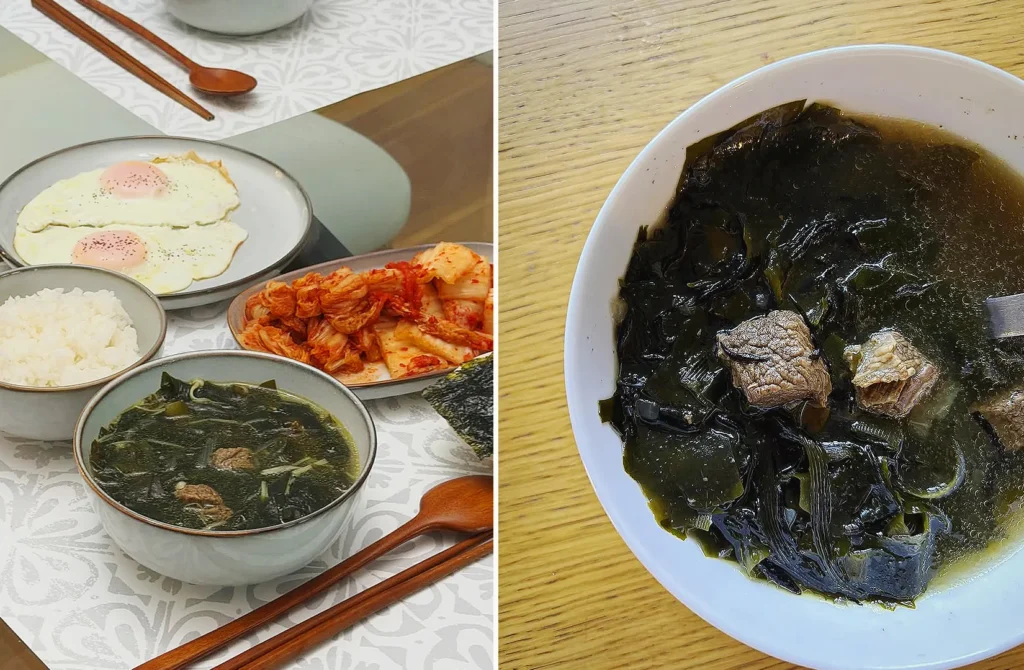
Across the Korean peninsula, this simple soup carries a massive cultural weight. In its quietly Asiatic way; ritualistic, elemental, and rooted in place, it links the body to ancestry through taste. It is the mandatory birthday breakfast, a culinary journey repeated every year to honour the exact meal a mother consumes for postpartum recovery. Waking up to a bowl of miyeok-guk signals care; it is an edible reminder of birth, sacrifice, and shared lineage. In the coastal villages of Jeju, where the female free divers known as haenyeo harvest the kelp directly from the cold currents, the soup feels even more tethered to the environment. Serving it is an act of deep familial devotion, a celebration of flavours that grounds the individual within their immediate community.
What makes this traditional preparation so compelling today is its quiet defiance of the instant food era. Supermarket shelves are currently lined with freeze-dried, microwaveable packets of seaweed soup that promise the taste of home in three minutes. Yet, those thin, uniform broths completely lack the heavy, oily emulsion that only comes from physically kneading the kelp and coaxing out its depth over a low, persistent flame. The authentic soup demands tactile interaction and patience. It reminds us that convenience cannot replicate the specific texture and emotional resonance born from deliberate human effort.
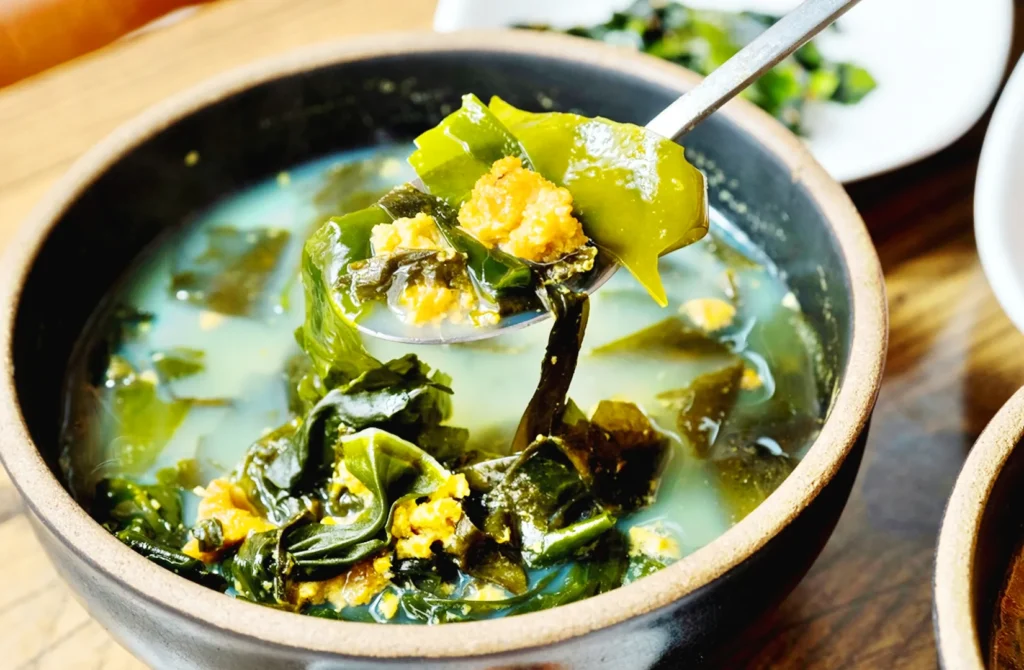
Taking a slow sip of the hot, opaque broth, the taste of the island is immediate. It is savoury, oceanic, and deeply grounding. It remains a profound reminder that our most meaningful food rituals are often the simplest ones, woven quietly into the fabric of our everyday lives.

Banana Leaf Steam: Why Some Rice Smells Like Home
Eda Wong | July 10, 2026
Steam rises from the pot, and a woman lifts a banana leaf over the open flame, turning it once, twice, until its stiff green softens and the surface goes glossy and pliant. She wipes it down with a damp cloth, then spoons hot rice into its center while the grains still steam. The leaf releases…
-
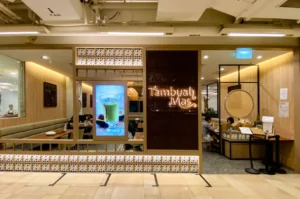
Tambuah Mas Paragon, Delivered: Unique Food Delivery Singapore With Old-School Comfort
Eda Wong | July 9, 2026
I ordered from Tambuah Mas on a rainy Sunday at around 6:15pm, mostly because I wasn’t in the mood to dress up and head into town, but I still wanted a proper meal. Not a sad one-bowl lunch. A real spread. That’s the thing about Tambuah Mas. It’s been around since 1981, serving Indonesian home-style…
-
Toasted Rice Powder: The Dust That Makes Larb Sing
Dio Asahi | July 8, 2026
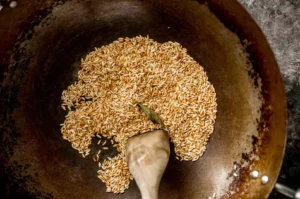
A wok sits over a low flame, and a handful of raw sticky rice slides across its dry surface. No oil, no water—nothing but heat and patience. The grains pale, then blush amber, then deepen toward the color of weak tea. Someone shakes the pan in a slow, even rhythm, listening as much as watching….
-
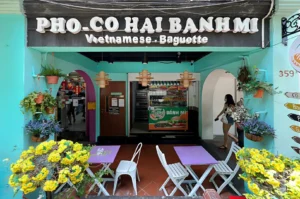
Ordering Lunch From Co Hai Banh Mi, and Finding Out the Definition of Good Food Delivery
Dio Asahi | July 7, 2026
I ordered lunch from Co Hai Banh Mi & Phở Vietnamese Restaurant on a Thursday at 12:08pm, which is probably the worst and most honest time to test delivery food. It was raining lightly, the kind of Singapore lunch rain that makes every rider slower and every office worker hungrier. I had been thinking about…

The “Little Tokyo” Floors Where Dinner Hides Behind Office Lobbies and Quiet Corridors : Orchard Plaza Food
Eat Drink Asia Team | July 4, 2026
Orchard Plaza is one of those buildings we kept walking past before we properly understood it. From the street, it looks more like an office block than a dinner plan. But over repeated visits, usually after work or during odd lunch windows, we’ve found that the real charm sits behind lift doors, quiet corridors, and…
-
Salted Egg, Properly Treated: Sauce, Not Shortcut
Eda Wong | July 3, 2026
By Eda Wong for Eat Drink Asia. The wok station is already hot when the cook lowers the flame. In the narrow back of a Singapore zi char kitchen, the air smells of butter, curry leaves, and the faint mineral edge of salted duck egg. A metal spatula presses cooked yolks through oil until they…
-
Fish Sauce at the Table: The Quiet Work of Fish Sauce
Dio Asahi | July 1, 2026
At a narrow lunch table in Bangkok, the bottle arrives before the rice has stopped steaming. It is clear glass, refilled many times, its plastic cap slightly stained from years of fingers and heat. Beside it sits a small bowl of sliced chillies floating in amber liquid, the cut edges pale and sharp. Someone nudges…
-
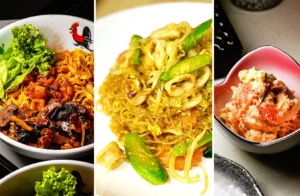
Eat 3 Bowls Bendemeer Review: A Taiwanese Comfort Food That Delivers
Eda Wong | June 30, 2026
I ordered Eat 3 Bowls @ Bendemeer on a Thursday at about 11:45am, which is my favourite test window for delivery food. It’s close enough to lunch for the kitchen to be in rhythm, but not so late that every rider in the neighbourhood is already fighting the office crowd. By 12:25pm, the bag was…
-
ABC Hokkien Mee After Renovation: What to Expect When the Woks Return
Dio Asahi | June 27, 2026
When I first walked past a hawker centre undergoing major renovations, the absolute silence unsettled me. The usual rhythmic scrape of metal spatulas against cast-iron woks was gone, replaced by the hum of construction. It made me realise just how much our culinary journeys are tied to the physical spaces we eat in. Right now,…
-
Claypot Rice Crusts: Listening for the First Crackle
Eda Wong | June 26, 2026
The narrow alleyway in Yau Ma Tei smells of charcoal and dark soy sauce, a thick coastal humidity pressing against the glow of the stoves. An elderly cook stands before a row of blackened sand-clay pots, a long metal tong in his right hand. He does not watch the flames; he listens to them. There…