By Eda Wong for Eat Drink Asia.
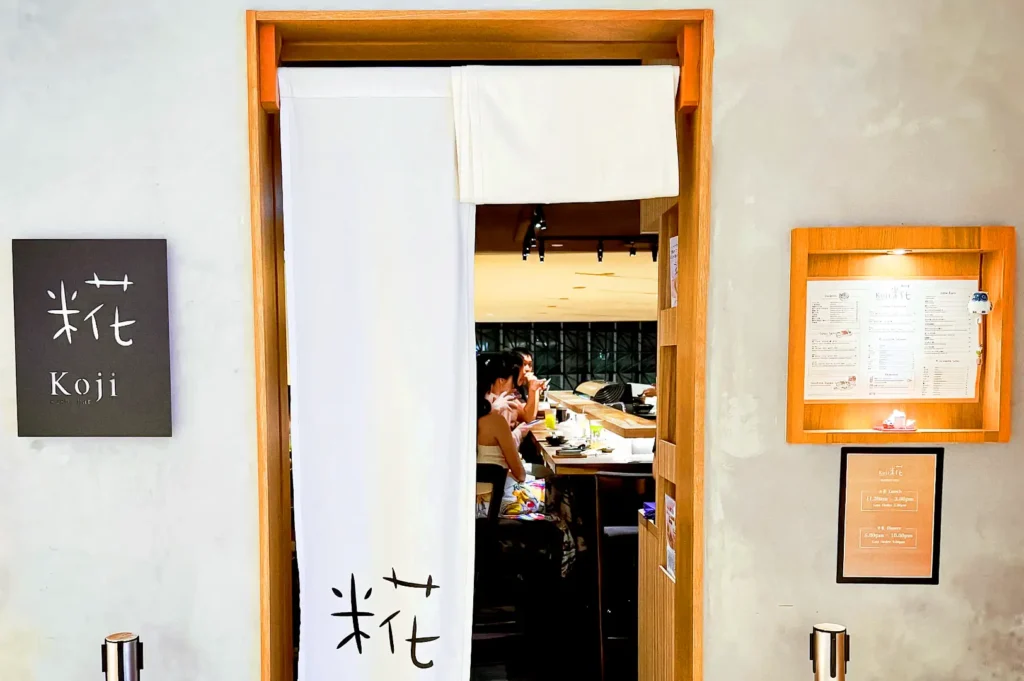
It’s a little before noon, and Raffles City is still mostly footsteps. Outside Koji Sushi Bar, shoppers drift past with paper bags and iced coffees. Inside, the counter is pale wood, wiped so clean it almost shines. A chef runs a damp cloth along its edge, then turns back to a shallow tub of rice. He folds it with a flat paddle, slowly, as if he doesn’t want to disturb it.
A woman two seats down orders without opening the menu. A man in a pressed shirt sets his phone face down beside his tea. Nobody here is in a hurry yet.
My Chirashi Don arrives in a lacquered bowl. Nothing is heaped. Slices of tuna, deep red and cool from the chiller, lie beside pale salmon and a curled prawn. A small spoonful of ikura glints orange in one corner. A tongue of uni sits near the center, soft and golden. There’s space between each piece, the way there is between words in a careful sentence.
I don’t reach for the soy sauce. Not yet.
Instead, I take a little rice on its own. It’s barely warm, close to the temperature of my hand. Each grain holds its shape, firm at the center and seasoned with vinegar so it tastes bright rather than sweet. A faint salt lingers after I swallow. Then I try a slice of tuna with it, and I understand the bowl. The cool fish and the warm rice meet halfway.
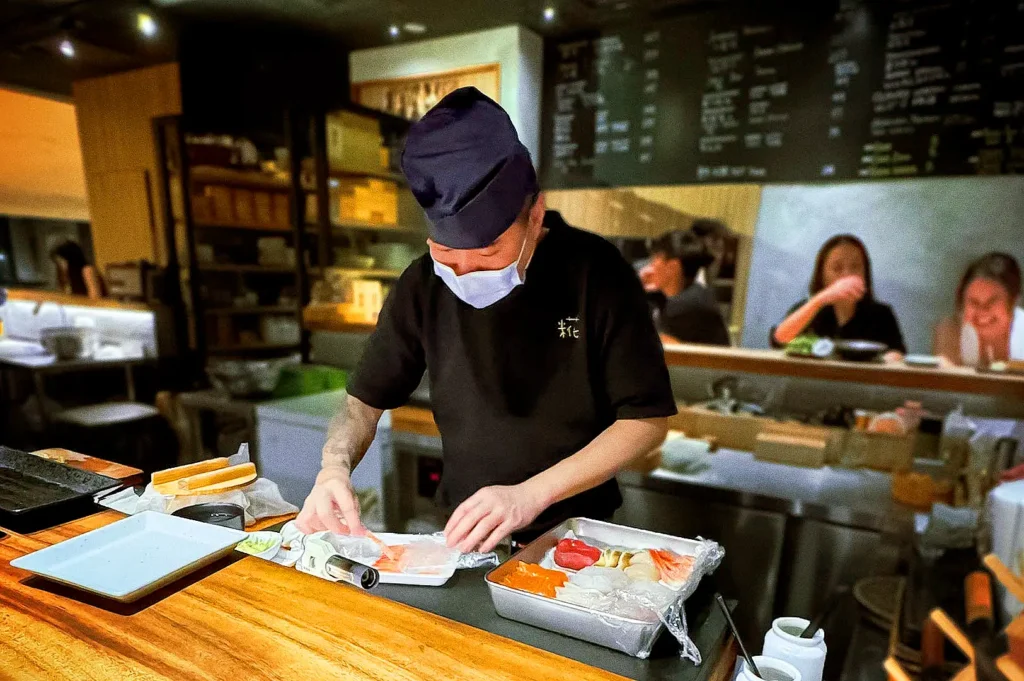
That’s the quiet discipline here. At many places, chirashi is where the trimmings go, a pile of raw fish over plain rice, eaten quickly and forgotten. Koji treats it like sushi. The rice is shaped by the same hands and seasoned with the same care. Each slice is cut cleanly, as if it were bound for nigiri. The bowl is simply sushi, unpressed and laid open.
For other interpretations of that balance between fish and rice, explore our chirashizushi picks in Singapore.
Around me, the lunch hour starts to arrive. Lanyards swing. A pair of colleagues share a quick laugh and then go silent over their bowls. In this part of the city, lunch is often something to get through, eaten from a box between calls. A sushi counter usually belongs to the evening, to long dinners and time set aside. Here, that kind of attention gets folded into an hour and placed in front of people who have to be back upstairs by one.
There’s a tension in that. This is a mall. The MRT runs right beneath it. Escalators hum, and a chain bakery sits not far away. Everything about the setting asks for speed. But behind the counter, the chef keeps the same slow rhythm with his knife and the same quiet with his rice. Convenience surrounds the craft without quite swallowing it.
I think that’s why the bowl stays with me. It isn’t loud. It doesn’t try to impress with abundance. It simply asks you to notice, and for a few minutes, I do.
When I finish, a single grain of rice clings to the rim. By now, the counter is full. The chef is still folding rice in the wooden tub, as gently as before.

The Alchemy of the Wok: The Story of Singapore-Style Bee Hoon
Eda Wong | February 10, 2026
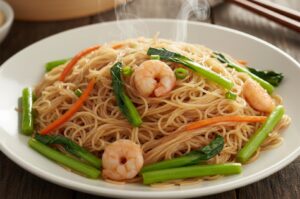
Across the humid evening air of Singapore, a rhythmic clatter echoes from hawker stalls to high-rise kitchens—the sound of a metal spatula against a seasoned wok. Within that intense heat, rice vermicelli noodles undergoes a profound transformation, absorbing the golden hues of curry powder, the savory depths of soy sauce, and the smoky “breath” of…
-
The Sizzle of the Wok: An Exploration of Fried Bee Hoon Across Southeast Asia
Eat Drink Asia Team | February 7, 2026
Across Southeast Asia, from bustling hawker centers to family kitchens, the sizzle of rice vermicelli noodles hitting a hot wok is a universal comfort. Few dishes capture the spirit of Asian noodle culture as well as fried bee hoon. This stir fry, made with thin rice noodles, delivers a tasty meal any time of the…
-
The Silk of the East: A Deep Dive into Bee Hoon and the Art of Rice Vermicelli
Eda Wong | February 5, 2026
Across the bustling kitchens of Southeast Asia, one humble ingredient has woven itself into the fabric of countless beloved dishes. Bee hoon, the delicate rice vermicelli that transforms from brittle strands into silky noodles, represents centuries of culinary tradition and innovation. Whether you’ve savored Singapore noodles in a hawker center or encountered fried bee hoon…
-
The Eternal Hearth: A Journey Through the Soul of Indian Foods Vegetarian Traditions
Dio Asahi | February 3, 2026
In the vibrant tapestry of global gastronomy, few cultures have elevated the plant-based plate to an art form quite like India. While much of the world has recently turned toward meat alternatives for health or environmental reasons, Indian cuisine has been centered on the vegetable for millennia. This isn’t merely a dietary choice; it is…
-
The Essence of Jeju Citron Tea: A Distinctive Profile of Yuja Tea in Korea
Dio Asahi | January 31, 2026
Imagine sitting in a quiet, sun-drenched teahouse overlooking the dramatic volcanic coastline of Jeju Island. The steam rising from your cup carries an aroma that is at once familiar and yet entirely new—a version of Korean citron tea, or yuja cha, that tastes of sea salt, volcanic soil, and generations of island tradition. As you…
-
Korean Citron Tea: Health Benefits and Wellness Secrets
Eat Drink Asia Team | January 29, 2026
As the seasons change and a chill enters the air, many of us seek out comforting rituals to support our well-being. Imagine wrapping your hands around a steaming cup of Korean citron tea—also known as yuja-cha—its bright, citrus aroma soothing and revitalizing with every sip. More than just a winter treat, Korean citron tea is…
-
When the Izakaya Becomes the Plan: Izakaya Singapore Top Picks for After-Work Reset
Dio Asahi | January 28, 2026
January 28, 2026 | Dio Asahi Last updated: October 12, 2026 As you step behind the humble noren curtain, you’re greeted by glowing lanterns, sizzling charcoal-grilled skewers, and warm welcomes. This is izakaya, Japan’s casual pub, a vibrant part of Singapore’s dining scene. More than just yakitori and sake, izakayas offer a lively setting for social…
-
Yuja Tea: Korea’s Traditional Citron Tea
Dio Asahi | January 27, 2026
The golden, aromatic steam rising from a cup of yuja tea carries centuries of Korean tradition and wellness wisdom. This caffeine-free citrus beverage has warmed Korean hearts through countless winters, offering both comfort and powerful health benefits in every sip. Made from the Korean citron known as yuja fruit, this simple Korean tea represents one…
-
The Global Phenomenon of Korean Instant Noodle: A Cultural and Culinary Journey
Eda Wong | January 24, 2026
In the high-octane streets of South Korea, where the “pali-pali” (hurry-hurry) culture defines the pace of life, one dish stands as the ultimate equalizer of speed and satisfaction: Korean ramyeon. While the world often uses the terms ramen and ramyeon interchangeably, the Korean version is a distinct entity. It is not merely a quick snack…
-
Traditional Ramyeon: The Soulful Heart of Korean Noodle Culture
Eat Drink Asia Team | January 20, 2026
In the bustling culinary landscape of South Korea, few comfort foods can match the satisfaction of a steaming bowl of ramyeon. While outside of Korea, “ramyeon” often brings to mind Korean instant noodles or instant ramen, true ramyeon Korean style refers to the artful, freshly prepared noodle soup enjoyed in homes and at local restaurants…