By Eda Wong for Eat Drink Asia.
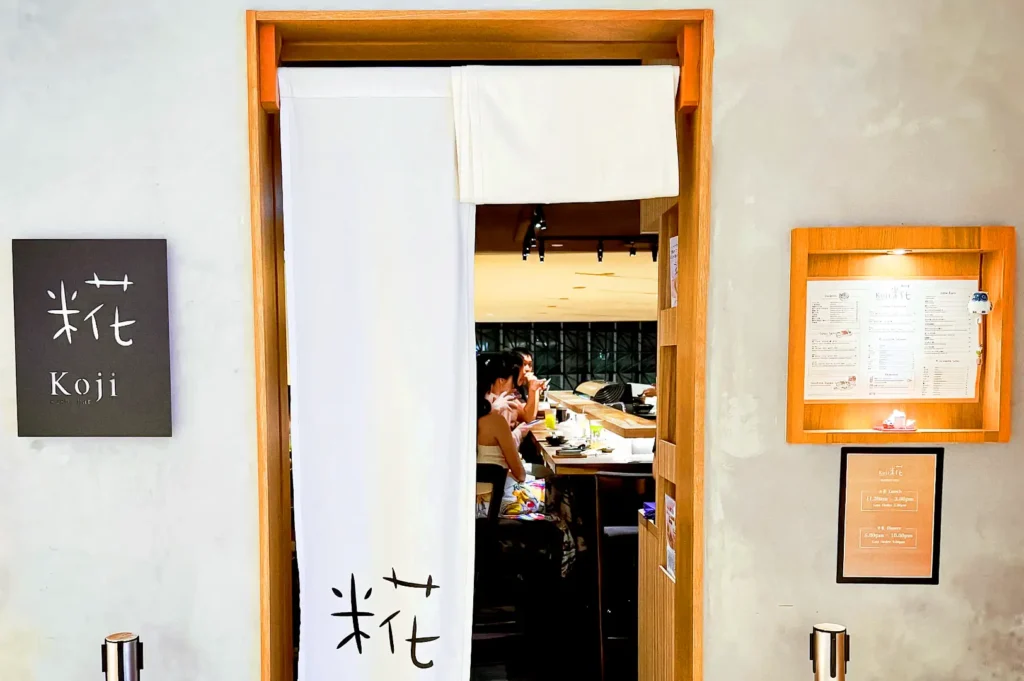
It’s a little before noon, and Raffles City is still mostly footsteps. Outside Koji Sushi Bar, shoppers drift past with paper bags and iced coffees. Inside, the counter is pale wood, wiped so clean it almost shines. A chef runs a damp cloth along its edge, then turns back to a shallow tub of rice. He folds it with a flat paddle, slowly, as if he doesn’t want to disturb it.
A woman two seats down orders without opening the menu. A man in a pressed shirt sets his phone face down beside his tea. Nobody here is in a hurry yet.
My Chirashi Don arrives in a lacquered bowl. Nothing is heaped. Slices of tuna, deep red and cool from the chiller, lie beside pale salmon and a curled prawn. A small spoonful of ikura glints orange in one corner. A tongue of uni sits near the center, soft and golden. There’s space between each piece, the way there is between words in a careful sentence.
I don’t reach for the soy sauce. Not yet.
Instead, I take a little rice on its own. It’s barely warm, close to the temperature of my hand. Each grain holds its shape, firm at the center and seasoned with vinegar so it tastes bright rather than sweet. A faint salt lingers after I swallow. Then I try a slice of tuna with it, and I understand the bowl. The cool fish and the warm rice meet halfway.
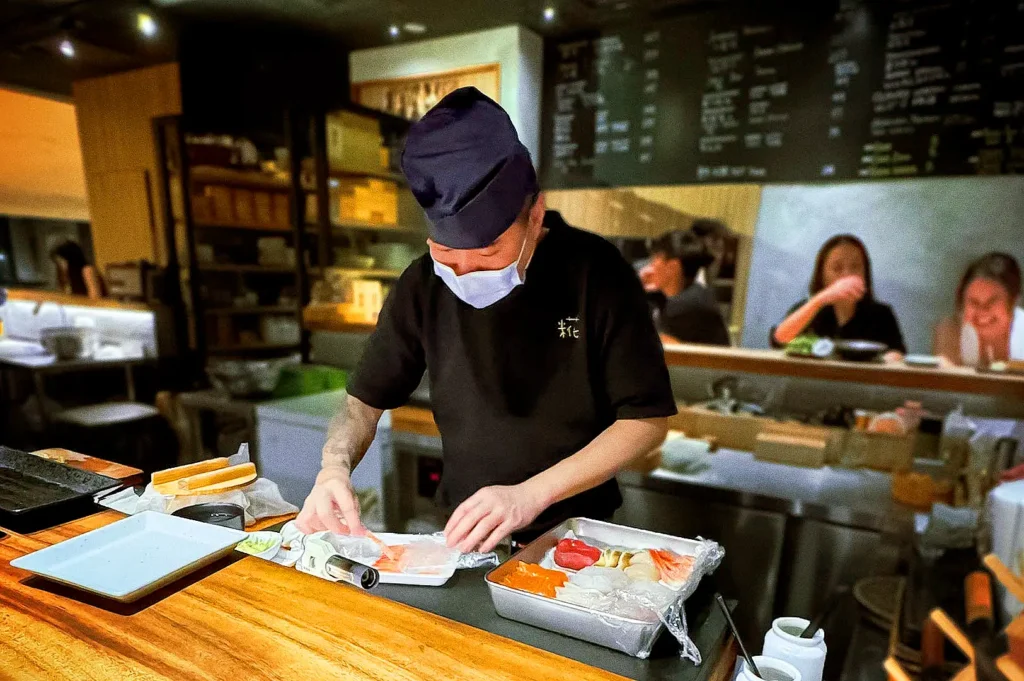
That’s the quiet discipline here. At many places, chirashi is where the trimmings go, a pile of raw fish over plain rice, eaten quickly and forgotten. Koji treats it like sushi. The rice is shaped by the same hands and seasoned with the same care. Each slice is cut cleanly, as if it were bound for nigiri. The bowl is simply sushi, unpressed and laid open.
For other interpretations of that balance between fish and rice, explore our chirashizushi picks in Singapore.
Around me, the lunch hour starts to arrive. Lanyards swing. A pair of colleagues share a quick laugh and then go silent over their bowls. In this part of the city, lunch is often something to get through, eaten from a box between calls. A sushi counter usually belongs to the evening, to long dinners and time set aside. Here, that kind of attention gets folded into an hour and placed in front of people who have to be back upstairs by one.
There’s a tension in that. This is a mall. The MRT runs right beneath it. Escalators hum, and a chain bakery sits not far away. Everything about the setting asks for speed. But behind the counter, the chef keeps the same slow rhythm with his knife and the same quiet with his rice. Convenience surrounds the craft without quite swallowing it.
I think that’s why the bowl stays with me. It isn’t loud. It doesn’t try to impress with abundance. It simply asks you to notice, and for a few minutes, I do.
When I finish, a single grain of rice clings to the rim. By now, the counter is full. The chef is still folding rice in the wooden tub, as gently as before.

The Heart of the Korean Noodles: History and Texture
Eda Wong | January 17, 2026
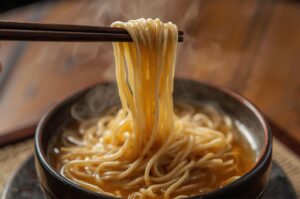
In Korea, a bowl of noodles is far more than a simple dish; it is a cultural anchor that has weathered centuries of change. For generations, the length of the strand has symbolized a long and prosperous life, making Korean noodles a staple at birthdays, weddings, and the milestone 60th birthday celebration known as hwangap….
-
Preserving the ‘Big Bowl’ Tradition with Pen Cai Delivery in the Age of Doorstep Dining
Eat Drink Asia Team | January 15, 2026
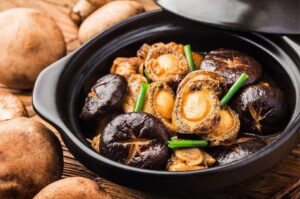
Modern Festive Menu: Bringing the Big Bowl Home There is a special, undeniable magic to the Chinese New Year reunion dinner. For many families, Chinese New Year 2026 is another chance to gather loved ones at the table and celebrate with a glorious pen cai—sometimes called the “big bowl feast”—overflowing with premium ingredients and festive…
-
Sencha: Traditions, Flavors, and the Essence of Japanese Tea
Eat Drink Asia Team | January 15, 2026
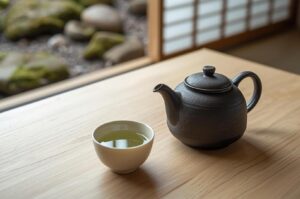
When people around the world think of Japanese tea, images of tranquil tea ceremonies in small rooms or frothy bowls of matcha often come to mind. Yet, the reality of tea drinking in Japan is much broader, woven deeply into the culture and daily habits. For the vast majority, sencha is the beloved tea that…
-
The Best Restaurants Tokyo Are Rarely the Ones You Plan For
Eda Wong | January 12, 2026
Tokyo, Japan’s capital, does not reward urgency. It rewards return. On my first visit, I chased what everyone told me were the best restaurants Tokyo had to offer. I spent weeks highlighting maps, bookmarking digital “must-eat” lists, and refreshing reservation pages until my eyes blurred. I thought that by conquering the top-tier establishments, I would…
-
Japan and Food: Culinary Harmony – The Deep Connection Between Japanese Food and Culture
Eat Drink Asia Team | January 11, 2026
When it comes to Japan and food, the two are intertwined in ways that captivate taste buds and awaken the senses. Japanese cuisine stands as one of the world’s most revered traditions—more than nourishing meals, it is an art reflecting centuries of philosophy and a window into Japanese culture itself. Every bowl of miso soup,…
-
The Verdant Cup: A Celebration of Green Tea in Japan
Eda Wong | January 10, 2026
In Japan, green tea is much more than a beverage. It marks a moment of pause, hospitality, and tradition. The story of green tea in Japan weaves through centuries of culture, artistry, and daily life—bridging ancient rituals like the Japanese tea ceremony to everyday meals enjoyed at home. The origins and beginning of Japanese tea…
-
Japanese Green Tea from Japan: The Story of Matcha
Dio Asahi | January 8, 2026
On a misty April morning in Kyoto, I knelt on tatami in a small tea room outside Uji, Japan. The host, dressed in kimono, moved with quiet skill as she scooped matcha powder into a ceramic bowl. The air was filled with the aroma of aged wood mixed with the grassy scent of high quality…
-
Takoyaki: The Sizzling Heart of Japan Food Culture
Dio Asahi | January 3, 2026
What is Takoyaki and Why Does it Matter in Japanese Food Culture? In the bright heart of Osaka, the sizzle of takoyaki batter signals one of Japan food culture’s most beloved street foods. Lines form at street stalls drawn by the delicious food aromas of sweet-savory sauce and bonito flakes dancing on golden spheres. Takoyaki,…
-
Everything You Need for a Flawless Bubble Tea Cake
Eda Wong | January 1, 2026
The global bubble tea phenomenon has evolved beyond drinks into the world of baking, creating one of the most exciting dessert trends of recent years. Bubble tea cake combines the beloved flavors of milk tea with the satisfying chew of boba pearls, all wrapped up in an adorable bubble tea cake that’s perfect for any…
-
Pad Thai Dish: Everything You Need to Know About the Rice Noodles That Make It Authentic
Eat Drink Asia Team | December 30, 2025
Pad Thai is more than just a staple of Thai Food; it’s a Global Phenomenon. From bustling street carts in Bangkok to high-end Thai Restaurants in New York, this iconic Pad Thai Dish has captured the hearts and palates of food lovers everywhere. The best Pad Thai rivals what you would find in a typical…