By Eda Wong for Eat Drink Asia.
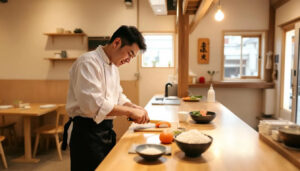
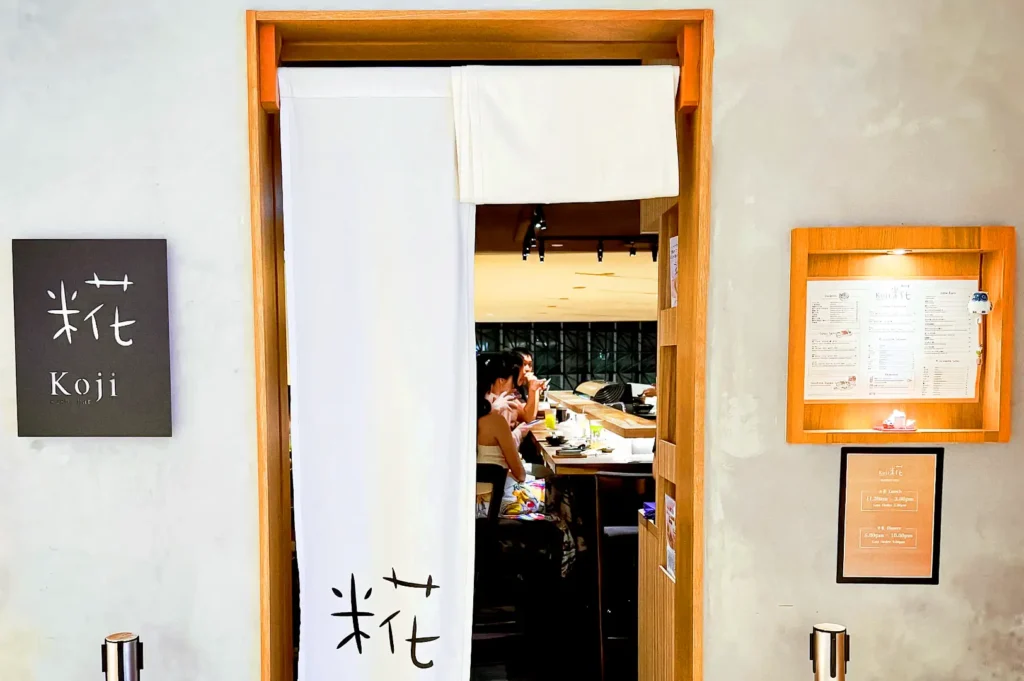
It’s a little before noon, and Raffles City is still mostly footsteps. Outside Koji Sushi Bar, shoppers drift past with paper bags and iced coffees. Inside, the counter is pale wood, wiped so clean it almost shines. A chef runs a damp cloth along its edge, then turns back to a shallow tub of rice. He folds it with a flat paddle, slowly, as if he doesn’t want to disturb it.
A woman two seats down orders without opening the menu. A man in a pressed shirt sets his phone face down beside his tea. Nobody here is in a hurry yet.
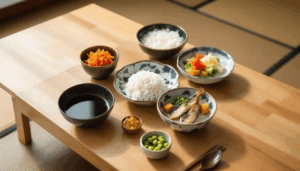
My Chirashi Don arrives in a lacquered bowl. Nothing is heaped. Slices of tuna, deep red and cool from the chiller, lie beside pale salmon and a curled prawn. A small spoonful of ikura glints orange in one corner. A tongue of uni sits near the center, soft and golden. There’s space between each piece, the way there is between words in a careful sentence.
I don’t reach for the soy sauce. Not yet.
Instead, I take a little rice on its own. It’s barely warm, close to the temperature of my hand. Each grain holds its shape, firm at the center and seasoned with vinegar so it tastes bright rather than sweet. A faint salt lingers after I swallow. Then I try a slice of tuna with it, and I understand the bowl. The cool fish and the warm rice meet halfway.
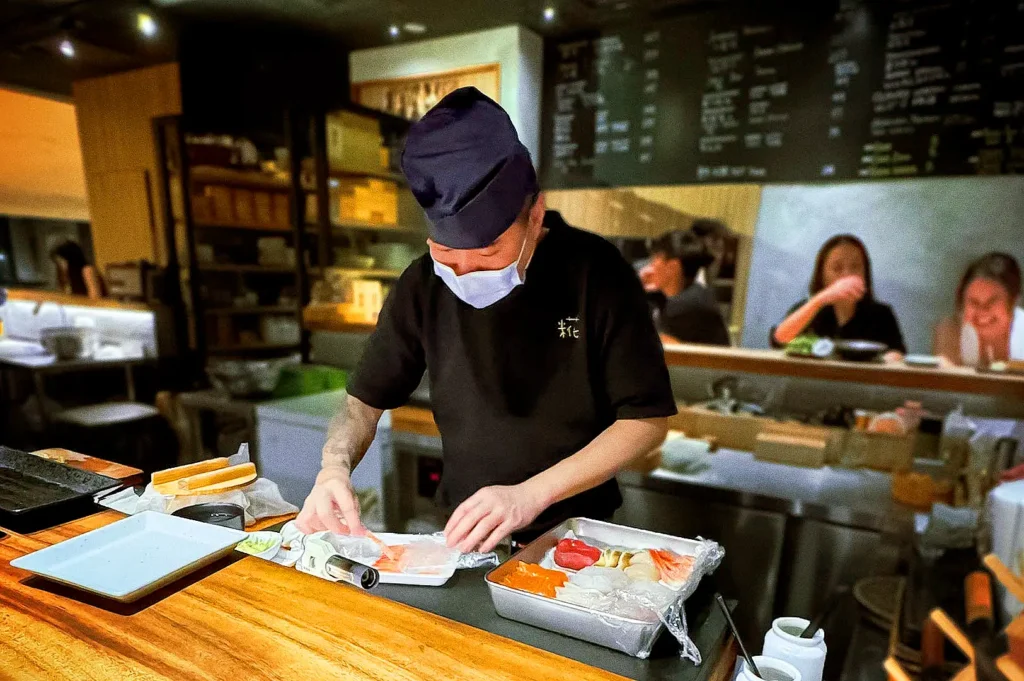
That’s the quiet discipline here. At many places, chirashi is where the trimmings go, a pile of raw fish over plain rice, eaten quickly and forgotten. Koji treats it like sushi. The rice is shaped by the same hands and seasoned with the same care. Each slice is cut cleanly, as if it were bound for nigiri. The bowl is simply sushi, unpressed and laid open.
For other interpretations of that balance between fish and rice, explore our chirashizushi picks in Singapore.
Around me, the lunch hour starts to arrive. Lanyards swing. A pair of colleagues share a quick laugh and then go silent over their bowls. In this part of the city, lunch is often something to get through, eaten from a box between calls. A sushi counter usually belongs to the evening, to long dinners and time set aside. Here, that kind of attention gets folded into an hour and placed in front of people who have to be back upstairs by one.
There’s a tension in that. This is a mall. The MRT runs right beneath it. Escalators hum, and a chain bakery sits not far away. Everything about the setting asks for speed. But behind the counter, the chef keeps the same slow rhythm with his knife and the same quiet with his rice. Convenience surrounds the craft without quite swallowing it.
I think that’s why the bowl stays with me. It isn’t loud. It doesn’t try to impress with abundance. It simply asks you to notice, and for a few minutes, I do.
When I finish, a single grain of rice clings to the rim. By now, the counter is full. The chef is still folding rice in the wooden tub, as gently as before.

How to Drink Sake: Your Guide to Enjoying Japanese Sake Wine
Eda Wong | December 5, 2025
As Japan’s national beverage, this traditional sake is present at celebrations, quiet dinners, and spiritual offerings, weaving itself into the very fabric of daily life and reflecting Japan’s deep-rooted cultural heritage. Yet, for many outside of Japan, it remains a delightful mystery. You might find yourself wondering, how do you drink sake properly to unlock…

What Is Sashimi? A Guide to Raw Fish, Sliced Raw Fish, and Japanese Seafood
Eat Drink Asia Team | December 3, 2025
Sashimi is one of the clearest ways to understand Japanese cuisine because there is very little to hide behind. At its simplest, sashimi is sliced raw fish or seafood served without sushi rice, usually with soy sauce, wasabi, and simple garnishes such as daikon radish. But the dish is not just “raw fish on a…

Understanding Sake Alcohol Content: A Complete Guide to ABV and Flavor
Eda Wong | December 2, 2025
When exploring Japanese sake, many wonder about its grades and complex flavors. Sake’s unique profile offers remarkable versatility, enjoyed in various serving styles and paired with diverse dishes. One fundamental aspect is sake alcohol content. Is sake stronger than wine? How does its alcohol by volume (ABV) compare to beer? The answer is nuanced. Understanding…
-
Japanese Sake: The Complete Guide to Japan’s Traditional Rice Wine
Dio Asahi | November 29, 2025
Japanese Sake: The Complete Guide to Japan’s Traditional Rice Wine While sake has been Japan’s national beverage for over a millennium, its popularity across Asia is at an all-time high. Rooted in Japan’s traditional brewing methods and centuries-old origins. It symbolizes Japan’s cultural heritage and craftsmanship. Understanding this complex brewed alcoholic beverage opens doors to…

Best Japanese Foods in Japan: The Must-Try Dishes
Eda Wong | November 27, 2025
Japan’s culinary world extends far beyond well-known sushi and ramen, revealing a rich variety of regional specialties cherished by locals. While many travelers stick to popular Japanese foods in tourist areas, authentic flavors are best discovered in neighborhood markets, family-run eateries, and seasonal menus reflecting centuries of Japanese cooking tradition. Understanding Japanese cuisine requires more…
-
Japanese Food in Japan: The Ultimate Guide to Authentic Culinary Experiences
Eat Drink Asia Team | November 25, 2025
Experiencing Japanese food in Japan is fundamentally different from eating Japanese cuisine anywhere else. While sushi restaurants and ramen shops have spread globally, the authentic flavors, techniques, and cultural context of Japanese food can only be fully appreciated in its homeland. From meticulously selecting ingredients at peak freshness to centuries-old traditions shaping every meal, eating…
-
Food in Japan: A Complete Guide to Japanese Cuisine and Culinary Culture
Eda Wong | November 22, 2025
The gentle steam rising from a bowl of miso soup carries more than just the earthy aroma of fermented soybeans-it carries centuries of Japanese culture and culinary wisdom. When you eat in Japan, you’re not simply consuming a meal; you’re participating in a ritual that connects you to the seasons, the land, and a philosophy…
-
Ramune Marble Soda: History and Cultural Meaning of Japan’s Iconic Marble Soda
Dio Asahi | November 20, 2025
Among Japan’s beloved fizzy drinks, none evoke nostalgia and uniqueness quite like Ramune marble soda. Instantly recognizable by its quirky Codd neck bottle and glass marble seal, Ramune soda is an essential part of Japanese summer, cherished by generations for its refreshing taste and signature pop sound. This marble soda remains a staple at summer…
-
Hokkaido’s Best Seafood Treasures: Beyond Sushi and Sashimi
Eat Drink Asia Team | November 18, 2025
When visiting Hokkaido, Japan’s northernmost island, food lovers are greeted with some of the most highly regarded seafood specialties in the world. Hokkaido is famous for its abundance of fresh seafood and rich fishing grounds, thanks to the surrounding Sea of Japan, Pacific Ocean, and Sea of Okhotsk. These nutrient-packed waters yield a wide range…
-
The Art of Asian Tea Ceremony Traditions: Ancient Rituals and Cultural Values Across Asia
Dio Asahi | November 15, 2025
A cup of tea, in many parts of Asia, represents far more than a beverage-it is a conduit to ancestral tradition, intellectual pursuit, and the cultivation of mindfulness. Asian tea ceremony traditions turn the act of drinking tea into a sophisticated art form, layered with symbolism, philosophy, and socio-cultural values. Each gesture, from scooping powdered…