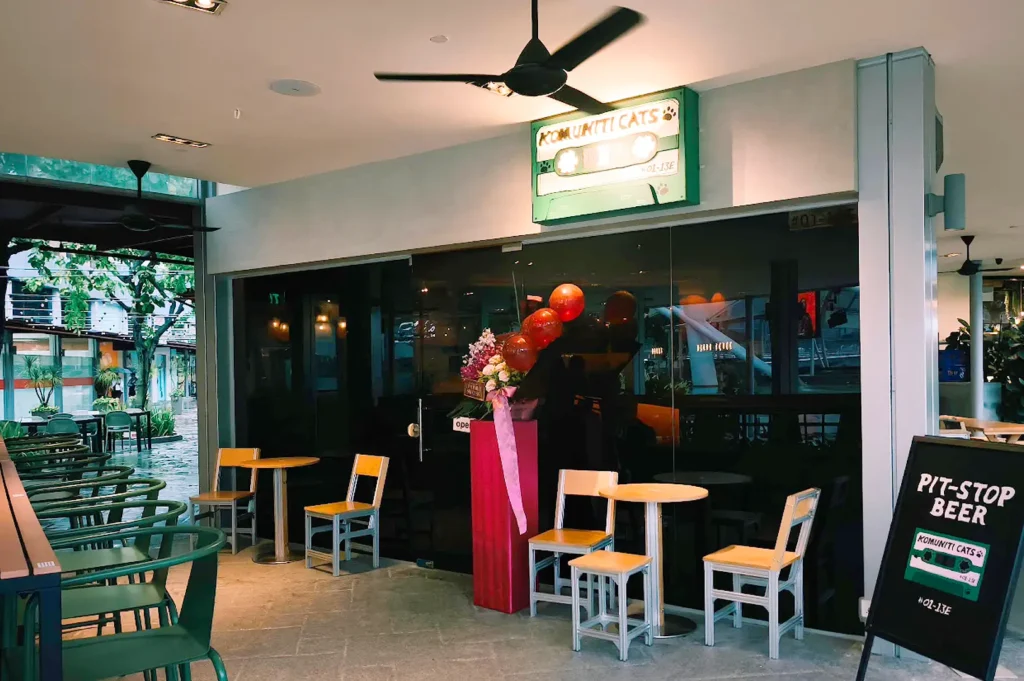
People who describe finding Komuniti Cats usually mention the same landmark: a large cassette-tape sign marked with paw prints. It’s a playful thing to look for at the Esplanade, a stretch of the city better known for concert halls and the bay. The sign marks a bar with a clear purpose. It pours Singapore’s independent breweries, with a few regional beers alongside, near the water. This komuniti cats review looks at why that focus matters and where the plan still feels unfinished.
Inside Komuniti Cats
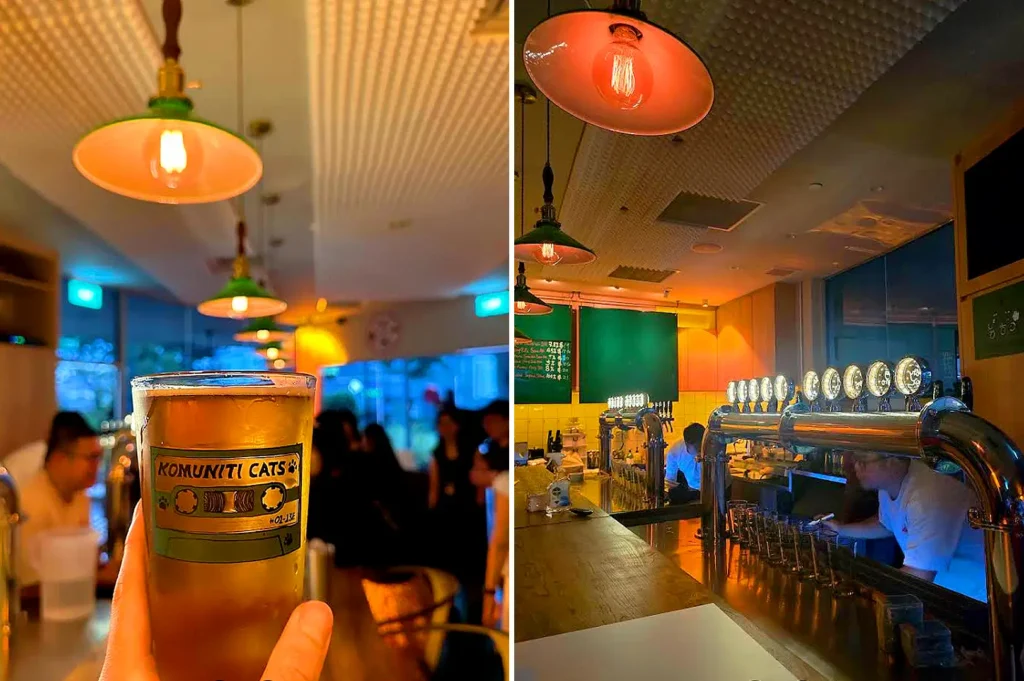
Komuniti Cats sits in the Esplanade Annexe in Downtown Core. It’s an independent craft beer bar, and its team is associated with Locality Craft Beers and AfterJourney. That link is the most useful thing to know before you go.
The people behind it come from smaller, community-minded beer bars. Here, that same loyalty to local brewing moves to a far more prominent address. The space is described as casual, with a covered terrace that faces the waterfront.
In my reading of the craft beer Singapore scene, that’s an interesting shift. A bar devoted to small producers would usually sit somewhere quieter. This one sits where concertgoers and visitors already pass.
What Komuniti Cats Pours
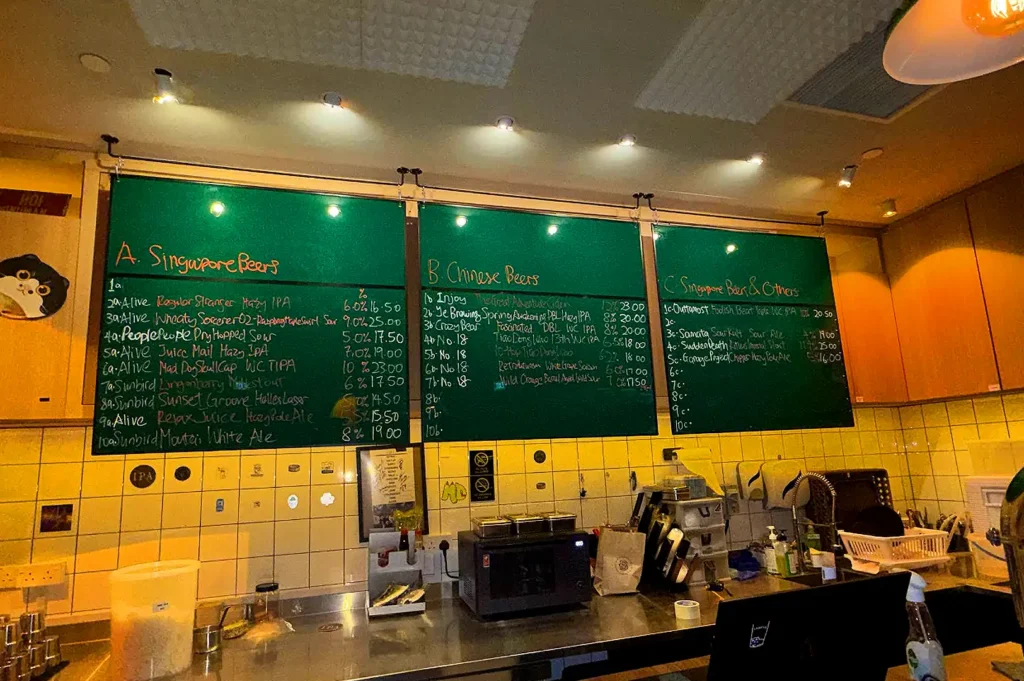
Public listings point to capacity for up to 20 draught taps. Treat that number as a ceiling, not a promise. The taps rotate, so fewer beers may be pouring on any given night.
The emphasis falls on Singapore’s independent breweries, with selected regional beers beside them. That narrower lens is the point. You don’t come here for a world tour of styles. You come to see what small local brewers are making right now.
Past check-ins give a sense of the bar’s taste:
- Outtamost Brewery: First Crush and Unbreak My Heart
- Sunbird Brewing Company: Breezy Summer NEIPA and Island Breeze White Ale
- West Coast Brewing: Starwatcher
None of these is guaranteed to be on when you arrive. They’re a record of what the bar has poured, not a fixed menu.
The two Sunbird styles still say something useful. A New England IPA generally leans on a hazy, soft body and juicy hop aroma, with gentler bitterness than many IPAs. A white ale is usually lighter and often brewed with wheat. Either style makes sense as an opening glass on a warm evening.
Here’s how I’d approach the board. I’d read the full tap list before ordering anything. Then I’d ask which local breweries are pouring that night and start with the one I know least. If a regional beer is on, I’d order it next to a Singapore beer and compare the two. A rotating list rewards curiosity more than loyalty to one favorite.
The Setting and the Drinking Experience
The covered, waterfront-facing terrace is the bar’s clearest advantage. Cover matters in Singapore. A sudden downpour doesn’t have to end the evening.
The location also changes who might walk in. Komuniti Cats suits a drink before or after an Esplanade performance, which few beer bars can offer. A neighborhood taproom depends on regulars. A bar here can also welcome someone with a ticket in their pocket and an hour to spare.
Food is the main practical uncertainty. The available venue information does not establish a regular kitchen menu, although an earlier listing indicated that a food offering was being developed. Anyone planning dinner alongside their beer should confirm the current options before visiting.
That uncertainty matters most for groups organising a complete evening around one venue. Until a regular menu can be confirmed, Komuniti Cats is easier to recommend for its beer selection and waterfront setting than as a guaranteed dinner destination.
What Komuniti Cats Could Do Better
The honest weak spot is predictability. Regular food availability is uncertain, and the rotating selection means you can’t count on any specific beer being there.
For a casual drinker, that’s manageable. For someone crossing the island to try one particular Sunbird or Outtamost release, it’s a real risk.
The food question weighs more. Without a confirmed menu, a group can’t easily treat Komuniti Cats as a full night out. Hungry drinkers will need a second stop. Whereas Craft Beer by Ki-setsu at Fortune Centre pairs a compact beer range with a full Japanese izakaya kitchen, Komuniti Cats puts its weight on independent and regional brewing in a waterfront setting.
Who Should Visit
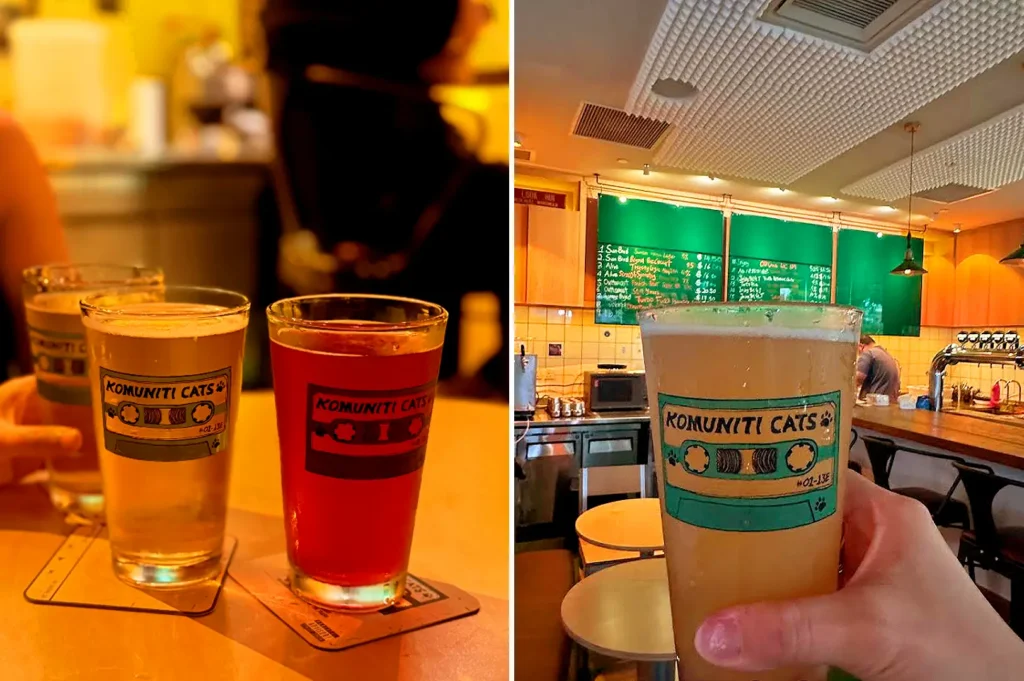
Komuniti Cats suits drinkers who follow independent breweries and enjoy discovering what’s new on a tap list. It also works for Esplanade audiences who want a drink before or after a performance. Groups looking for a casual waterfront round will find it a natural fit.
If you want a guaranteed meal or a beer you already know you love, another singapore craft beer bar may serve you better. For more options, browse the rest of the craft beer bars we rate in Singapore.
Practical Details and Verdict
- Address: #01-13E, Esplanade Annexe, 8 Raffles Avenue, Singapore 039802
- Hours: Listed as daily, 4pm to 1am. Confirm before you go.
- Beer: Up to 20 rotating draught taps, focused on Singapore independents plus regional picks
- Food: Not confirmed. Check ahead or eat beforehand.
- Prices: Check the board on arrival.
So, is Komuniti Cats worth finding? Yes, if the beer is your reason for going. It brings the instincts of smaller community bars to a far more public stretch of waterfront. Arrive curious, arrive fed, and let the tap list decide.

Thai Cuisine in Singapore: Finding the Best Authentic Flavors
Eat Drink Asia Team | December 9, 2025
The unmistakable aroma of lemongrass, galangal, and fiery spices mingles with the bustling night air in Singapore, setting the stage for a dining experience that wakes the soul and tantalizes the senses. Thai cuisine in Singapore has become an essential part of the city’s culinary landscape, offering a complete blend of vibrant flavor, tangy notes,…

The Ultimate Guide to Thai Food: Flavors, Traditions, and Culinary Adventures
Dio Asahi | December 6, 2025
Thai cuisine is one of the world’s most beloved and complex culinary traditions, captivating food enthusiasts globally with its masterful balance of flavors and vibrant presentations. From bustling Bangkok street stalls to high-end international restaurants, Thai food has become a global phenomenon that evolves while maintaining its authentic roots. What sets Thai cuisine apart from…
-
How to Drink Sake: Your Guide to Enjoying Japanese Sake Wine
Eda Wong | December 5, 2025
As Japan’s national beverage, this traditional sake is present at celebrations, quiet dinners, and spiritual offerings, weaving itself into the very fabric of daily life and reflecting Japan’s deep-rooted cultural heritage. Yet, for many outside of Japan, it remains a delightful mystery. You might find yourself wondering, how do you drink sake properly to unlock…
-
What Is Sashimi? A Guide to Raw Fish, Sliced Raw Fish, and Japanese Seafood
Eat Drink Asia Team | December 3, 2025
Sashimi is one of the clearest ways to understand Japanese cuisine because there is very little to hide behind. At its simplest, sashimi is sliced raw fish or seafood served without sushi rice, usually with soy sauce, wasabi, and simple garnishes such as daikon radish. But the dish is not just “raw fish on a…

Understanding Sake Alcohol Content: A Complete Guide to ABV and Flavor
Eda Wong | December 2, 2025
When exploring Japanese sake, many wonder about its grades and complex flavors. Sake’s unique profile offers remarkable versatility, enjoyed in various serving styles and paired with diverse dishes. One fundamental aspect is sake alcohol content. Is sake stronger than wine? How does its alcohol by volume (ABV) compare to beer? The answer is nuanced. Understanding…
-
Japanese Sake: The Complete Guide to Japan’s Traditional Rice Wine
Dio Asahi | November 29, 2025
Japanese Sake: The Complete Guide to Japan’s Traditional Rice Wine While sake has been Japan’s national beverage for over a millennium, its popularity across Asia is at an all-time high. Rooted in Japan’s traditional brewing methods and centuries-old origins. It symbolizes Japan’s cultural heritage and craftsmanship. Understanding this complex brewed alcoholic beverage opens doors to…

Best Japanese Foods in Japan: The Must-Try Dishes
Eda Wong | November 27, 2025
Japan’s culinary world extends far beyond well-known sushi and ramen, revealing a rich variety of regional specialties cherished by locals. While many travelers stick to popular Japanese foods in tourist areas, authentic flavors are best discovered in neighborhood markets, family-run eateries, and seasonal menus reflecting centuries of Japanese cooking tradition. Understanding Japanese cuisine requires more…
-
Japanese Food in Japan: The Ultimate Guide to Authentic Culinary Experiences
Eat Drink Asia Team | November 25, 2025
Experiencing Japanese food in Japan is fundamentally different from eating Japanese cuisine anywhere else. While sushi restaurants and ramen shops have spread globally, the authentic flavors, techniques, and cultural context of Japanese food can only be fully appreciated in its homeland. From meticulously selecting ingredients at peak freshness to centuries-old traditions shaping every meal, eating…
-
Food in Japan: A Complete Guide to Japanese Cuisine and Culinary Culture
Eda Wong | November 22, 2025
The gentle steam rising from a bowl of miso soup carries more than just the earthy aroma of fermented soybeans-it carries centuries of Japanese culture and culinary wisdom. When you eat in Japan, you’re not simply consuming a meal; you’re participating in a ritual that connects you to the seasons, the land, and a philosophy…
-
Ramune Marble Soda: History and Cultural Meaning of Japan’s Iconic Marble Soda
Dio Asahi | November 20, 2025
Among Japan’s beloved fizzy drinks, none evoke nostalgia and uniqueness quite like Ramune marble soda. Instantly recognizable by its quirky Codd neck bottle and glass marble seal, Ramune soda is an essential part of Japanese summer, cherished by generations for its refreshing taste and signature pop sound. This marble soda remains a staple at summer…