By Dio Asahi for Eat Drink Asia.
The lid comes off, and the steam rises first.
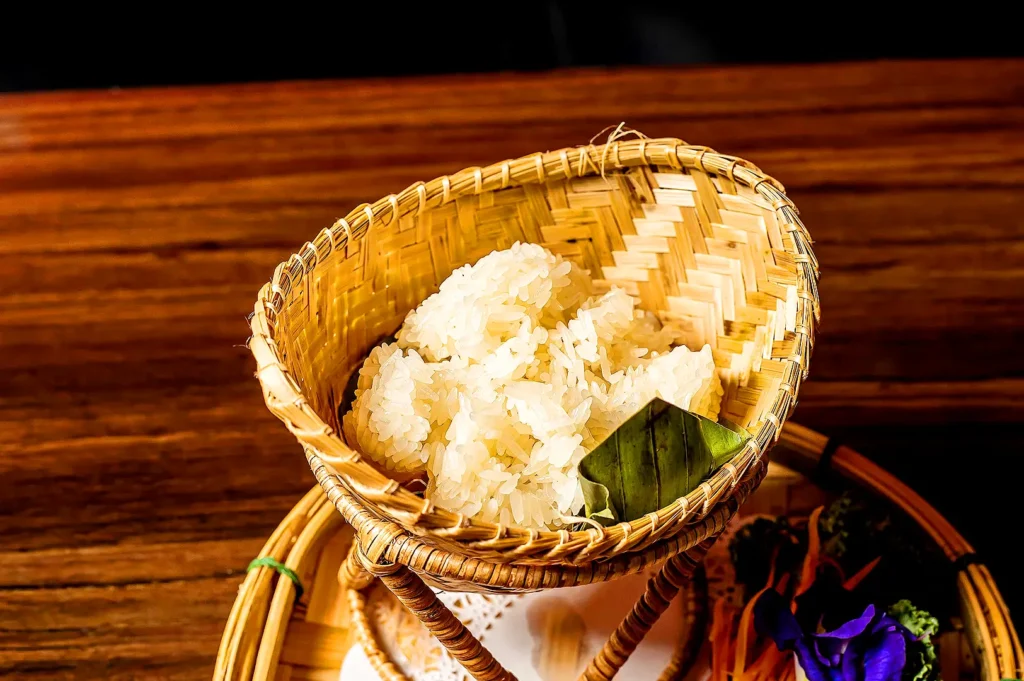
It’s a warm afternoon in Chiang Mai, and on the table sits a small woven bamboo basket, still holding the heat of the pot it came from. Someone’s grandmother lifts the top and sets it aside without looking. Inside, the sticky rice waits — pale, glossy, faintly sweet in smell. Fingers reach in, pinch off a lump, roll it once against the palm. Nobody uses a spoon. The rice holds its shape, warm and pliant, ready to dip into whatever sits beside it. The basket breathes gently, and the meal begins.
Chiang Mai’s food memory is impossible to separate from bowls of khao soi, the northern Thai curry noodle soup that turns coconut, chilli, and crisp noodles into something deeply local.
This basket is called a krathip — say it roughly as “gra-TEEP.” It’s a container woven from thin strips of bamboo, small enough to hold in two hands, made specifically for khao niao, the glutinous sticky rice of the north and northeast. The weaving isn’t decoration. The tight bamboo walls let the rice keep its warmth while letting just enough air pass through, so the grains stay soft and moist rather than turning to paste or drying out. The rice is steamed, not boiled — soaked for hours, then cooked over rising steam in a conical basket, then tipped warm into the krathip to rest. A lid keeps the heat in. The whole thing works the way it always has, without a single moving part.
In the north, a meal without khao niao feels unfinished. The krathip sits in the middle of the table, shared, passed, opened and closed as people eat. You take a little, then a little more, using the rice as both spoon and plate — pinching it, dipping it into nam prik, scooping up grilled meat or sour soup. There’s an unhurried rhythm to it. The basket asks you to slow down, to reach with your hands, to eat the way the people beside you are eating. It’s a communal object more than a personal one. One basket, many hands, the lid going back on between mouthfuls so the last grains stay as warm as the first.
You see the plastic tubs now, of course. Cheaper, lighter, easy to stack behind a stall or send out with a takeaway order. They do the job. But sticky rice sealed in plastic sweats and turns gummy, the grains clinging in a way the bamboo never allowed. The krathip lets the rice keep its dignity. That a woven basket still outperforms the convenient thing says something quiet about why certain old tools survive — not out of nostalgia, but because they simply work better at the thing they were made for.
The lid goes back on. The rice keeps its warmth a while longer, waiting for the next hand. Some objects hold food. This one holds a way of eating, too — and it has never needed to be anything more than what it is.

Thai Green Milk Tea: The Complete Guide to Thailand’s Refreshing Emerald Delight
Eda Wong | December 13, 2025
Picture a tall glass filled with crushed ice, its emerald-green contents swirled with ribbons of creamy white milk—this is thai green milk tea, one of Southeast Asia’s most visually striking and refreshing drinks. Known locally as cha khiao nom yen, this popular drink has captured hearts across Asia and beyond with its distinctive pale green…

Best Thai Singapore: Discover the Art of Authentic Pad Thai
Dio Asahi | December 11, 2025
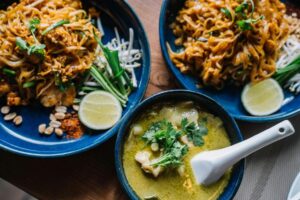
In Singapore, a city that celebrates a universe of flavors, the magnetic pull of Thai cuisine is undeniable. From bustling food courts to elegant dining rooms, the kingdom’s culinary ambassadors have firmly planted their flag. When considering the best Thai food, it’s impossible to overlook how integral Pad Thai is to the local Thai food…
-
Thai Cuisine in Singapore: Finding the Best Authentic Flavors
Eat Drink Asia Team | December 9, 2025
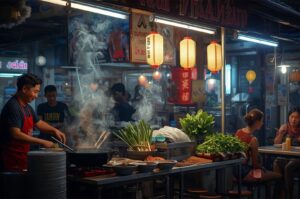
The unmistakable aroma of lemongrass, galangal, and fiery spices mingles with the bustling night air in Singapore, setting the stage for a dining experience that wakes the soul and tantalizes the senses. Thai cuisine in Singapore has become an essential part of the city’s culinary landscape, offering a complete blend of vibrant flavor, tangy notes,…
-
The Ultimate Guide to Thai Food: Flavors, Traditions, and Culinary Adventures
Dio Asahi | December 6, 2025
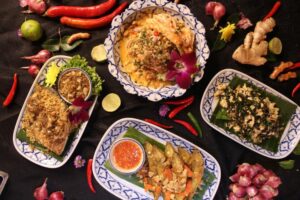
Thai cuisine is one of the world’s most beloved and complex culinary traditions, captivating food enthusiasts globally with its masterful balance of flavors and vibrant presentations. From bustling Bangkok street stalls to high-end international restaurants, Thai food has become a global phenomenon that evolves while maintaining its authentic roots. What sets Thai cuisine apart from…
-
How to Drink Sake: Your Guide to Enjoying Japanese Sake Wine
Eda Wong | December 5, 2025
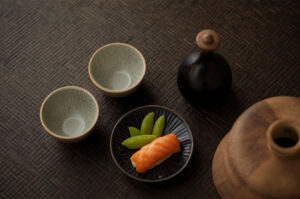
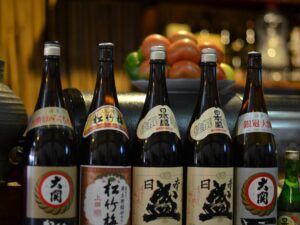
As Japan’s national beverage, this traditional sake is present at celebrations, quiet dinners, and spiritual offerings, weaving itself into the very fabric of daily life and reflecting Japan’s deep-rooted cultural heritage. Yet, for many outside of Japan, it remains a delightful mystery. You might find yourself wondering, how do you drink sake properly to unlock…
-
What Is Sashimi? A Guide to Raw Fish, Sliced Raw Fish, and Japanese Seafood
Eat Drink Asia Team | December 3, 2025
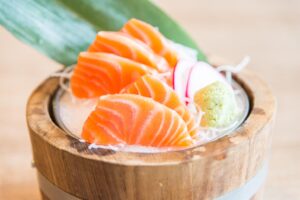
Sashimi is one of the clearest ways to understand Japanese cuisine because there is very little to hide behind. At its simplest, sashimi is sliced raw fish or seafood served without sushi rice, usually with soy sauce, wasabi, and simple garnishes such as daikon radish. But the dish is not just “raw fish on a…

Understanding Sake Alcohol Content: A Complete Guide to ABV and Flavor
Eda Wong | December 2, 2025
When exploring Japanese sake, many wonder about its grades and complex flavors. Sake’s unique profile offers remarkable versatility, enjoyed in various serving styles and paired with diverse dishes. One fundamental aspect is sake alcohol content. Is sake stronger than wine? How does its alcohol by volume (ABV) compare to beer? The answer is nuanced. Understanding…
-
Japanese Sake: The Complete Guide to Japan’s Traditional Rice Wine
Dio Asahi | November 29, 2025
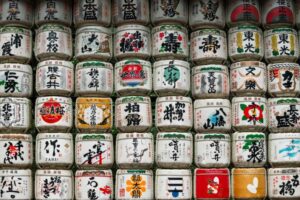
Japanese Sake: The Complete Guide to Japan’s Traditional Rice Wine While sake has been Japan’s national beverage for over a millennium, its popularity across Asia is at an all-time high. Rooted in Japan’s traditional brewing methods and centuries-old origins. It symbolizes Japan’s cultural heritage and craftsmanship. Understanding this complex brewed alcoholic beverage opens doors to…

Best Japanese Foods in Japan: The Must-Try Dishes
Eda Wong | November 27, 2025
Japan’s culinary world extends far beyond well-known sushi and ramen, revealing a rich variety of regional specialties cherished by locals. While many travelers stick to popular Japanese foods in tourist areas, authentic flavors are best discovered in neighborhood markets, family-run eateries, and seasonal menus reflecting centuries of Japanese cooking tradition. Understanding Japanese cuisine requires more…
-
Japanese Food in Japan: The Ultimate Guide to Authentic Culinary Experiences
Eat Drink Asia Team | November 25, 2025
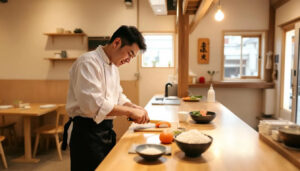
Experiencing Japanese food in Japan is fundamentally different from eating Japanese cuisine anywhere else. While sushi restaurants and ramen shops have spread globally, the authentic flavors, techniques, and cultural context of Japanese food can only be fully appreciated in its homeland. From meticulously selecting ingredients at peak freshness to centuries-old traditions shaping every meal, eating…