By Dio Asahi for Eat Drink Asia.
The lid comes off, and the steam rises first.
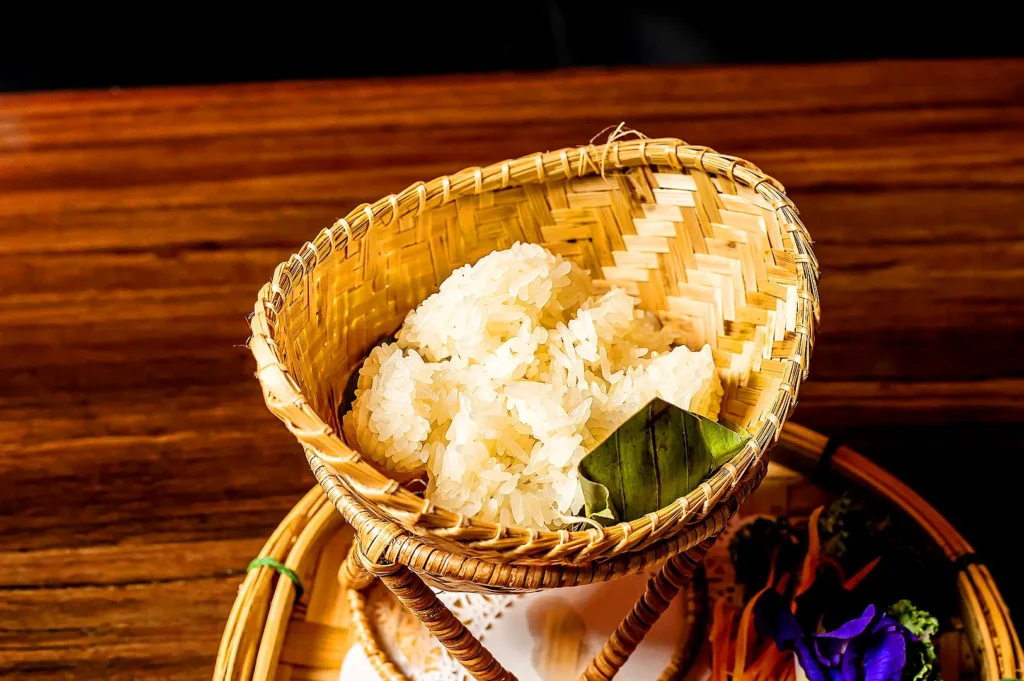
It’s a warm afternoon in Chiang Mai, and on the table sits a small woven bamboo basket, still holding the heat of the pot it came from. Someone’s grandmother lifts the top and sets it aside without looking. Inside, the sticky rice waits — pale, glossy, faintly sweet in smell. Fingers reach in, pinch off a lump, roll it once against the palm. Nobody uses a spoon. The rice holds its shape, warm and pliant, ready to dip into whatever sits beside it. The basket breathes gently, and the meal begins.
Chiang Mai’s food memory is impossible to separate from bowls of khao soi, the northern Thai curry noodle soup that turns coconut, chilli, and crisp noodles into something deeply local.
This basket is called a krathip — say it roughly as “gra-TEEP.” It’s a container woven from thin strips of bamboo, small enough to hold in two hands, made specifically for khao niao, the glutinous sticky rice of the north and northeast. The weaving isn’t decoration. The tight bamboo walls let the rice keep its warmth while letting just enough air pass through, so the grains stay soft and moist rather than turning to paste or drying out. The rice is steamed, not boiled — soaked for hours, then cooked over rising steam in a conical basket, then tipped warm into the krathip to rest. A lid keeps the heat in. The whole thing works the way it always has, without a single moving part.
In the north, a meal without khao niao feels unfinished. The krathip sits in the middle of the table, shared, passed, opened and closed as people eat. You take a little, then a little more, using the rice as both spoon and plate — pinching it, dipping it into nam prik, scooping up grilled meat or sour soup. There’s an unhurried rhythm to it. The basket asks you to slow down, to reach with your hands, to eat the way the people beside you are eating. It’s a communal object more than a personal one. One basket, many hands, the lid going back on between mouthfuls so the last grains stay as warm as the first.
You see the plastic tubs now, of course. Cheaper, lighter, easy to stack behind a stall or send out with a takeaway order. They do the job. But sticky rice sealed in plastic sweats and turns gummy, the grains clinging in a way the bamboo never allowed. The krathip lets the rice keep its dignity. That a woven basket still outperforms the convenient thing says something quiet about why certain old tools survive — not out of nostalgia, but because they simply work better at the thing they were made for.
The lid goes back on. The rice keeps its warmth a while longer, waiting for the next hand. Some objects hold food. This one holds a way of eating, too — and it has never needed to be anything more than what it is.

When the Izakaya Becomes the Plan: Izakaya Singapore Top Picks for After-Work Reset
Dio Asahi | January 28, 2026
January 28, 2026 | Dio Asahi Last updated: October 12, 2026 As you step behind the humble noren curtain, you’re greeted by glowing lanterns, sizzling charcoal-grilled skewers, and warm welcomes. This is izakaya, Japan’s casual pub, a vibrant part of Singapore’s dining scene. More than just yakitori and sake, izakayas offer a lively setting for social…
-
Yuja Tea: Korea’s Traditional Citron Tea
Dio Asahi | January 27, 2026
The golden, aromatic steam rising from a cup of yuja tea carries centuries of Korean tradition and wellness wisdom. This caffeine-free citrus beverage has warmed Korean hearts through countless winters, offering both comfort and powerful health benefits in every sip. Made from the Korean citron known as yuja fruit, this simple Korean tea represents one…
-
The Global Phenomenon of Korean Instant Noodle: A Cultural and Culinary Journey
Eda Wong | January 24, 2026
In the high-octane streets of South Korea, where the “pali-pali” (hurry-hurry) culture defines the pace of life, one dish stands as the ultimate equalizer of speed and satisfaction: Korean ramyeon. While the world often uses the terms ramen and ramyeon interchangeably, the Korean version is a distinct entity. It is not merely a quick snack…
-
Traditional Ramyeon: The Soulful Heart of Korean Noodle Culture
Eat Drink Asia Team | January 20, 2026
In the bustling culinary landscape of South Korea, few comfort foods can match the satisfaction of a steaming bowl of ramyeon. While outside of Korea, “ramyeon” often brings to mind Korean instant noodles or instant ramen, true ramyeon Korean style refers to the artful, freshly prepared noodle soup enjoyed in homes and at local restaurants…
-
The Heart of the Korean Noodles: History and Texture
Eda Wong | January 17, 2026
In Korea, a bowl of noodles is far more than a simple dish; it is a cultural anchor that has weathered centuries of change. For generations, the length of the strand has symbolized a long and prosperous life, making Korean noodles a staple at birthdays, weddings, and the milestone 60th birthday celebration known as hwangap….
-
Preserving the ‘Big Bowl’ Tradition with Pen Cai Delivery in the Age of Doorstep Dining
Eat Drink Asia Team | January 15, 2026
Modern Festive Menu: Bringing the Big Bowl Home There is a special, undeniable magic to the Chinese New Year reunion dinner. For many families, Chinese New Year 2026 is another chance to gather loved ones at the table and celebrate with a glorious pen cai—sometimes called the “big bowl feast”—overflowing with premium ingredients and festive…
-
Sencha: Traditions, Flavors, and the Essence of Japanese Tea
Eat Drink Asia Team | January 15, 2026
When people around the world think of Japanese tea, images of tranquil tea ceremonies in small rooms or frothy bowls of matcha often come to mind. Yet, the reality of tea drinking in Japan is much broader, woven deeply into the culture and daily habits. For the vast majority, sencha is the beloved tea that…
-
The Best Restaurants Tokyo Are Rarely the Ones You Plan For
Eda Wong | January 12, 2026
Tokyo, Japan’s capital, does not reward urgency. It rewards return. On my first visit, I chased what everyone told me were the best restaurants Tokyo had to offer. I spent weeks highlighting maps, bookmarking digital “must-eat” lists, and refreshing reservation pages until my eyes blurred. I thought that by conquering the top-tier establishments, I would…
-
Japan and Food: Culinary Harmony – The Deep Connection Between Japanese Food and Culture
Eat Drink Asia Team | January 11, 2026
When it comes to Japan and food, the two are intertwined in ways that captivate taste buds and awaken the senses. Japanese cuisine stands as one of the world’s most revered traditions—more than nourishing meals, it is an art reflecting centuries of philosophy and a window into Japanese culture itself. Every bowl of miso soup,…
-
The Verdant Cup: A Celebration of Green Tea in Japan
Eda Wong | January 10, 2026
In Japan, green tea is much more than a beverage. It marks a moment of pause, hospitality, and tradition. The story of green tea in Japan weaves through centuries of culture, artistry, and daily life—bridging ancient rituals like the Japanese tea ceremony to everyday meals enjoyed at home. The origins and beginning of Japanese tea…