By Dio Asahi for Eat Drink Asia.
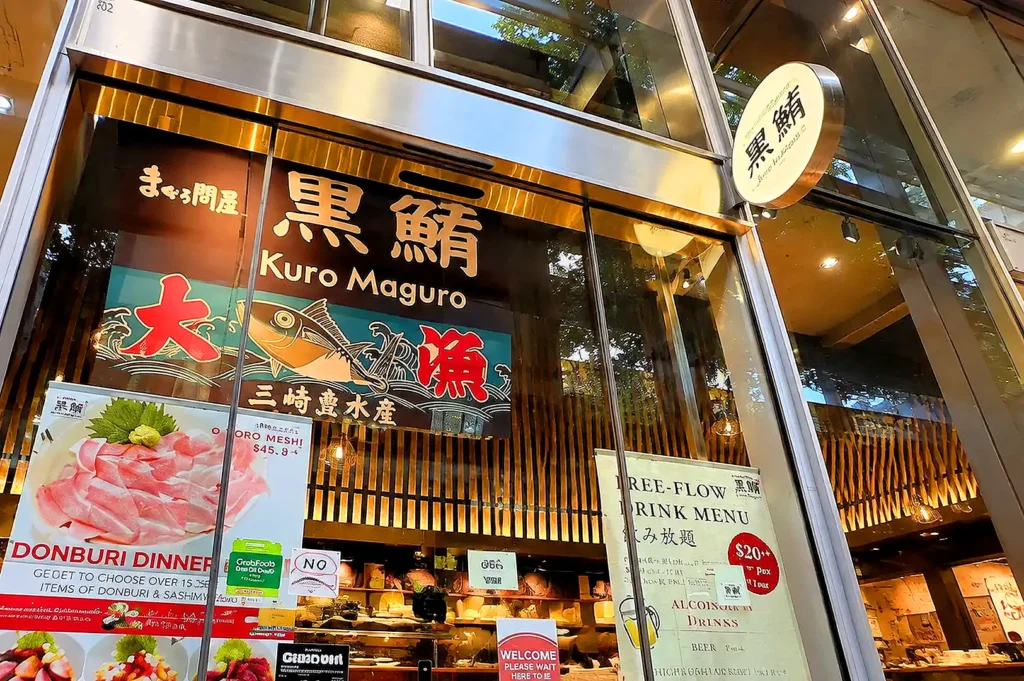
It’s a few minutes past noon at Guoco Tower, and the lunch crowd moves in lanyards and quick steps. Inside Kuro Maguro, the noise drops a little. At the counter, a man in a white apron draws his knife through a block of deep red tuna in one long stroke. He lifts the slice and lays it on rice without looking up. Beside me, an office worker sets her phone face down. She doesn’t seem to notice she’s done it.
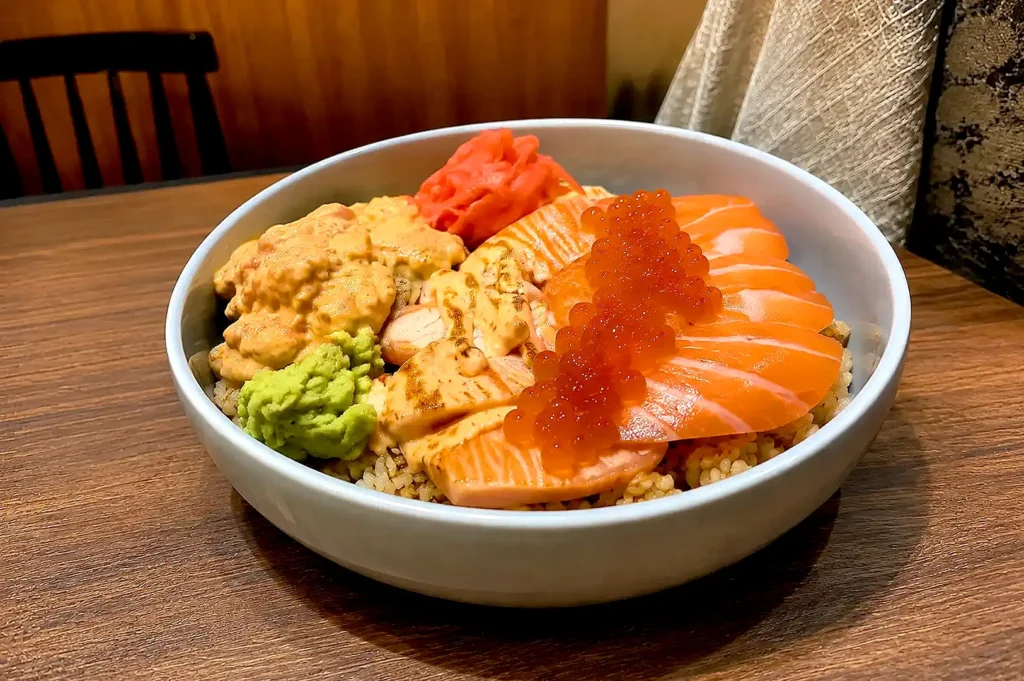
The bowl arrives plainly. The rice is still faintly warm, seasoned with vinegar so it tastes bright rather than sweet. Over it lies tuna in several shades. The leaner cuts, the akami, are a dark garnet color. They’re firm and clean, closer to the sea than to anything rich. The fattier slices are paler and marbled, and they soften almost as soon as they touch my tongue. I reach for the soy sauce out of habit, then put it back.
This is a chirashi don built around one fish. Some bowls carry salmon, ikura, or prawn, but those feel like guests. The tuna is the reason for the bowl. Kuro Maguro is connected to Megumi F&S, the group behind Maguro Donya, and that lineage shows in how the fish is handled. Each cut is sliced to show what that part of the tuna does: lean against fatty, firm against soft. Nothing is chopped small and hidden under sauce or mayonnaise.
Lunch in the CBD usually asks for speed. People eat between meetings, often from a takeaway box, sometimes at a desk with a spreadsheet still open. Omakase sits at the other end. It’s slow and costly, and it’s usually saved for evenings with time to spare. Kuro Maguro lands somewhere in between. The diners at this counter don’t want a performance. They want precision they can finish before the next call. That means a bowl, a seat, and a fish that’s been treated with care before they head back to the office.
For more bowls that fit that middle ground, our guide to scattered sushi offers a few other places to start.
There’s a tension in that. Singapore loves abundance. Our plates fill up with three meats, two vegetables, and a fried egg on top, just in case. A good meal often means a full one. Next to that, a bowl that leans on a single ingredient can look almost spare, even a little stubborn.
But I’ve come to think the restraint is the point. When there’s only one thing to pay attention to, you pay attention. You notice that the lean slice tastes faintly of iron. You notice that the fatty slice leaves a cool richness that lingers after the rice is gone. In a lunch hour built for distraction, that feels like a small, quiet discipline.
I eat the last of the akami slowly. The woman beside me has already left. Her bowl is empty except for a single grain stuck to the rim. Behind the counter, the chef is cutting again with the same long stroke.
Outside, the lift lobby is full of voices. For a few minutes, though, lunch was just rice, vinegar, and tuna. It was enough.

The Eternal Hearth: A Journey Through the Soul of Indian Foods Vegetarian Traditions
Dio Asahi | February 3, 2026
In the vibrant tapestry of global gastronomy, few cultures have elevated the plant-based plate to an art form quite like India. While much of the world has recently turned toward meat alternatives for health or environmental reasons, Indian cuisine has been centered on the vegetable for millennia. This isn’t merely a dietary choice; it is…
-
The Essence of Jeju Citron Tea: A Distinctive Profile of Yuja Tea in Korea
Dio Asahi | January 31, 2026
Imagine sitting in a quiet, sun-drenched teahouse overlooking the dramatic volcanic coastline of Jeju Island. The steam rising from your cup carries an aroma that is at once familiar and yet entirely new—a version of Korean citron tea, or yuja cha, that tastes of sea salt, volcanic soil, and generations of island tradition. As you…
-
Korean Citron Tea: Health Benefits and Wellness Secrets
Eat Drink Asia Team | January 29, 2026
As the seasons change and a chill enters the air, many of us seek out comforting rituals to support our well-being. Imagine wrapping your hands around a steaming cup of Korean citron tea—also known as yuja-cha—its bright, citrus aroma soothing and revitalizing with every sip. More than just a winter treat, Korean citron tea is…
-
When the Izakaya Becomes the Plan: Izakaya Singapore Top Picks for After-Work Reset
Dio Asahi | January 28, 2026
January 28, 2026 | Dio Asahi Last updated: October 12, 2026 As you step behind the humble noren curtain, you’re greeted by glowing lanterns, sizzling charcoal-grilled skewers, and warm welcomes. This is izakaya, Japan’s casual pub, a vibrant part of Singapore’s dining scene. More than just yakitori and sake, izakayas offer a lively setting for social…
-
Yuja Tea: Korea’s Traditional Citron Tea
Dio Asahi | January 27, 2026
The golden, aromatic steam rising from a cup of yuja tea carries centuries of Korean tradition and wellness wisdom. This caffeine-free citrus beverage has warmed Korean hearts through countless winters, offering both comfort and powerful health benefits in every sip. Made from the Korean citron known as yuja fruit, this simple Korean tea represents one…
-
The Global Phenomenon of Korean Instant Noodle: A Cultural and Culinary Journey
Eda Wong | January 24, 2026
In the high-octane streets of South Korea, where the “pali-pali” (hurry-hurry) culture defines the pace of life, one dish stands as the ultimate equalizer of speed and satisfaction: Korean ramyeon. While the world often uses the terms ramen and ramyeon interchangeably, the Korean version is a distinct entity. It is not merely a quick snack…
-
Traditional Ramyeon: The Soulful Heart of Korean Noodle Culture
Eat Drink Asia Team | January 20, 2026
In the bustling culinary landscape of South Korea, few comfort foods can match the satisfaction of a steaming bowl of ramyeon. While outside of Korea, “ramyeon” often brings to mind Korean instant noodles or instant ramen, true ramyeon Korean style refers to the artful, freshly prepared noodle soup enjoyed in homes and at local restaurants…
-
The Heart of the Korean Noodles: History and Texture
Eda Wong | January 17, 2026
In Korea, a bowl of noodles is far more than a simple dish; it is a cultural anchor that has weathered centuries of change. For generations, the length of the strand has symbolized a long and prosperous life, making Korean noodles a staple at birthdays, weddings, and the milestone 60th birthday celebration known as hwangap….
-
Preserving the ‘Big Bowl’ Tradition with Pen Cai Delivery in the Age of Doorstep Dining
Eat Drink Asia Team | January 15, 2026
Modern Festive Menu: Bringing the Big Bowl Home There is a special, undeniable magic to the Chinese New Year reunion dinner. For many families, Chinese New Year 2026 is another chance to gather loved ones at the table and celebrate with a glorious pen cai—sometimes called the “big bowl feast”—overflowing with premium ingredients and festive…
-
Sencha: Traditions, Flavors, and the Essence of Japanese Tea
Eat Drink Asia Team | January 15, 2026
When people around the world think of Japanese tea, images of tranquil tea ceremonies in small rooms or frothy bowls of matcha often come to mind. Yet, the reality of tea drinking in Japan is much broader, woven deeply into the culture and daily habits. For the vast majority, sencha is the beloved tea that…