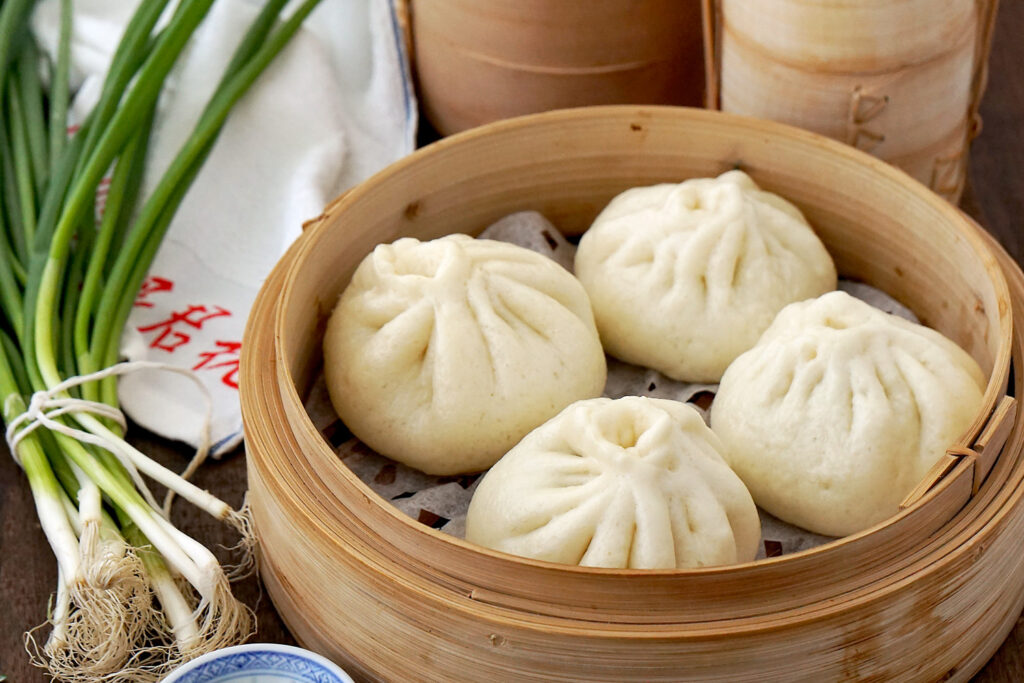
The first thing I noticed was the steam.
It rose in soft, continuous bursts from stacked bamboo baskets, drifting into the cold Beijing morning like breath made visible. The vendor lifted each lid with practiced rhythm, a quick tilt, a release of heat, then the faint scent of yeast, pork, and warm flour rolling outward. People moved in quietly, almost instinctively, drawn by that smell. I remember standing there with numb fingers, watching as hands reached for paper bags, each one quickly filled with plump, pale baozi that still trembled slightly from the heat. Someone bit into one beside me, and the sound, soft dough giving way, stayed with me longer than the cold.
The baozi itself is deceptively simple. A steamed bun made from wheat dough, filled with seasoned meat or vegetables. But in Beijing, it feels less like a dish and more like a daily rhythm. The ones I watched being made that morning were filled with minced pork, ginger, and Chinese chives, the juices just beginning to seep into the surrounding dough. Each bun was pleated quickly by hand, the folds gathered at the top like a quiet signature. There was no decoration, no attempt to elevate it beyond what it was. It existed in its most honest form, something meant to be eaten quickly, while still hot, on the way to somewhere else.
Discover more about Century-Old Dumpling Techniques here: https://eatdrinkasia.com/century-old-dumpling-techniques/
Baozi belongs to the rhythm of northern China, where wheat has long replaced rice as the staple. The technique of steaming dough stretches back centuries, shaped by both necessity and care. Unlike baked breads, baozi rely on moisture and timing, the balance between heat and fermentation that gives the dough its softness. The fillings shift with region and season, from pork and cabbage to sweet red bean, but the structure remains constant. In that way, baozi reflects something essential in Asian food traditions. Continuity does not depend on sameness. It depends on repetition. The act of folding, steaming, and sharing carries forward even as ingredients evolve.
What stayed with me was not just the taste, though it was quietly satisfying. The dough was soft but structured, the filling slightly sweet from the natural richness of the pork, the warmth spreading slowly through cold hands. It was the precision. The way each bun was folded without hesitation. The way the steam was managed, basket after basket, without waste. There was no sense of performance, no effort to present it as something extraordinary. And yet, everything about it was deliberate.
Standing there, I realised how easily something like baozi can be overlooked. It does not demand attention. It does not try to impress. But in that quiet exchange between vendor and customer, in the transfer of something warm and made by hand into waiting palms, there is a kind of continuity that feels increasingly rare.

Banana Leaf Steam: Why Some Rice Smells Like Home
Eda Wong | July 10, 2026
Steam rises from the pot, and a woman lifts a banana leaf over the open flame, turning it once, twice, until its stiff green softens and the surface goes glossy and pliant. She wipes it down with a damp cloth, then spoons hot rice into its center while the grains still steam. The leaf releases…
-
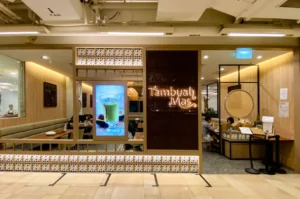
Tambuah Mas Paragon, Delivered: Unique Food Delivery Singapore With Old-School Comfort
Eda Wong | July 9, 2026
I ordered from Tambuah Mas on a rainy Sunday at around 6:15pm, mostly because I wasn’t in the mood to dress up and head into town, but I still wanted a proper meal. Not a sad one-bowl lunch. A real spread. That’s the thing about Tambuah Mas. It’s been around since 1981, serving Indonesian home-style…
-
Toasted Rice Powder: The Dust That Makes Larb Sing
Dio Asahi | July 8, 2026
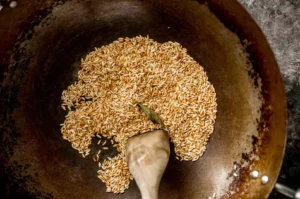
A wok sits over a low flame, and a handful of raw sticky rice slides across its dry surface. No oil, no water—nothing but heat and patience. The grains pale, then blush amber, then deepen toward the color of weak tea. Someone shakes the pan in a slow, even rhythm, listening as much as watching….
-
Ordering Lunch From Co Hai Banh Mi, and Finding Out the Definition of Good Food Delivery
Dio Asahi | July 7, 2026
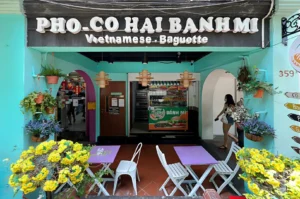
I ordered lunch from Co Hai Banh Mi & Phở Vietnamese Restaurant on a Thursday at 12:08pm, which is probably the worst and most honest time to test delivery food. It was raining lightly, the kind of Singapore lunch rain that makes every rider slower and every office worker hungrier. I had been thinking about…

The “Little Tokyo” Floors Where Dinner Hides Behind Office Lobbies and Quiet Corridors : Orchard Plaza Food
Eat Drink Asia Team | July 4, 2026
Orchard Plaza is one of those buildings we kept walking past before we properly understood it. From the street, it looks more like an office block than a dinner plan. But over repeated visits, usually after work or during odd lunch windows, we’ve found that the real charm sits behind lift doors, quiet corridors, and…
-
Salted Egg, Properly Treated: Sauce, Not Shortcut
Eda Wong | July 3, 2026
By Eda Wong for Eat Drink Asia. The wok station is already hot when the cook lowers the flame. In the narrow back of a Singapore zi char kitchen, the air smells of butter, curry leaves, and the faint mineral edge of salted duck egg. A metal spatula presses cooked yolks through oil until they…
-
Fish Sauce at the Table: The Quiet Work of Fish Sauce
Dio Asahi | July 1, 2026
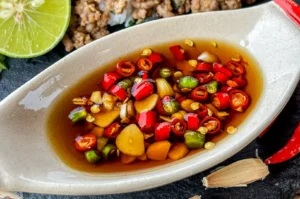
At a narrow lunch table in Bangkok, the bottle arrives before the rice has stopped steaming. It is clear glass, refilled many times, its plastic cap slightly stained from years of fingers and heat. Beside it sits a small bowl of sliced chillies floating in amber liquid, the cut edges pale and sharp. Someone nudges…
-
Eat 3 Bowls Bendemeer Review: A Taiwanese Comfort Food That Delivers
Eda Wong | June 30, 2026
I ordered Eat 3 Bowls @ Bendemeer on a Thursday at about 11:45am, which is my favourite test window for delivery food. It’s close enough to lunch for the kitchen to be in rhythm, but not so late that every rider in the neighbourhood is already fighting the office crowd. By 12:25pm, the bag was…
-
ABC Hokkien Mee After Renovation: What to Expect When the Woks Return
Dio Asahi | June 27, 2026
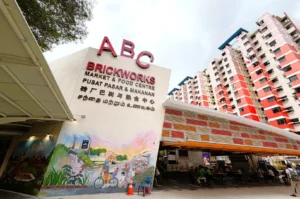
When I first walked past a hawker centre undergoing major renovations, the absolute silence unsettled me. The usual rhythmic scrape of metal spatulas against cast-iron woks was gone, replaced by the hum of construction. It made me realise just how much our culinary journeys are tied to the physical spaces we eat in. Right now,…
-
Claypot Rice Crusts: Listening for the First Crackle
Eda Wong | June 26, 2026
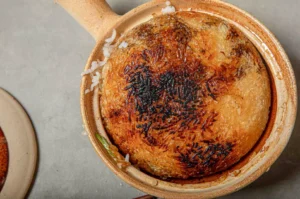
The narrow alleyway in Yau Ma Tei smells of charcoal and dark soy sauce, a thick coastal humidity pressing against the glow of the stoves. An elderly cook stands before a row of blackened sand-clay pots, a long metal tong in his right hand. He does not watch the flames; he listens to them. There…