The damp morning mist still clings to the teakwood houses of Luang Prabang as an elderly cook tends to a glowing charcoal brazier. Sparks jump lightly into the cool air, illuminating the blackened belly of an aluminium pot. Inside, a thick, dark liquid bubbles rhythmically, releasing an incredibly aromatic cloud of charred lemongrass, sweet Thai basil, and the sharp, earthy bite of wood smoke. She gently stirs the mixture with a long wooden spoon, coaxing the dense ingredients into a cohesive, bubbling mass. The heat radiating from the stove offers a quiet comfort against the morning chill, setting an unhurried, deliberate pace for the day’s culinary journey in this quiet Laotian town.
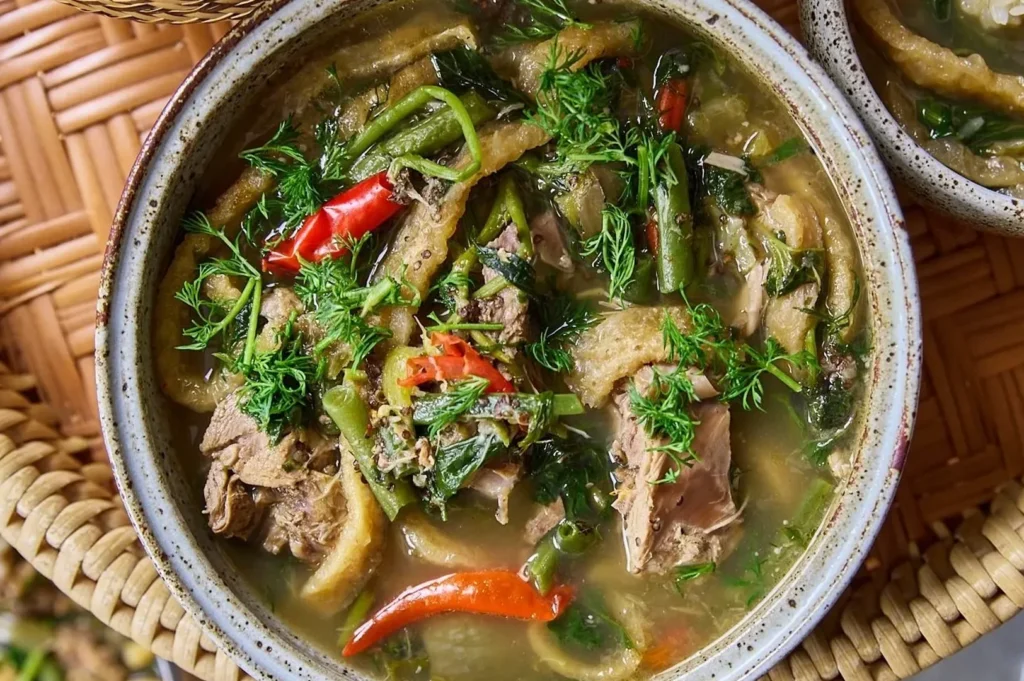
This slow-simmering cauldron holds or lam (pronounced aw-lam), a deeply complex, gently thickened Lao stew that acts as a celebration of flavours from the surrounding jungles. It is not a delicate broth, but rather a robust, heavily textured dish traditionally built on a foundation of buffalo skin, pounded sticky rice, and wild mushrooms. But the defining soul of this dish comes from a uniquely regional ingredient: sakhan (pronounced sah-kahn), a woody, fibrous vine often called forest pepper. Preparing sakhan requires a specific, preservation-focused craft ritual. The tough, knobbly stems are chopped into small, rough cylinders and tossed directly into the boiling stew. Diners do not swallow the wood; instead, they chew on the porous bark, extracting an intense, tingling spiciness that gently numbs the lips, much like Sichuan peppercorns but with a deeper, herbaceous resonance.
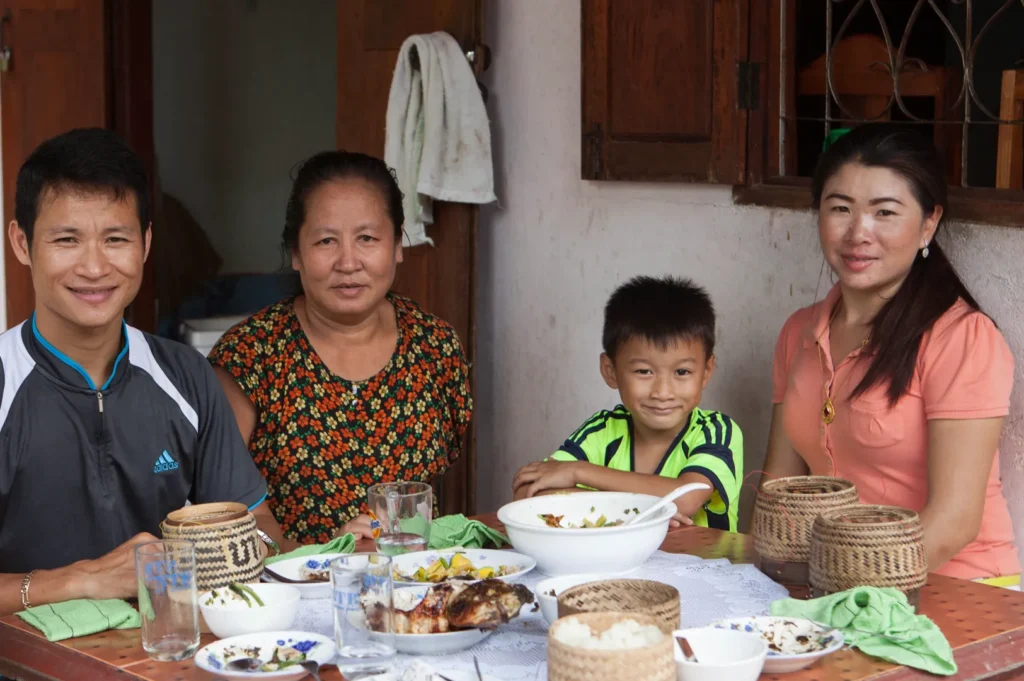
In the ancient capital, gathering around a bowl of or lam is one of the most fundamental shared experiences of local life. It reflects a profound, everyday connection to the Mekong River and the dense green mountains that cradle the city. The stew is rarely eaten alone. It demands the communal tearing of fresh, sticky rice, rolled by hand and dipped into the thick, dark gravy to soak up its earthy richness. Whether served at a quiet family dinner or prepared for a community gathering, this diverse pot of foraged vegetables and meats signals resourcefulness. It represents a way of eating that relies entirely on the immediate landscape, preserving a taste the world often overlooks in favour of more commercialised Southeast Asian curries.
What feels so vital about or lam right now is its stubborn refusal to yield to modern culinary convenience. As Eat Drink Asia highlights, the stew’s slow ritual is inseparable from its regional identity. In a time when fast-paced, trend-setting urban diets favour quick stir-fries and instant pastes, extracting the authentic, nuanced flavour of sakhan demands time-consuming effort. You cannot rush the breakdown of tough vines or the slow thickening of pounded rice. The stew requires a patient surrender to the slow boil. It stands as a quiet act of resistance, maintaining its regional identity by insisting that diners slow down, chew the fibrous bark, and actively engage with their meal rather than mindlessly consuming it.
Setting down an empty bowl, the residual tingling of the forest pepper lingers on the tongue long after the heat of the stew has faded. It is a lingering, visceral reminder of the landscape itself—a beautiful reflection of regional identity that remains deeply rooted in the soil and smoke of Luang Prabang.

Best Buffet Singapore: Where Hotel Buffets Turn Abundance Into Order
Dio Asahi | July 28, 2026
I used to think buffets were about greed. Pile the plate high, go back for thirds, leave feeling like you got your money’s worth. That was the whole game, or so I believed. After years of exploring this city’s hotel buffets, I learned the good ones focus on order. They transform a wall of food…
-
STR TAO Taiwan Cuisine and the Comfort of a Menu That’s Too Big to Be Lazy: Food Places Nearby
Eat Drink Asia Team | July 25, 2026
It was the kind of evening where you don’t want to think too hard about dinner. I’d been walking up East Coast Road, the air still thick from an afternoon shower, when I ducked into a coffeeshop just to sit down. The Bullion Hawker Bar. And tucked among the usual suspects — wanton mee, Hokkien…
-
Sesame Oil at the End: Finishing, Not Flavoring
Eda Wong | July 24, 2026
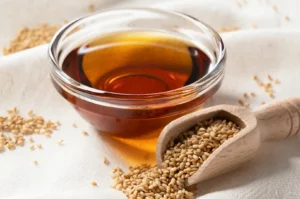
The wok is already off the heat. The greens sit glossy and dark, steam still curling off them. My mother lifts a small bottle, tilts it, and lets a thin line of sesame oil fall across the top. It hisses faintly against the warm leaves, and the smell rises all at once — toasted, nutty,…
-
Long Phung Vietnamese Cuisine, Where the Menu Doesn’t Waste Words: A Good Restaurant Close to Me
Eda Wong | July 23, 2026
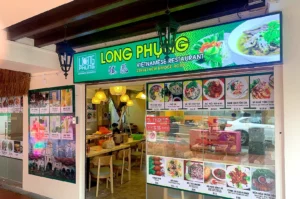
I came in from the rain on a Tuesday, somewhere past 8pm, hungry and a little defeated by the day. The fan was clacking. A queue of three or four people stood near the doorway, dripping. Someone shouted an order toward the kitchen in Vietnamese, and a bowl of pho slid onto a nearby table…
-
The First Squeeze of Calamansi in a Noodle Stall Bowl
Dio Asahi | July 22, 2026
The bowl lands in front of me, broth still trembling from the walk across the stall. Steam rises and fogs the edge of my glasses. To the side sits a small dish of calamansi halves, cut and waiting, their skins slick under the fluorescent light. I pick one up. It gives slightly between my fingers,…
-
Isshin Machi East Coast: Where Comfort Food Turns Addictive
Dio Asahi | July 21, 2026
Let me clear up the first puzzle right away. The name “Isshin Machi” sounds unmistakably Japanese, and I’ll admit I walked in half-expecting ramen and gyoza. What I found instead was a Taiwanese kitchen, plates of lu rou fan, braised beef noodles, and golden fried chicken that trace straight back to the island’s home cooking….

Best Cafe Singapore: A Map of Brunch Plates, Quiet Corners, and Dangerous Pastries
Dio Asahi | July 18, 2026
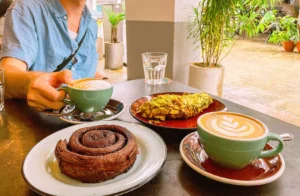
I didn’t set out to make a list. I made a habit. Over the years, cafes became the places I went to think, to wait out the rain, to sit with a coffee I didn’t have to rush. Some I returned to for the food. Others, I returned to for the feeling — the way…
-
Pickled Mustard Greens: The Sour Note in Clear Broth
Eda Wong | July 17, 2026
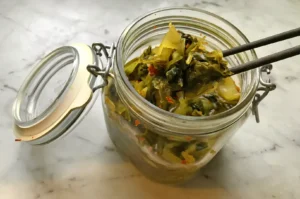
Steam lifts from a bowl of clear pork broth, and a spoonful of chopped pickled greens slides in. The broth shifts at once, its richness suddenly cut by a sharp, clean sourness that sits high and bright on the tongue. The greens have softened in the heat but keep a faint, springy crunch. Someone leans…
-
The Potato Curry That Teaches You How Spices Wake Up: A Beginner’s Indian Cooking Lesson
Eda Wong | July 16, 2026
The first time I made aloo curry on my own, I burned the cumin. I remember standing in my tiny HDB kitchen, watching those little seeds go from golden to black in what felt like one breath, and thinking: this is harder than it looks. But here’s what that bitter, smoky disaster taught me, the…
-
Bamboo Skewers and Smoke: Street Grills in Chiang Mai
Dio Asahi | July 15, 2026
The cart glows at the edge of the lane just as the heat of the day finally loosens. A woman fans the coals with a flattened piece of cardboard, and the embers brighten orange under a row of skewers. Fat slides off the pork, hits the charcoal, and hisses upward in a thin curl of…