The damp morning mist still clings to the teakwood houses of Luang Prabang as an elderly cook tends to a glowing charcoal brazier. Sparks jump lightly into the cool air, illuminating the blackened belly of an aluminium pot. Inside, a thick, dark liquid bubbles rhythmically, releasing an incredibly aromatic cloud of charred lemongrass, sweet Thai basil, and the sharp, earthy bite of wood smoke. She gently stirs the mixture with a long wooden spoon, coaxing the dense ingredients into a cohesive, bubbling mass. The heat radiating from the stove offers a quiet comfort against the morning chill, setting an unhurried, deliberate pace for the day’s culinary journey in this quiet Laotian town.
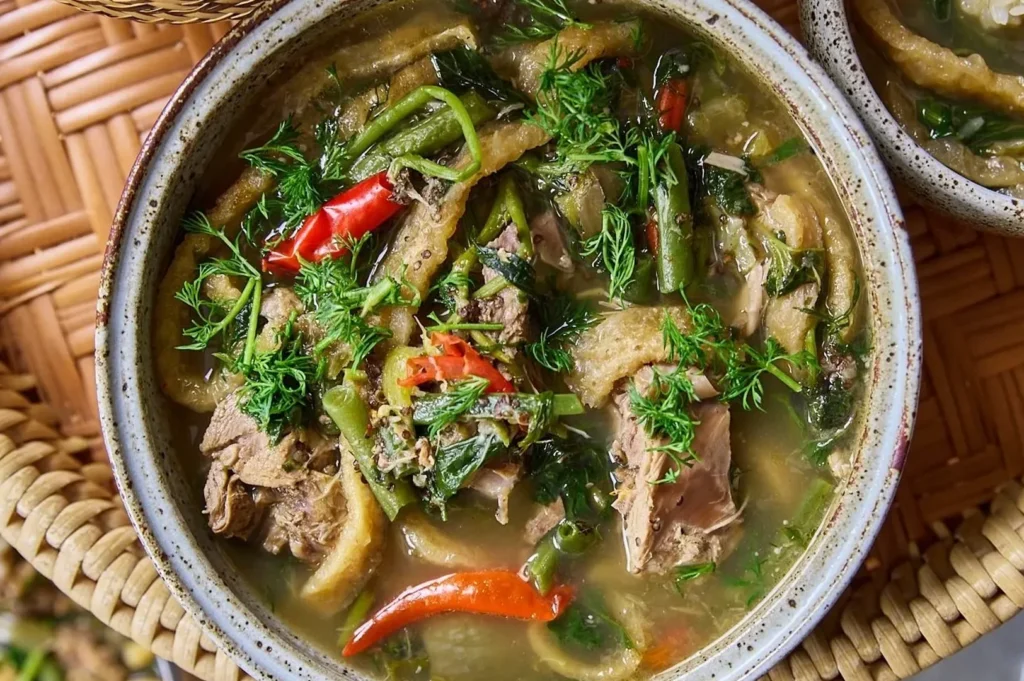
This slow-simmering cauldron holds or lam (pronounced aw-lam), a deeply complex, gently thickened Lao stew that acts as a celebration of flavours from the surrounding jungles. It is not a delicate broth, but rather a robust, heavily textured dish traditionally built on a foundation of buffalo skin, pounded sticky rice, and wild mushrooms. But the defining soul of this dish comes from a uniquely regional ingredient: sakhan (pronounced sah-kahn), a woody, fibrous vine often called forest pepper. Preparing sakhan requires a specific, preservation-focused craft ritual. The tough, knobbly stems are chopped into small, rough cylinders and tossed directly into the boiling stew. Diners do not swallow the wood; instead, they chew on the porous bark, extracting an intense, tingling spiciness that gently numbs the lips, much like Sichuan peppercorns but with a deeper, herbaceous resonance.
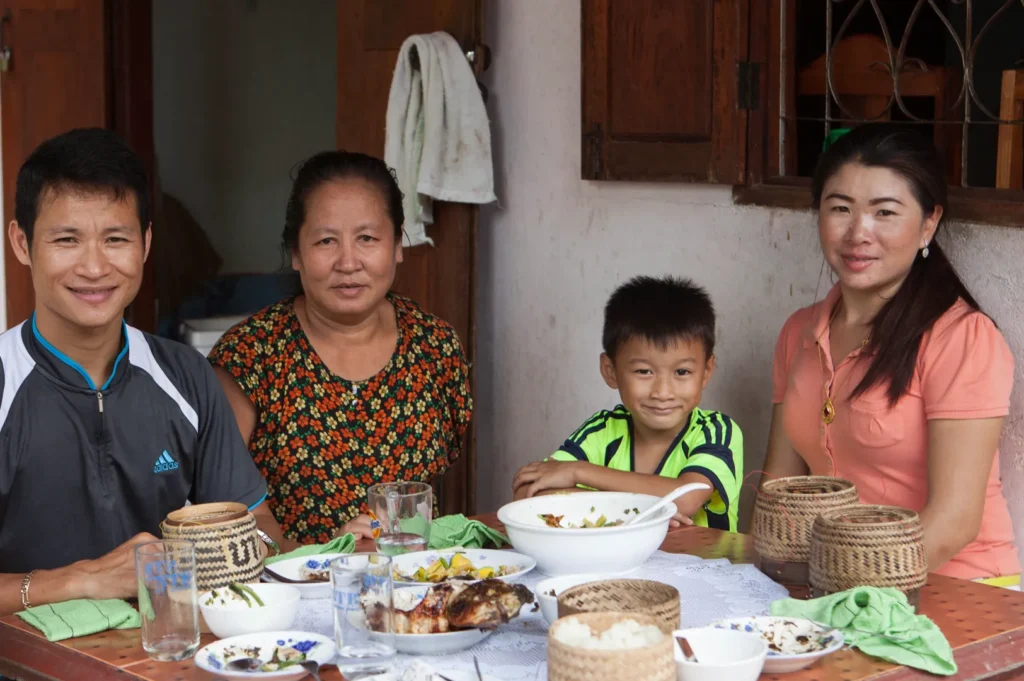
In the ancient capital, gathering around a bowl of or lam is one of the most fundamental shared experiences of local life. It reflects a profound, everyday connection to the Mekong River and the dense green mountains that cradle the city. The stew is rarely eaten alone. It demands the communal tearing of fresh, sticky rice, rolled by hand and dipped into the thick, dark gravy to soak up its earthy richness. Whether served at a quiet family dinner or prepared for a community gathering, this diverse pot of foraged vegetables and meats signals resourcefulness. It represents a way of eating that relies entirely on the immediate landscape, preserving a taste the world often overlooks in favour of more commercialised Southeast Asian curries.
What feels so vital about or lam right now is its stubborn refusal to yield to modern culinary convenience. As Eat Drink Asia highlights, the stew’s slow ritual is inseparable from its regional identity. In a time when fast-paced, trend-setting urban diets favour quick stir-fries and instant pastes, extracting the authentic, nuanced flavour of sakhan demands time-consuming effort. You cannot rush the breakdown of tough vines or the slow thickening of pounded rice. The stew requires a patient surrender to the slow boil. It stands as a quiet act of resistance, maintaining its regional identity by insisting that diners slow down, chew the fibrous bark, and actively engage with their meal rather than mindlessly consuming it.
Setting down an empty bowl, the residual tingling of the forest pepper lingers on the tongue long after the heat of the stew has faded. It is a lingering, visceral reminder of the landscape itself—a beautiful reflection of regional identity that remains deeply rooted in the soil and smoke of Luang Prabang.

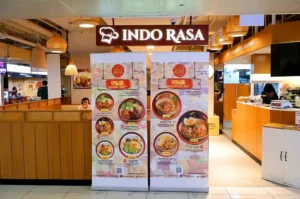
Indo Rasa Singapore and the Nasi Goreng That Measures a Kitchen’s Confidence
Eat Drink Asia Team | August 25, 2026
There’s a dish I order when I want to know a kitchen quickly. Not the specialty. Not the thing the menu is proud of. I order the fried rice. Because nasi goreng has nowhere to hide. It’s rice, chilli, chicken, egg, a few crackers, some cucumber. Everyone thinks they can make it. Most people can….
-
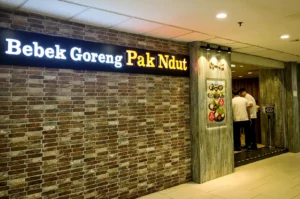
Bebek Goreng Pak Ndut and the Fried Duck That Makes Nasi Goreng Feel Too Polite
Eda Wong | August 22, 2026
The duck arrived and made a sound before I’d even touched it. Not the plate, the skin. When my fork pressed against it, there was a small, dry crackle, the kind you feel in your fingers before you hear it. That’s when I understood I wasn’t eating a soft meal. This was something with edges….
-
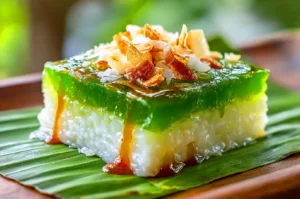
The Coconut Spoon That Shapes Nyonya Kueh Salat
Eda Wong | August 21, 2026
By Eda Wong for Eat Drink Asia. Steam curls up from a tray in the back of the kitchen, and the whole room smells green. Pandan, crushed and knotted, pushed through wet cloth until the leaves give up their colour. An auntie leans over the tray with a spoon carved from coconut shell, dark and…
-
Chicken Nasi Goreng Recipe: What Leftover Rice Becomes After the Wok Gets Serious
Dio Asahi | August 20, 2026
There’s a container of rice at the back of my fridge most weeks. Cold, a little hard, forgotten from a dinner two nights ago. Some people see that and think of waste. I see the start of something better. Because leftover rice doesn’t want to be reheated. It wants to be fried. And when it…
-
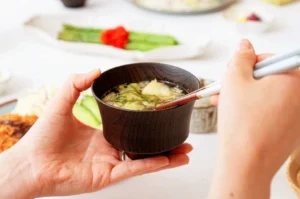
The First Ladle of Miso Soup in a Tokyo Breakfast Shop
Dio Asahi | August 19, 2026
By Dio Asahi for Eat Drink Asia. The shop is barely wider than a hallway. Seven stools, a counter worn smooth, and behind it a woman ladling soup into small ceramic bowls before anyone has ordered it. Steam lifts off the surface and fogs the window against the cold morning. The bowl reaches me warm…
-
Chirashi Don Best Picks When Bowls Between the Sushi Counter and Lunch Are the Current Mood
Eat Drink Asia Team | August 18, 2026
There’s a specific kind of hunger that a chirashi don answers. It’s not the hunger for a full sushi omakase, with its slow ceremony and its quiet counter watching. And it’s not the hunger for something thrown together and forgotten by three o’clock. It sits somewhere in between, fish and rice in one bowl, cool…
-
Kopi Through the Cloth: Why the Strain Matters
Eda Wong | August 17, 2026
By Eda Wong for Eat Drink Asia. It is not yet seven, and the uncle at Heap Seng Leong has the pot going. He works the sock strainer over the tin cup with both hands, dipping and lifting, dipping and lifting, coaxing the coffee through the worn cloth. Steam rises between his fingers. The smell…
-
SBCD Korean Tofu House and the Comfort Logic of Bubbling Soondubu
Eda Wong | August 15, 2026
It was raining the afternoon I went. Not the polite kind, the sort that drums against the glass of Guoco Tower and makes you glad you’re already underground. I hadn’t planned on soondubu. I’d planned on something quick, something I could eat between the errands piling up in my head. But the rain does something…
-
The Knife Work at Hanashizuku Japanese Cuisine, Three Floors Above the Noise
Eda Wong | August 14, 2026
By Eda Wong for Eat Drink Asia. The lift doors open on a floor of Cuppage Plaza that has seen better decades. Peeling signage. A corridor that smells faintly of old carpet and cigarette smoke drifting from somewhere. Then a door slides shut behind me, and the noise falls away. Inside Hanashizuku Japanese Cuisine, the…
-
Todamgol Restaurant and the Comfort Logic Behind Famous Korean Foods
Dio Asahi | August 13, 2026
It was close to nine on a Friday when I finally found the door. Tanjong Pagar was doing its usual thing, full tables spilling onto five-foot ways, soju bottles catching the light, someone laughing too loudly two doors down. I almost walked past Todamgol. Then the smell reached me. Fermented, smoky, a little sharp. The…