By Dio Asahi for Eat Drink Asia.
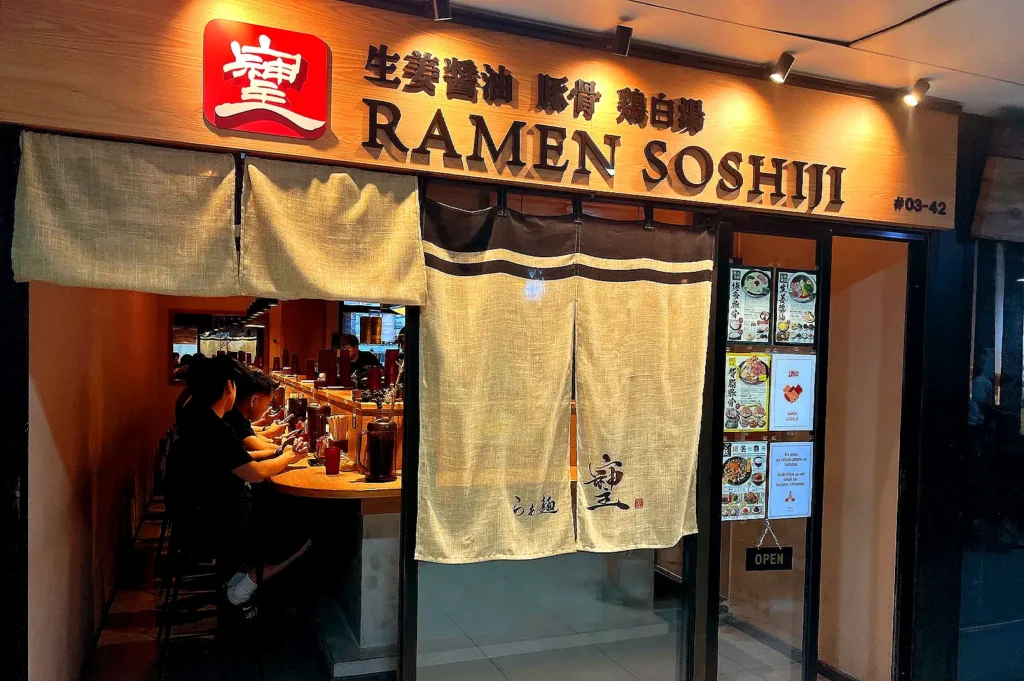
The lift opens on the third floor of Orchard Plaza, and for a second I don’t know which way to turn. The corridor is dim and still, the kind of quiet that feels almost accidental in this part of town. A few doors down, an unmarked entrance. Inside, a counter, a row of stools, and the low sound of a kitchen already at work at Ramen Soshiji.
Below me, Orchard Road is doing what it always does — buses, shopfronts, the churn of people who came to buy something. Up here, none of that reaches. The change happens in a single lift ride, and I still find it strange every time.
I sit at the counter and order the Ginger Shoyu Ramen. When it arrives, the steam comes first. Not the heavy, clouded steam of a pork-bone broth, but something lighter, carrying a sharpness I can smell before I taste. Ginger. Fresh, not powdered. It cuts clean through the warmth of the soy.
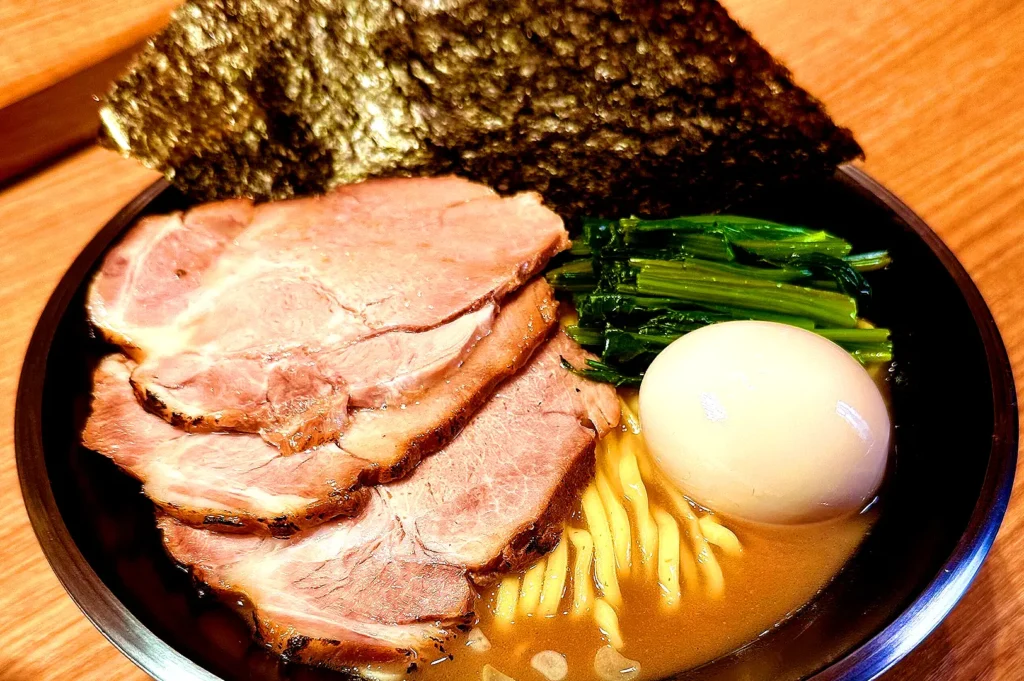
The broth is the thing here. Most ramen counters in this city lean on tonkotsu — that thick, milky richness that coats the mouth and stays. This one goes the other way. It’s soy-based, clear enough to see the noodles resting in it, and the ginger keeps it moving on the palate instead of settling heavy. The noodles have a real spring to them, a chew that holds up against the broth rather than surrendering to it. I eat slower than I meant to.
In the larger comfort-food canon, this reminds me of our ongoing search for best japanese curry singapore — different spice, same need for warmth.
There’s something about a counter like this that changes how you eat. No table to share, no conversation to manage. Just you, the bowl, and the small distance to the kitchen. Ramen in Japan is often eaten this way — alone, quickly, without ceremony, a meal built for one person’s attention. The seat faces forward for a reason. You’re not meant to perform the meal. You’re meant to have it.
That solitude feels rarer than it should in Singapore, where eating is so often communal, loud, a table crowded with dishes to pass. Here, nobody expects you to talk. The person two stools down is doing exactly what you’re doing, and neither of you acknowledges it. It’s a kind of company that asks nothing.
What stays with me isn’t only the broth. It’s the gap between the floor I’m sitting on and the street I walked in from. Orchard Road sells attention. Everything down there is trying to be seen. And then, three floors up, a small room does the opposite — it asks for nothing, advertises nothing, and simply cooks. The ginger in the broth is a decision someone made because it tastes better that way, not because it photographs well.
I finish the last of the soup, ginger still faint on the back of the tongue. The stool beside me empties and fills again. Someone new, another single bowl.
Outside, the noise is waiting. But for the length of one ramen, the quiet held — and that, I think, is the whole point of the place.

A Symphony of Senses: Why Southeast Asian Food is the World’s Greatest Culinary Journey
Dio Asahi | February 12, 2026
If you were to stand at a busy intersection in Bangkok, Ho Chi Minh City, or Jakarta and close your eyes, your nose would tell you a story before your eyes ever could. There is a specific, intoxicating perfume that defines Southeast Asian food: the sharp tang of lime juice hitting a hot wok, the…
-
The Alchemy of the Wok: The Story of Singapore-Style Bee Hoon
Eda Wong | February 10, 2026
Across the humid evening air of Singapore, a rhythmic clatter echoes from hawker stalls to high-rise kitchens—the sound of a metal spatula against a seasoned wok. Within that intense heat, rice vermicelli noodles undergoes a profound transformation, absorbing the golden hues of curry powder, the savory depths of soy sauce, and the smoky “breath” of…
-
The Sizzle of the Wok: An Exploration of Fried Bee Hoon Across Southeast Asia
Eat Drink Asia Team | February 7, 2026
Across Southeast Asia, from bustling hawker centers to family kitchens, the sizzle of rice vermicelli noodles hitting a hot wok is a universal comfort. Few dishes capture the spirit of Asian noodle culture as well as fried bee hoon. This stir fry, made with thin rice noodles, delivers a tasty meal any time of the…
-
The Silk of the East: A Deep Dive into Bee Hoon and the Art of Rice Vermicelli
Eda Wong | February 5, 2026
Across the bustling kitchens of Southeast Asia, one humble ingredient has woven itself into the fabric of countless beloved dishes. Bee hoon, the delicate rice vermicelli that transforms from brittle strands into silky noodles, represents centuries of culinary tradition and innovation. Whether you’ve savored Singapore noodles in a hawker center or encountered fried bee hoon…
-
The Eternal Hearth: A Journey Through the Soul of Indian Foods Vegetarian Traditions
Dio Asahi | February 3, 2026
In the vibrant tapestry of global gastronomy, few cultures have elevated the plant-based plate to an art form quite like India. While much of the world has recently turned toward meat alternatives for health or environmental reasons, Indian cuisine has been centered on the vegetable for millennia. This isn’t merely a dietary choice; it is…
-
The Essence of Jeju Citron Tea: A Distinctive Profile of Yuja Tea in Korea
Dio Asahi | January 31, 2026
Imagine sitting in a quiet, sun-drenched teahouse overlooking the dramatic volcanic coastline of Jeju Island. The steam rising from your cup carries an aroma that is at once familiar and yet entirely new—a version of Korean citron tea, or yuja cha, that tastes of sea salt, volcanic soil, and generations of island tradition. As you…
-
Korean Citron Tea: Health Benefits and Wellness Secrets
Eat Drink Asia Team | January 29, 2026
As the seasons change and a chill enters the air, many of us seek out comforting rituals to support our well-being. Imagine wrapping your hands around a steaming cup of Korean citron tea—also known as yuja-cha—its bright, citrus aroma soothing and revitalizing with every sip. More than just a winter treat, Korean citron tea is…
-
When the Izakaya Becomes the Plan: Izakaya Singapore Top Picks for After-Work Reset
Dio Asahi | January 28, 2026
January 28, 2026 | Dio Asahi Last updated: October 12, 2026 As you step behind the humble noren curtain, you’re greeted by glowing lanterns, sizzling charcoal-grilled skewers, and warm welcomes. This is izakaya, Japan’s casual pub, a vibrant part of Singapore’s dining scene. More than just yakitori and sake, izakayas offer a lively setting for social…
-
Yuja Tea: Korea’s Traditional Citron Tea
Dio Asahi | January 27, 2026
The golden, aromatic steam rising from a cup of yuja tea carries centuries of Korean tradition and wellness wisdom. This caffeine-free citrus beverage has warmed Korean hearts through countless winters, offering both comfort and powerful health benefits in every sip. Made from the Korean citron known as yuja fruit, this simple Korean tea represents one…
-
The Global Phenomenon of Korean Instant Noodle: A Cultural and Culinary Journey
Eda Wong | January 24, 2026
In the high-octane streets of South Korea, where the “pali-pali” (hurry-hurry) culture defines the pace of life, one dish stands as the ultimate equalizer of speed and satisfaction: Korean ramyeon. While the world often uses the terms ramen and ramyeon interchangeably, the Korean version is a distinct entity. It is not merely a quick snack…