By Dio Asahi for Eat Drink Asia.
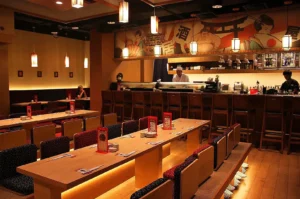
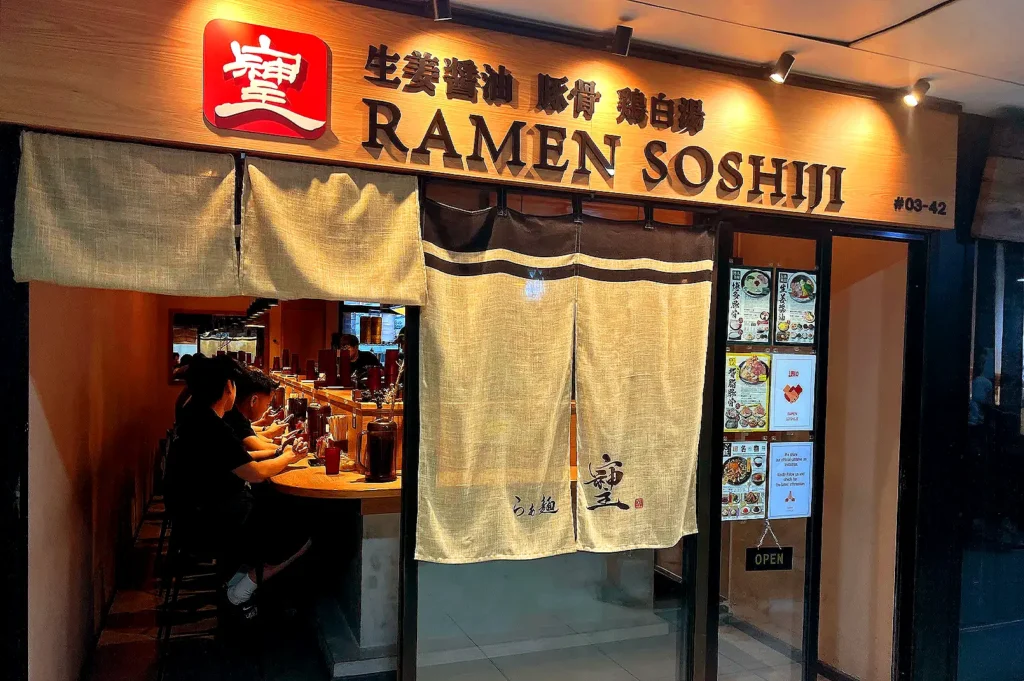
The lift opens on the third floor of Orchard Plaza, and for a second I don’t know which way to turn. The corridor is dim and still, the kind of quiet that feels almost accidental in this part of town. A few doors down, an unmarked entrance. Inside, a counter, a row of stools, and the low sound of a kitchen already at work at Ramen Soshiji.
Below me, Orchard Road is doing what it always does — buses, shopfronts, the churn of people who came to buy something. Up here, none of that reaches. The change happens in a single lift ride, and I still find it strange every time.
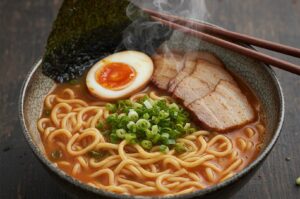
I sit at the counter and order the Ginger Shoyu Ramen. When it arrives, the steam comes first. Not the heavy, clouded steam of a pork-bone broth, but something lighter, carrying a sharpness I can smell before I taste. Ginger. Fresh, not powdered. It cuts clean through the warmth of the soy.
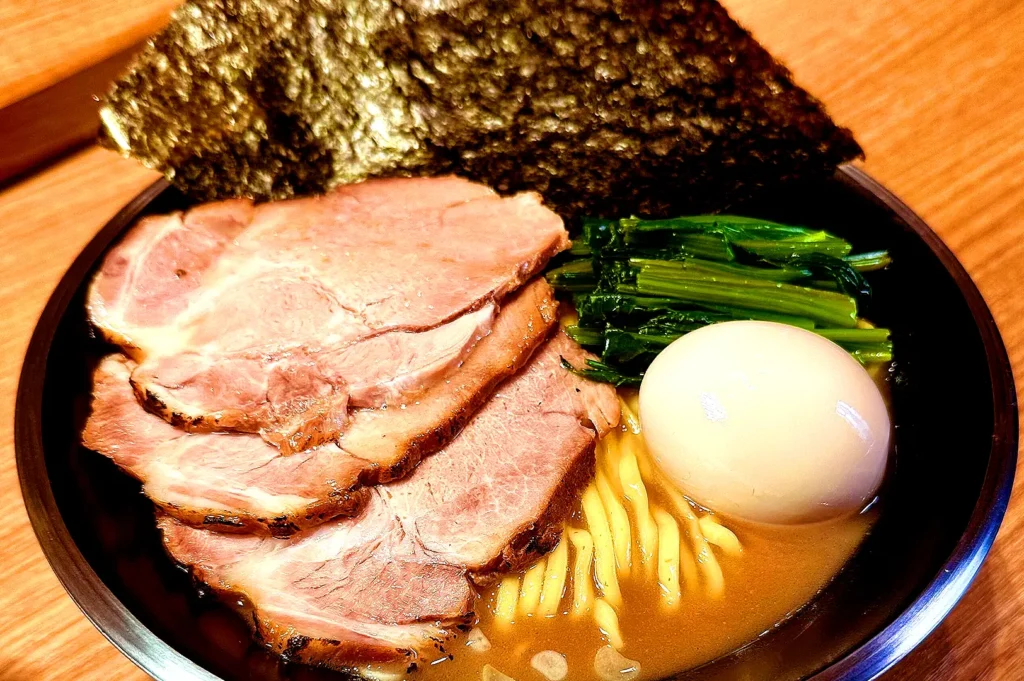
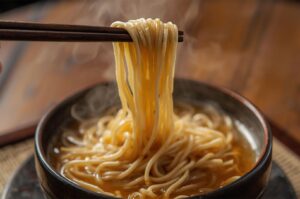
The broth is the thing here. Most ramen counters in this city lean on tonkotsu — that thick, milky richness that coats the mouth and stays. This one goes the other way. It’s soy-based, clear enough to see the noodles resting in it, and the ginger keeps it moving on the palate instead of settling heavy. The noodles have a real spring to them, a chew that holds up against the broth rather than surrendering to it. I eat slower than I meant to.
In the larger comfort-food canon, this reminds me of our ongoing search for best japanese curry singapore — different spice, same need for warmth.
There’s something about a counter like this that changes how you eat. No table to share, no conversation to manage. Just you, the bowl, and the small distance to the kitchen. Ramen in Japan is often eaten this way — alone, quickly, without ceremony, a meal built for one person’s attention. The seat faces forward for a reason. You’re not meant to perform the meal. You’re meant to have it.
That solitude feels rarer than it should in Singapore, where eating is so often communal, loud, a table crowded with dishes to pass. Here, nobody expects you to talk. The person two stools down is doing exactly what you’re doing, and neither of you acknowledges it. It’s a kind of company that asks nothing.
What stays with me isn’t only the broth. It’s the gap between the floor I’m sitting on and the street I walked in from. Orchard Road sells attention. Everything down there is trying to be seen. And then, three floors up, a small room does the opposite — it asks for nothing, advertises nothing, and simply cooks. The ginger in the broth is a decision someone made because it tastes better that way, not because it photographs well.
I finish the last of the soup, ginger still faint on the back of the tongue. The stool beside me empties and fills again. Someone new, another single bowl.
Outside, the noise is waiting. But for the length of one ramen, the quiet held — and that, I think, is the whole point of the place.

Korean Citron Tea: Health Benefits and Wellness Secrets
Eat Drink Asia Team | January 29, 2026
As the seasons change and a chill enters the air, many of us seek out comforting rituals to support our well-being. Imagine wrapping your hands around a steaming cup of Korean citron tea—also known as yuja-cha—its bright, citrus aroma soothing and revitalizing with every sip. More than just a winter treat, Korean citron tea is…
-
When the Izakaya Becomes the Plan: Izakaya Singapore Top Picks for After-Work Reset
Dio Asahi | January 28, 2026
January 28, 2026 | Dio Asahi Last updated: September 14, 2026 As you step behind the humble noren curtain, you’re greeted by glowing lanterns, sizzling charcoal-grilled skewers, and warm welcomes. This is izakaya, Japan’s casual pub, a vibrant part of Singapore’s dining scene. More than just yakitori and sake, izakayas offer a lively setting for social…
-
Yuja Tea: Korea’s Traditional Citron Tea
Dio Asahi | January 27, 2026
The golden, aromatic steam rising from a cup of yuja tea carries centuries of Korean tradition and wellness wisdom. This caffeine-free citrus beverage has warmed Korean hearts through countless winters, offering both comfort and powerful health benefits in every sip. Made from the Korean citron known as yuja fruit, this simple Korean tea represents one…
-
The Global Phenomenon of Korean Instant Noodle: A Cultural and Culinary Journey
Eda Wong | January 24, 2026
In the high-octane streets of South Korea, where the “pali-pali” (hurry-hurry) culture defines the pace of life, one dish stands as the ultimate equalizer of speed and satisfaction: Korean ramyeon. While the world often uses the terms ramen and ramyeon interchangeably, the Korean version is a distinct entity. It is not merely a quick snack…
-
Traditional Ramyeon: The Soulful Heart of Korean Noodle Culture
Eat Drink Asia Team | January 20, 2026
In the bustling culinary landscape of South Korea, few comfort foods can match the satisfaction of a steaming bowl of ramyeon. While outside of Korea, “ramyeon” often brings to mind Korean instant noodles or instant ramen, true ramyeon Korean style refers to the artful, freshly prepared noodle soup enjoyed in homes and at local restaurants…
-
The Heart of the Korean Noodles: History and Texture
Eda Wong | January 17, 2026
In Korea, a bowl of noodles is far more than a simple dish; it is a cultural anchor that has weathered centuries of change. For generations, the length of the strand has symbolized a long and prosperous life, making Korean noodles a staple at birthdays, weddings, and the milestone 60th birthday celebration known as hwangap….
-
Preserving the ‘Big Bowl’ Tradition with Pen Cai Delivery in the Age of Doorstep Dining
Eat Drink Asia Team | January 15, 2026
Modern Festive Menu: Bringing the Big Bowl Home There is a special, undeniable magic to the Chinese New Year reunion dinner. For many families, Chinese New Year 2026 is another chance to gather loved ones at the table and celebrate with a glorious pen cai—sometimes called the “big bowl feast”—overflowing with premium ingredients and festive…
-
Sencha: Traditions, Flavors, and the Essence of Japanese Tea
Eat Drink Asia Team | January 15, 2026
When people around the world think of Japanese tea, images of tranquil tea ceremonies in small rooms or frothy bowls of matcha often come to mind. Yet, the reality of tea drinking in Japan is much broader, woven deeply into the culture and daily habits. For the vast majority, sencha is the beloved tea that…
-
The Best Restaurants Tokyo Are Rarely the Ones You Plan For
Eda Wong | January 12, 2026
Tokyo, Japan’s capital, does not reward urgency. It rewards return. On my first visit, I chased what everyone told me were the best restaurants Tokyo had to offer. I spent weeks highlighting maps, bookmarking digital “must-eat” lists, and refreshing reservation pages until my eyes blurred. I thought that by conquering the top-tier establishments, I would…
-
Japan and Food: Culinary Harmony – The Deep Connection Between Japanese Food and Culture
Eat Drink Asia Team | January 11, 2026
When it comes to Japan and food, the two are intertwined in ways that captivate taste buds and awaken the senses. Japanese cuisine stands as one of the world’s most revered traditions—more than nourishing meals, it is an art reflecting centuries of philosophy and a window into Japanese culture itself. Every bowl of miso soup,…