I used to add the rice too early.
The oil would be hot, the sambal barely a minute in, and I’d tip in the cold rice because I was hungry and impatient. Every time, the same result: rice stained red but tasting of nothing much. Sharp. Raw. Flat where it should have been deep.
It took me longer than I’d like to admit to understand that sambal fried rice — nasi goreng sambal, if you grew up calling it that — isn’t fried rice with chilli paste stirred through it. It’s rice transformed by chilli paste that has already done its work in the pan. The sambal does the heavy lifting. But only after you let it.
Ingredients
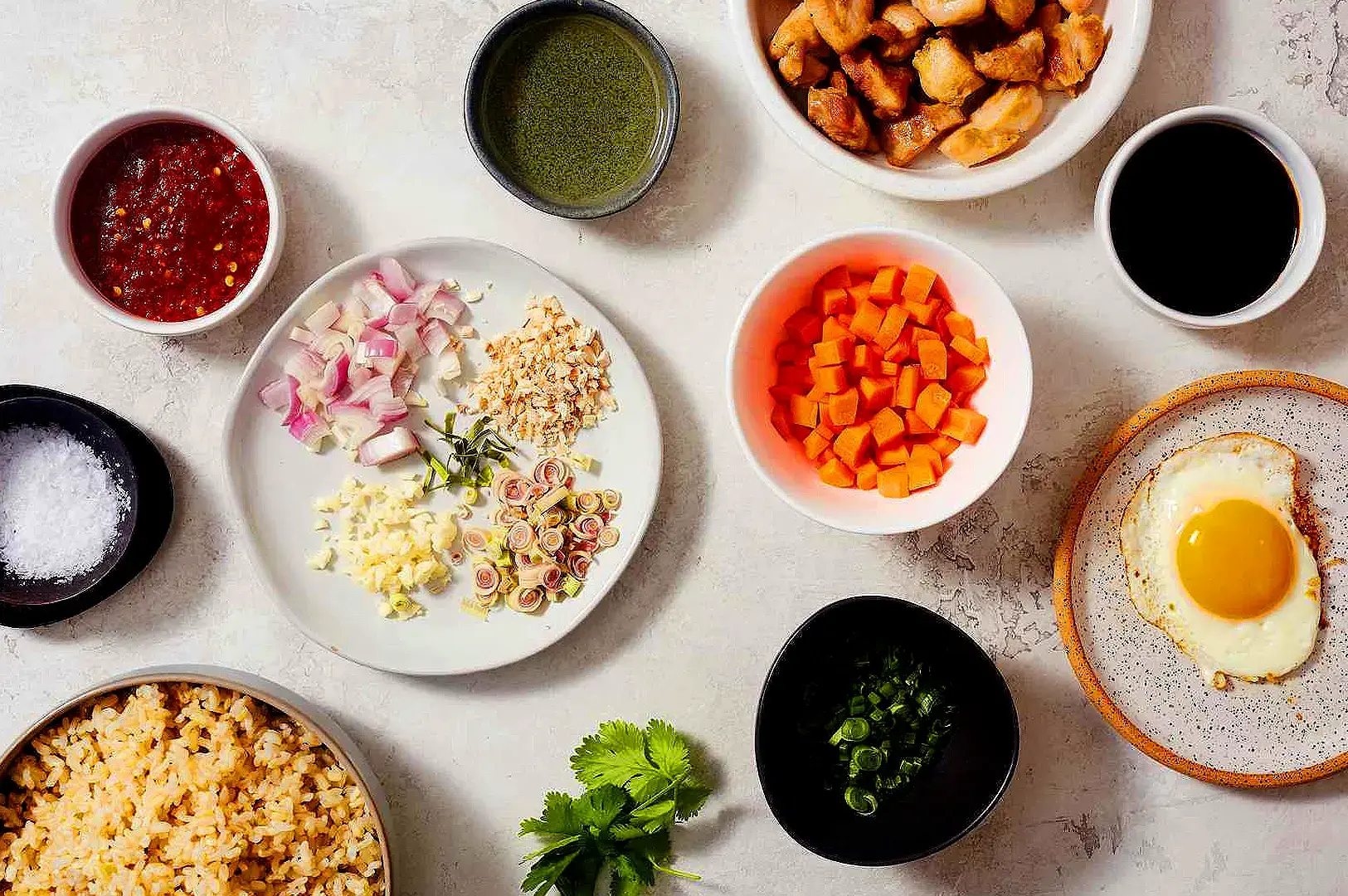
This makes two generous portions of sambal fried rice, a dish where the fragrant heat of sambal oelek melds with the savory richness of fried rice. Read the roles, not just the amounts — knowing why something is there tells you how to fix things when they go sideways.
- Day-old cooked rice — about 3 cups, roughly 450–500g. Jasmine rice or long grain rice works well. Cold rice has dried out overnight, so the grains stay separate and fry instead of steaming. Freshly cooked rice wants to become porridge; cold rice wants to become fried rice.
- Sambal — 2 to 3 tablespoons. Two for moderate heat, three for something closer to a proper nasi goreng sambal. Start low. It’s easy to add more, hard to rescue rice that’s gone too hot.
- Neutral oil — 2 to 3 tablespoons. Sambal needs oil to cook properly. Skimp here and the paste catches and burns before the raw taste is gone.
- Minced garlic — 2 to 3 cloves. Sharp aroma, savory base.
- Shallots or half an onion — sliced. Sweetness and body underneath the chilli.
- Eggs — 2. Cook them separately as scrambled eggs, or fry one for the top and fold one through.
- Chicken breast (optional) — 150–200g, diced small. Thigh is juicier, but breast works if you want lean protein.
- Soy sauce — 1 to 2 teaspoons, for salt and a little color.
- Kecap manis (optional) — 1 to 2 teaspoons. It adds sweetness and dark gloss, but use it carefully. Too much and the dish turns sticky. Sweetness is support here, not the engine.
- Salt and sugar — to taste, added last. Many sambal pastes already carry both.
- Add-ins — french beans, shrimp, tofu, cabbage. Whatever you have.
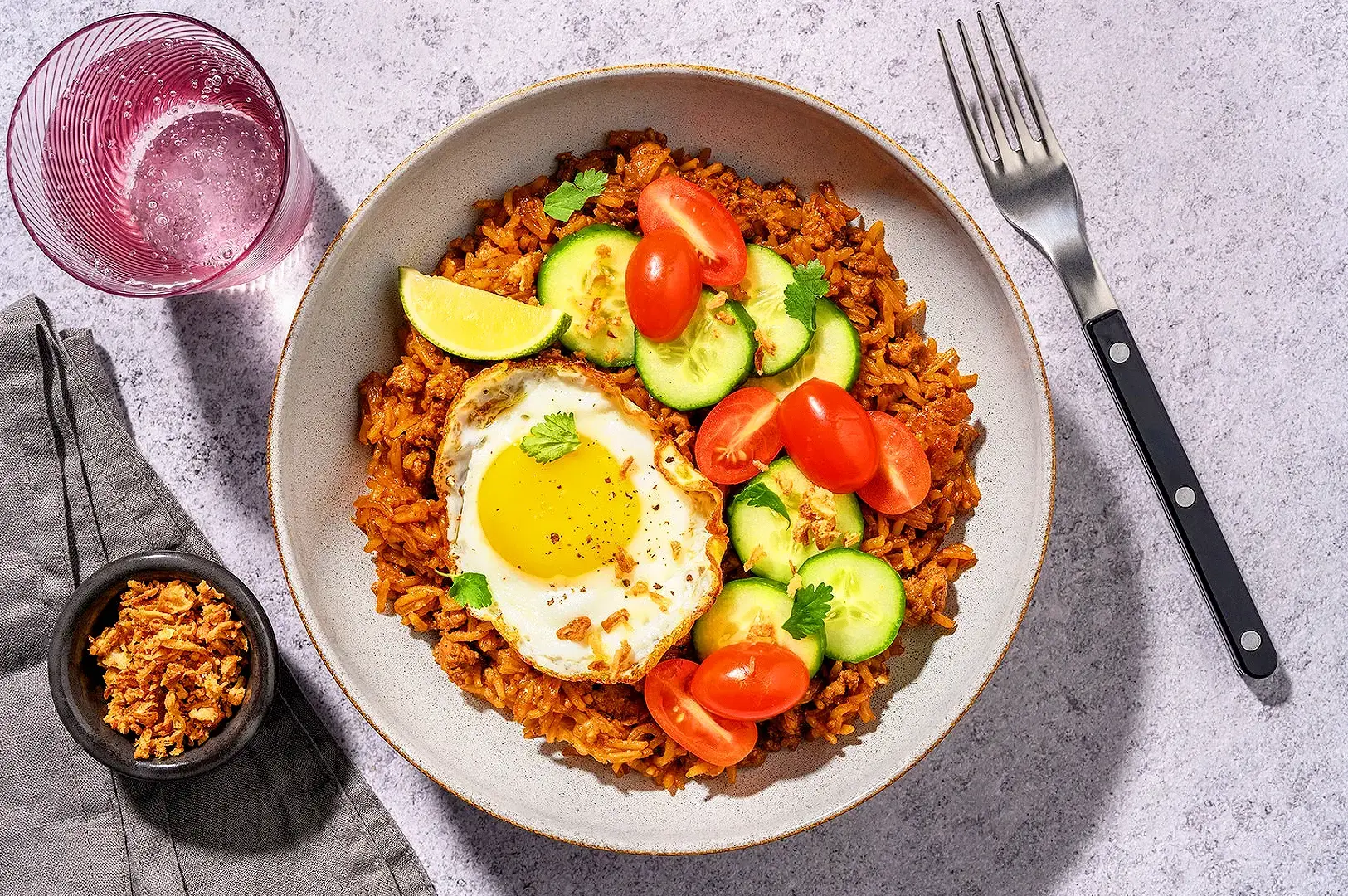
- Garnish — sliced cucumbers, fried shallots, spring onion, a lime wedge, a fried egg.
If you’re leaning vegetarian, the same logic that makes Fortune Centre food so useful applies in this article from Eat Drink Asia: tofu, cabbage, beans, and egg can carry a meal when the seasoning base is doing enough work.
Chef Notes: A note on sambal. Fresh from home is best because you control it. But in Singapore, you don’t need to. FairPrice shelves are full of usable options — Singlong Sambal Belacan, nasi lemak chilli, plain chilli pastes. They all work. Belacan versions bring a depth of shrimp paste and plenty of salt; nasi lemak sambal runs sweeter; sambal oelek is sharper and sometimes carries a little vinegar tang. Whichever you grab, taste it first, and remember it still needs frying.
Step-by-Step Recipe
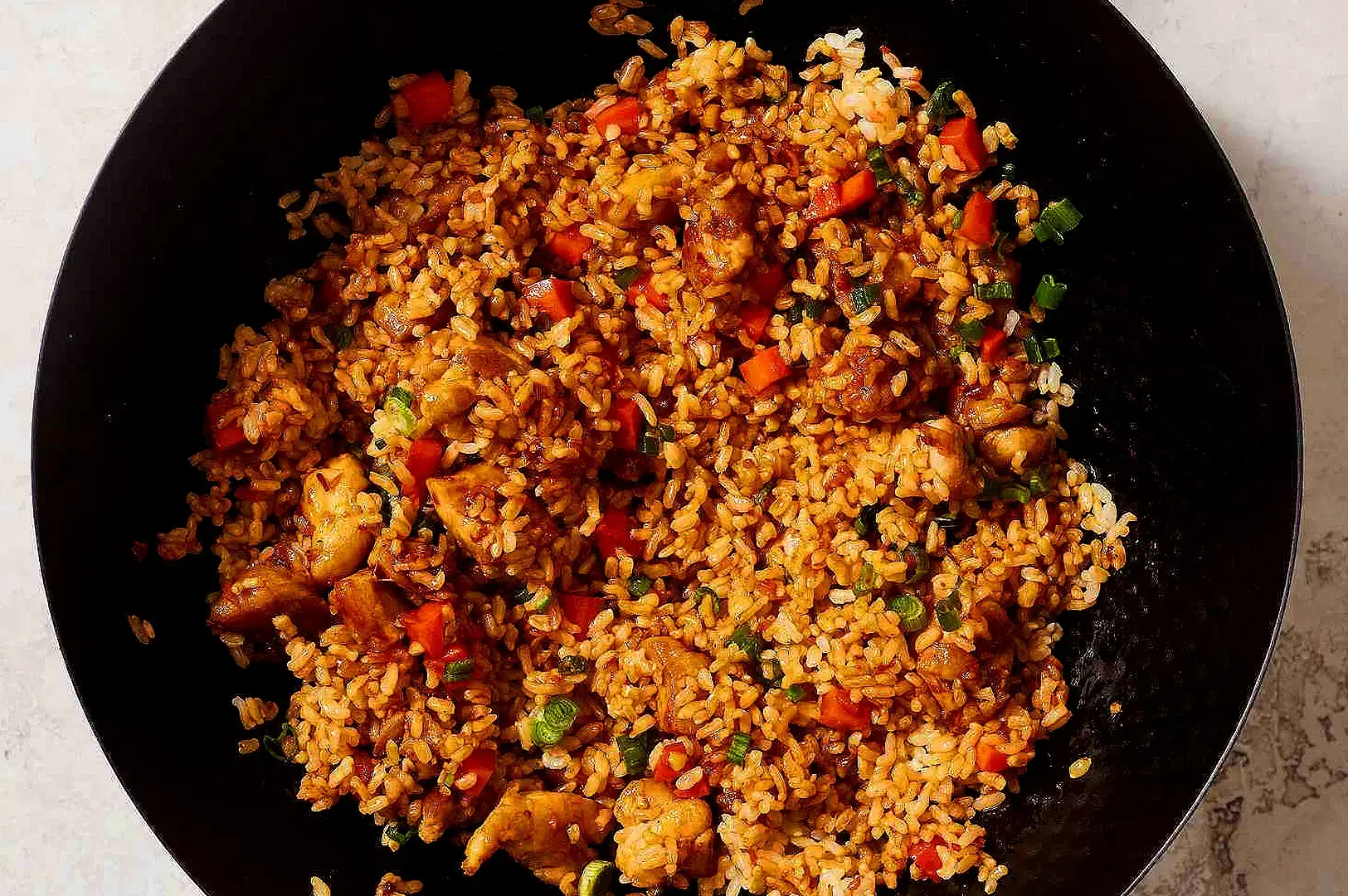
Prep everything first — mise en place is crucial for this fast-paced stir fry. This moves fast once the heat is on. Reckon on 15 to 25 minutes total, assuming your rice is already cooked and chilled.
1. Cook the egg first. Scramble the beaten eggs in a little hot oil until just set, then lift them out. Doing this early keeps them soft and stops them wetting the rice later. You want the egg catching gently at the edge, not drying out.
2. Cook the chicken, if using. Sear the diced chicken breast in hot oil until just cooked and lightly browned. You’re listening for a sizzle, not a hiss of steam. Remove it and set aside.
3. Fry the aromatics. Use fresh oil, then add minced garlic and onion or shallots. Fry until fragrant but not dark — about a minute.
4. Cook the sambal properly. Add the sambal and drop to medium heat. This is the step everything depends on. Fry until the raw chilli smell fades, the paste darkens, and the oil starts to separate at the edges. Don’t rush it, and don’t walk away — sambal with sugar or shrimp paste in it burns fast.
5. Add the rice. Only now. Tip in the cold day old rice and press out the clumps with the back of your spatula. Toss hard so the sambal coats every grain.
6. Raise the heat and let it fry. Crank it up to medium high heat. Then leave the rice alone in short bursts — give it moments of contact with the hot pan rather than stirring constantly. You’re chasing that faint smoky smell — the crispy edges that define great fried rice. Toss until the grains look glossy and coated, moving freely like rice again instead of a red clump.
7. Season lightly. Now add soy sauce, a touch of kecap manis if you want it, salt, or sugar. Taste before adding more. Adjust seasoning to balance the heat and savoriness.
8. Fold everything back. Return the scrambled eggs and chicken once the rice is hot and separate.
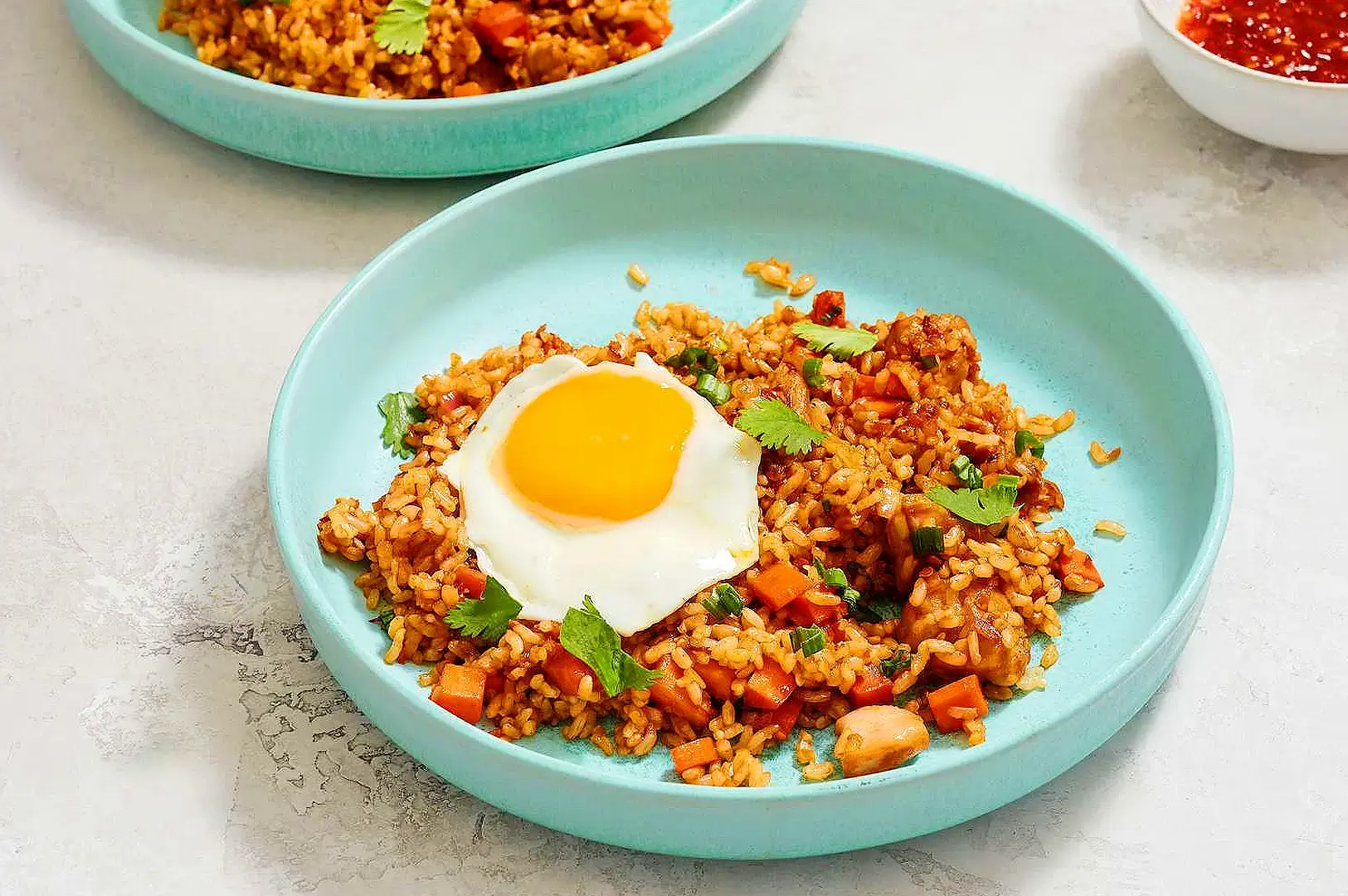
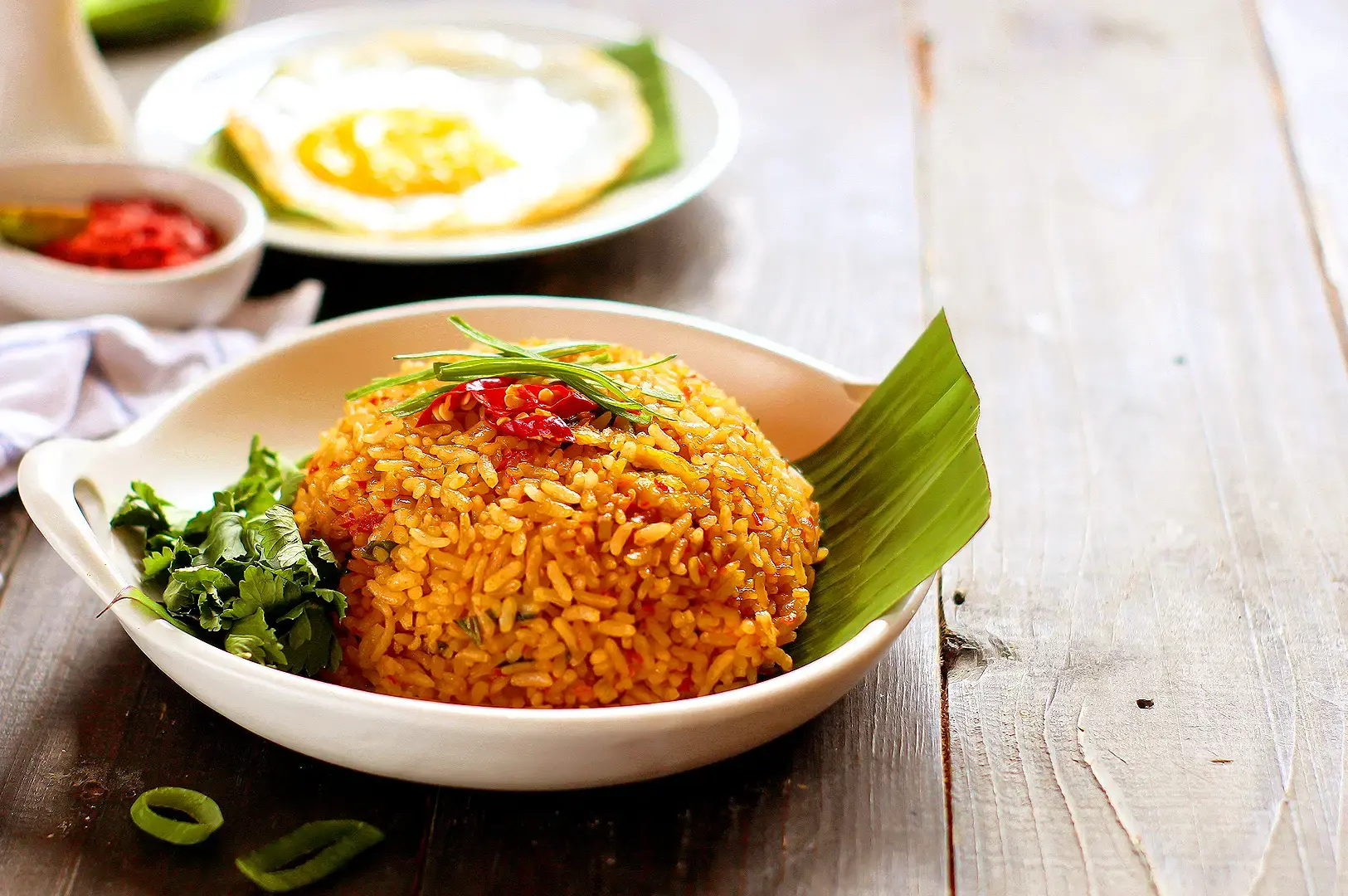
9. Finish fresh. Garnish with spring onion, fried shallots, sliced cucumbers on the side, a lime wedge, and a fried egg on top to make it feel complete.
That pan contact matters, whether you’re chasing sambal-coated rice at home or reading the wok logic behind the best Chinese restaurants in Singapore.
Why Sambal Comes First
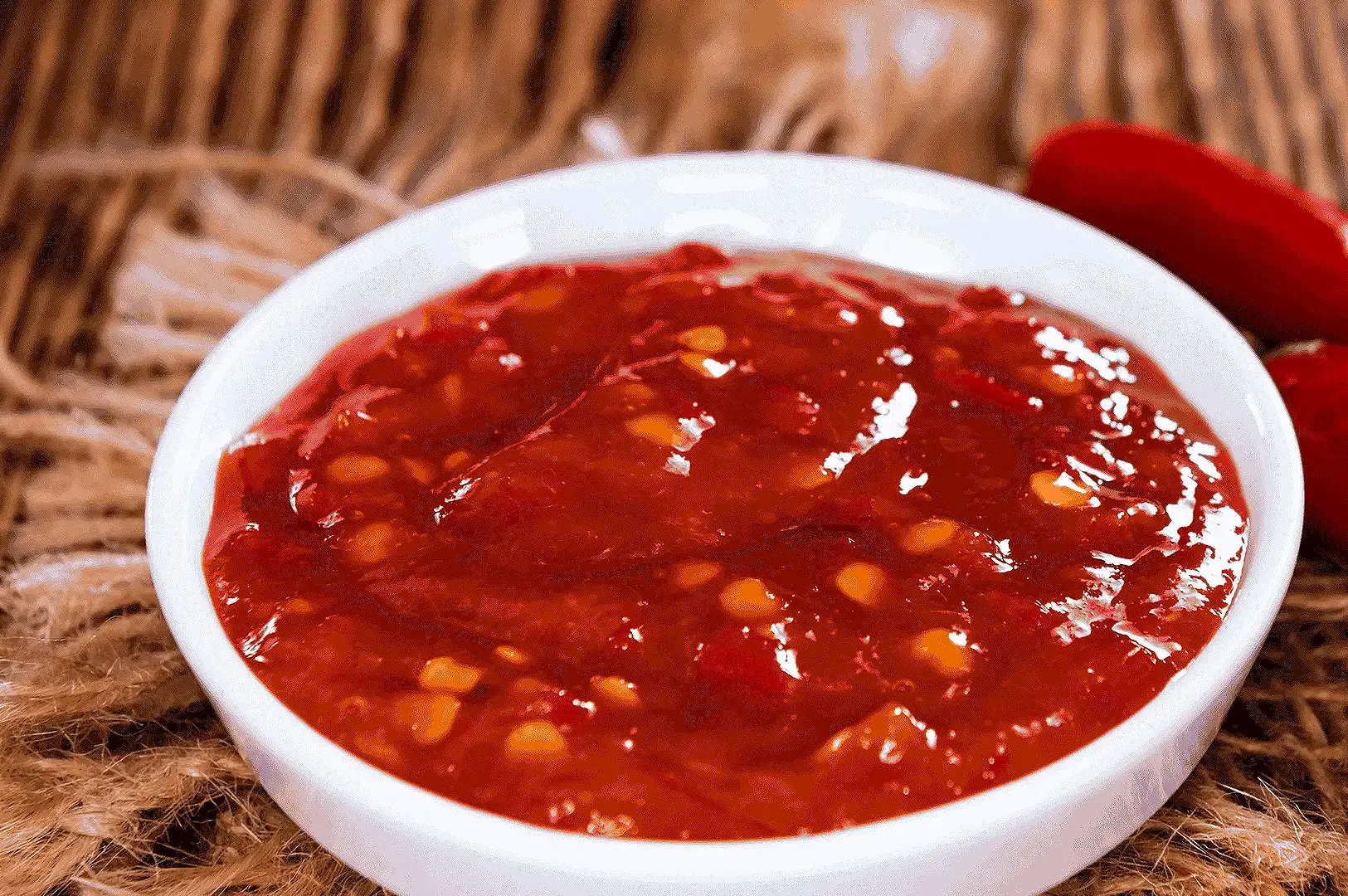
Raw sambal isn’t ready to season anything.
Straight from the jar, or freshly pounded, it tastes sharp and grassy. There’s a rawness to the chilli, a harsh edge from uncooked garlic and shallot, and none of the roundness you want coating your rice. If you add rice to sambal in that state, the rice just carries the harshness. Red, but hollow.
Stir Fry Transformation
Frying changes it. You cook it by smell more than by clock.
At first it smells like raw chilli and wet aromatics — a sort of stinging, green sharpness. Keep it moving over medium heat and that smell shifts. It rounds out. It turns sweeter, savory, almost toasted. That change in fragrance is the single best cue you have.
The colour deepens too, as the water cooks off and the sugar and aromatics start to caramelise. And then the important moment: the oil begins to separate at the edges.
That gloss is what lets the sambal cling to each grain later instead of pooling like a sauce.
Eatdrinkers tip: Cook the sambal by nose, not by timer. When the raw chilli smell disappears and the aroma turns sweet and toasted, and you see oil beading at the edges of the paste, it’s ready. That’s pecah minyak — the moment the paste earns the right to touch the rice.
Common Mistakes
- Adding rice before the sambal is cooked. The rice ends up red but raw-tasting, carrying the harsh chilli edge. Fix it by pushing the rice aside, adding a little oil, frying a fresh spoonful of sambal until fragrant, then tossing everything back together. Prevention: wait for the smell to change before the rice goes in.
- Using fresh, wet rice. It steams and clumps into something closer to porridge. Spread freshly cooked rice out and break it up before cooking. If you must use fresh, chill it uncovered first.
- Overcrowding the pan or wok. Too much rice drops the heat and the whole thing steams instead of fries. Cook in smaller batches in a large wok or wide pan. A crowded pan turns chilli into steam; give the rice room and the sambal suddenly gets louder.
- Making it too sweet. Heavy-handed kecap manis leaves the dish sticky and cloying. Pull it back with a little salt, light soy, lime, or more plain rice. Don’t reach for more sambal to fix it — plenty of sambals are sweet too.
- Not letting the rice fry long enough. Stir it non-stop and it never touches the pan properly, so it stays soft and flat. Let it sit in contact with the heat between tosses until you catch that smoky edge and the grains separate.
Sambal Chicken Fried Rice Variation
For a heartier version, try sambal fried rice with chicken breast:
- Dice the chicken small so it cooks quickly and doesn’t release too much moisture.
- Season lightly — a pinch of salt, maybe a splash of fish sauce or soy sauce — but avoid wet marinades.
- Sear in hot oil until just cooked and lightly browned, then remove.
- Follow the same steps to fry aromatics, add sambal, then stir fry the cold rice.
- Fold the chicken back in at the end, letting the sambal coat every grain.
This method keeps the chicken juicy and the rice flavorful, perfect for a balanced, delicious meal.
Mastering the Balance
Adjust as you go, and trust your tongue over the recipe.
- Too spicy? Add more rice, egg, or cucumber.
- Lime brightens it, but dilution is the real fix.
- Too flat despite looking red? Your sambal probably didn’t cook deep enough — add savoury weight with soy, fish sauce, ikan bilis, or a belacan-style sambal.
- Too salty? More rice, less sauce next time.
For a milder plate, drop to a single tablespoon of sambal and lean on egg. For something deeper, fry the sambal a touch longer and finish with fried shallots and a squeeze of lime. Serve it with cucumber on the side. That’s not decoration — it’s the pause between chilli, salt, oil, and egg, the cool bite that lets you keep eating.

Crunch, Sweet, and Heat: The Irresistible Textures of Southeast Asian Snacks
Dio Asahi | February 17, 2026
In the humid, sticky heat of Southeast Asia, where your shirt clings to your back and the air is thick with the sharp scent of oxidising oil, there’s a particular clink that always gets me. It’s the sound of a metal spatula striking a wok, a rhythmic percussion that’s as familiar to me now as…
-
The Living Pantry: How Geography and Trade Shaped the Food in the Southeast Region
Eat Drink Asia Team | February 14, 2026
To understand the plate is to understand the map. If you were to trace the spice routes of the 15th century or follow the monsoon winds that carried merchant ships across the Indian Ocean, you would find yourself at the epicenter of the world’s most vibrant pantry. The food in the Southeast region of Asia…
-
A Symphony of Senses: Why Southeast Asian Food is the World’s Greatest Culinary Journey
Dio Asahi | February 12, 2026
If you were to stand at a busy intersection in Bangkok, Ho Chi Minh City, or Jakarta and close your eyes, your nose would tell you a story before your eyes ever could. There is a specific, intoxicating perfume that defines Southeast Asian food: the sharp tang of lime juice hitting a hot wok, the…
-
The Alchemy of the Wok: The Story of Singapore-Style Bee Hoon
Eda Wong | February 10, 2026
Across the humid evening air of Singapore, a rhythmic clatter echoes from hawker stalls to high-rise kitchens—the sound of a metal spatula against a seasoned wok. Within that intense heat, rice vermicelli noodles undergoes a profound transformation, absorbing the golden hues of curry powder, the savory depths of soy sauce, and the smoky “breath” of…
-
The Sizzle of the Wok: An Exploration of Fried Bee Hoon Across Southeast Asia
Eat Drink Asia Team | February 7, 2026
Across Southeast Asia, from bustling hawker centers to family kitchens, the sizzle of rice vermicelli noodles hitting a hot wok is a universal comfort. Few dishes capture the spirit of Asian noodle culture as well as fried bee hoon. This stir fry, made with thin rice noodles, delivers a tasty meal any time of the…
-
The Silk of the East: A Deep Dive into Bee Hoon and the Art of Rice Vermicelli
Eda Wong | February 5, 2026
Across the bustling kitchens of Southeast Asia, one humble ingredient has woven itself into the fabric of countless beloved dishes. Bee hoon, the delicate rice vermicelli that transforms from brittle strands into silky noodles, represents centuries of culinary tradition and innovation. Whether you’ve savored Singapore noodles in a hawker center or encountered fried bee hoon…
-
The Eternal Hearth: A Journey Through the Soul of Indian Foods Vegetarian Traditions
Dio Asahi | February 3, 2026
In the vibrant tapestry of global gastronomy, few cultures have elevated the plant-based plate to an art form quite like India. While much of the world has recently turned toward meat alternatives for health or environmental reasons, Indian cuisine has been centered on the vegetable for millennia. This isn’t merely a dietary choice; it is…
-
The Essence of Jeju Citron Tea: A Distinctive Profile of Yuja Tea in Korea
Dio Asahi | January 31, 2026
Imagine sitting in a quiet, sun-drenched teahouse overlooking the dramatic volcanic coastline of Jeju Island. The steam rising from your cup carries an aroma that is at once familiar and yet entirely new—a version of Korean citron tea, or yuja cha, that tastes of sea salt, volcanic soil, and generations of island tradition. As you…
-
Korean Citron Tea: Health Benefits and Wellness Secrets
Eat Drink Asia Team | January 29, 2026
As the seasons change and a chill enters the air, many of us seek out comforting rituals to support our well-being. Imagine wrapping your hands around a steaming cup of Korean citron tea—also known as yuja-cha—its bright, citrus aroma soothing and revitalizing with every sip. More than just a winter treat, Korean citron tea is…
-
When the Izakaya Becomes the Plan: Izakaya Singapore Top Picks for After-Work Reset
Dio Asahi | January 28, 2026
January 28, 2026 | Dio Asahi Last updated: October 12, 2026 As you step behind the humble noren curtain, you’re greeted by glowing lanterns, sizzling charcoal-grilled skewers, and warm welcomes. This is izakaya, Japan’s casual pub, a vibrant part of Singapore’s dining scene. More than just yakitori and sake, izakayas offer a lively setting for social…