It was raining when I got to Millenia Walk. The warm, sideways kind that follows you under every shelter.
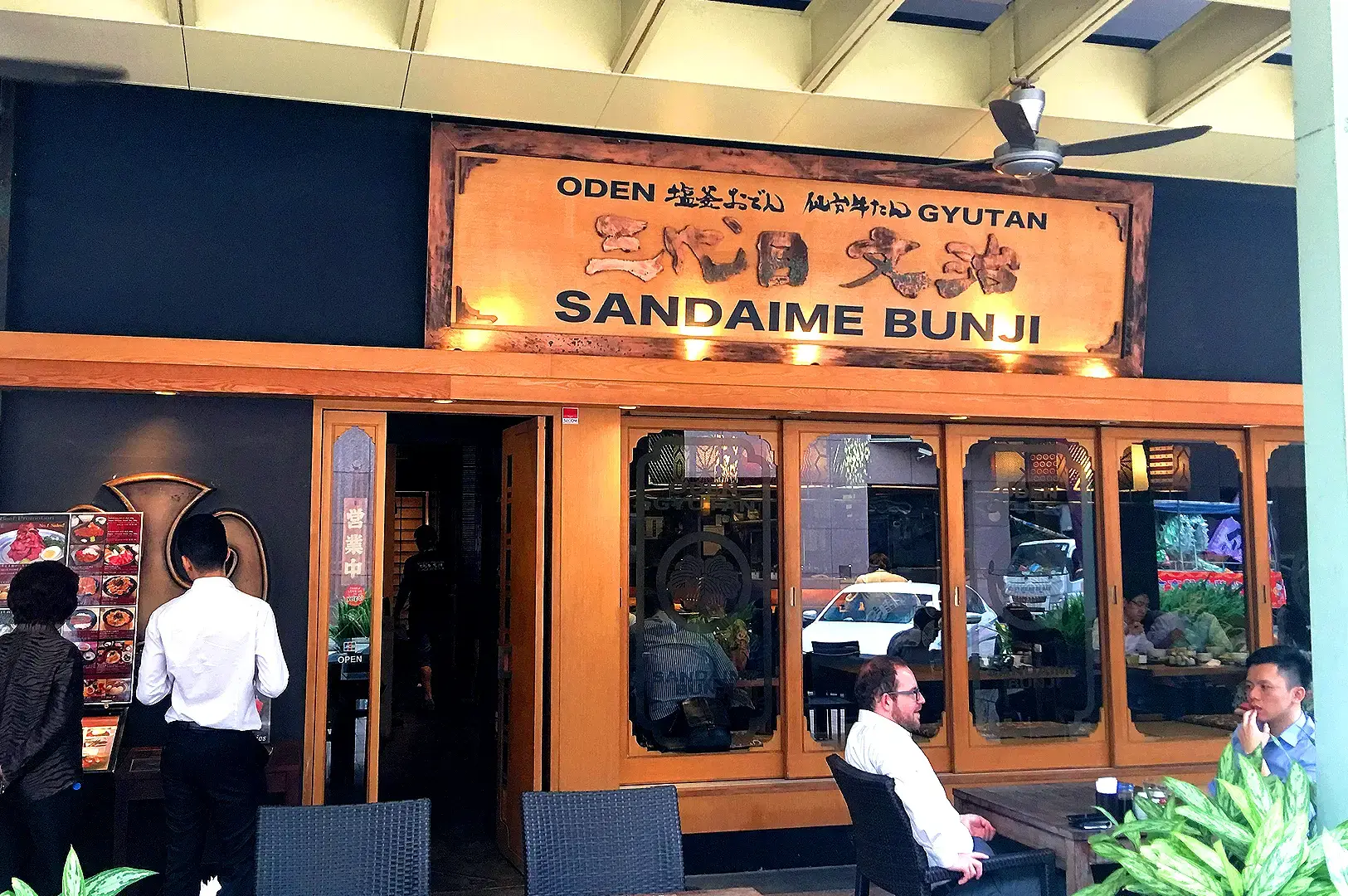
I came for the beef tongue. That is what many diners associate with Sandaime Bunji, the Japanese izakaya at 9 Raffles Boulevard, #01-14/15 Millenia Walk. But by the time I shook out my umbrella at the door, the smell had already changed my mind about where to start.
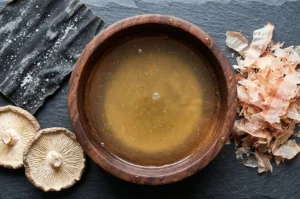
Charcoal, yes. But beneath it, something softer: kombu, bonito, and a soup-like broth that seemed to have been working quietly for hours. That is the thing about Sandaime Bunji. It has two personalities. One is fire, smoke, and Sendai-style grilled beef tongue. The other is oden, soft egg, daikon, and the kind of broth that does not need to shout.
First Impressions at Sandaime Bunji
I visited on a Thursday, a little after 6pm. The after-work crowd from Marina Centre had not fully arrived yet, so the restaurant still had space to breathe.
I took the counter. From there, you can see part of the kitchen: the grill working, a cook turning skewers, steam rising from the oden pot in slow ribbons. There are standard tables behind, plus private rooms for larger groups. Nobody was dressed up. A man in a loosened tie was already on his second highball.
The Room and the Mood
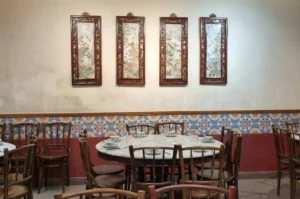
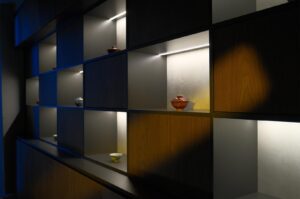
The restaurant feels like an izakaya that has settled into itself. There is warm wood, low chatter, the clink of glasses, and enough movement to feel alive without becoming loud. I could hear the person beside me place orders without leaning in.
This matters because Sandaime Bunji works for more than casual dinners. The room is relaxed enough for friends, but still composed enough for business meetings over food and sake, especially if you book a private room.
If this mix of small plates, drinks, and after-work ease appeals to you, explore our Izakaya Singapore top picks for an after-work reset.
What I Ordered
Sandaime Bunji is known for gyutan, oden, and roast beef bowls, but the menu is wider than that. You will also find izakaya small plates, yakitori, sashimi, sake, lunch-friendly rice bowls, ramen-style items, deep fried oysters, and other seasonal specialities.
For this visit, I focused on the dishes that seemed to explain the restaurant best:
- Dashimaki Tamago
- Oden Moriawase, 7 pieces
- Gyutan Steak Sendai Special, 6 pieces
- Wagyu Mountain Roast Beef Don
- Homemade Tofu
This was enough to understand the kitchen’s strengths and its weaknesses. It also gave me a clearer experience of what customers seem to come here for: smoke, broth, beef, and Japanese comfort food that feels close to an after-work meal in Japan.
Dashimaki Tamago: The Best Place to Start
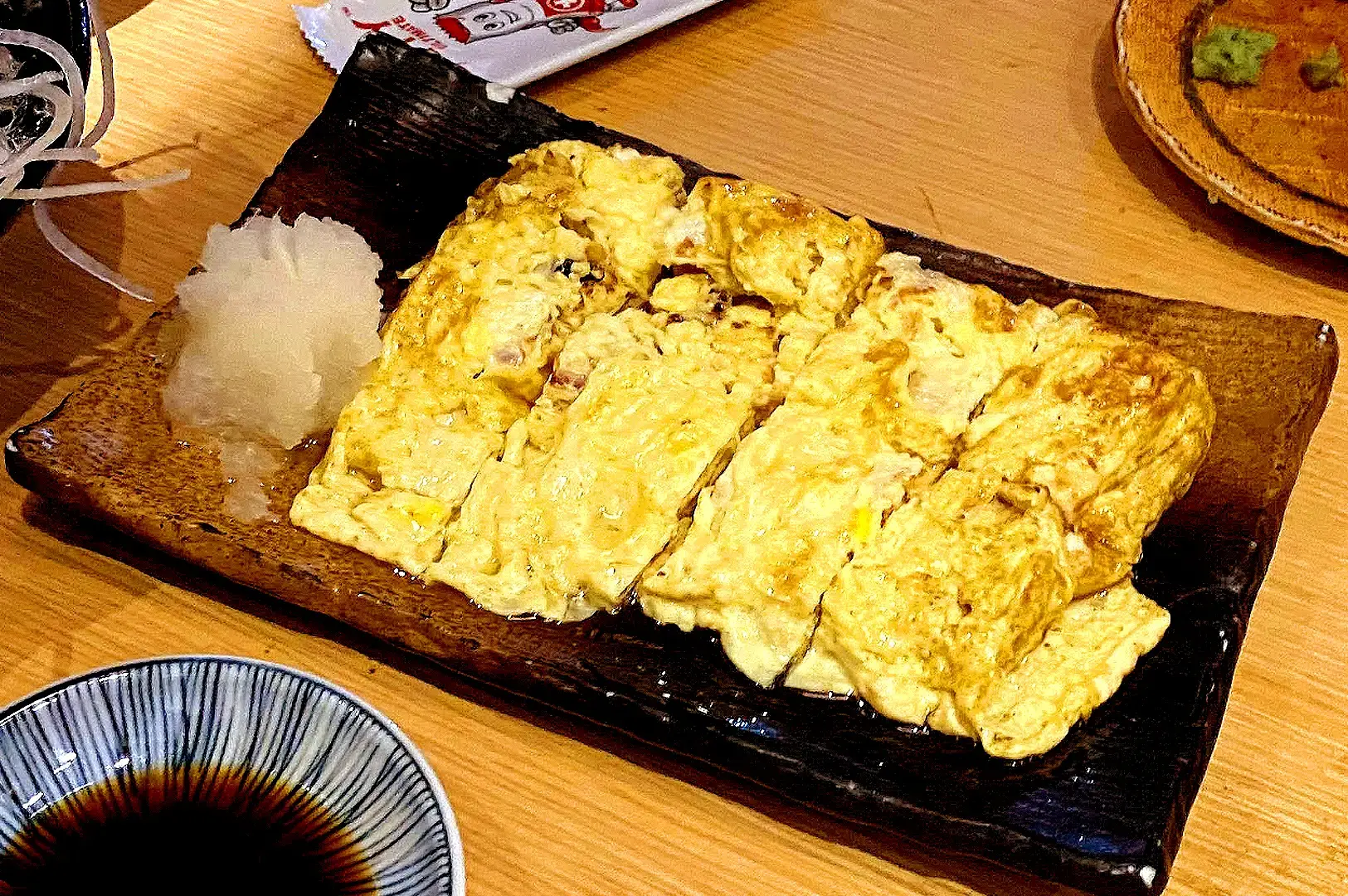
I started with the Dashimaki Tamago. It felt like the right bridge between the grill and the oden pot: egg shaped by heat, but flavoured by broth. It came out pale yellow, barely browned. That was a good sign. Heavy browning would have made it taste fried and firm. This was softer. When I pressed a chopstick into it, the layers gave way gently, folding rather than resisting.
The first bite was all dashi. Clean, savoury, lightly sweet, with a texture that sat between omelette and custard. A little broth slipped out when I cut through the centre, but it did not feel watery. It felt deliberate.
Why It Works
This is not a side dish tacked onto the menu. It tastes connected to the oden, as if the same broth had learned to hold a shape inside egg. It is quiet, but it tells you a lot about the restaurant. I would order it again, ideally with a small cup of cold sake. If you want the most gentle entry point into the meal, start here before the grilled items arrive.
To understand how cooks hold so much savoury broth inside delicate layers of egg, read our guide to making dashimaki tamago, the Japanese rolled omelette that tastes like broth.
Oden Moriawase: The Daikon Test
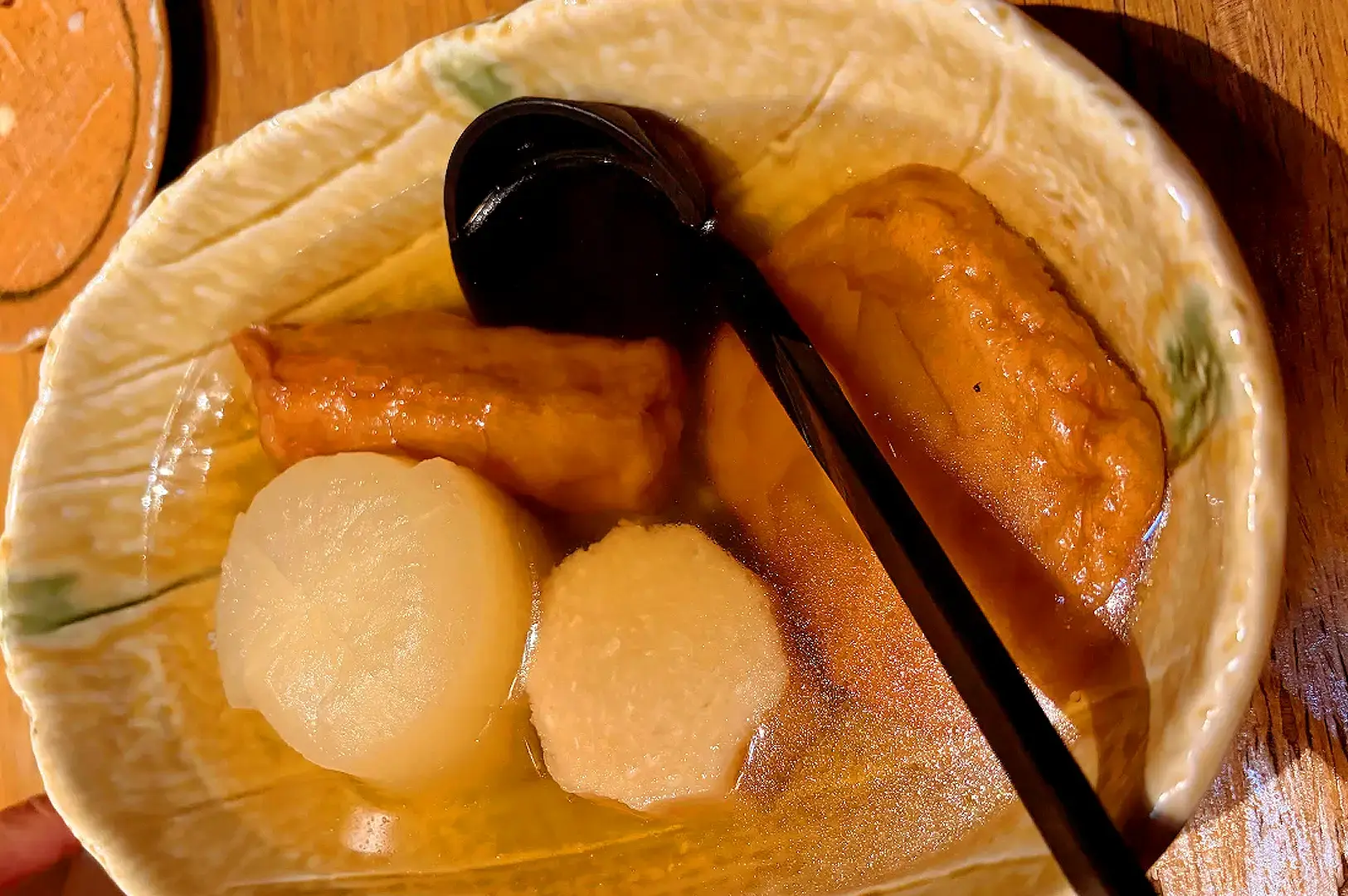
Next came the Oden Moriawase, a 7-piece set served in a shallow bowl with steam lifting off the surface. There was daikon, a soft-boiled egg, chikuwa, konnyaku, and fish cakes swollen from the broth. It did not look dramatic. Oden rarely does. Its appeal is slower than that.
I went straight for the daikon because daikon is the honest test of oden. A good broth does not just sit around the radish. It gets inside it. This one did. The daikon was soft all the way through, pale brown at the centre, and full of warm dashi when I bit into it. The broth was clear, faintly sweet, and savoury without turning salty.
What Could Be Better
Not every piece was equally memorable. The konnyaku was mostly texture: springy, mild, and there to break up the softer ingredients. I can also understand why some reviews describe the oden as average if the diner is expecting bold, heavy flavour.
But on a rainy evening, with the glass fogging slightly and the smell of broth in the room, it made sense. This is comfort food, not fireworks.
Beef Tongue at Sandaime Bunji: The Signature with a Wobble
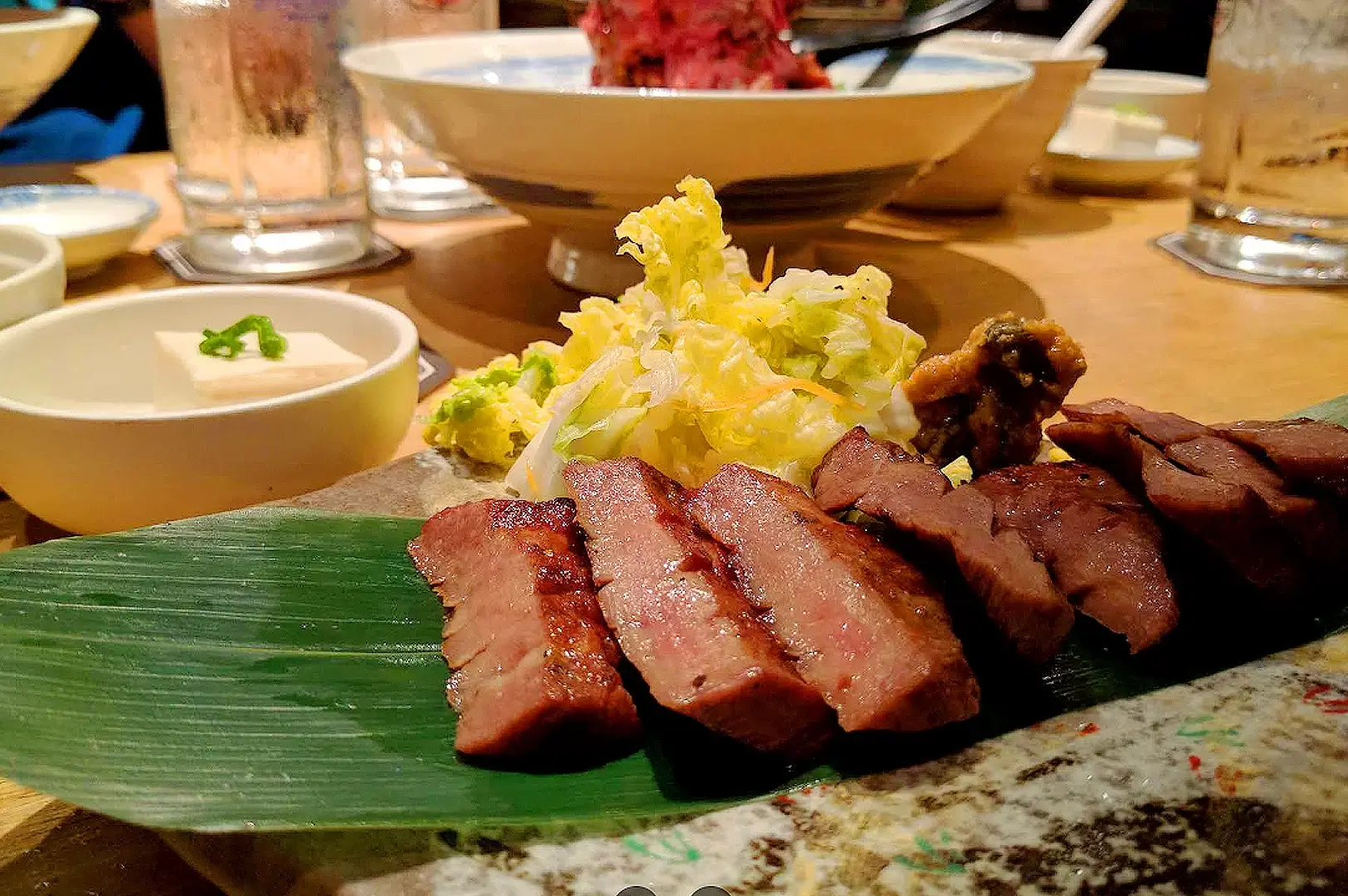
I ordered the Gyutan Steak Sendai Special, 6 pieces. This is the beef tongue dish Sandaime Bunji is most associated with, and it is also the one I approached with the most curiosity. The plate arrived with thick-cut slices of beef tongue, grill marks across each piece, a little salt, and lemon on the side. The aroma was smoky and meaty, with that faint sweetness beef fat gets when it meets charcoal.
The first two pieces were very good. Firm, springy, and smoky, with enough chew to remind you that gyutan is not meant to melt like wagyu. The lemon cut through the richness cleanly. Then the texture shifted.
A couple of pieces were denser than I wanted. Not terrible, but they needed more chewing. Thick-cut beef tongue leaves very little room for error: a few seconds too long, and the bounce turns into resistance.
Should You Order It?
Yes, if you are curious about gyutan or came specifically for Sandaime Bunji’s Sendai-style identity. The brand has roots in Tokyo and draws from the Sendai beef tongue tradition, so this is one of the items that gives the restaurant its point of view.
But go in with the right expectation. This is not a soft steak experience. It is springy, smoky, and deliberately chewy. At close to S$30 for six pieces, it also feels like a dish where consistency matters. My plate was mostly good, with a slight wobble.
Wagyu Mountain Roast Beef Don: The Safer Crowd-Pleaser
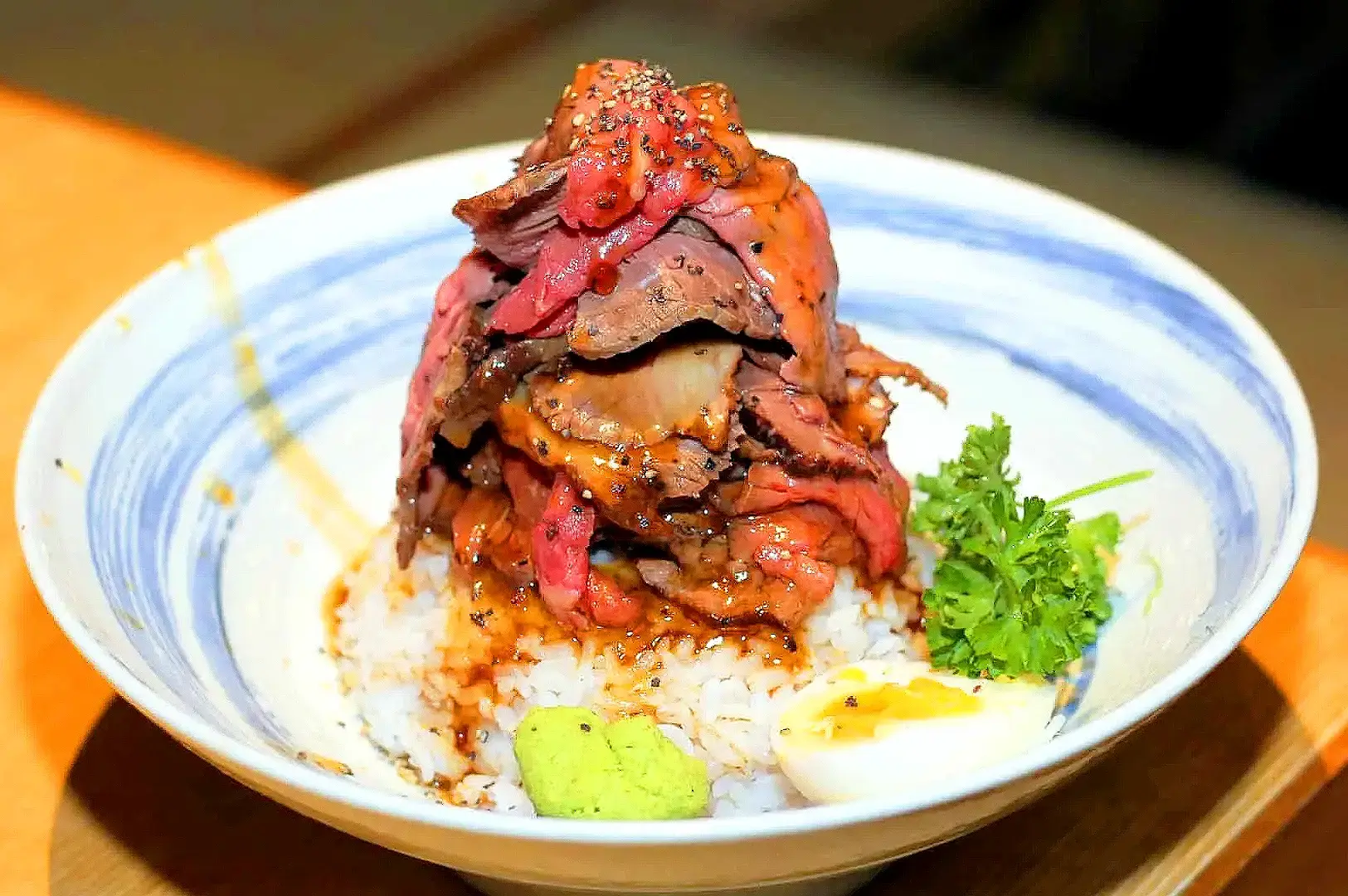
It arrived as a small hill of pink beef slices over rice, glossy with sauce. The beef was thin, tender, and easy to fold with chopsticks. The sauce was sweet-savoury, soaking into the rice below, with a soft peppery finish. It was not complicated, but it was satisfying in the way a good lunch bowl should be. Rice, beef, sauce, softness, salt, and just enough richness to keep you going back.
Best for Lunch
This was the most consistent thing I ate. If I worked nearby, I could see myself returning for this at lunch more often than for the gyutan steak. It is less risky, easier to enjoy, and better suited to a quick weekday meal. If you are scanning the page before ordering, this is the practical pick: comforting, filling, and easier to recommend to a wider variety of diners.
Homemade Tofu and Smaller Plates
The Homemade Tofu was the quiet reset after the beef. Cool, soft, and clean, it did not try to compete with the grill or the oden. It simply gave the meal a pause. That matters at an izakaya. When the table fills with smoky meat, fried items, broth, and drinks, you need something soft and calm between heavier bites.
I would not come here only for the tofu, but I would order it again as a balancing dish. On another visit, I would also consider the deep fried oysters. They fit the room’s mood: crisp outside, briny within, and better with sake than with too much analysis.
Prices, Location, and Practical Details
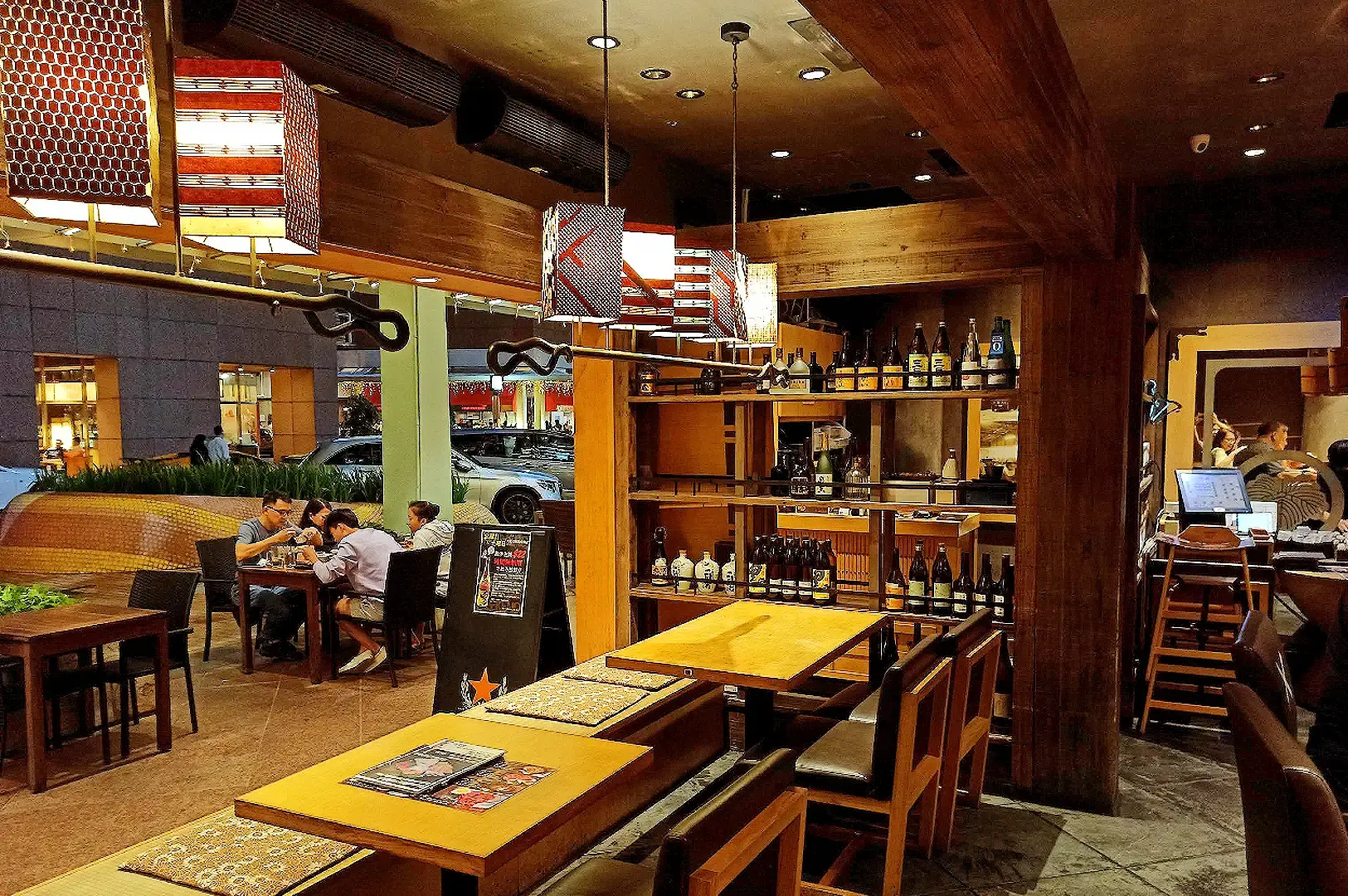
Sandaime Bunji is at Millenia Walk, close to Promenade MRT. It works well for office workers, Suntec visitors, Marina Square diners, and anyone looking for a Japanese izakaya near Marina Centre.
Before You Go
- Address: 9 Raffles Boulevard, #01-14/15 Millenia Walk, Singapore 039596
- Nearest MRT: Promenade MRT
- Budget: Around S$20 to S$35 for a simpler lunch; S$35 to S$70 or more for dinner with shared plates and drinks
- Reservations: Useful for Fri evenings, Saturday dinners, groups, business meetings, or private rooms
Current listings show service from 11 30 for lunch and dinner from 5pm, with closing times varying by day. For accurate information, check the restaurant’s current booking page or official listing before making a special trip.
Sandaime Bunji: Worth Every Bite?
Sandaime Bunji is not perfect. The beef tongue can be uneven, portions can feel modest for the price, and service slows when the room fills. If you want polished fine dining, this is not the place. But if you want an izakaya with warmth, smoke, broth, sake, and after-work ease, it makes sense.
The dish I expected to remember was the beef tongue. The dish I actually kept thinking about was the dashimaki: pale, soft, and quietly full of dashi. The oden daikon stayed with me too, not because it was loud, but because it did exactly what it needed to do.
I left understanding Sandaime Bunji better than when I arrived. It is at its best when fire and broth share the table: gyutan for the chew, oden for the calm, roast beef don for comfort, and a cold drink to tie everything together.

The Soul of the Table: An Educational Guide to the Role of Food in Malaysian Culture
Eat Drink Asia Team | March 17, 2026
We still remember our first collective Rumah Terbuka (Open House) experience in Kuala Lumpur.Standing at the doorway of a home during Hari Raya, we were utterly paralyzed by the sheer volume of people and the aroma of Malaysian cooking. There were aunties ladling beef rendang and tables groaning under the weight of colourful kuih. “Do…
-
Asian Food Comfort Trends: Why Broths and Bowls are Dominating Globally
Eda Wong | March 14, 2026
I still remember the first time I faced a “build-your-own” Mala Xiang Guo counter. I stood there, plastic tongs in hand, completely paralyzed by the mountain of choices. Lotus root? Kelp knots? three different types of tofu skin? My anxiety spiked. I panicked, grabbed way too much luncheon meat, and ended up with a $28…
-
The Fifth Element: A Masterclass on Umami in East Asian Cuisine
Dio Asahi | March 12, 2026
I’ll never forget the first time I made miso soup from scratch. Not the instant kind, but the “proper” way. I boiled water, dissolved miso paste, added tofu, and waited. It tasted flat, salty and cloudy but missing the deep, satisfying flavor I loved in Japanese restaurants. I thought maybe I needed better miso. Years…
-
Why My Quest Ended at Yummy Western (409 AMK)
Dio Asahi | March 10, 2026
There’s a specific magic to a late-night supper hunt in Singapore. It’s the ritual of chasing a craving through the humidity to find that one stall that hits the spot. For me, that meant a pilgrimage to Ang Mo Kio Avenue 10. I arrived at 10 PM on a Friday, just as the ‘supper soul’…
-
A Taste of Time: My Dinner at Guan Hoe Soon
Eda Wong | March 7, 2026
There’s something special about visiting a place that has seen decades of Singapore’s history unfold. Guan Hoe Soon, tucked away on Joo Chiat Road, holds the title of Singapore’s oldest Nyonya restaurant, and you can feel that heritage the moment you step inside. I’d heard about it for years, a place where recipes aren’t just…
-
The 6 Best Halal Restaurant in Singapore for Authentic Nasi Padang
Eda Wong | March 5, 2026
There are few meals as satisfying as Nasi Padang, a colourful feast where you choose from a variety of dishes to create your perfect plate. Over the years, I’ve explored Singapore’s Nasi Padang scene, especially in Kampong Glam, sampling everything from humble hawker stalls to renowned spots. This list highlights the best halal Nasi Padang…
-
The Global Soup Bowl: How Indonesian Soto Shapes the Future of Asiatic Food Traditions
Dio Asahi | March 3, 2026
I still remember my first “real” bowl of Indonesian soto. Sitting on a low plastic stool in a cramped warung, I ordered Soto Betawi, expecting it to be like the clear Soto Ayam from Singaporean weddings. I was wrong. The rich, milky broth was intense, creamy, and boldly spiced. That first spoonful rewired my idea…
-
Shun: Japan’s Seasonal Treasures – A Deep Dive Into the Ingredients Behind True Omakase
Eat Drink Asia Team | February 28, 2026
In the world of Asian food, few dining experiences capture the soul of traditional Japanese food culture like omakase. At a premier omakase restaurant, diners entrust their meal entirely to the chef, whose artistry is guided not just by mastery, but by shun—the appreciation of seasonal and fresh ingredients at the absolute peak of their…

My Trip to Bánh Mì Saigon and How It Compares to Best Food in Singapore
Eda Wong | February 26, 2026
Located in the bustling neighborhood of Ang Mo Kio, Bánh Mì Saigon offers a taste of Vietnam right here in Singapore. From traditional bánh mì sandwiches to hearty pho bowls and refreshing Vietnamese iced coffee, this restaurant has it all. I arrived at Bánh Mì Saigon on a busy Saturday evening and was immediately drawn…
-
Tea Room by Ki-setsu: A Curated Journey Through Chinese Tea in the Heart of Singapore
Dio Asahi | February 25, 2026
Most people arrive at Chinese tea the way they arrive at any beverage: thirsty, curious, maybe looking for something sweet or soothing. But traditional chinese tea isn’t built like a single drink. It’s a network: leaf origin, processing choices, vessel physics, water, pacing, and the quiet social technology of sitting down long enough for a…