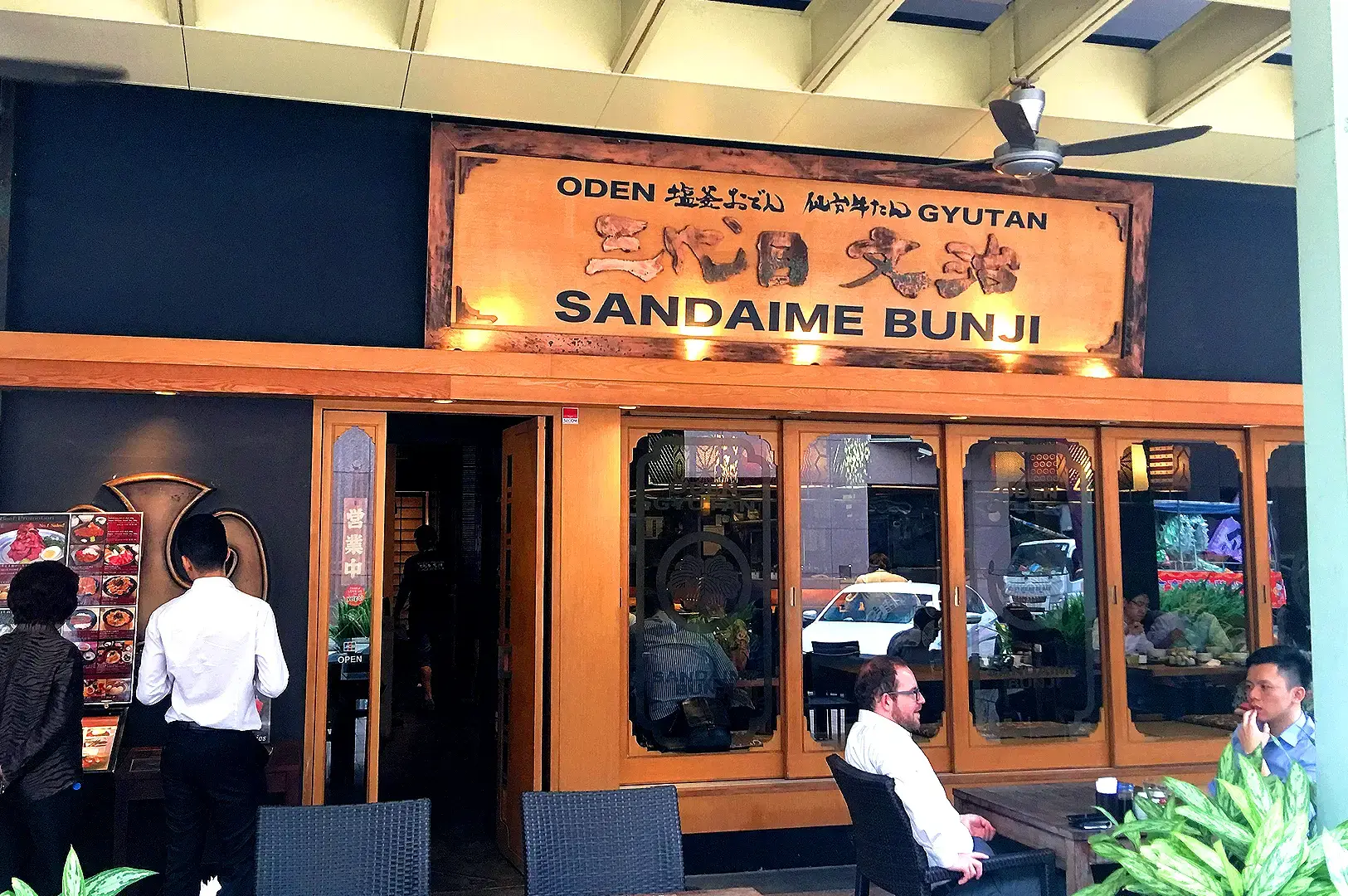
It was raining when I got to Millenia Walk. The warm, sideways kind that follows you under every shelter.
I came for the beef tongue. That is what many diners associate with Sandaime Bunji, the Japanese izakaya at 9 Raffles Boulevard, #01-14/15 Millenia Walk. But by the time I shook out my umbrella at the door, the smell had already changed my mind about where to start.
Charcoal, yes. But beneath it, something softer: kombu, bonito, and a soup-like broth that seemed to have been working quietly for hours. That is the thing about Sandaime Bunji. It has two personalities. One is fire, smoke, and Sendai-style grilled beef tongue. The other is oden, soft egg, daikon, and the kind of broth that does not need to shout.
First Impressions at Sandaime Bunji
I visited on a Thursday, a little after 6pm. The after-work crowd from Marina Centre had not fully arrived yet, so the restaurant still had space to breathe.
I took the counter. From there, you can see part of the kitchen: the grill working, a cook turning skewers, steam rising from the oden pot in slow ribbons. There are standard tables behind, plus private rooms for larger groups. Nobody was dressed up. A man in a loosened tie was already on his second highball.
The Room and the Mood
The restaurant feels like an izakaya that has settled into itself. There is warm wood, low chatter, the clink of glasses, and enough movement to feel alive without becoming loud. I could hear the person beside me place orders without leaning in.
This matters because Sandaime Bunji works for more than casual dinners. The room is relaxed enough for friends, but still composed enough for business meetings over food and sake, especially if you book a private room.
If this mix of small plates, drinks, and after-work ease appeals to you, explore our Izakaya Singapore top picks for an after-work reset.
What I Ordered
Sandaime Bunji is known for gyutan, oden, and roast beef bowls, but the menu is wider than that. You will also find izakaya small plates, yakitori, sashimi, sake, lunch-friendly rice bowls, ramen-style items, deep fried oysters, and other seasonal specialities.
For this visit, I focused on the dishes that seemed to explain the restaurant best:
- Dashimaki Tamago
- Oden Moriawase, 7 pieces
- Gyutan Steak Sendai Special, 6 pieces
- Wagyu Mountain Roast Beef Don
- Homemade Tofu
This was enough to understand the kitchen’s strengths and its weaknesses. It also gave me a clearer experience of what customers seem to come here for: smoke, broth, beef, and Japanese comfort food that feels close to an after-work meal in Japan.
Dashimaki Tamago: The Best Place to Start
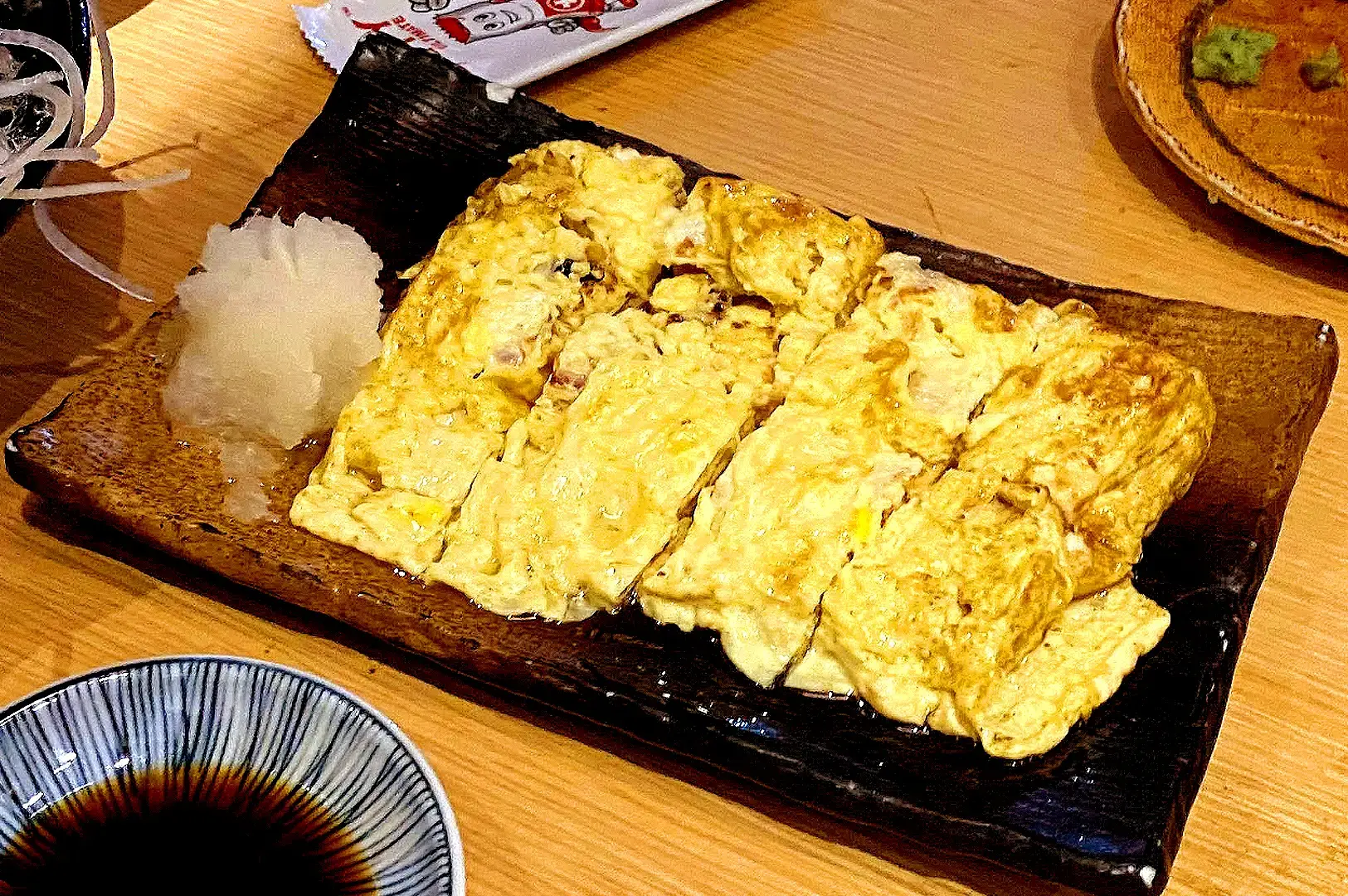
I started with the Dashimaki Tamago. It felt like the right bridge between the grill and the oden pot: egg shaped by heat, but flavoured by broth. It came out pale yellow, barely browned. That was a good sign. Heavy browning would have made it taste fried and firm. This was softer. When I pressed a chopstick into it, the layers gave way gently, folding rather than resisting.
The first bite was all dashi. Clean, savoury, lightly sweet, with a texture that sat between omelette and custard. A little broth slipped out when I cut through the centre, but it did not feel watery. It felt deliberate.
Why It Works
This is not a side dish tacked onto the menu. It tastes connected to the oden, as if the same broth had learned to hold a shape inside egg. It is quiet, but it tells you a lot about the restaurant. I would order it again, ideally with a small cup of cold sake. If you want the most gentle entry point into the meal, start here before the grilled items arrive.
To understand how cooks hold so much savoury broth inside delicate layers of egg, read our guide to making dashimaki tamago, the Japanese rolled omelette that tastes like broth.
Oden Moriawase: The Daikon Test
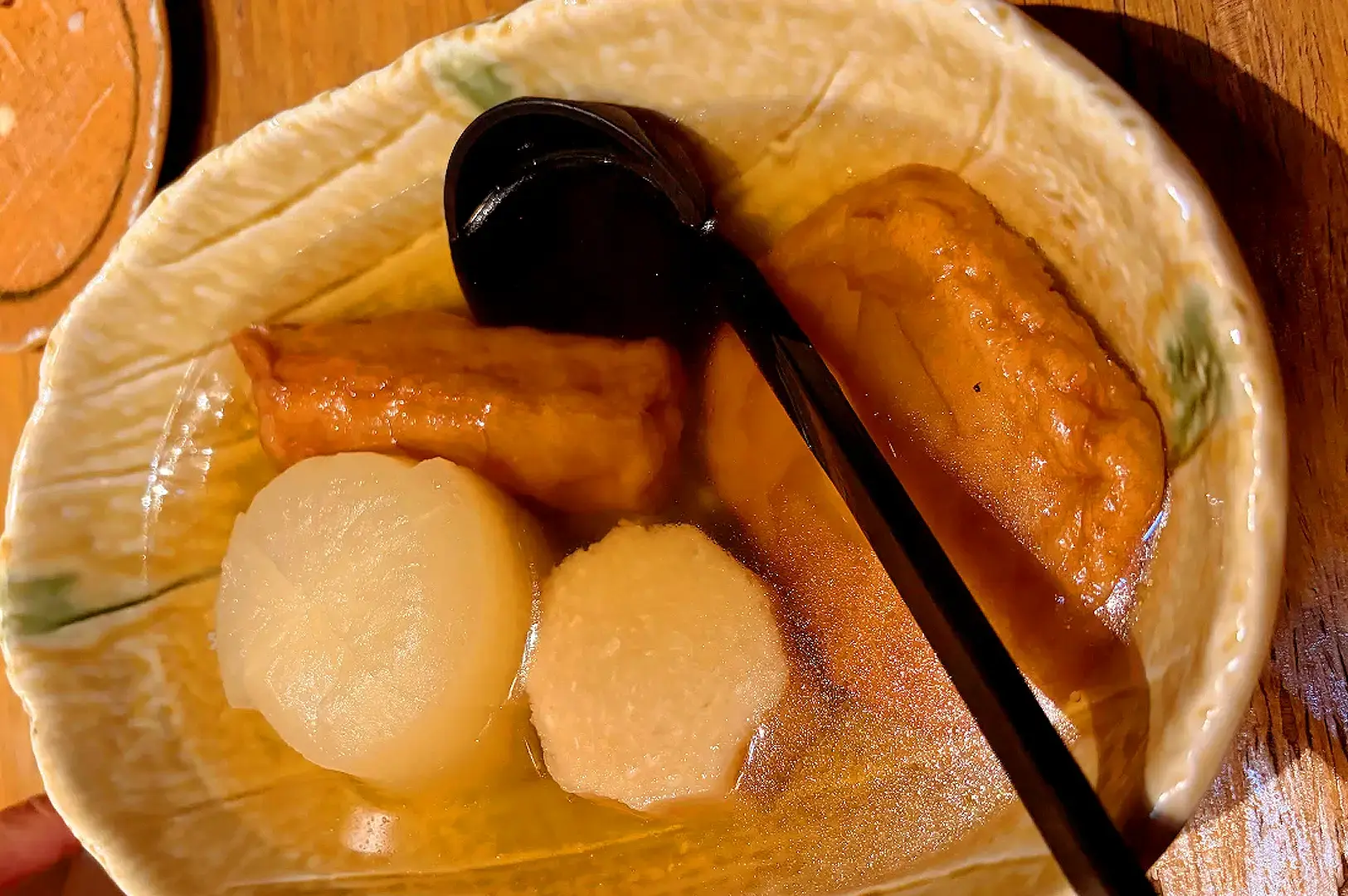
Next came the Oden Moriawase, a 7-piece set served in a shallow bowl with steam lifting off the surface. There was daikon, a soft-boiled egg, chikuwa, konnyaku, and fish cakes swollen from the broth. It did not look dramatic. Oden rarely does. Its appeal is slower than that.
I went straight for the daikon because daikon is the honest test of oden. A good broth does not just sit around the radish. It gets inside it. This one did. The daikon was soft all the way through, pale brown at the centre, and full of warm dashi when I bit into it. The broth was clear, faintly sweet, and savoury without turning salty.
What Could Be Better
Not every piece was equally memorable. The konnyaku was mostly texture: springy, mild, and there to break up the softer ingredients. I can also understand why some reviews describe the oden as average if the diner is expecting bold, heavy flavour.
But on a rainy evening, with the glass fogging slightly and the smell of broth in the room, it made sense. This is comfort food, not fireworks.
Beef Tongue at Sandaime Bunji: The Signature with a Wobble
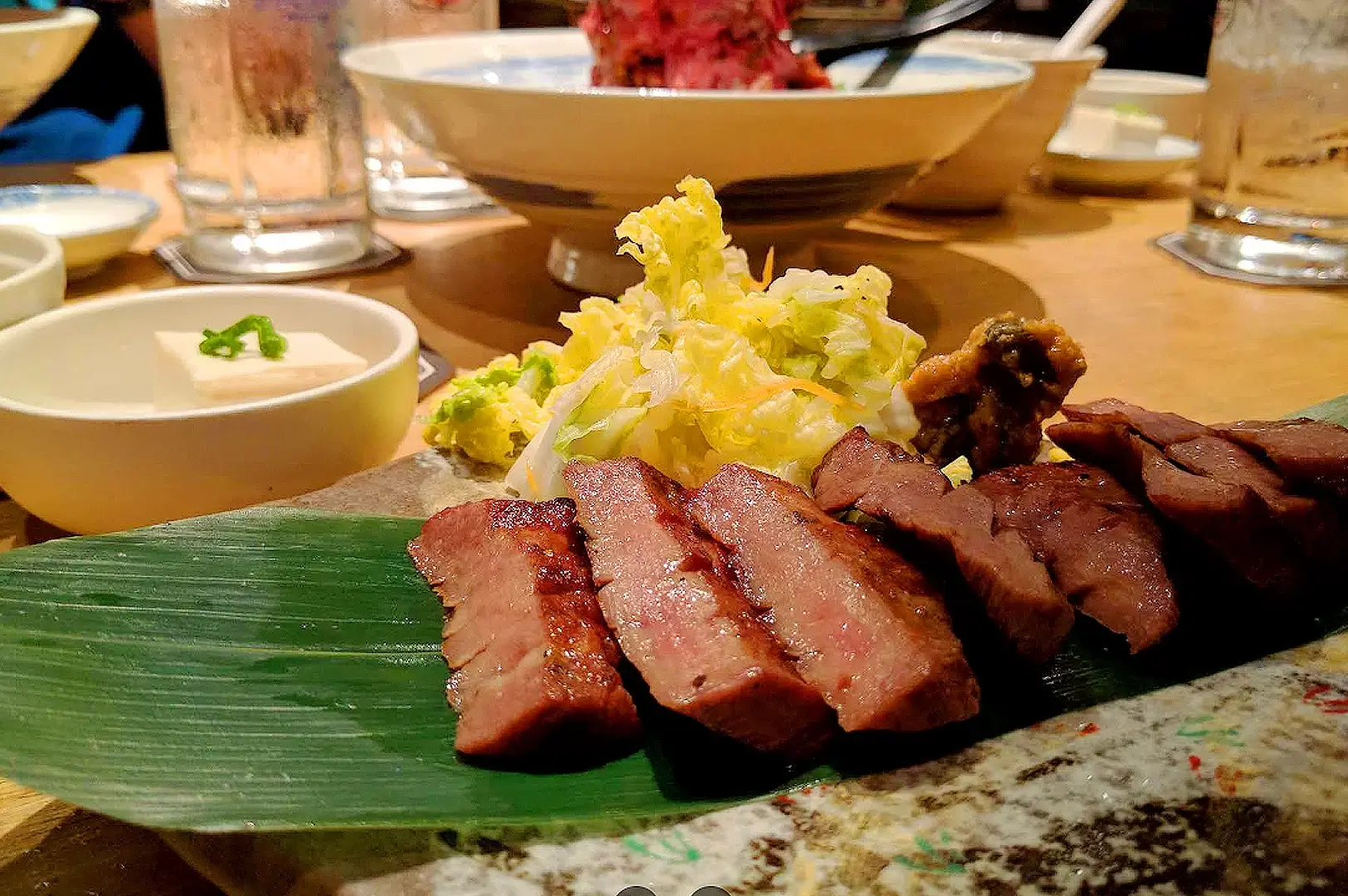
I ordered the Gyutan Steak Sendai Special, 6 pieces. This is the beef tongue dish Sandaime Bunji is most associated with, and it is also the one I approached with the most curiosity. The plate arrived with thick-cut slices of beef tongue, grill marks across each piece, a little salt, and lemon on the side. The aroma was smoky and meaty, with that faint sweetness beef fat gets when it meets charcoal.
The first two pieces were very good. Firm, springy, and smoky, with enough chew to remind you that gyutan is not meant to melt like wagyu. The lemon cut through the richness cleanly. Then the texture shifted.
A couple of pieces were denser than I wanted. Not terrible, but they needed more chewing. Thick-cut beef tongue leaves very little room for error: a few seconds too long, and the bounce turns into resistance.
Should You Order It?
Yes, if you are curious about gyutan or came specifically for Sandaime Bunji’s Sendai-style identity. The brand has roots in Tokyo and draws from the Sendai beef tongue tradition, so this is one of the items that gives the restaurant its point of view.
But go in with the right expectation. This is not a soft steak experience. It is springy, smoky, and deliberately chewy. At close to S$30 for six pieces, it also feels like a dish where consistency matters. My plate was mostly good, with a slight wobble.
Wagyu Mountain Roast Beef Don: The Safer Crowd-Pleaser
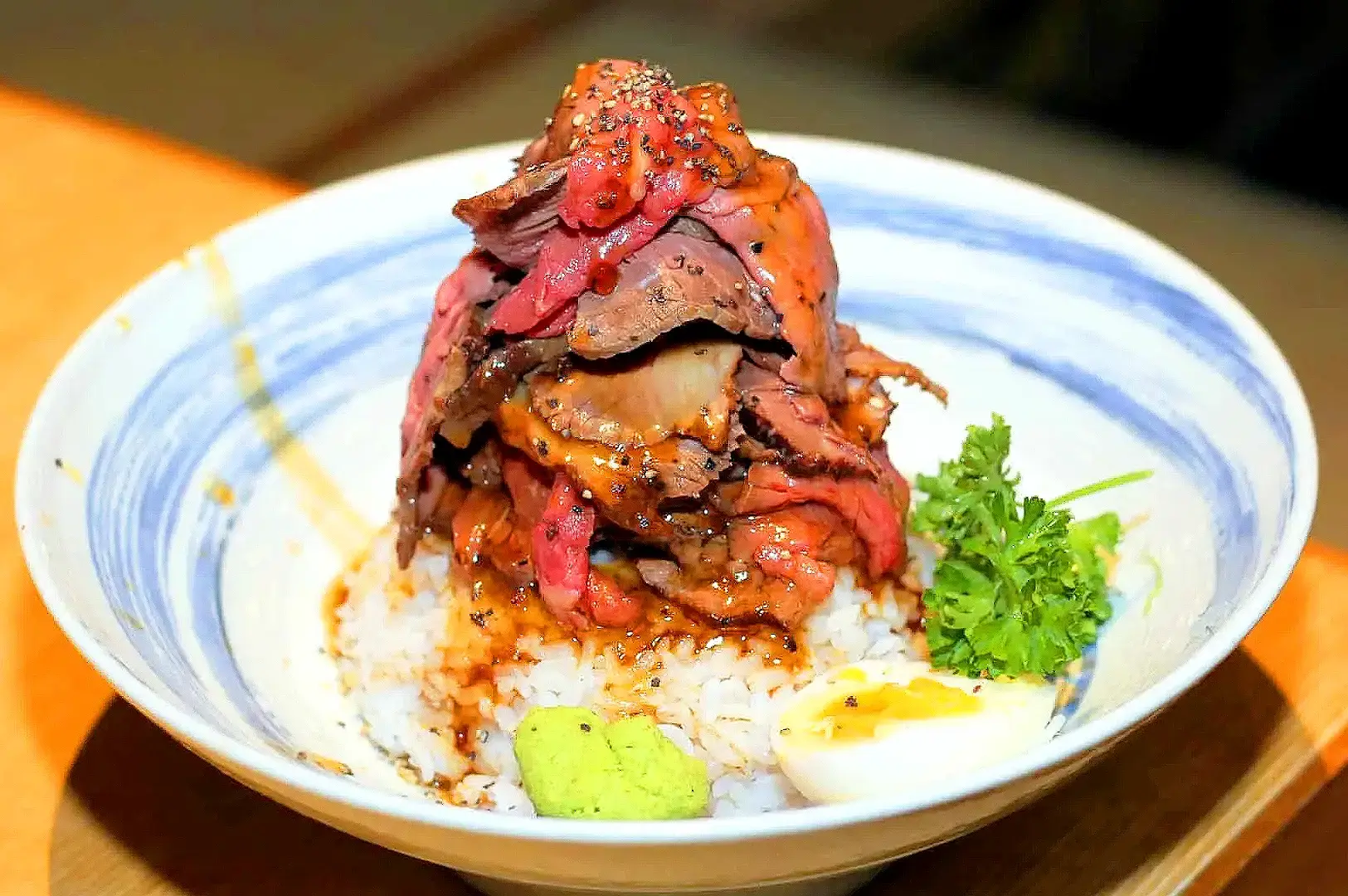
It arrived as a small hill of pink beef slices over rice, glossy with sauce. The beef was thin, tender, and easy to fold with chopsticks. The sauce was sweet-savoury, soaking into the rice below, with a soft peppery finish. It was not complicated, but it was satisfying in the way a good lunch bowl should be. Rice, beef, sauce, softness, salt, and just enough richness to keep you going back.
Best for Lunch
This was the most consistent thing I ate. If I worked nearby, I could see myself returning for this at lunch more often than for the gyutan steak. It is less risky, easier to enjoy, and better suited to a quick weekday meal. If you are scanning the page before ordering, this is the practical pick: comforting, filling, and easier to recommend to a wider variety of diners.
Homemade Tofu and Smaller Plates
The Homemade Tofu was the quiet reset after the beef. Cool, soft, and clean, it did not try to compete with the grill or the oden. It simply gave the meal a pause. That matters at an izakaya. When the table fills with smoky meat, fried items, broth, and drinks, you need something soft and calm between heavier bites.
I would not come here only for the tofu, but I would order it again as a balancing dish. On another visit, I would also consider the deep fried oysters. They fit the room’s mood: crisp outside, briny within, and better with sake than with too much analysis.
Prices, Location, and Practical Details
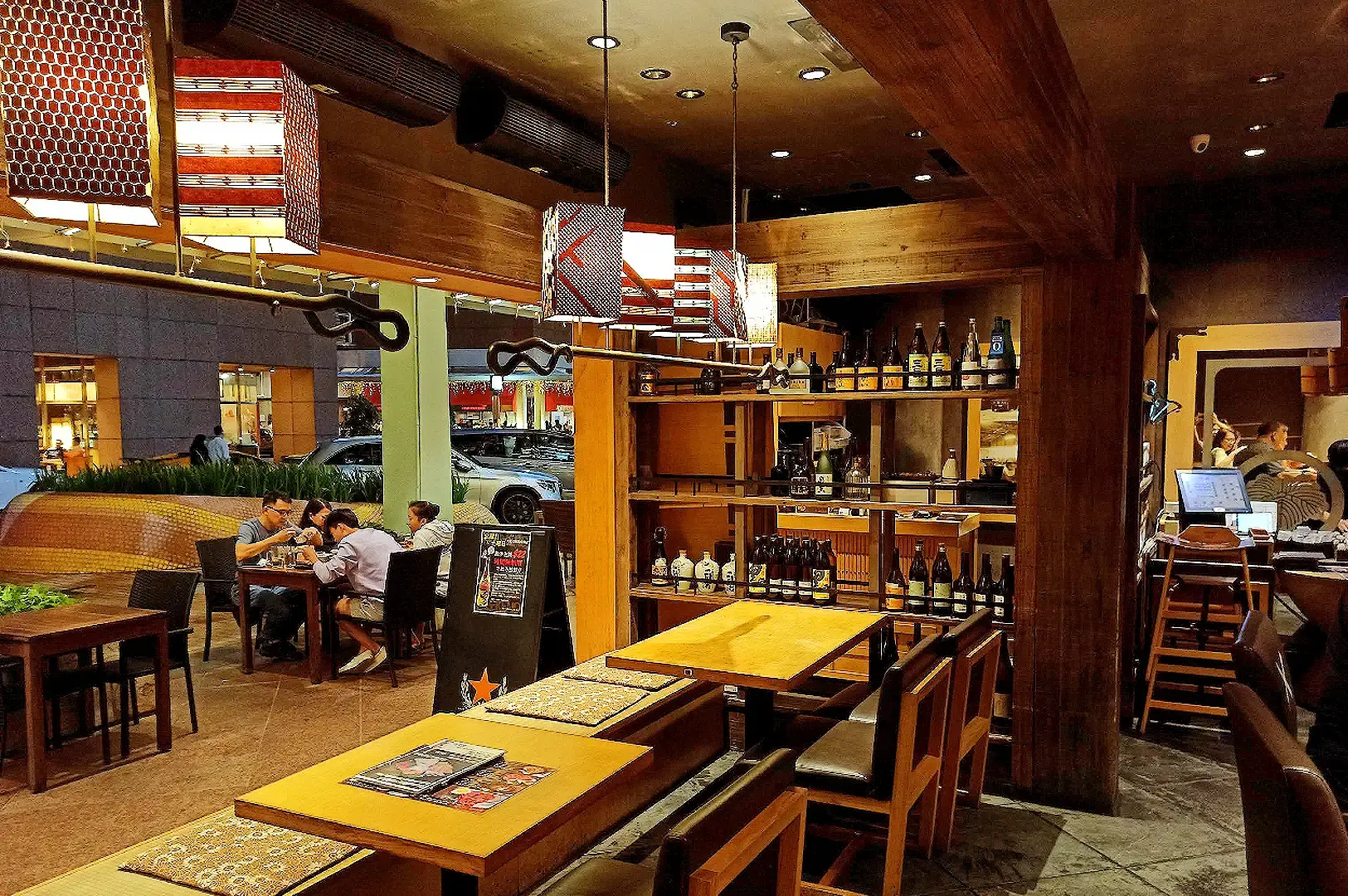
Sandaime Bunji is at Millenia Walk, close to Promenade MRT. It works well for office workers, Suntec visitors, Marina Square diners, and anyone looking for a Japanese izakaya near Marina Centre.
Before You Go
- Address: 9 Raffles Boulevard, #01-14/15 Millenia Walk, Singapore 039596
- Nearest MRT: Promenade MRT
- Budget: Around S$20 to S$35 for a simpler lunch; S$35 to S$70 or more for dinner with shared plates and drinks
- Reservations: Useful for Fri evenings, Saturday dinners, groups, business meetings, or private rooms
Current listings show service from 11 30 for lunch and dinner from 5pm, with closing times varying by day. For accurate information, check the restaurant’s current booking page or official listing before making a special trip.
Sandaime Bunji: Worth Every Bite?
Sandaime Bunji is not perfect. The beef tongue can be uneven, portions can feel modest for the price, and service slows when the room fills. If you want polished fine dining, this is not the place. But if you want an izakaya with warmth, smoke, broth, sake, and after-work ease, it makes sense.
The dish I expected to remember was the beef tongue. The dish I actually kept thinking about was the dashimaki: pale, soft, and quietly full of dashi. The oden daikon stayed with me too, not because it was loud, but because it did exactly what it needed to do.
I left understanding Sandaime Bunji better than when I arrived. It is at its best when fire and broth share the table: gyutan for the chew, oden for the calm, roast beef don for comfort, and a cold drink to tie everything together.

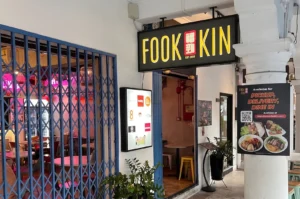
Chasing Flavor: How Fook Kin Taught Us to Cook Asian Cuisine Recipes the Right Way
Eat Drink Asia Team | April 14, 2026
For years, we told ourselves that truly great Asian cooking was a mystical art form, a craft reserved for seasoned hawker uncles or Michelin-starred chefs with decades of experience. Our own attempts at home often felt like pale imitations, lacking that deep, smoky flavour or that perfect textural contrast we craved. Then, we had dinner…
-
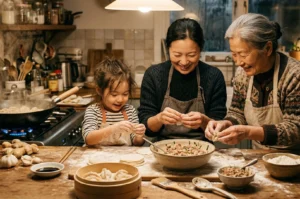
Connecting Generations: How Asiatic Food Builds Family Bonds Across Time
Dio Asahi | April 11, 2026
Whenever I smell toasted sesame oil hitting a hot wok, I am instantly transported back to a tiny, bustling kitchen from my childhood. The air would be thick with the aroma of ginger, garlic, and slow-simmering soy sauce. Before a single word was spoken, the meal was already telling a story. For many of us,…
-
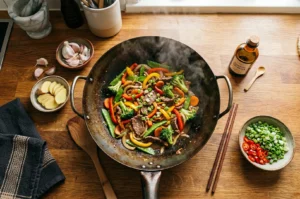
A Comprehensive Resource for Oriental Foods Recipes for the Modern Home Cook
Eda Wong | April 10, 2026
For years, I thought cooking Asian food at home required something mystical. My stir-fries were soggy, lacking that smoky breath of the wok. My fried rice was inconsistent, sometimes clumpy, other times dry. My sauces tasted flat, missing the balance of savory, sweet, and tangy flavors I craved. I assumed restaurants had secrets I’d never…
-
Pour Decisions: The Best Bars in Singapore for Craft Beers and More
Dio Asahi | April 9, 2026
Walking through the humid streets of Singapore at dusk, you can feel the city transforming. The tropical heat fades into neon lights, and the clinking of glasses begins to echo from narrow shophouses and towering skyscrapers. Singapore boasts a dynamic bar scene that rivals any global metropolis. From opulent destinations like to the laid back charm,…
-
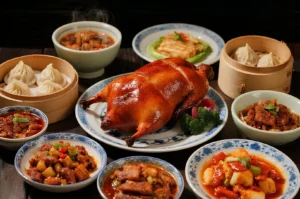
The 8 Best Chinese Restaurants in Singapore: From Dim Sum to Peking Duck
Dio Asahi | April 7, 2026
Singapore’s best chinese restaurants in singapore function less like isolated dining rooms and more like a networked system of technique. Across these chinese restaurants, you see branches of chinese cuisine expressed through roast mastery, controlled fermentation, seafood purity, and banquet choreography. This is not simply a guide to chinese food. It’s a mapped culinary journey…
-
The Neighbourhood Restaurant Test: How to Spot Truly Authentic Cuisine Restaurants in Your Area
Eda Wong | March 31, 2026
A friend texted me last week: “I’m outside this new Vietnamese place. How do I know if it’s legit before I waste my money?” It’s a question I get often. We’ve all been there, drawn in by a cool sign, only to get a plate of sad, sweet, tourist-grade pad thai that tastes like ketchup….
-
Cuisine in the World Meets Singapore: Inside Nakhon Kitchen’s Cross-Cultural Magic
Dio Asahi | March 26, 2026
There’s a rite of passage for any food lover living in the East of Singapore, and it involves a queue. Specifically, the perpetually long, snaking queue outside Nakhon Kitchen in Bedok. I’d heard the legends for years: authentic Thai food, rock-bottom prices, and a wait time that tests your commitment. So, on a Tuesday evening…
-
The Spice Route Secrets: A Deep Dive into Malay Ethnic Food
Eda Wong | March 24, 2026
My first time ordering Nasi Padang in Geylang Serai was overwhelming, I randomly picked dishes and was shocked by a $20 bill due to premium beef rendang and squid. That taught me to always ask seafood prices and that Malay food is a complex, modular cuisine. Malay food is everywhere in Singapore, in hawker centres,…
-
The Shokunin Spirit: How Japan’s Craftsman Philosophy Lives Inside Singapore’s Most Disciplined Omakase Counter
Dio Asahi | March 21, 2026
The fire is not roaring; it is breathing. In a small, darkened workshop in Sakai, a swordsmith watches the colour of the steel with eyes that have tracked the same transformation for forty years. He does not look at a clock. He listens to the hum of the charcoal. He waits for the metal to…
-
The Evolution of the Plate: How History Transformed Iconic Malaysian Dishes
Eda Wong | March 19, 2026
I used to think I understood Malaysian food. As a Singaporean, it’s practically in my DNA, right? Nasi lemak for breakfast, a cheeky roti canai for supper – I thought I had it all figured out. Then I spent a week eating my way through Penang and Kuala Lumpur, and I realised I knew absolutely…