It was close to nine on a Friday when I finally found the door.
Tanjong Pagar was doing its usual thing, full tables spilling onto five-foot ways, soju bottles catching the light, someone laughing too loudly two doors down. I almost walked past Todamgol. Then the smell reached me. Fermented, smoky, a little sharp. The kind of smell that makes your stomach speak before your head does.
I wasn’t there for one clean bowl. I was there to eat the way Korean food actually wants to be eaten, messily, together, across a whole table. And Todamgol, I’d been told, understands that better than most.
A Room That Doesn’t Try to Be Pretty in Tanjong Pagar
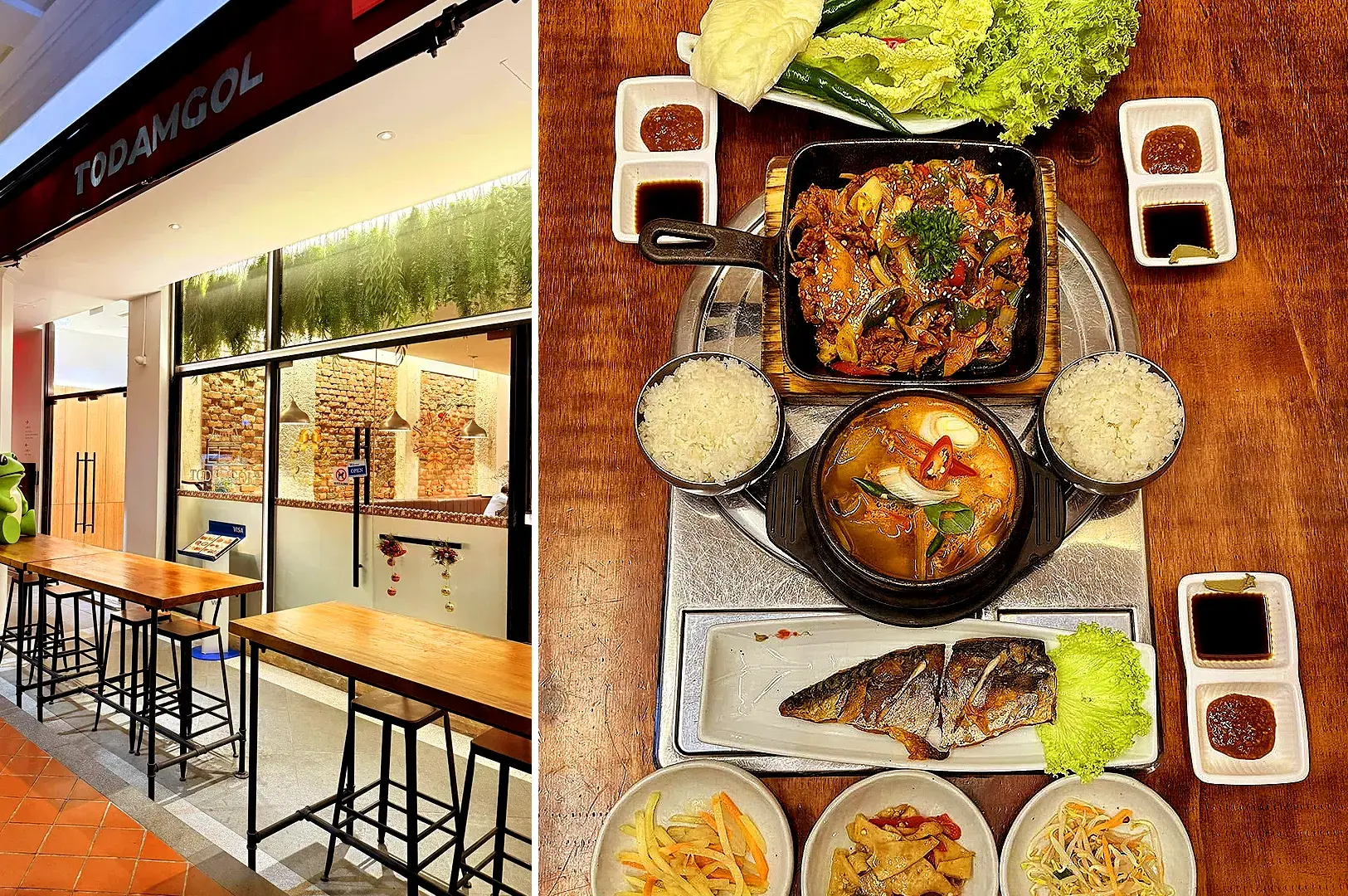
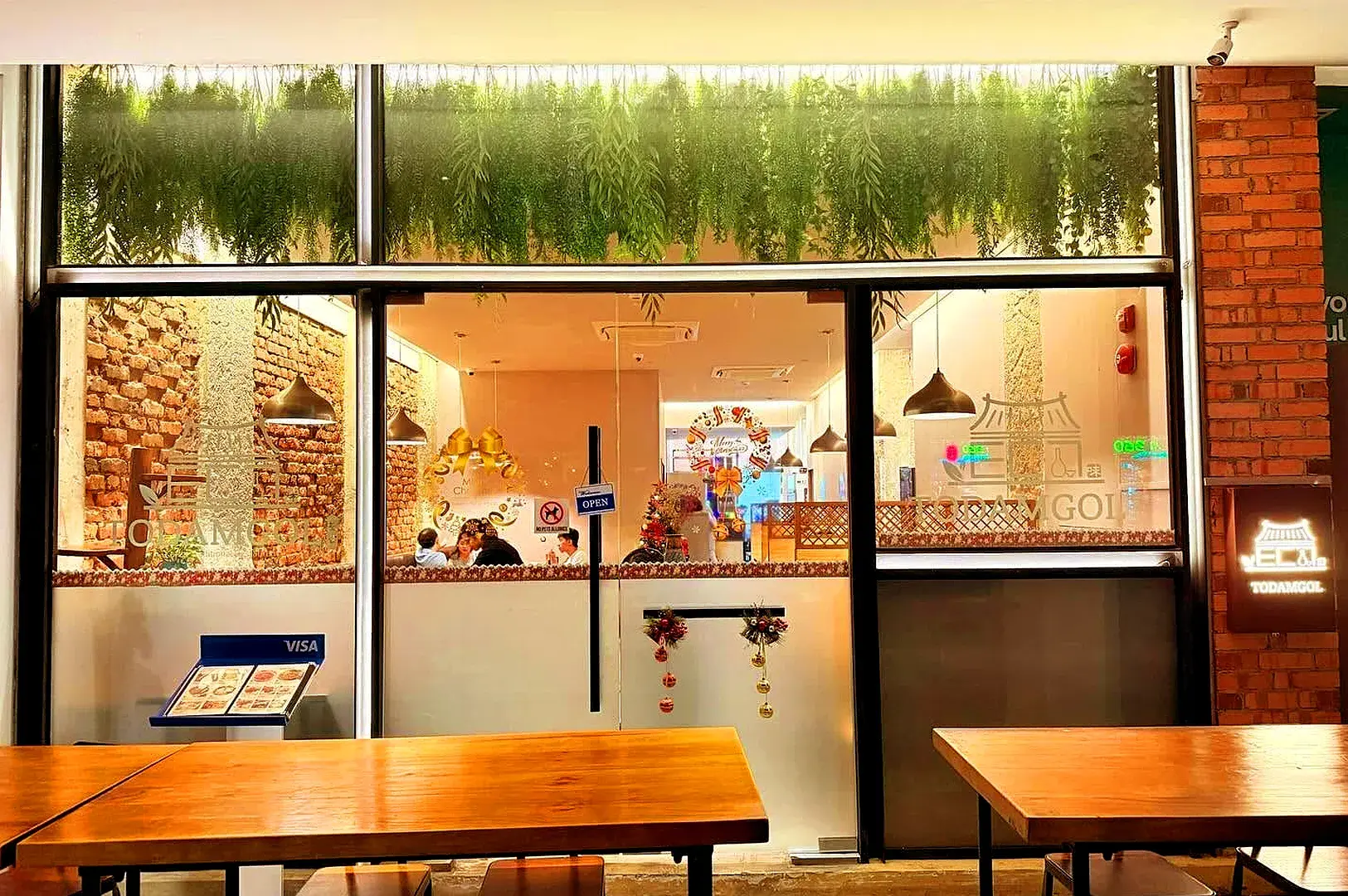
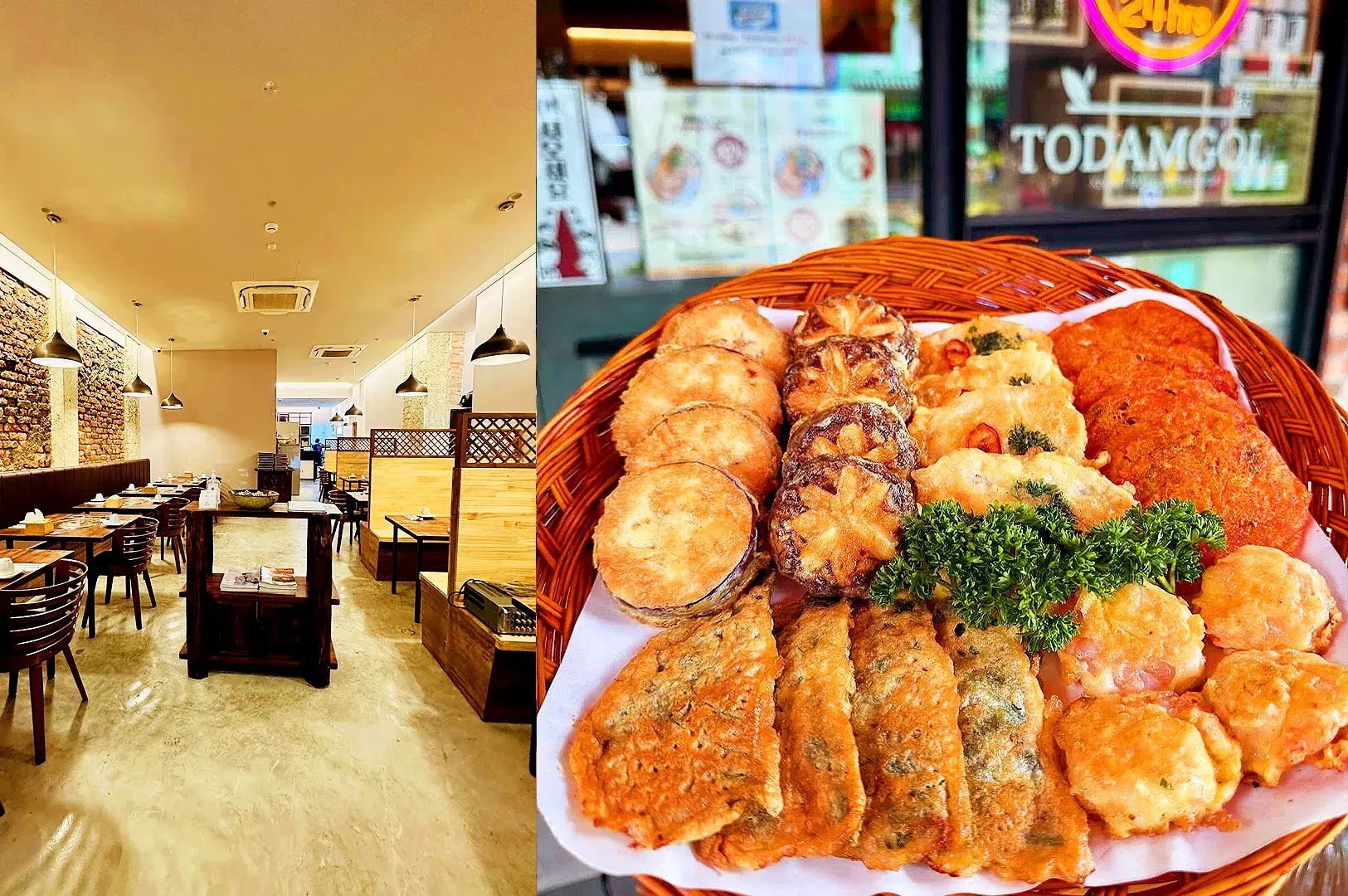
Inside Todamgol, nestled in the bustling Tanjong Pagar area, the décor is wooden and warm, a little worn in the good way. It’s a far cry from the polished Korean places you find in malls along Tanjong Pagar Road, with their bright screens and matching chairs. This place feels older, more grounded, timber walls and low lighting evoke the rustic charm of a countryside Korean drinking house rather than a modern restaurant. Nothing matches perfectly, and nothing needs to.
It’s loud. A Friday night here is not a quiet meal, it’s clatter and chatter, the hiss of stews arriving still bubbling, and the buzz of people enjoying themselves. If you want hushed tones, come another time. But if you crave the lively heart of Korean dining, it wraps around you fast.
I squeezed into one of the spacious seats with two friends, and the korean side dishes, or banchan, arrived almost before we’d sat down. Small dishes of kimchi, pickled radish, and a seasoned green I couldn’t name. These aren’t just fillers; they’re the quiet backbone of the meal, a mix of flavors and textures that reminded me of my time in Korea. The rustic decor also brings to mind the cozy atmosphere of certain izakaya restaurants in Singapore featured on Eat Drink Asia.
The Food, and Why the Table Matters More Than Any Dish in Tanjong Pagar
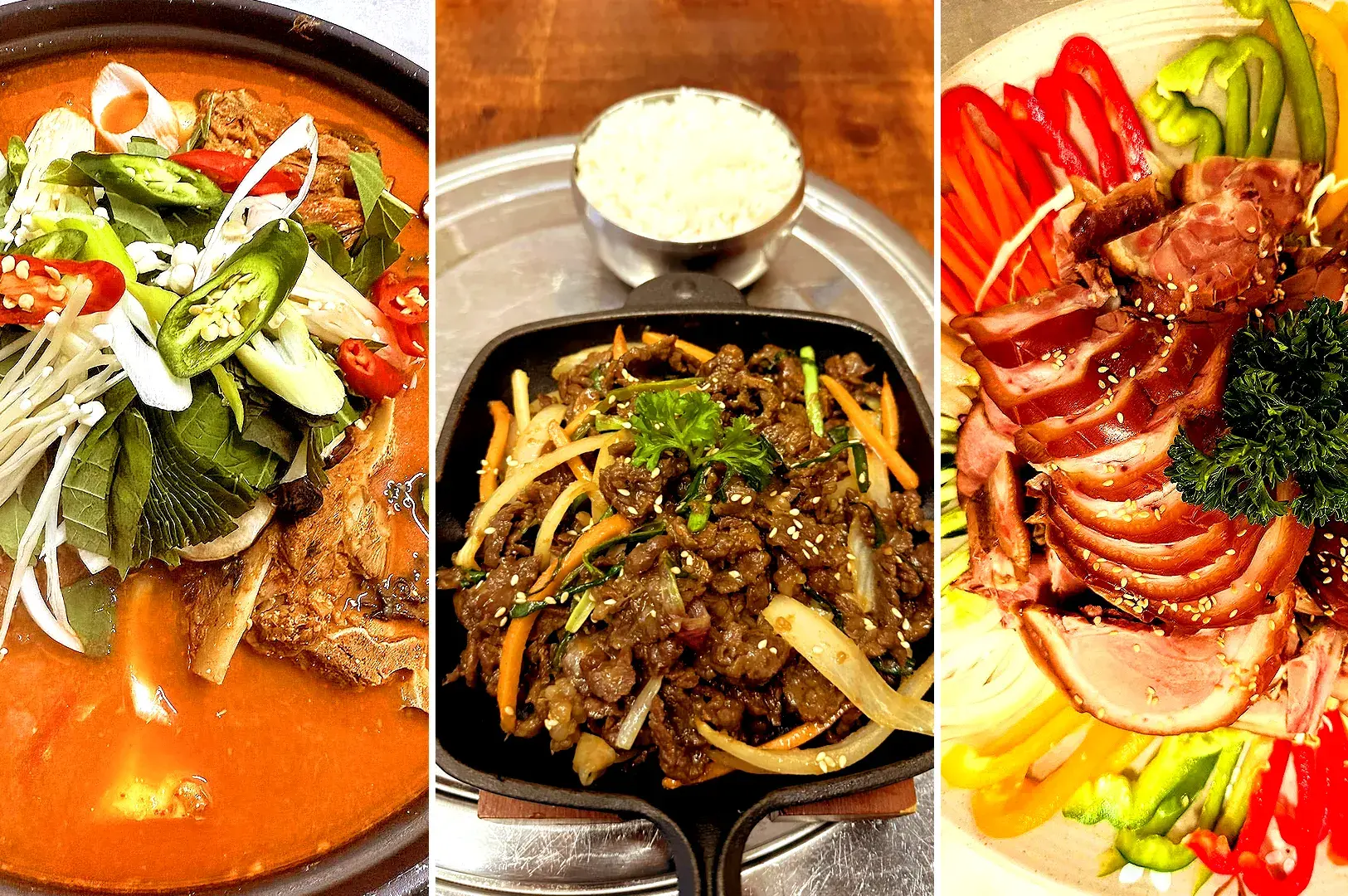
Here’s what I kept thinking: Korean food doesn’t work as a single plate. It’s a system, heat and rice, sour and crunch, all reaching across each other. Todamgol leans hard into that, and it’s where the place truly shines.
Budae Jjigae (Army Stew)
- We started with the army stew, because you’d be a little foolish not to.
- It arrived massive, almost comically big, enough for three of us with room to spare.
- The broth was a deep red, spicy and savoury at once, hitting the back of your throat gently before settling into warmth.
- Thick slabs of luncheon meat floated near the top, soft and salty.
- Beneath, noodles, tofu, and vegetables soaked up that heat.
This dish embodies the authenticity of Todamgol’s offerings. It’s not refined food, and it’s not trying to be. But it’s complete, spicy stew, soft rice on the side to calm it down, kimchi to cut through. I ate more than I meant to.
Expect to pay in the S$25–S$35 range for these big shared bowls. Split it. One is plenty for a small group.
Korean Pancake / Jeon Platter
Next came the jeon platter, which broke up the heat nicely.
- Crisp at the edges, chewy in the middle.
- Eggy batter holding scallion and savory bits together.
- Tear off a piece, dip it in the soy-vinegar sauce, which cuts right through the richness of the stew.
There’s something cute and festive about pancakes on a Korean table. They feel made for sharing, for passing around, for reaching across someone’s chopsticks to grab the last golden corner. It did exactly that work here.
Dak Bal (Spicy Chicken Feet)
We ordered the chicken feet, a dish many Singapore diners shy away from.
- Late-night Korean drinking food at its most honest.
- Sticky, glossy, red with spice, scattered with spring onion.
- You debone them yourself, a bit of a project, a bit messy.
- The reward is chewy, addictive heat.
- When it got too much, we tucked pieces into rice balls, and the starch pulled the fire down to something manageable.
This dish is not for everyone. But if you want to understand how Koreans actually eat and drink late into the night, this plate tells you everything.
Bossam and Pork Hangover Soup
We couldn’t finish everything, but the bossam deserves a mention, boiled pork you wrap yourself in cabbage with kimchi and perilla leaf.
- Assembly required.
- The perilla note lingered longer than I expected.
The pork hangover soup, ordered by a friend, was rich and clean at once, cut through with fresh chili. She finished every drop, which says more than I could.
What Didn’t Land and the Reality of Reservations and Service in Tanjong Pagar
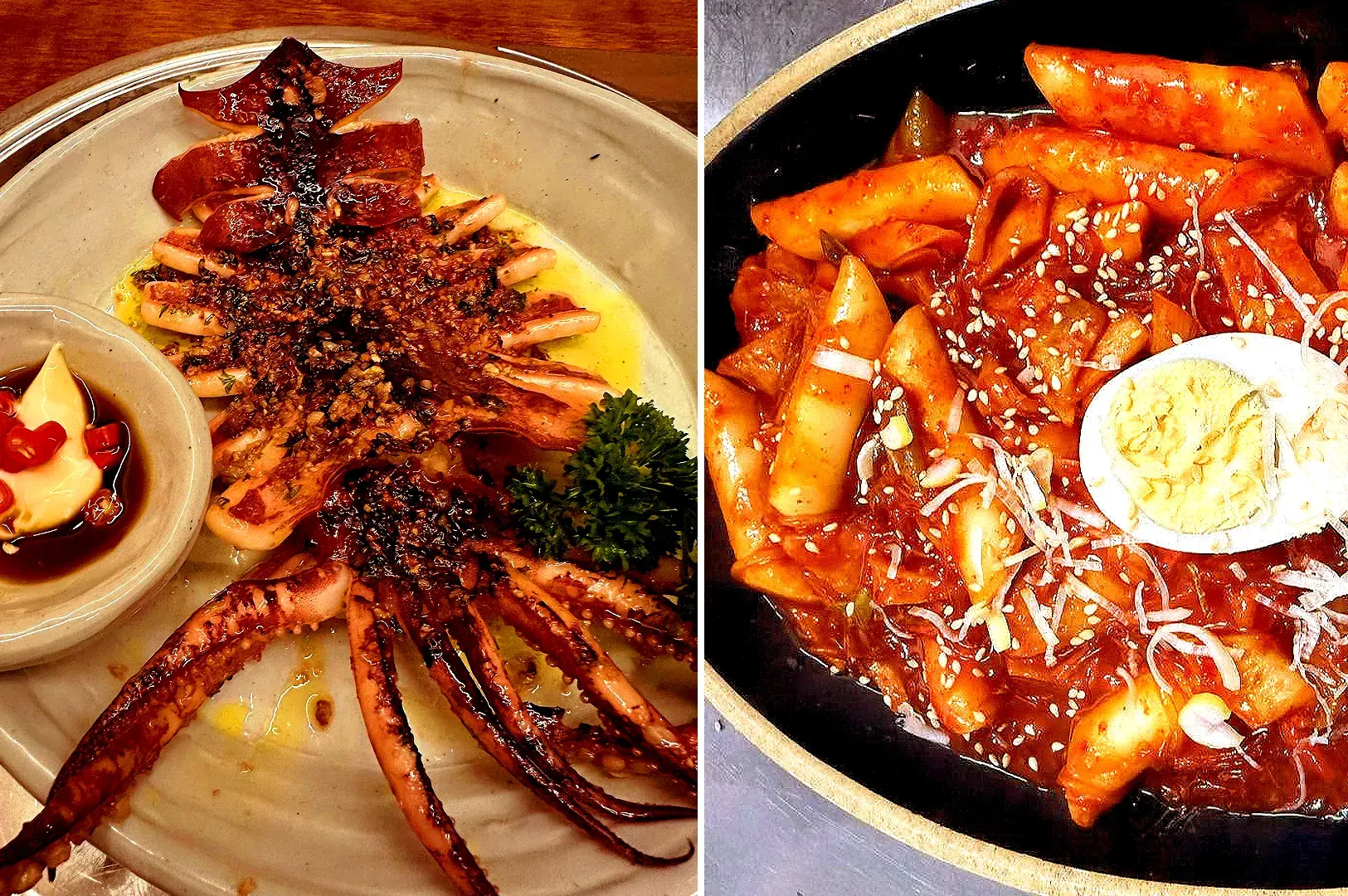
Not everything worked. The Cheese Dak Galbi was the low point.
- The sauce was milder than I’d hoped.
- The chicken had gone soft, overcooked, a little sad in texture.
- It’s the kind of dish that looks great arriving at the table and then quietly disappoints.
- I wouldn’t order it again.
- There’s better on this menu, most of it spicier, messier, and more alive.
The staff were warm, genuinely so. When we hesitated, someone talked us through the portions, steering us away from over-ordering, which I appreciated, since it would have been easy to drown the table in food we couldn’t finish.
But it was a busy Friday, and it showed. During the busiest stretch, refills took longer, and once or twice we half-stood to catch someone’s eye. It didn’t feel careless, just like a room full to the brim and a team stretched thin. On a quieter weekday, I’d guess it flows better.
If you plan to visit, reservations are recommended, especially on weekends, to secure your seats and avoid disappointment.
What You’ll Want to Know Before You Go: A Slice of Korea in Tanjong Pagar
Getting there: Tanjong Pagar MRT is your stop, about a 5–8 minute walk depending on your exit and pace. Public transport beats driving here, the road gets busy at night, and parking is a gamble.
Hours: Generally 11:30 am to 1:00 am daily, making it a proper late-night option. Listings vary, so check before a special trip.
Spend: Around S$30–S$50 per person once you factor in a few dishes and drinks. The portions are generous, so order to share, not one main each.
When to go: Weekday lunch is calmer if you want to actually hear your friends. Weekend dinner is louder, busier, and more fun if that’s the energy you want.
The Lucky Charm of Todamgol
What makes Todamgol stand out in the crowded Tanjong Pagar area is its authenticity. From the cute bustle of Korean staff who remind you of Korea itself, to the mix of traditional dishes served with genuine care, it feels like stepping into a Korean village right in the city.
I was reminded of my own early days discovering Korean food, lucky enough to find a place that doesn’t just serve meals but builds a whole table around you, big stews, sharp kimchi, chewy pancakes, rice to catch the fire, and endless korean side dishes that keep the meal lively.
Korean cuisine here is celebrated not just for its flavors but for the way it brings people together.
Todamgol isn’t just about food. It’s about the time spent together, the shared stories, and the comfort logic behind famous Korean dishes that warm more than just your stomach.
Who Todamgol is For
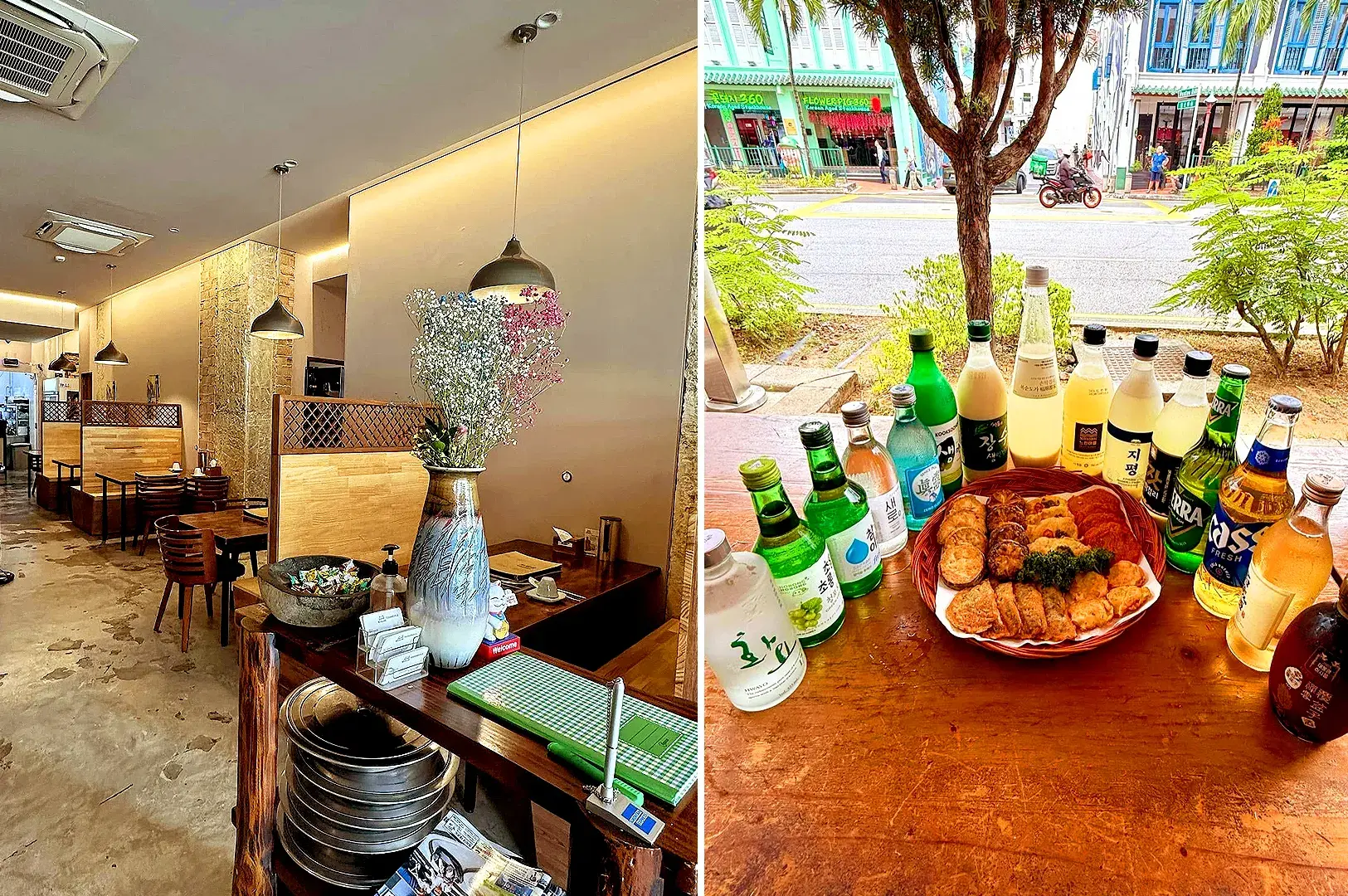
It’s for groups. For friends who want to sit long, order across the menu, pour some soju, and let the evening stretch. It’s for people who want more than Korean BBQ, who want the stews and the drinking food and the messy, hands-on plates.
It’s less for solo diners after one neat bowl, or anyone hoping for a quiet, polished meal. That’s not what this place is, and it’s not pretending to be.
I left full. Not just my stomach, the whole evening felt full. The noise, the shared bowls, the pile of empty banchan dishes, the last sticky chicken foot nobody wanted to claim.
That’s the meal that stayed with me. Not because it was perfect. Because it felt like sitting at someone’s table, and being fed until you couldn’t move.
I’d go back. On a weekday, maybe, when it’s quieter. But I’d go back.

Sandaime Bunji Review: Beef Tongue, Oden, and the Quiet Comfort of Millenia Walk
Eat Drink Asia Team | October 29, 2026
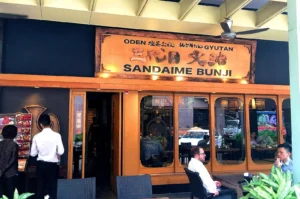
It was raining when I got to Millenia Walk. The warm, sideways kind that follows you under every shelter. I came for the beef tongue. That is what many diners associate with Sandaime Bunji, the Japanese izakaya at 9 Raffles Boulevard, #01-14/15 Millenia Walk. But by the time I shook out my umbrella at the…
-
Shinjuku Restaurant, Where Cuppage Plaza Keeps Japanese Comfort Food Uncomplicated
Dio Asahi | October 27, 2026
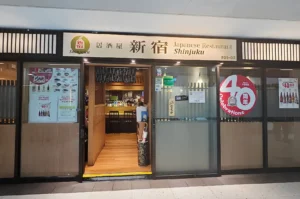
I almost walked past Shinjuku Restaurant. That is easy to do in Cuppage Plaza. Step away from the polish of Orchard Road and the building feels older, quieter, and much less interested in catching your attention. Shinjuku sits on the ground floor at 5 Koek Road, behind a frontage that gives little away about the…
-
Prawn Mee in Singapore: Bowls Where the Broth Tastes Like Time
Eda Wong | October 24, 2026
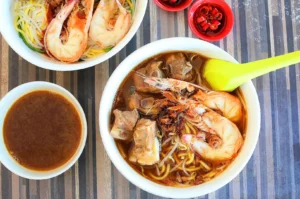
I do not remember the first bowl of prawn mee I ever ate. But I remember the smell: that deep, roasted-shell darkness that fills a coffee shop before you have even sat down. My grandfather used to say you could tell a good prawn noodle stall from the doorway, just by breathing. Over the years,…
-
How to Make Dashimaki Tamago, the Japanese Rolled Omelette That Tastes Like Broth
Eat Drink Asia Team | October 22, 2026
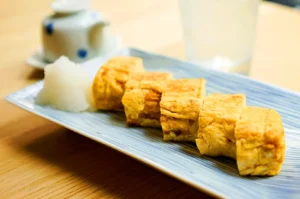
Dashimaki tamago is one of those dishes that looks quieter than it is. At first glance, it is just a rolled egg. Pale, soft, sliced neatly, often served beside steamed rice, miso soup, and grated daikon radish. But once you make it, you realise it is not really about eggs alone. It is about how…
-
The Lunch Hour Slows Down at Gochi-So Shokudo
Dio Asahi | October 21, 2026
By Dio Asahi for Eat Drink Asia. It’s just past noon, and the lifts keep opening. Suits spill out, lanyards swinging, phones already halfway to their ears. But inside Gochi-So Shokudo, tucked into One Raffles Place, something else is happening. People are sitting down. Actually sitting. Chopsticks lifting, shoulders dropping a little, the room warm…
-
Kintamani Singapore Review: Can an All-You-Can-Eat Buffet Still Taste Like Indonesia?
Dio Asahi | October 20, 2026
I walked into Kintamani Singapore with one question in mind. Buffets ask food to wait. Rendang, sambal, grilled meats, and fried seafood all sit under heat while diners circle the spread. That is not necessarily kind to Indonesian dishes built around texture, reduction, chilli, coconut, and freshly cooked aromatics. So I was less interested in…

Pagi Sore Indonesian Restaurant Est 1989 Review: A Second-Generation Kitchen That Still Knows Its Own Voice
Eda Wong | October 17, 2026
The first thing I noticed at Pagi Sore Indonesian Restaurant was the smell. Not the sharp, showy kind. Something slower: coconut milk, lemongrass, chilli, fried egg, and the deep warmth of spice paste drifting out from a wood-heavy dining room while Far East Square kept moving outside. I walked over on a Wednesday evening, just…
-
Best Fish Soup in Singapore: Bowls Where the Broth Is the Whole Point
Eat Drink Asia Team | October 15, 2026
I don’t remember when fish soup became my quiet meal. It just did. On days when I couldn’t decide what I wanted, when the weather turned grey, when I needed something warm that asked nothing of me, I’d end up hunched over a bowl, breathing in the steam before the first spoonful. I’ve eaten a…
-
The Clay Stove Heat Beneath a Lao Grilled River Fish
Eda Wong | October 14, 2026
By Eda Wong for Eat Drink Asia It’s late afternoon, and the river is the colour of weak tea. A woman crouches beside a small clay stove at the edge of the bank, feeding it slivers of charcoal. Smoke lifts, thin and grey, and drifts toward the water. On a bamboo skewer, a whole fish…
-
The National Dish of Indonesia Is Not One Plate: Why a Country of Islands Needs Many Icons
Dio Asahi | October 13, 2026
The first time someone asked me for the national dish of Indonesia, I answered nasi goreng without thinking. It seemed obvious: fried rice darkened with kecap manis, often topped with a fried egg, familiar from warungs and late-night street food stalls. That answer is not wrong. It is simply too small. Indonesian food is regional,…