There are cities you can understand through maps, and then there are cities like Kuala Lumpur that only begin to make sense when you follow what people eat. Not what is recommended or ranked, but what is repeated. The same stall visited every week, the same dish ordered without hesitation, the same flavours that feel familiar before they are even tasted.
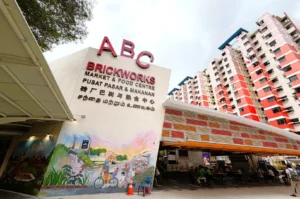
Kuala Lumpur does not announce itself loudly through its cuisine, even though a lot of people like people (https://klfoodadventures.mystrikingly.com/) does. It unfolds slowly, often in spaces that seem ordinary at first glance. A coffee shop beneath aging apartments, a roadside stall that appears only in the evening, a corner shop where the queue forms before the shutters fully open. These are not destinations in the traditional sense, but they are where the city reveals itself most honestly.
We begin to notice that KL cuisine is not defined by a single identity, but by its layering. Malay, Chinese, and Indian influences sit side by side, not in separation but in quiet negotiation. A dish may carry techniques and flavours from multiple traditions without needing to explain itself. It simply exists, shaped by the rhythms of the people who make it.
This is where the idea of specialty becomes more complex. In Kuala Lumpur, a specialty is rarely about exclusivity or refinement. It is about repetition and consistency, about doing one thing well enough that it becomes part of someone’s routine. A hawker preparing the same dish for decades is not just serving food, but maintaining something others rely on.
And yet, these recipes are not fixed. What we call tradition here is constantly shifting, often in ways that are subtle and undocumented. Ingredients change with availability, techniques adapt depending on who takes over, and flavours evolve quietly over time. These differences are not written down, but they are felt by those who return often enough to notice.
This is what makes KL’s food culture both resilient and fragile. It adapts without losing its core, but much of it exists without formal preservation. Recipes are passed through practice rather than instruction, and when a stall closes, what disappears is not just a dish, but a way of making it. What remains is memory, and even that shifts over time.
We see this clearly in how dishes are experienced rather than defined. A plate might be known for its balance, its timing, or the consistency of its preparation, rather than a fixed set of ingredients. The smallest decisions, when to add heat, when to stop, how long to wait, shape the final outcome. These are not easily translated, but they matter.
In many ways, Kuala Lumpur resists simplification. It does not fit neatly into categories designed for easy understanding. It asks for attention, for repeated visits, and for a willingness to accept that what you experience today may not be exactly the same tomorrow. That variability is not a flaw, but part of its identity.
We return not just for the food, but for the familiarity of the process. The act of ordering, the rhythm of waiting, the recognition between vendor and customer. These small interactions form a structure that holds the city together in ways that are easy to overlook.
If we try to define Kuala Lumpur’s cuisine too quickly, we miss what makes it meaningful. The city is not built on singular highlights, but on accumulation**. Small, repeated experiences that gradually shape how we understand it.**
Because in Kuala Lumpur, food is not just something you seek out. It is something you grow into.

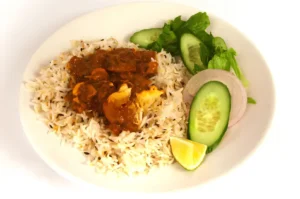
One-Pan Chicken Curry With Jeera Rice and Cucumber Raita: Food for Dinner Indian, Made Practical
Eat Drink Asia Team | July 11, 2026
The first time we cooked a full Indian dinner on a weeknight, the curry, rice, and raita felt like three separate tasks—three pans, three timers, and a kitchen full of wonderful smells but chaos. The curry was good, the rice sticky, and the raita watery from being made too early. That night taught us a…
-
Banana Leaf Steam: Why Some Rice Smells Like Home
Eda Wong | July 10, 2026
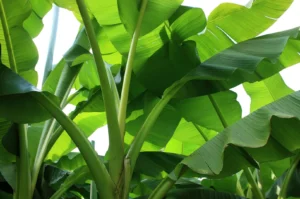
Steam rises from the pot, and a woman lifts a banana leaf over the open flame, turning it once, twice, until its stiff green softens and the surface goes glossy and pliant. She wipes it down with a damp cloth, then spoons hot rice into its center while the grains still steam. The leaf releases…
-
Tambuah Mas Paragon, Delivered: Unique Food Delivery Singapore With Old-School Comfort
Eda Wong | July 9, 2026
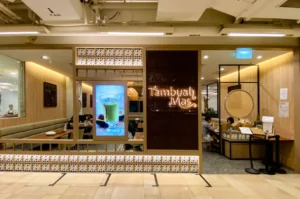
I ordered from Tambuah Mas on a rainy Sunday at around 6:15pm, mostly because I wasn’t in the mood to dress up and head into town, but I still wanted a proper meal. Not a sad one-bowl lunch. A real spread. That’s the thing about Tambuah Mas. It’s been around since 1981, serving Indonesian home-style…
-
Toasted Rice Powder: The Dust That Makes Larb Sing
Dio Asahi | July 8, 2026
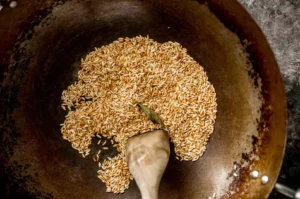
A wok sits over a low flame, and a handful of raw sticky rice slides across its dry surface. No oil, no water—nothing but heat and patience. The grains pale, then blush amber, then deepen toward the color of weak tea. Someone shakes the pan in a slow, even rhythm, listening as much as watching….
-
Ordering Lunch From Co Hai Banh Mi, and Finding Out the Definition of Good Food Delivery
Dio Asahi | July 7, 2026
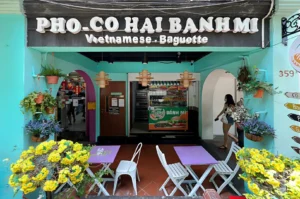
I ordered lunch from Co Hai Banh Mi & Phở Vietnamese Restaurant on a Thursday at 12:08pm, which is probably the worst and most honest time to test delivery food. It was raining lightly, the kind of Singapore lunch rain that makes every rider slower and every office worker hungrier. I had been thinking about…

The “Little Tokyo” Floors Where Dinner Hides Behind Office Lobbies and Quiet Corridors : Orchard Plaza Food
Eat Drink Asia Team | July 4, 2026
Orchard Plaza is one of those buildings we kept walking past before we properly understood it. From the street, it looks more like an office block than a dinner plan. But over repeated visits, usually after work or during odd lunch windows, we’ve found that the real charm sits behind lift doors, quiet corridors, and…
-
Salted Egg, Properly Treated: Sauce, Not Shortcut
Eda Wong | July 3, 2026
By Eda Wong for Eat Drink Asia. The wok station is already hot when the cook lowers the flame. In the narrow back of a Singapore zi char kitchen, the air smells of butter, curry leaves, and the faint mineral edge of salted duck egg. A metal spatula presses cooked yolks through oil until they…
-
Fish Sauce at the Table: The Quiet Work of Fish Sauce
Dio Asahi | July 1, 2026
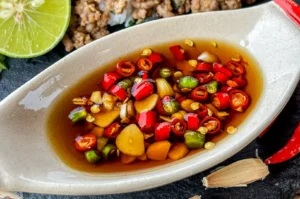
At a narrow lunch table in Bangkok, the bottle arrives before the rice has stopped steaming. It is clear glass, refilled many times, its plastic cap slightly stained from years of fingers and heat. Beside it sits a small bowl of sliced chillies floating in amber liquid, the cut edges pale and sharp. Someone nudges…
-
Eat 3 Bowls Bendemeer Review: A Taiwanese Comfort Food That Delivers
Eda Wong | June 30, 2026
I ordered Eat 3 Bowls @ Bendemeer on a Thursday at about 11:45am, which is my favourite test window for delivery food. It’s close enough to lunch for the kitchen to be in rhythm, but not so late that every rider in the neighbourhood is already fighting the office crowd. By 12:25pm, the bag was…
-
ABC Hokkien Mee After Renovation: What to Expect When the Woks Return
Dio Asahi | June 27, 2026
When I first walked past a hawker centre undergoing major renovations, the absolute silence unsettled me. The usual rhythmic scrape of metal spatulas against cast-iron woks was gone, replaced by the hum of construction. It made me realise just how much our culinary journeys are tied to the physical spaces we eat in. Right now,…