There are cities you can understand through maps, and then there are cities like Kuala Lumpur that only begin to make sense when you follow what people eat. Not what is recommended or ranked, but what is repeated. The same stall visited every week, the same dish ordered without hesitation, the same flavours that feel familiar before they are even tasted.
Kuala Lumpur does not announce itself loudly through its cuisine, even though a lot of people like people (https://klfoodadventures.mystrikingly.com/) does. It unfolds slowly, often in spaces that seem ordinary at first glance. A coffee shop beneath aging apartments, a roadside stall that appears only in the evening, a corner shop where the queue forms before the shutters fully open. These are not destinations in the traditional sense, but they are where the city reveals itself most honestly.
We begin to notice that KL cuisine is not defined by a single identity, but by its layering. Malay, Chinese, and Indian influences sit side by side, not in separation but in quiet negotiation. A dish may carry techniques and flavours from multiple traditions without needing to explain itself. It simply exists, shaped by the rhythms of the people who make it.
This is where the idea of specialty becomes more complex. In Kuala Lumpur, a specialty is rarely about exclusivity or refinement. It is about repetition and consistency, about doing one thing well enough that it becomes part of someone’s routine. A hawker preparing the same dish for decades is not just serving food, but maintaining something others rely on.
And yet, these recipes are not fixed. What we call tradition here is constantly shifting, often in ways that are subtle and undocumented. Ingredients change with availability, techniques adapt depending on who takes over, and flavours evolve quietly over time. These differences are not written down, but they are felt by those who return often enough to notice.
This is what makes KL’s food culture both resilient and fragile. It adapts without losing its core, but much of it exists without formal preservation. Recipes are passed through practice rather than instruction, and when a stall closes, what disappears is not just a dish, but a way of making it. What remains is memory, and even that shifts over time.
We see this clearly in how dishes are experienced rather than defined. A plate might be known for its balance, its timing, or the consistency of its preparation, rather than a fixed set of ingredients. The smallest decisions, when to add heat, when to stop, how long to wait, shape the final outcome. These are not easily translated, but they matter.
In many ways, Kuala Lumpur resists simplification. It does not fit neatly into categories designed for easy understanding. It asks for attention, for repeated visits, and for a willingness to accept that what you experience today may not be exactly the same tomorrow. That variability is not a flaw, but part of its identity.
We return not just for the food, but for the familiarity of the process. The act of ordering, the rhythm of waiting, the recognition between vendor and customer. These small interactions form a structure that holds the city together in ways that are easy to overlook.
If we try to define Kuala Lumpur’s cuisine too quickly, we miss what makes it meaningful. The city is not built on singular highlights, but on accumulation**. Small, repeated experiences that gradually shape how we understand it.**
Because in Kuala Lumpur, food is not just something you seek out. It is something you grow into.

Claypot Rice Crusts: Listening for the First Crackle
Eda Wong | June 26, 2026
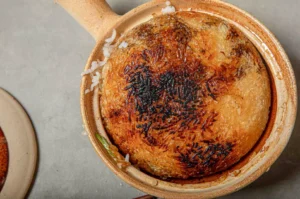
The narrow alleyway in Yau Ma Tei smells of charcoal and dark soy sauce, a thick coastal humidity pressing against the glow of the stoves. An elderly cook stands before a row of blackened sand-clay pots, a long metal tong in his right hand. He does not watch the flames; he listens to them. There…
-
Shiok Hokkien Mee and the Pleasure of a Plate That Clings: Tiong Bahru Hokkien Mee at Midday
Eat Drink Asia Team | June 25, 2026
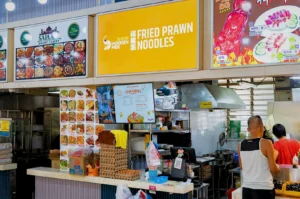
I have always believed that the true test of a neighbourhood’s food scene happens right in the middle of the day. When the midday hunger hits, you don’t want a tasting menu; you want a fast, flavourful culinary journey that hits the spot. That is exactly what led me, representing the Eat Drink Asia team,…
-
When Curry Learns to Breathe
Dio Asahi | June 24, 2026
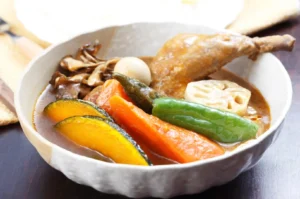
The rain taps lightly against the glass of a quiet Japanese diner, turning the pavement outside a slick, silver grey. Inside, the bowl arrives with steam first, then colour: pumpkin orange, aubergine purple, and a dark curve of chicken set against a broth that looks too light to carry so much heat. The spoon touches…
-
Hong Heng Fried Sotong Prawn Mee: Where Squid Turns Chewy, Broth Turns Glossy, and Time Turns Quiet
Eda Wong | June 23, 2026
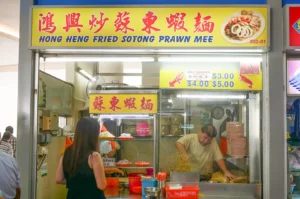
There is something deeply comforting about a hawker centre right before the lunch rush hits. I visited Tiong Bahru Market on a Tuesday around 10:30 am, hoping to beat the infamous queue at Hong Heng Fried Sotong Prawn Mee. Even at that early hour, a line of six people had already formed, waiting quietly under…

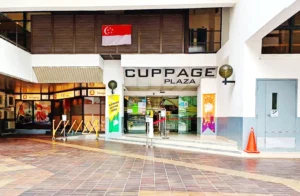
Cuppage Plaza Food for People Who Hate Obvious Places: Restaurants That Feel Like a Detour Off Orchard
Dio Asahi | June 20, 2026
Orchard Road is a brilliant, trend-setting celebration of flavours, but its gleaming mega-malls can sometimes feel a bit predictable. If you are an urban food enthusiast seeking genuine culinary journeys rather than polished franchise menus, the true heart of the district lies slightly hidden. Cuppage Plaza is a fascinating, liminal space that operates almost like…
-
Makgeolli Bowls and the Soft Grain of Korean Rice Wine
Eda Wong | June 19, 2026
The monsoon rain drums a steady, heavy rhythm against the fogged windows of a narrow tavern in Jongno, muffling the chaotic pulse of the city outside. Inside, the air hangs warm, thick with the scent of toasted mung beans and a subtle, yeasty tang. A dented brass kettle tips forward, and a chalk-white, opaque liquid…
-
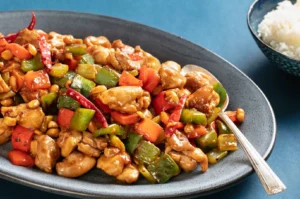
Kung Pao Chicken Sauce Is the Real Test: Why It Turns Glossy, Sharp, and Addictive
Eat Drink Asia Team | June 18, 2026
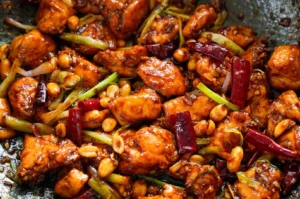
Kung pao chicken is often described by its main ingredients: diced chicken, dried chillies, peanuts, spring onions, and Sichuan peppercorns. But anyone who has cooked it at home knows the truth: the dish succeeds or fails because of the sauce. The sauce decides whether kung pao chicken tastes lively and balanced, or flat, sticky, and…
-
Jeju’s Seaweed Soup and the Memory of Birthday Tables
Dio Asahi | June 17, 2026
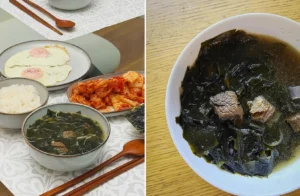
The sharp winter wind rattles the low stone walls of a Jeju Island kitchen, but inside, the air is thick with steam and the deeply marine scent of boiling kelp. An elderly woman stands by a bubbling steel pot, watching the dark green fronds swell and twist in the rolling water. She adds a splash…
-
Chicken Pao Recipe for People Who Respect Heat: Why Kung Pao Works Only When Timing Is Tight
Eda Wong | June 16, 2026
I remember my first attempt at cooking gong bao ji ding a few years ago. I wanted to recreate that authentic, trend-setting dish I had experienced at a traditional Sichuan restaurant, a meal that felt like a genuine celebration of flavours. I heated my wok until it was smoking, tossed in a handful of dried…
-
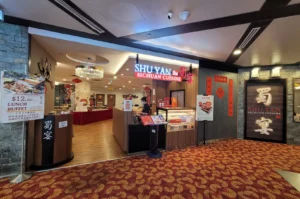
A Shu Yan Sichuan Cuisine Review Written in Pepper and Smoke: Chicken Pao That Wakes Up the Table
Dio Asahi | June 13, 2026
I used to think of authentic Sichuan food as a sheer test of endurance. For a long time, I assumed the goal was simply to survive the fiery onslaught of chillies rather than actually taste anything. But my recent culinary journey at Shu Yan Sichuan Cuisine completely rewired how I understand this region’s flavour map….