There are cities you can understand through maps, and then there are cities like Kuala Lumpur that only begin to make sense when you follow what people eat. Not what is recommended or ranked, but what is repeated. The same stall visited every week, the same dish ordered without hesitation, the same flavours that feel familiar before they are even tasted.
Kuala Lumpur does not announce itself loudly through its cuisine, even though a lot of people like people (https://klfoodadventures.mystrikingly.com/) does. It unfolds slowly, often in spaces that seem ordinary at first glance. A coffee shop beneath aging apartments, a roadside stall that appears only in the evening, a corner shop where the queue forms before the shutters fully open. These are not destinations in the traditional sense, but they are where the city reveals itself most honestly.
We begin to notice that KL cuisine is not defined by a single identity, but by its layering. Malay, Chinese, and Indian influences sit side by side, not in separation but in quiet negotiation. A dish may carry techniques and flavours from multiple traditions without needing to explain itself. It simply exists, shaped by the rhythms of the people who make it.
This is where the idea of specialty becomes more complex. In Kuala Lumpur, a specialty is rarely about exclusivity or refinement. It is about repetition and consistency, about doing one thing well enough that it becomes part of someone’s routine. A hawker preparing the same dish for decades is not just serving food, but maintaining something others rely on.
And yet, these recipes are not fixed. What we call tradition here is constantly shifting, often in ways that are subtle and undocumented. Ingredients change with availability, techniques adapt depending on who takes over, and flavours evolve quietly over time. These differences are not written down, but they are felt by those who return often enough to notice.
This is what makes KL’s food culture both resilient and fragile. It adapts without losing its core, but much of it exists without formal preservation. Recipes are passed through practice rather than instruction, and when a stall closes, what disappears is not just a dish, but a way of making it. What remains is memory, and even that shifts over time.
We see this clearly in how dishes are experienced rather than defined. A plate might be known for its balance, its timing, or the consistency of its preparation, rather than a fixed set of ingredients. The smallest decisions, when to add heat, when to stop, how long to wait, shape the final outcome. These are not easily translated, but they matter.
In many ways, Kuala Lumpur resists simplification. It does not fit neatly into categories designed for easy understanding. It asks for attention, for repeated visits, and for a willingness to accept that what you experience today may not be exactly the same tomorrow. That variability is not a flaw, but part of its identity.
We return not just for the food, but for the familiarity of the process. The act of ordering, the rhythm of waiting, the recognition between vendor and customer. These small interactions form a structure that holds the city together in ways that are easy to overlook.
If we try to define Kuala Lumpur’s cuisine too quickly, we miss what makes it meaningful. The city is not built on singular highlights, but on accumulation**. Small, repeated experiences that gradually shape how we understand it.**
Because in Kuala Lumpur, food is not just something you seek out. It is something you grow into.

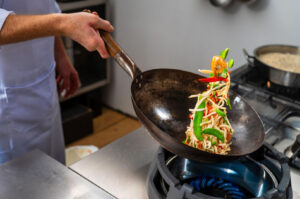
What the Wok Is Really Doing to the Vegetable: The Question Behind Every ‘Brinjal Recipe Chinese Style’
Dio Asahi | May 30, 2026
When I first tried cooking brinjal at home, I was completely convinced that all I needed was a hot pan, some oil, and a good recipe. I chopped the vibrant purple vegetable, threw it into a standard frying pan with a generous pour of oil, and waited for the magic to happen. Instead of the…
-
The Clay Pot Rice Crust That Hong Kong Cooks Wait For
Eda Wong | May 29, 2026
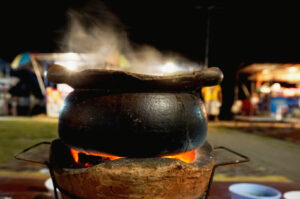
The December wind cuts sharply through the narrow alleys of Temple Street, but the ambient heat from the glowing charcoal stoves pushes the chill away. A cook stands before a long row of blackened clay pots, working with a rhythmic, almost meditative focus. Plumes of white steam rise into the night air, carrying the heavy,…
-
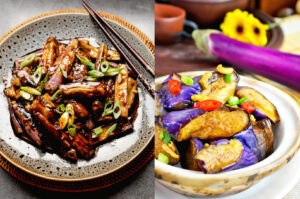
The Velvet Logic Behind a Chinese Eggplant Recipe: When ‘Eggplant Recipes Asian’ Means Silk
Eda Wong | May 28, 2026
I vividly remember standing over my stove a few years ago, staring into a wok full of what can only be described as a greasy, grey disaster. When I first tried this dish at home, I assumed that tossing chopped eggplant into a hot pan with a generous glug of cooking oil would naturally yield…
-
Cambodia’s Prahok Pots and the Ferment Beneath the Meal
Dio Asahi | May 27, 2026
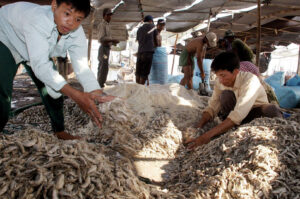
The afternoon heat in the outskirts of Phnom Penh settles like a thick blanket over the wooden stilt houses. Underneath the corrugated tin roof of an open-air kitchen, the air carries a heavy, sharp scent that instantly commands attention, a deeply pungent, earthen aroma of crushed fish and salt. An elderly woman sits on a…
-
Heat Has a Shape: Reading the Samyang Spicy Level Like a Flavour Map, Not a Dare
Eat Drink Asia Team | May 26, 2026
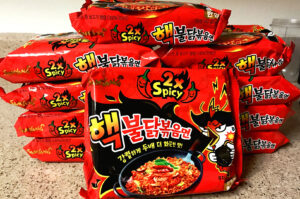
When we first tried the notorious Samyang 2x Spicy Buldak noodles, we treated it exactly how the internet told us to: like a dare. We boiled the noodles, poured in every last drop of the blood-red sauce, and braced ourselves. Within three bites, our palates were completely blown out. We could not taste the savoury…
-
313 Somerset Food Crawl: Spots That Turn ‘Quick Shopping Lunch’ Into a Full Day Plan
Eda Wong | May 23, 2026
Over the past three months, I have spent countless weekends navigating the energetic crowds of Orchard Road, determined to map out the ultimate dining itinerary. I must have visited over twenty different eateries in the area, hunting for those brilliant culinary experiences that elevate a standard shopping trip into a true celebration of flavours. Finding…
-
Benguet’s Pinikpikan and the Ethics of Mountain Broth
Eda Wong | May 22, 2026
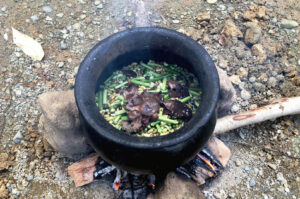
The mist in Benguet settles low over the pine-studded ridges, carrying the sharp, woody scent of a wood fire. In a quiet backyard in La Trinidad, a small gathering watches as a live chicken is prepared for the pot. The rhythm of a short, thick stick striking the bird’s wings and neck echoes softly, a…
-
The Quiet Trick Behind Loud Noodles: A Samyang Instant Noodle Recipe Built on Emulsion
Eda Wong | May 21, 2026
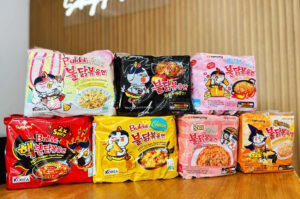
When I first tried making Samyang Buldak noodles at home, I expected the fiery heat but was surprised by the watery, separated red oil at the bottom of my bowl. I had boiled the noodles, drained them, and dumped the flavor packets on top, ending with a dry, clumpy mess that burned my throat without…
-
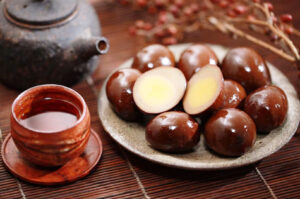
Taiwan’s Iron Egg and the Patience of Soy-Braised Time
Dio Asahi | May 20, 2026
The wind coming off the Tamsui River carries a sharp, saline chill, but the narrow lanes bordering the waterfront offer a different atmosphere entirely. Here, the air is thick with the heavy, sweet-savoury aroma of star anise, cassia bark, and boiling soy sauce. Behind a modest storefront, dark liquid bubbles in massive, dented metal vats….

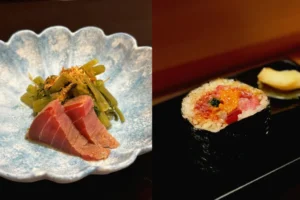
Not Just ‘Fresh Fish’: The Best Omakase Singapore Has for Storytelling Courses & Seasonal Bites
Eat Drink Asia Team | May 19, 2026
May 19, 2026 | Eat Drink Asia Team | Last Updated September 7, 2026 When you sit at an omakase counter, you’re paying for a culinary journey. A memorable omakase is more than fresh fish; it’s a delicate celebration of flavors. The best chefs act as storytellers, sequencing each bite to build anticipation and contrast, guiding…