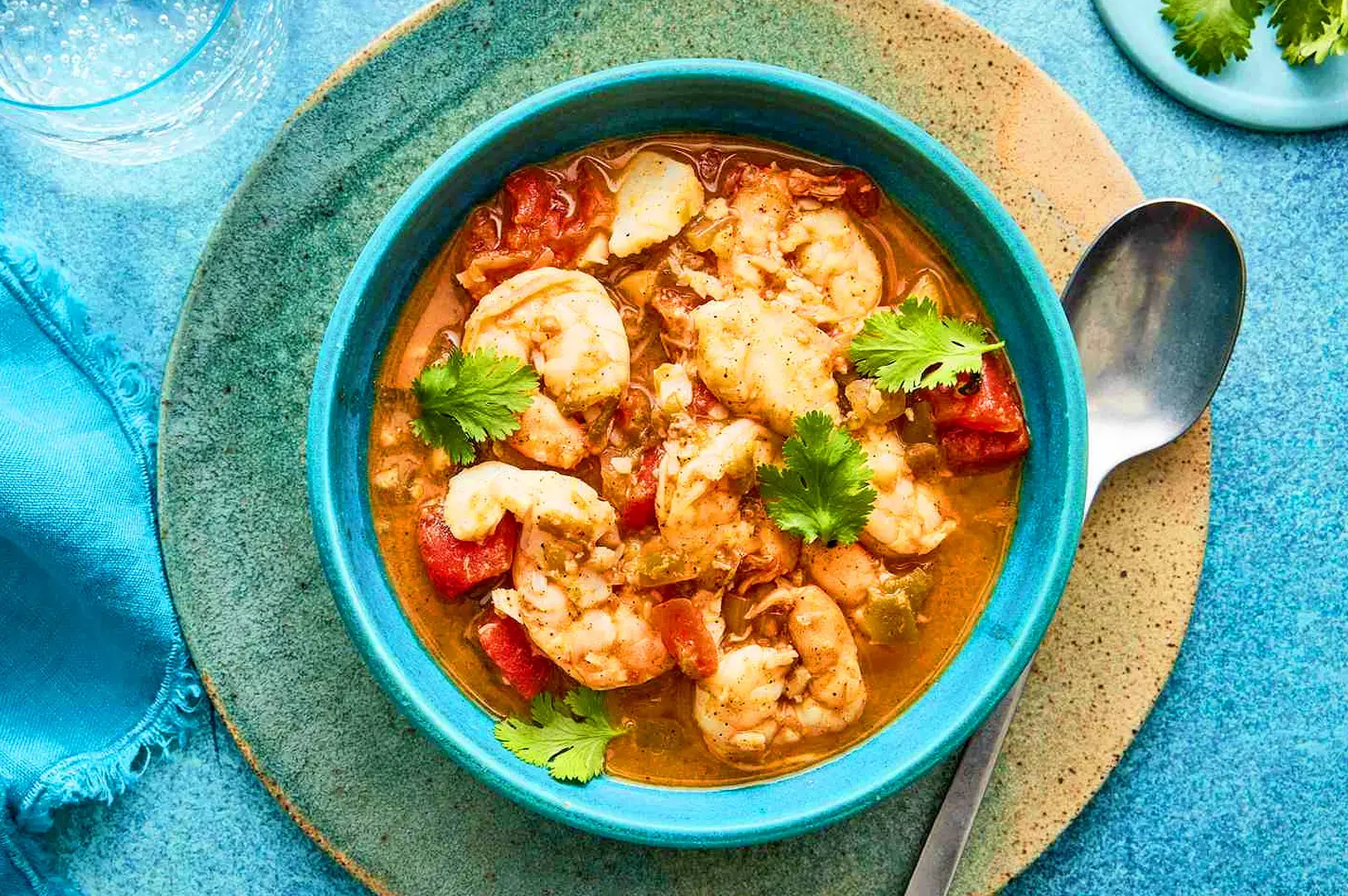
I don’t remember when fish soup became my quiet meal.
It just did. On days when I couldn’t decide what I wanted, when the weather turned grey, when I needed something warm that asked nothing of me, I’d end up hunched over a bowl, breathing in the steam before the first spoonful.
I’ve eaten a lot of fish soup in Singapore. Some bowls made me wait an hour. Some sold out before I reached the front. Some I still think about. What follows are the ones I keep returning to, not because they’re famous, though a few are, but because in each one the broth is doing the real work.
That’s the whole point. Not the garnish, not the queue, not the photo. The soup. Here’s where I’d send you.
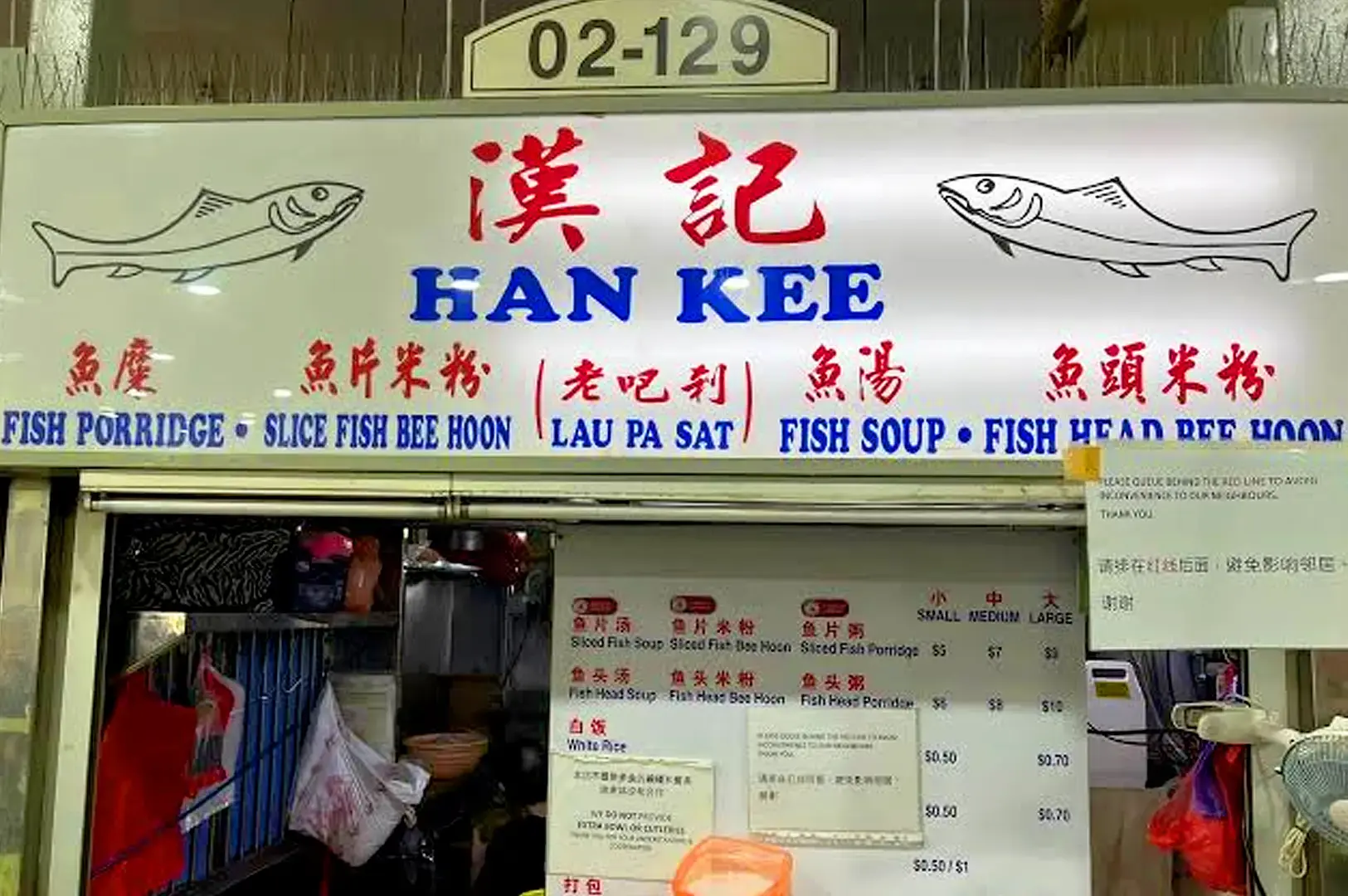
1. Han Kee Fish Soup: Clear Sliced Fish Soup at Amoy Street Food Centre
Nearest MRT: Maxwell MRT, about 3–5 minutes on foot; Tanjong Pagar MRT is also nearby
Price: $ — sliced fish soup from about S$5 to S$9
Han Kee is the place to start if you want to understand why people become obsessive about a simple bowl of fish soup. Its sliced fish soup is deliberately restrained: a clear soup with gentle fish sweetness, white-pepper warmth, coriander, and fried garlic. There is no evaporated milk or cloudy soup base to soften the edges, so the quality of the fresh fish matters.
The thick batang fish slices are the defining feature. Instead of the thin slices found at some fish soup stalls, Han Kee cuts its Spanish mackerel generously, giving each piece a firm, smooth bite that holds up in the hot broth. You can pair the sliced fish with bee hoon, porridge, or simply drink the clear fish soup on its own. For me, the plain bowl gives you the best sense of the original taste. Current 2026 guides place the standard sliced-fish bowls at roughly S$5 to S$9.
It is a useful benchmark when people debate the best fish soup in Singapore because very little distracts from the fish itself. A scatter of fried garlic bits adds savoury aroma, but this is not a bowl overloaded with tofu cubes, preserved vegetables, green veggies, or other garnishes.
Service, Queue, and Opening Hours
Han Kee is currently listed as operating on weekdays from roughly 11 AM to 3 PM, though popular items can sell out before closing. The lunch queue remains part of the experience, especially when office workers descend on Amoy Street Food Centre.
The line can move efficiently, but a long queue around noon is normal enough that I would not gamble on it during a strict one-hour lunch break. Staff work briskly, so knowing your order before reaching the front helps.
The Draw: Best for clear sliced fish soup purists who care about thick, fresh batang fish slices more than elaborate toppings.
The Catch: Avoid if you have a tight lunch window or dislike queueing, particularly during the CBD lunch rush.
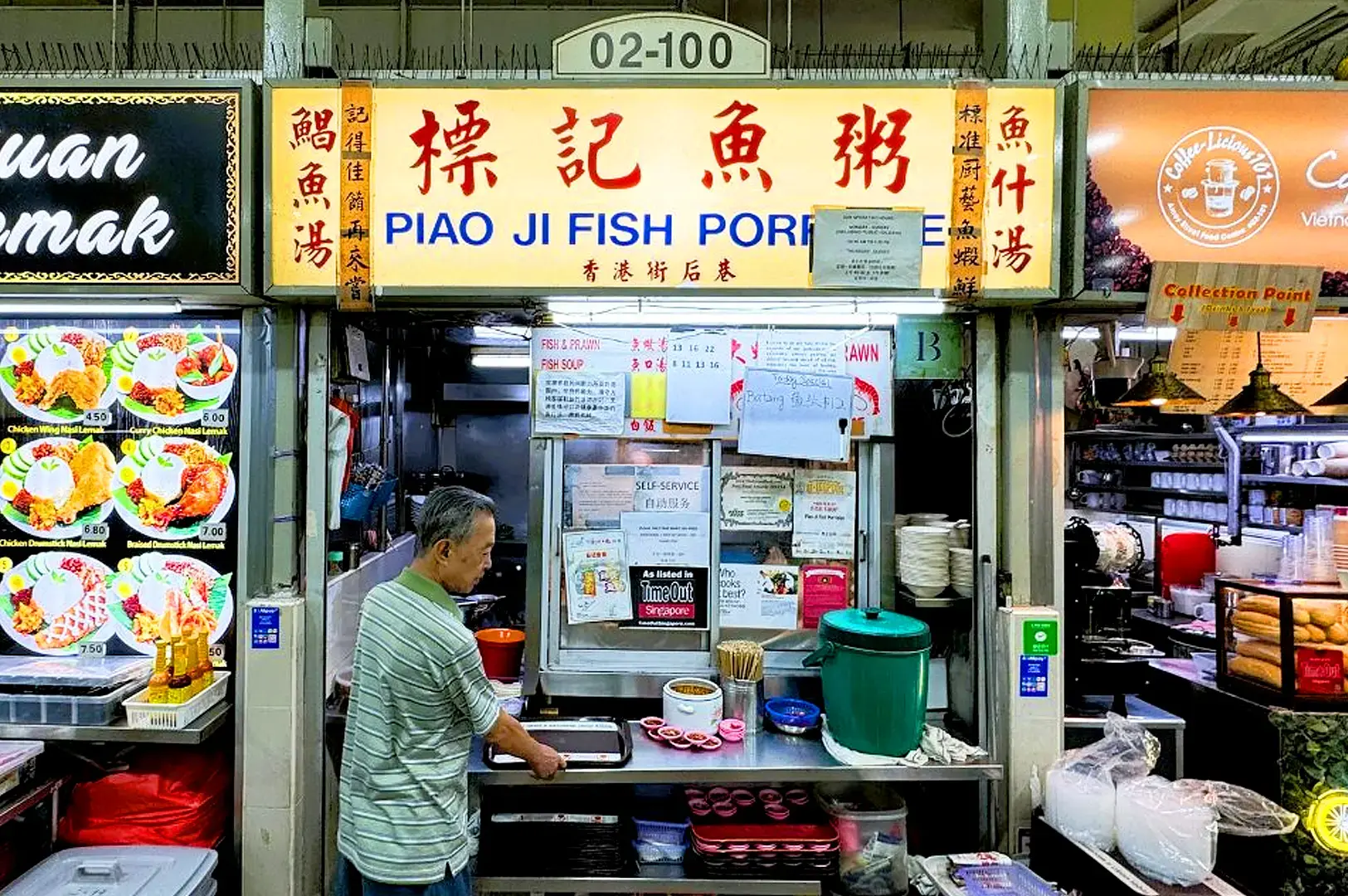
2. Piao Ji Fish Porridge: Fish and Prawn Soup at Amoy Street Food Centre
Nearest MRT: Maxwell MRT, about 3–5 minutes on foot; Tanjong Pagar MRT is also nearby
Price: $$ — roughly S$8 to S$22 depending on bowl and portion
Piao Ji Fish Porridge sits in the same food centre as Han Kee, which makes comparison almost inevitable. But ordering the same basic sliced fish soup at both misses what makes Piao Ji interesting. The fish-and-prawn combination gives the soup a deeper seafood sweetness, with prawns adding shellfish richness around the fresh fish slices.
Under its current owner, Piao Ji focuses primarily on batang fish soup and fish-and-prawn soup. Pomfret, once associated with the stall, is no longer part of the current menu. Fish-and-prawn bowls start around S$13 and larger portions can reach about S$22.
The broth also tastes more assertive than Han Kee’s. Fried shallots and richer savoury notes push it away from an ultra-clean Teochew fish soup profile. If you’re after a fish soup fix that feels fuller rather than delicate, the fish-and-prawn bowl is the reason to queue.
Service, Queue, and Opening Hours
Piao Ji remains known for a substantial queue, with current guides describing 20 minutes as a realistic minimum wait at peak periods. Its operating days have also shifted over time, so this is one stall where checking before travelling is sensible. Opening hours: Approximately 10:30am–3pm, Monday–Wednesday and Friday–Sunday; closed Thursday.
Because bowls are prepared with more care than a simple ladle-and-go service, a short-looking queue can still move slowly.
The Draw: Best for diners who want sliced fish with prawns and more seafood depth than a minimalist clear soup provides.
The Catch: Avoid if price and speed matter most. Piao Ji is one of the more expensive fish soup options in Amoy Street Food Centre.
3. Mei Xiang Black & White Fish Soup: Fried Fish and Fresh Fish in One Bowl
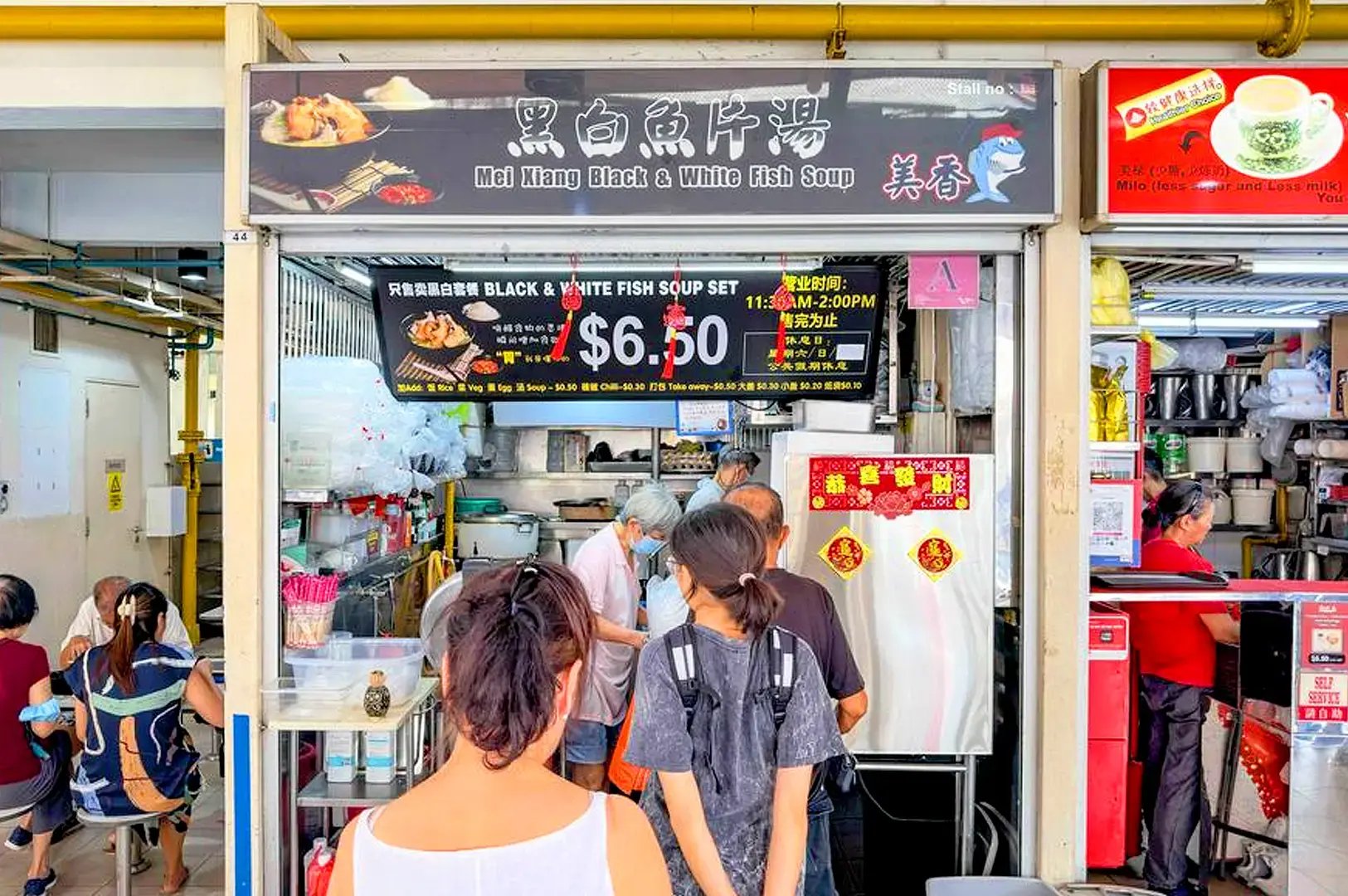
Nearest MRT: Jalan Besar MRT, about 3–5 minutes on foot
Price: $ — Black & White Fish Set around S$6.50
Mei Xiang Black & White Fish Soup at Berseh Food Centre solves the fried-fish-versus-sliced-fish question by refusing to make you choose. Its only main item combines deep-fried fish with fresh sliced fish, so one spoonful can be soft and clean while the next brings a richer piece whose fried exterior has soaked up the stock.
The soup is cloudy, but importantly, recent reporting says the body comes from fish bones rather than adding evaporated milk. Ginger gives it a pronounced warming quality, while cabbage contributes a slight sweetness. Fried egg ribbons add another layer of richness. The result is closer to a hearty mixed soup than the spare white fish soup style you get at Han Kee.
I like it most once the fried fish has sat in the broth for a minute. The edges lose their crispness, but they pick up the stock and become soft and savoury. Some fried pieces can contain fish bones, though, so this is not a bowl to attack without paying attention.
Service, Queue, and Opening Hours
Mei Xiang’s opening hours are currently listed as Tuesday to Friday, 11:30 AM to 2 PM, and sell-outs can happen earlier. At peak, current guides report queues of around 15 to 30 minutes.
Service itself is straightforward because there is essentially one main order. The challenge is getting there while the stall is still serving.
The Draw: Best for anyone who wants fried fish and fresh fish slices in the same bowl and prefers a fuller, ginger-forward broth.
The Catch: Avoid if you dislike fish bones, richer soup, or planning lunch around very short opening hours.
4. Jun Yuan House of Fish: Herbal Seafood Soup Beyond the Usual Fish Soup
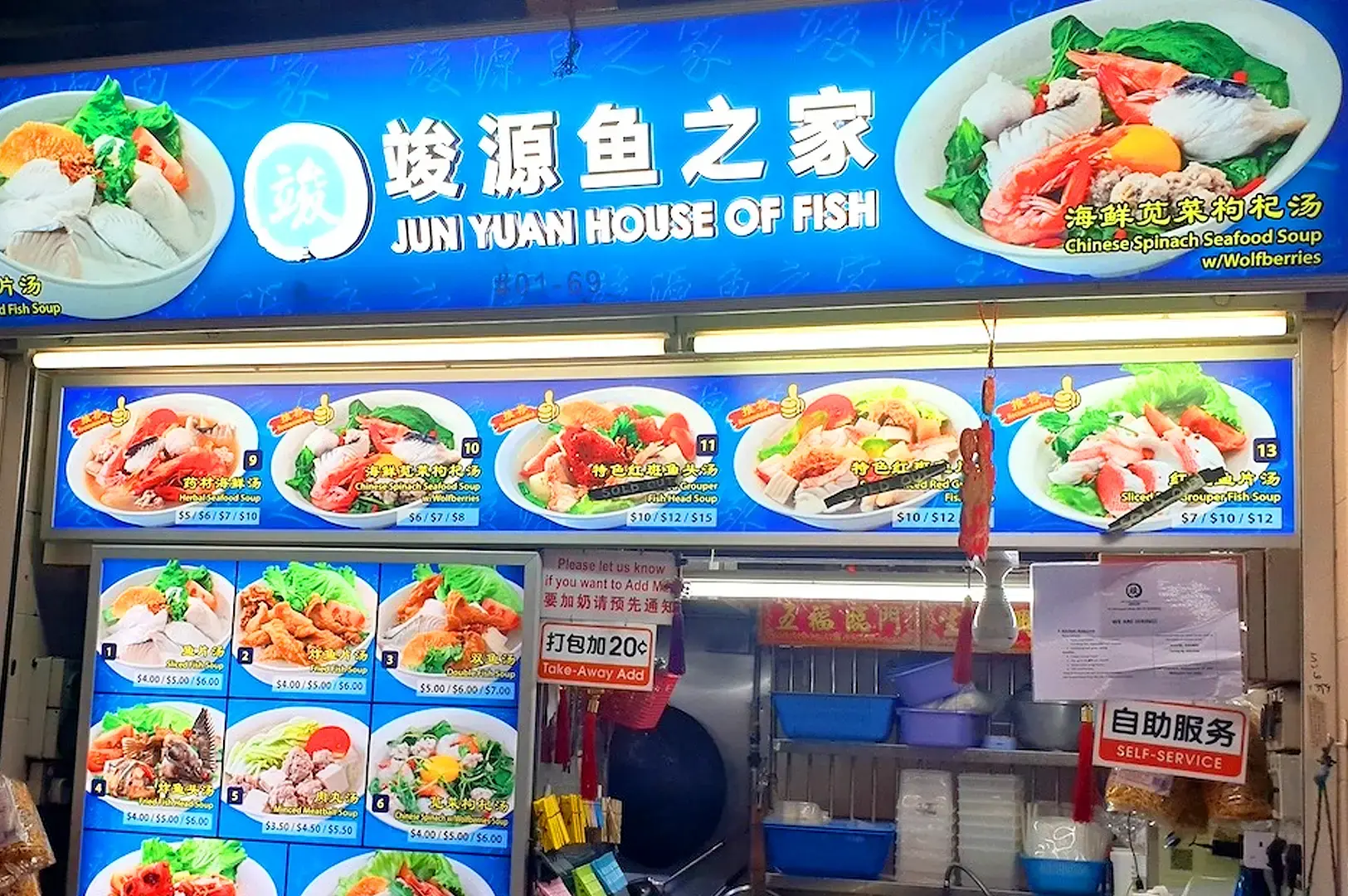
Nearest MRT: Pasir Ris MRT, followed by a short walk
Price: $–$$ — signature soups generally around S$8.80 to S$9.80
Jun Yuan House of Fish is useful once the usual clear-versus-milky fish soup debate starts feeling repetitive. Its signature Herbal Seafood Soup moves in a completely different direction, pairing fish and seafood with earthy Chinese herbal notes that are deeper and more medicinal than a standard sliced fish broth.
I remember needing a few spoonfuls before deciding how I felt about it. The herbal character can initially seem almost overwhelming compared with the clean sweetness of a Teochew fish soup. Once your palate settles, though, there is something deeply comforting about the warmth of the broth around fresh fish and seafood. Current reporting identifies the Herbal Seafood Soup as the stall’s defining order.
If that sounds too intense, the fried fish soup side of the menu is easier to approach. Jun Yuan also serves sliced batang fish soup, Chinese spinach seafood soup, and other fish soups. Egg floss is a useful addition because it absorbs the broth while retaining a faint fried aroma, giving the bowl another texture without overwhelming the fish.
Service, Queue, and Opening Hours
Unlike several lunch-only hawker stalls here, Jun Yuan works better for diners who cannot organise their entire day around one short service window. The Pasir Ris branch operates with a broader daytime-to-evening schedule, making it one of the easier fish soup destinations to plan around.
The service is closer to a neighbourhood hawker experience than a queue-driven destination, so the wait is generally less central to the experience than it is at Han Kee or First Street.
The Draw: Best for fish soup regulars who want something genuinely different, particularly the Herbal Seafood Soup.
The Catch: Avoid if Chinese herbal bitterness is not your thing or you want a very clean, traditional Teochew broth.
5. Xin Yuan Ji: Fried Fish Bee Hoon and Milky Broth in Bugis
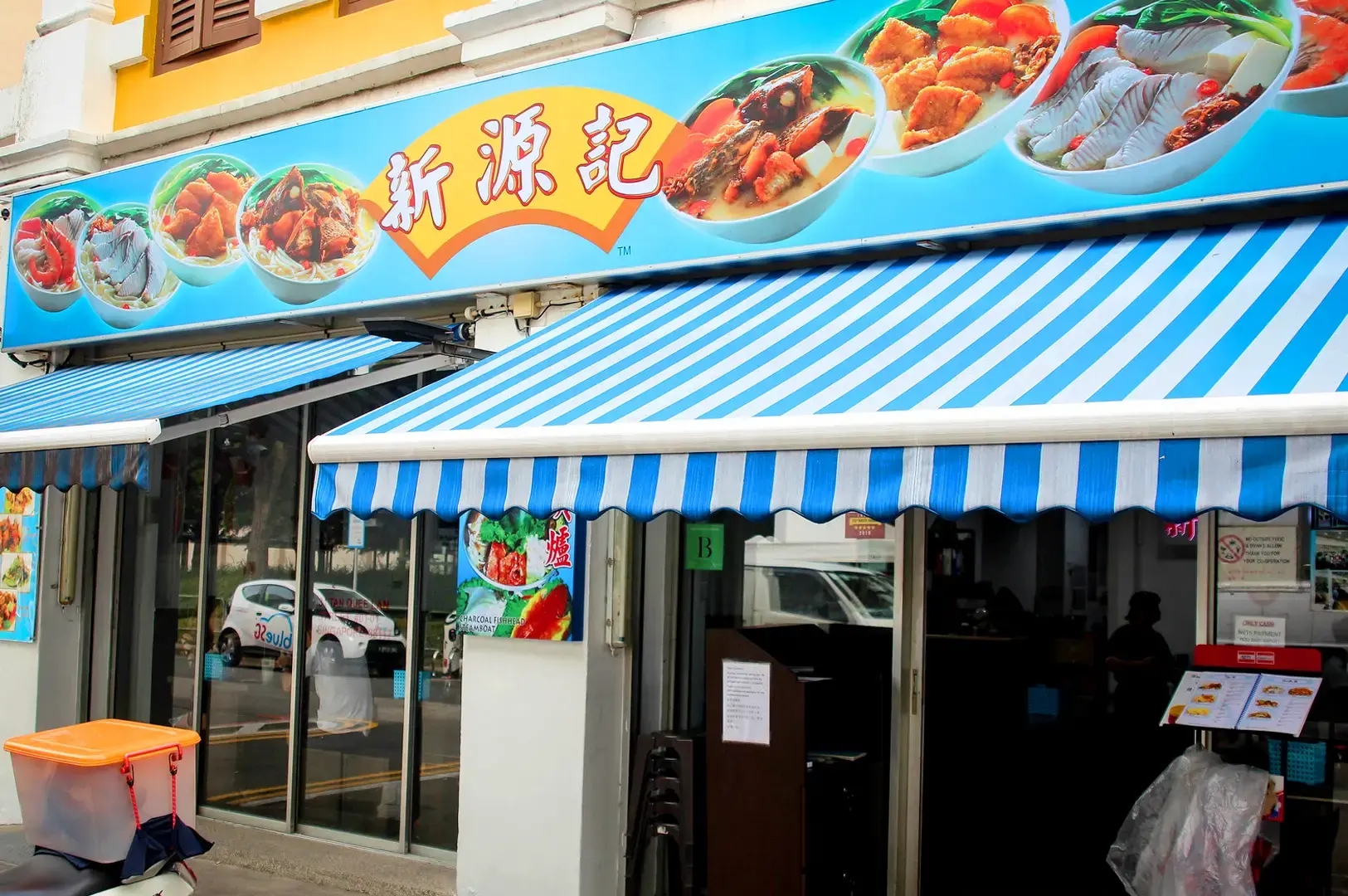
Nearest MRT: Bugis MRT, about 3–5 minutes on foot
Price: $–$$ — fish soup bowls generally around S$6 to S$10+
Xin Yuan Ji is where I would go when the craving is specifically for fried fish, bee hoon, and a richer soup rather than a delicate clear broth. The long-running Tan Quee Lan Street restaurant serves sliced fish, fried fish soup, mixed fish, fish head soup, and fish head steamboat, giving diners more choice than a specialist fish soup stall.
The fried fish bee hoon is the obvious starting point. Golden pieces of fried fish arrive with enough crust to retain some texture before slowly softening in the soup. The appeal is that contrast: crisp edges at the beginning, broth-soaked fish by the final spoonful. Bee hoon makes the bowl more substantial without distracting from the stock.
Diners can generally choose a clearer version or go richer by adding milk. That milky broth style is familiar across fish-head bee hoon restaurants in Singapore, where evaporated milk can lend the soup a creamy colour and rounder mouthfeel. If you want the fish itself to remain more prominent, the sliced fish version is the cleaner order.
Service, Queue, and Opening Hours
Xin Yuan Ji’s practical advantage is its restaurant format and much longer service hours. The Tan Quee Lan Street location currently trades through lunch and dinner rather than shutting after the midday rush.
That convenience comes with crowds. Peak meal periods can still bring a queue, but this remains the easiest choice on the list when you need a proper dinner rather than a lunchtime fish soup mission. For another convenient CBD outlet, our Raffles Place food guide includes other lunch-hour options like this one.
The Draw: Best for fried fish bee hoon, milky broth, families, and diners who want a late fish soup fix in air-conditioning.
The Catch: Avoid if your favourite fish soup is extremely clear, lean, and restrained.
6. First Street Teochew Fish Soup: Batang Fish Slices and Fish Maw in Kovan
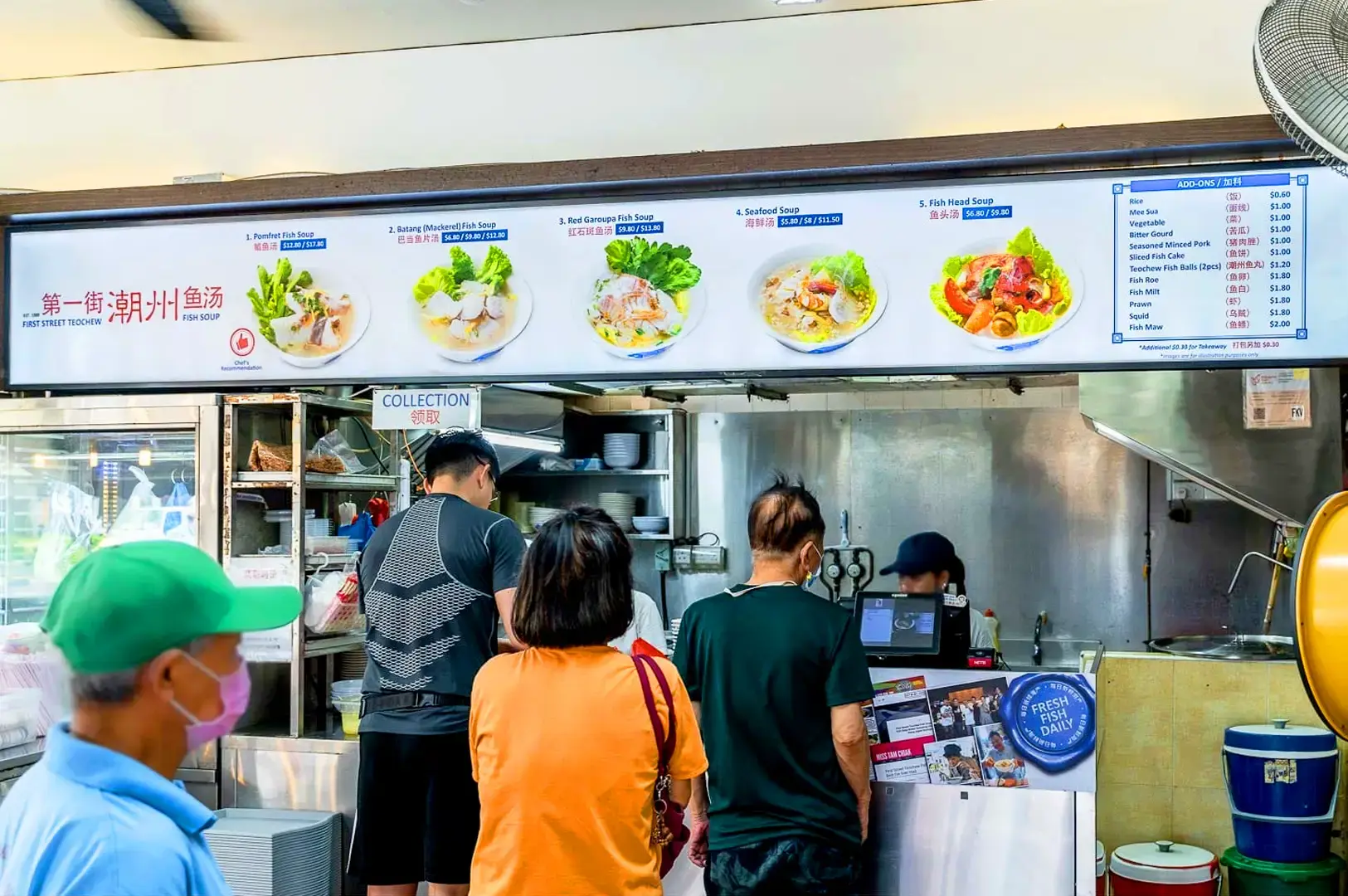
Nearest MRT: Kovan MRT, roughly 7–10 minutes on foot
Price: $$ — batang fish soup roughly S$6.80 to S$12.80 depending on size
First Street Teochew Fish Soup is the bowl for anyone who believes fresh fish and clear broth should be enough. The family-run business dates back to the late 1980s, and its Upper Serangoon shop remains focused on traditional Teochew fish soup rather than milky richness.
The batang fish slices are thick, firm, and clean-tasting, with the clear soup kept light enough that you can actually taste the fish. Other choices have included garoupa and pomfret fish soup, which gives First Street more range than stalls built around one type of fish.
Fish maw is the add-on I would spend on. Its soft, springy texture absorbs the broth while leaving the clear soup largely unchanged. That contrast between firm batang fish slices and yielding fish maw gives the bowl more interest without turning it into an overwhelming amount of toppings.
Service, Queue, and Opening Hours
This is where planning matters. A recent August 2026 report still describes half-hour queues even at supposedly off-peak times such as 11 AM, so popularity has not disappeared. Opening hours: Around 8am–3pm; current listings differ on Monday opening, so check before visiting.
The Draw: Best for traditional Teochew fish soup, thick batang fish slices, and fish maw without a heavy broth.
The Catch: Avoid if you dislike long queues or need a late meal. This is one of the bowls worth planning your timing around.
How to Choose the Best Fish Soup in Singapore for Your Taste
A good bowl should first make the fish taste fresh. That sounds obvious, but it matters. Whether you are eating batang, grouper, or pomfret, the flesh should stay firm and clean rather than soft or overly fishy.
Clear Broth, Teochew Fish Porridge, or Something Richer?
Traditional Teochew fish soup usually keeps the broth light, often with ginger, spring onions, preserved vegetables, and sometimes bitter gourd slices. Bitter gourd gives the soup a gentle bitterness that works surprisingly well against the slight sweetness of fresh fish.
You may also come across older or neighbourhood names such as Mei Chin Fish Soup when reading food news, food videos, or discussions about a favourite stall. Likewise, searches for steam fish soup sometimes refer more broadly to light fish-based soups rather than one standard Singapore recipe, so it is worth checking what each stall actually serves.
What Makes a Good Bowl of Fish Soup?
For me, a fish soup has to tick all the boxes:
- Fresh fish: Firm slices with no muddy or overly fishy finish.
- Balanced broth: Enough flavour to stand alone without burying the fish.
- Good aromatics: Ginger and spring onions should lift the soup, not dominate it.
- Useful add-ons: Bitter gourd, egg tofu, or rice should add contrast rather than clutter.
- Fair portions: A generous serving matters, especially when premium fish is involved.
The best stalls feel like they have an own recipe and clear point of view. If fish quality is your deciding factor, our Fresh Sashimi Singapore: Places for Clean Cuts, Quiet Counters, and Fish That Still Feels Alive explores how clean cuts and careful handling shape the texture and flavour of fresh seafood.
So, Which Bowl of Fish Soup Should You Choose?
It depends on the day you’re having.
The best fish soup offers thick fresh fish slices in a balanced, restrained broth that highlights the natural flavors. Some prefer the added sweetness and depth that prawns or other seafood bring, while others enjoy the contrast of fried fish combined with fresh slices in one bowl. For those seeking something different, herbal notes or a rich, milky broth can provide a unique twist on the traditional fish soup.
Ultimately, the best fish soup is the one that suits your mood and taste preferences. Whether you want a light, clear broth or a richer, more complex soup, the key is to appreciate the broth first—its depth and clarity set the foundation for the entire experience. A generous amount of fresh fish and generous portions make the meal satisfying and comforting, perfect for any day.

PappaRich SG and the Comfort of Malaysian Staple Food: A Restaurant Review in Familiar Flavours
Dio Asahi | June 6, 2026
There is a very specific kind of exhaustion that hits you right before a flight or just after you land. You are dragging your suitcase, staring blankly at the departure boards, and suddenly, you realize you are starving. But you don’t want just any food. You want something warm, familiar, and deeply comforting. I felt…
-
Sri Lanka’s Ambul Thiyal and the Sourness of Goraka
Eda Wong | June 5, 2026
In the open-air kitchen of a coastal home in southern Sri Lanka, a low fire crackles under a wide, unglazed clay pot. The air is thick with the scent of roasted black pepper and something deeply, aggressively tart. A wooden spoon scrapes the bottom of the pot, turning cubes of firm yellowfin tuna until they…
-
Traditional Malaysian Foods Aren’t a Museum: They’re a Living Argument at the Table
Eda Wong | June 4, 2026
When I first really started digging into traditional Malaysian food, I made a classic rookie mistake. I was sitting at a crowded kopitiam in Kuala Lumpur, looking at a plate of nasi lemak, and I thought I understood exactly what it was supposed to be. I thought it was a fixed, rigid recipe, a museum…
-
In Gifu, Hoba Miso Warms Slowly Over Magnolia Leaves
Dio Asahi | June 3, 2026
Frost clings to the wooden window frames in the highlands of Gifu. Inside, the air is thick with the scent of woodsmoke and fermented soybeans. On the table, a small ceramic charcoal grill known as a shichirin radiates a gentle, localized heat. Resting directly above the glowing embers is a large, brittle brown leaf holding…
-
The Stir Fried Egg Plant That Taught Me Restraint at Si Chuan Dou Hua Restaurant
Eat Drink Asia Team | June 2, 2026
I’ve always had a love-hate relationship with Sichuan food. Usually, you walk into a spot, order your food, and spend the rest of the night sweating through your shirt, chugging ice water, and wondering why you did this to yourself. But when I visited Si Chuan Dou Hua Restaurant on a Tuesday around 7 pm,…
-
What the Wok Is Really Doing to the Vegetable: The Question Behind Every ‘Brinjal Recipe Chinese Style’
Dio Asahi | May 30, 2026
When I first tried cooking brinjal at home, I was completely convinced that all I needed was a hot pan, some oil, and a good recipe. I chopped the vibrant purple vegetable, threw it into a standard frying pan with a generous pour of oil, and waited for the magic to happen. Instead of the…
-
The Clay Pot Rice Crust That Hong Kong Cooks Wait For
Eda Wong | May 29, 2026
The December wind cuts sharply through the narrow alleys of Temple Street, but the ambient heat from the glowing charcoal stoves pushes the chill away. A cook stands before a long row of blackened clay pots, working with a rhythmic, almost meditative focus. Plumes of white steam rise into the night air, carrying the heavy,…
-
The Velvet Logic Behind a Chinese Eggplant Recipe: When ‘Eggplant Recipes Asian’ Means Silk
Eda Wong | May 28, 2026
I vividly remember standing over my stove a few years ago, staring into a wok full of what can only be described as a greasy, grey disaster. When I first tried this dish at home, I assumed that tossing chopped eggplant into a hot pan with a generous glug of cooking oil would naturally yield…
-
Cambodia’s Prahok Pots and the Ferment Beneath the Meal
Dio Asahi | May 27, 2026
The afternoon heat in the outskirts of Phnom Penh settles like a thick blanket over the wooden stilt houses. Underneath the corrugated tin roof of an open-air kitchen, the air carries a heavy, sharp scent that instantly commands attention, a deeply pungent, earthen aroma of crushed fish and salt. An elderly woman sits on a…
-
Heat Has a Shape: Reading the Samyang Spicy Level Like a Flavour Map, Not a Dare
Eat Drink Asia Team | May 26, 2026
When we first tried the notorious Samyang 2x Spicy Buldak noodles, we treated it exactly how the internet told us to: like a dare. We boiled the noodles, poured in every last drop of the blood-red sauce, and braced ourselves. Within three bites, our palates were completely blown out. We could not taste the savoury…