By Dio Asahi for Eat Drink Asia.
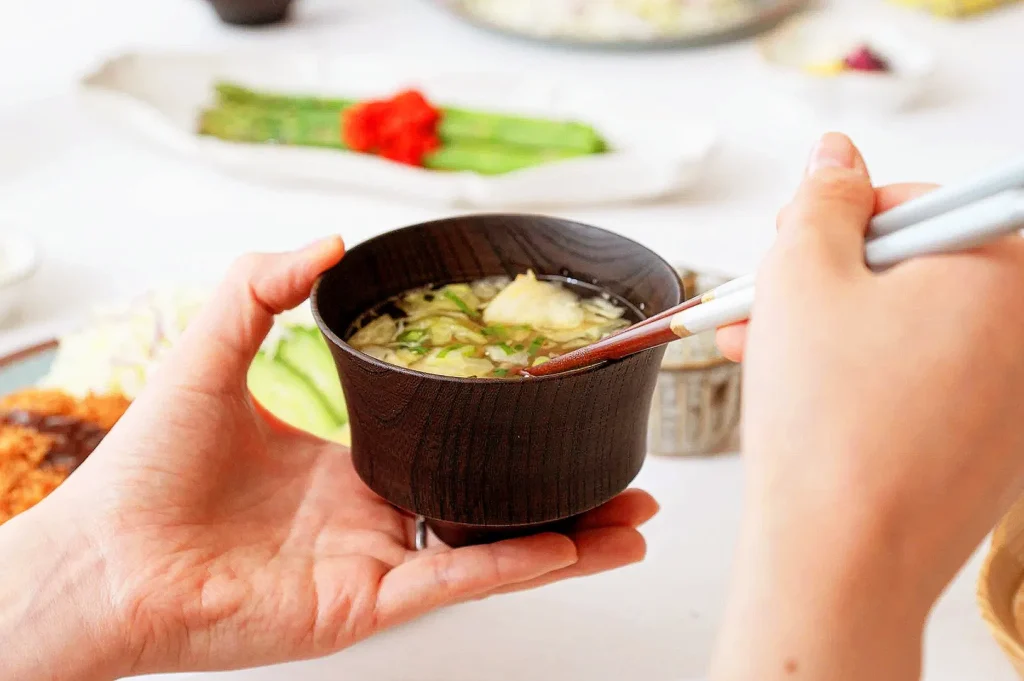
The shop is barely wider than a hallway. Seven stools, a counter worn smooth, and behind it a woman ladling soup into small ceramic bowls before anyone has ordered it. Steam lifts off the surface and fogs the window against the cold morning. The bowl reaches me warm in both hands, heavier than it looks. There’s a smell first — something salted, deep, almost like the sea remembered rather than tasted. Then the sip. Cloudy, gentle, faintly sweet under the salt. Outside, a train sighs into the station. Inside, nobody speaks yet.
What I’m holding is miso soup — 味噌汁, roughly “mee-so shiru.” At its simplest, it’s fermented soybean paste dissolved into dashi, a stock usually drawn from kombu seaweed and dried bonito flakes. That’s the whole architecture. The miso brings the salt and the funk, that living, fermented depth. The dashi brings the quieter thing underneath — a savoury base the Japanese call umami, which is less a flavour you name than one you feel settle in the back of the throat.
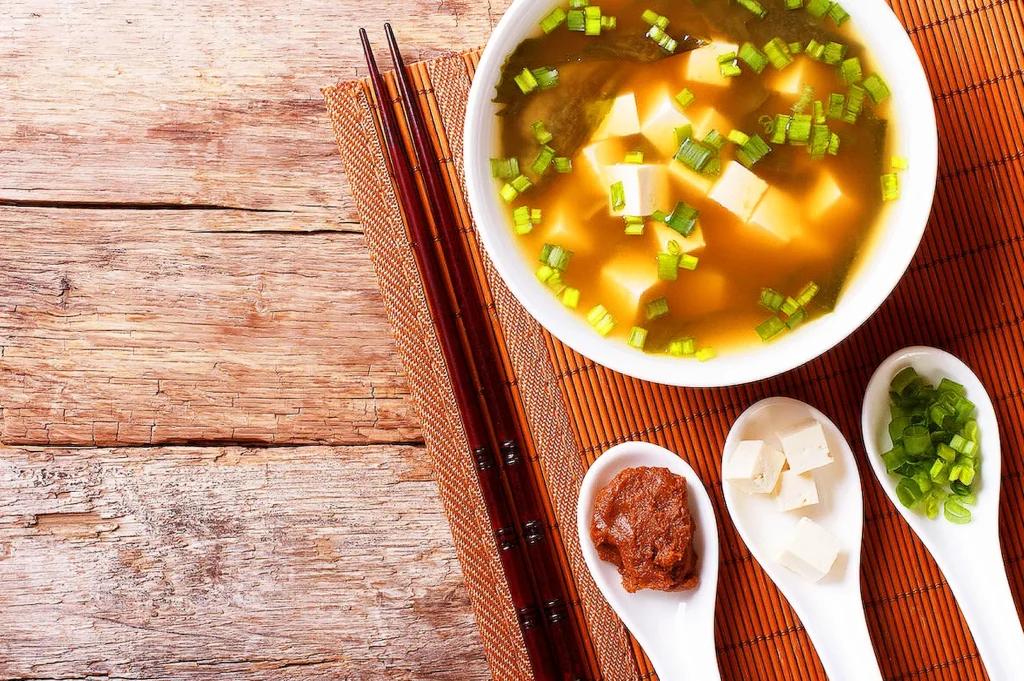
There’s often a little inside the broth. Cubes of soft tofu, a few slippery strands of wakame, sometimes sliced green onion floating on top. But the soup isn’t really about what’s in it. It’s about the liquid itself, and the way it arrives hot and unhurried, at the start of the day, without ceremony.
Watch a Tokyo breakfast shop at seven in the morning and you notice the rhythm before you notice the food. People arrive alone, mostly. They sit, they receive the bowl, they eat with a kind of practiced quiet. The soup is rarely the main dish — it comes beside rice, grilled fish, a raw egg. But it’s the first thing lifted, the first warmth of the morning. There’s an etiquette to it, too: you drink from the bowl, tilting it, rather than spooning. It signals something small and communal. Everyone here is doing the same thing at the same hour, in the same silence, before the city asks anything of them.
The craft hides in the timing. Dashi is warmed, but the miso is stirred in only at the end, off the strongest heat — never boiled. Boil it, and the miso turns flat and sour, the living quality cooked out of it. The woman behind the counter dissolves it through a small strainer with the back of a ladle, so no lumps remain, seconds before serving.
You can buy miso in a packet now. Tear, pour, add hot water, done. It’s not bad, and I understand why a tired morning reaches for it. But the packet version is a copy of a gesture, not the gesture itself, it is not what Eat Drink Asia stands for. The handmade bowl carries the memory of someone deciding not to let it boil — a small, deliberate act of care, repeated at dawn, for strangers.
I finished the bowl before I’d finished thinking about it. The woman was already ladling the next.
Some mornings ask for nothing more than that. Warmth, handed over. A quiet way of being fed.

Indonesian Traditional Food at Warong Nasi Pariaman: A Plate That Doesn’t Explain Itself—It Proves It
Dio Asahi | May 16, 2026
It’s always a little heartbreaking when a true culinary landmark decides to close its doors. Warong Nasi Pariaman, the iconic nasi padang spot at 738 North Bridge Road, served its final plates in January 2026. For decades, it stood as a testament to heritage, feeding generations of Singaporeans and becoming an essential part of the…
-
Indonesian Dishes, the IndoChili Way: A Restaurant Review Written in Smoke and Sweet Soy
Eda Wong | May 14, 2026
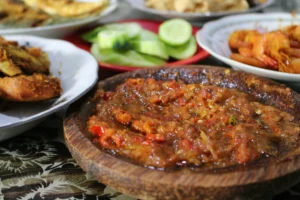
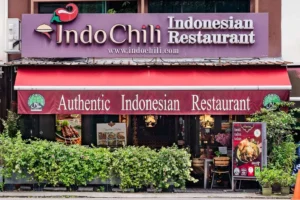
There are evenings when only a very specific type of comfort food will do. I wasn’t craving a standard bowl of noodles or a generic curry. I wanted that unmistakable, deeply fragrant balance of charcoal smoke and sticky sweet soy sauce that defines authentic Indonesian cooking. Finding that perfect harmony in Singapore without sitting outside…
-
The Sweet Darkness of Kecap Manis: The Flavour That Makes Food in Indonesia Feel Like Home
Dio Asahi | May 12, 2026
When I first tried to cook authentic Indonesian nasi goreng at home, I was incredibly confident. I had my wok smoking hot, my garlic and shallots perfectly fragrant, and a generous splash of regular soy sauce ready to go. But when I took that first bite, my heart sank. It tasted flat, salty, and entirely…

Fortune Centre Food Guide: Vegetarian Finds, Quick Lunches, and Hidden Dinner Spots
Eda Wong | May 9, 2026
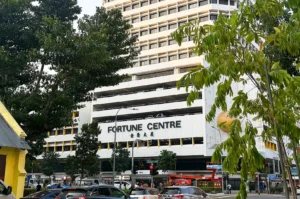
May 9, 2026 | Eda Wong | Last Updated: October 08, 2026 I have spent the last six months navigating the tight corridors and bustling walkways of Fortune Centre, determined to map out the Fortune Centre food scene beyond its best-known stalls. I’ve tried all of these famous stalls, sampling everything from intricate plant-based creations to…
-
Types of Chinese Food Hidden in Plain Sight: Imperial Treasure, Reviewed Through Their Orders
Eat Drink Asia Team | May 7, 2026
For a long time, many viewed Chinese food as one giant, delicious monolith, characterized by intense heat, heavy sauces, and wok-tossed brilliance. However, as more time is spent exploring Singapore’s incredible dining scene, it becomes clear that true culinary mastery often whispers rather than shouts. To demonstrate this to visitors, a table at Imperial Treasure…
-
Famous Food in China Isn’t Loud: Din Tai Fung’s Dumplings and the Power of Precision
Dio Asahi | May 5, 2026
There is a common misconception that the most authentic culinary journeys involve loud, chaotic kitchens with massive wok flames and shouting chefs. I used to think the same thing until I started paying closer attention to the quieter corners of Asian cooking. I visited Din Tai Fung on a Tuesday around 2:30 pm, hoping to…
-
The Morning Steam of Baozi Along a Beijing Street
Eda Wong | May 2, 2026
The first thing I noticed was the steam. It rose in soft, continuous bursts from stacked bamboo baskets, drifting into the cold Beijing morning like breath made visible. The vendor lifted each lid with practiced rhythm, a quick tilt, a release of heat, then the faint scent of yeast, pork, and warm flour rolling outward….
-
Moo Ping and the Structure of Thai Grilled Street Meat
Dio Asahi | April 30, 2026
The first thing I noticed was the smoke, thin, controlled, rising steadily from a charcoal grill along a Bangkok street. Skewers of pork turned in a quiet rhythm, fat dripping and hissing as it met the heat. The air carried layers of scent: sweet palm sugar, garlic, and a faint fermented depth beneath it. I…
-
Where Kuala Lumpur Actually Begins: Reading the City Through Its Food
Eat Drink Asia Team | April 30, 2026
There are cities you can understand through maps, and then there are cities like Kuala Lumpur that only begin to make sense when you follow what people eat. Not what is recommended or ranked, but what is repeated. The same stall visited every week, the same dish ordered without hesitation, the same flavours that feel…
-
The Silent Language of the Table: How Traditional Food in China Speaks Through Generations
Eda Wong | April 28, 2026
When I first tried to navigate a traditional Cantonese family dinner, I made a spectacularly embarrassing mistake. I sat down, looked at the sprawling, beautifully written menu, and confidently ordered an individual plate of sweet and sour pork just for myself. The table went completely quiet. My host gently nudged the menu back towards the…