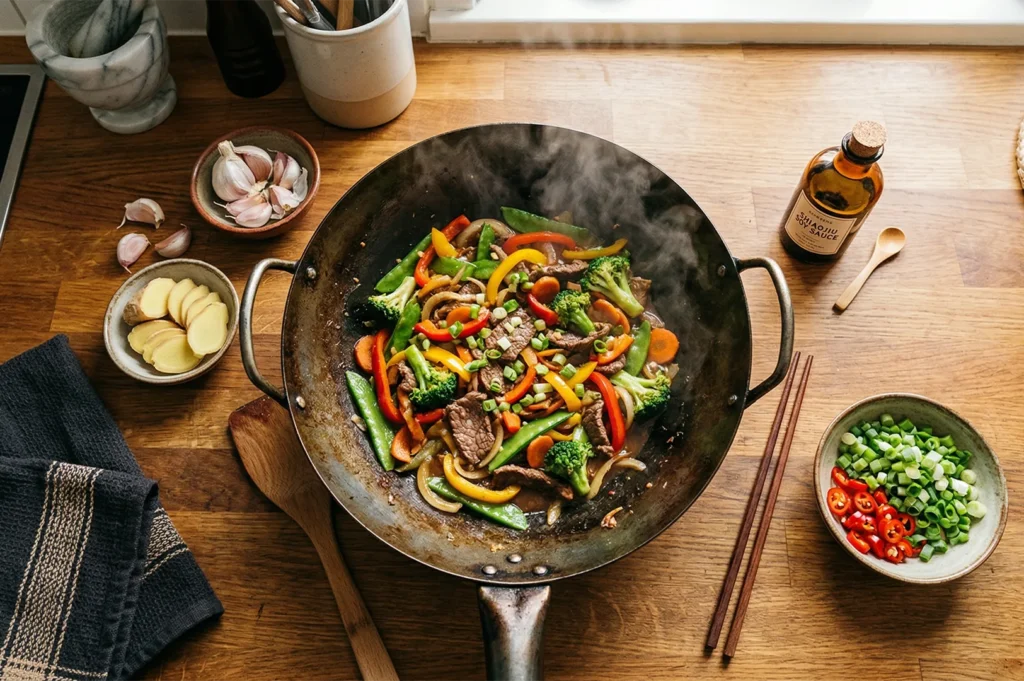
For years, I thought cooking Asian food at home required something mystical.
My stir-fries were soggy, lacking that smoky breath of the wok. My fried rice was inconsistent, sometimes clumpy, other times dry. My sauces tasted flat, missing the balance of savory, sweet, and tangy flavors I craved. I assumed restaurants had secrets I’d never learn.
They don’t.
They have systems.
Once I understood that Asian cooking isn’t magic, it’s repeatable technique, everything changed. This guide is built around that idea: teach the fundamentals once, and you can confidently cook delicious oriental foods recipes across Chinese, Japanese, Korean, Thai, and Vietnamese kitchens right in your home kitchen.
Not 60 random recipes.
Eighteen core dishes.
Transferable skills.
Why 18 Recipes Is the Sweet Spot for Asian Recipes
If you want 15–20 recipes, 18 is perfect. It’s comprehensive without turning into an encyclopedia.
These dishes teach:
- Rice handling — perfect for that fluffy fried rice or sticky Japanese rice
- Noodle timing — so your noodles are tender yet chewy, never mushy
- Stir-fry sequencing — mastering high heat to get that crispy, caramelized edge
- Broth logic — building layers of flavor in soups like pho or miso
- Sauce balance — the dance of salty soy sauce, sweet sugar, and tangy lime
- Fermentation basics — unlocking the umami depth of kimchi and miso
- Quick pickling — adding a refreshing crunch to side dishes
- Knife skills — chop vegetables and proteins uniformly for even cooking
Master these once, and you stop “following recipes.” You start cooking.
The Flavor DNA (Short Cultural Orientation of Asian Dishes)
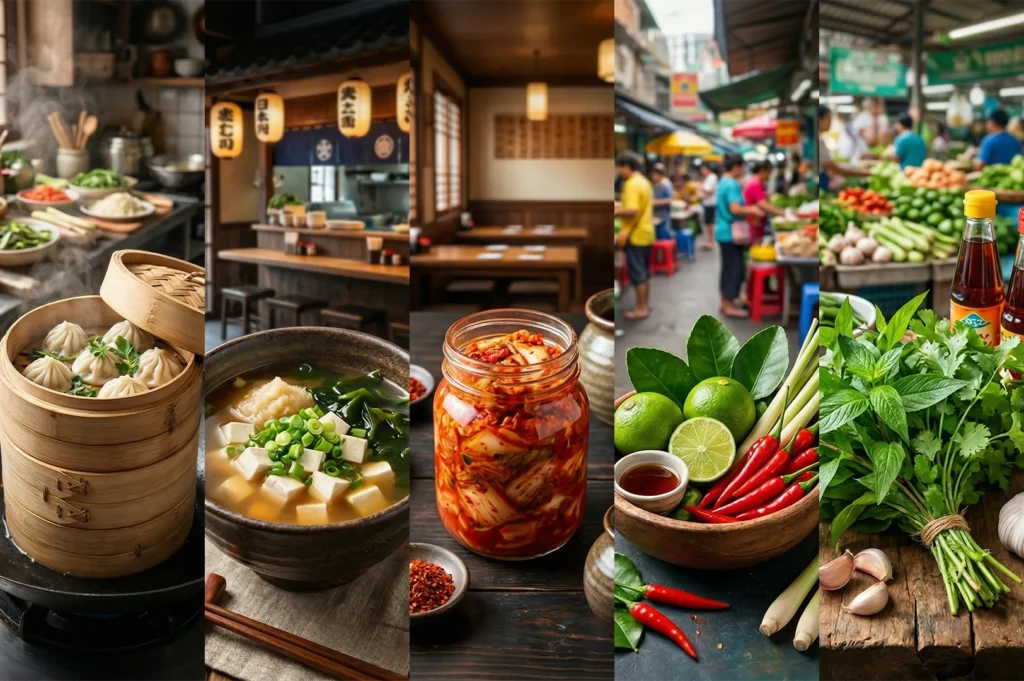
Before we cook, understand the core logic behind each cuisine’s flavors and techniques.
Chinese: High-heat stir fry logic with layered aromatics like garlic and onion; texture matters as much as taste, from crispy bok choy to tender beef.
Japanese: Precision and restraint. Quiet but exact seasoning using miso, mirin, and dashi to create delicate, balanced dishes.
Korean: Fermented foundations (jang), sesame fragrance, and contrast through banchan side dishes that bring texture and spice.
Thai: Balance is law, sweet, sour, salty, spicy in perfect tension, often garnished with fresh lime and herbs.
Vietnamese: Fresh herbs, light broths, and dipping sauces that tie everything together, like the warm, satisfying bowl of pho.
Once you see these patterns, the food stops feeling mysterious and becomes fun to make.
The 18 Core Oriental Foods Recipes That Teach Everything
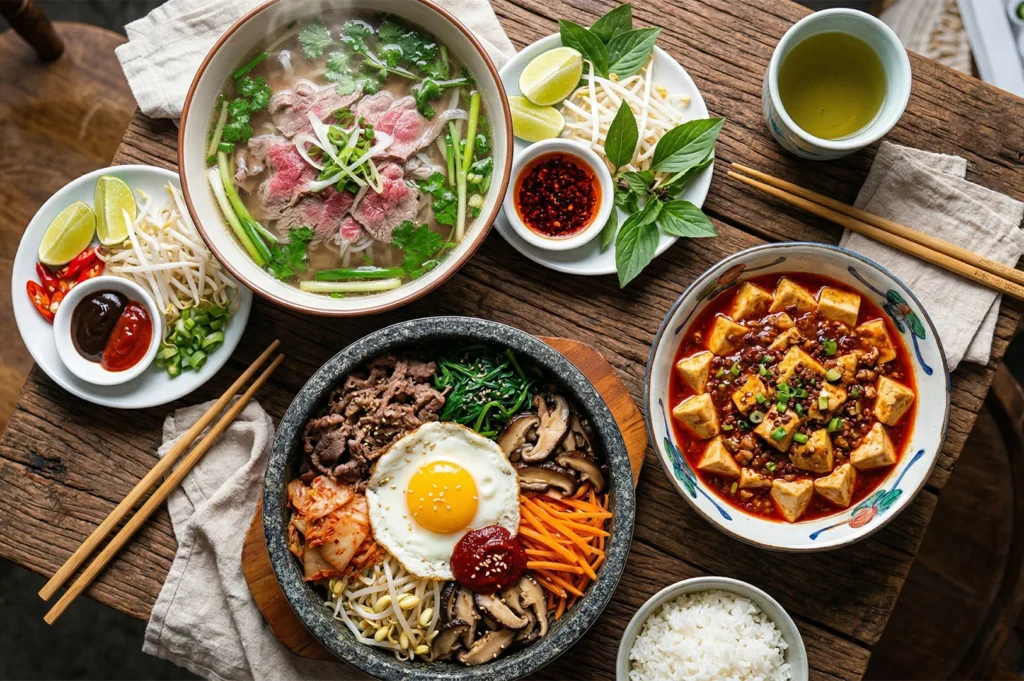
🇨🇳 Chinese (Heat + Sequencing)
- Egg Fried Rice
Teaches dry rice handling and high-heat sequencing. Perfect for transforming leftover rice into a crispy, savory meal. - Kung Pao Chicken (or tofu)
Aromatic stir fry workflow with a spicy, tangy sauce balanced by crunchy peanuts and tender protein. - Mapo Tofu
Layered umami from fermented doubanjiang and soft tofu simmered to silky perfection. - Steamed Fish with Ginger–Scallion
Steaming technique with fresh aromatics, finished with a drizzle of hot oil and soy sauce for a delicate, flavorful dish. - Tomato & Egg Stir-Fry
A fast, comforting weekday dish with fresh tomatoes, eggs, and simple seasoning, surprisingly easy and delicious.
🇯🇵 Japanese (Clarity + Control)
- Miso Soup
Foundational soup logic. Never boil miso to preserve its complex flavors; serve warm with tofu and scallions. - Tamagoyaki
Rolled egg with a tender, slightly sweet texture that showcases heat control discipline. - Chicken Teriyaki
Soy–mirin glaze mastery that creates a glossy, flavorful coating over juicy chicken. - Gyudon
Thin-sliced beef simmered quickly with onion and soy sauce, served over rice for a satisfying quick lunch. - Onigiri
Rice balls seasoned and shaped for portable, tasty snacks or light meals.
In addition to these classic dishes, those exploring Japanese cuisine in Singapore should not miss the vibrant izakaya scene. Izakayas Singapore offer a lively atmosphere where you can enjoy a variety of small plates, sake, and casual dining experiences that complement the flavors of traditional Japanese cooking.
🇰🇷 Korean (Fermentation + Depth)
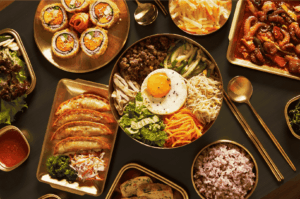
- Bibimbap
Component prep and mix-at-the-table format with fresh vegetables, protein, and spicy gochujang sauce. - Doenjang Jjigae
Fermented soybean stew rich in umami, perfect for a healthy, comforting dinner. - Kimchi Fried Rice
Leftover rice transformed with spicy kimchi, garlic, and vegetables into a flavorful, crispy dish.
🇹🇭 Thai (Balance + Sauce Logic)
- Pad Thai
Noodle timing and sweet/sour/salty harmony with crunchy peanuts, fresh lime, and tender shrimp or chicken. - Green Curry
Creamy coconut sanctuary with fragrant spices and tender vegetables simmered to perfection. - Som Tam–Inspired Salad
Pounding and maceration technique creates a tangy, crunchy salad bursting with fresh flavors.
🇻🇳 Vietnamese (Freshness + Broth)
- Phở-Inspired Quick Beef Noodle Soup
Broth shortcuts with fresh aromatics and tender beef slices make for a warm, satisfying bowl. - Gỏi Cuốn (Fresh Spring Rolls)
Knife skills and prep rhythm combine fresh vegetables, herbs, and protein wrapped in translucent rice dough; served with tangy peanut or hoisin dipping sauce.
Pantry Map for the Modern Home Kitchen: Building Blocks for Oriental Foods Recipes
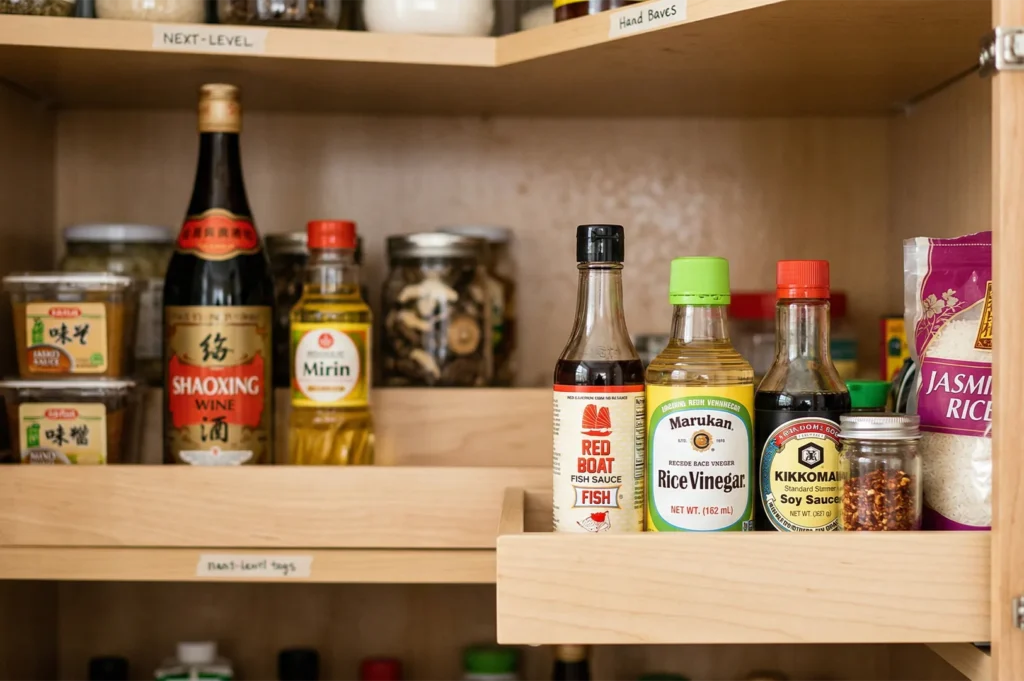
Instead of listing 60 ingredients, build your pantry in layers to keep your fridge stocked with essentials that unlock countless asian inspired dishes.
Must-Have: Cross-Cuisine Staples
Start here to cook flavorful dishes from scratch:
- Soy Sauce (Light for seasoning, dark for color and mild sweetness, Japanese shoyu for balance)
- Rice Vinegar for clean acidity in quick pickles and dipping sauces
- Toasted Sesame Oil — a few drops add a nutty finish
- Fish Sauce — the umami backbone of Thai and Vietnamese food (use sparingly)
- Chili Elements like gochujang, sambal, or dried chili flakes for spice
- Aromatics — garlic, ginger, scallions
- Cornstarch for velveting meat and glossy stir-fry sauces
Next-Level Staples (Unlock Authentic Taste Faster)
- Mirin — sweet Japanese rice wine for glazes and sauces
- Miso — white for mild sweetness, darker for deeper savoriness
- Oyster Sauce — savory-sweet backbone of Chinese stir-fries
- Shaoxing Wine — adds aroma depth to stir-fries and braises
Where to Buy
- Asian grocers offer the best variety and price
- Regular supermarkets carry essentials like soy sauce, rice vinegar, and sesame oil
- Online retailers for specialty items like hon-mirin and niche noodles
Core Skill Modules: Confidence Builders for Cooking Oriental Foods Recipes
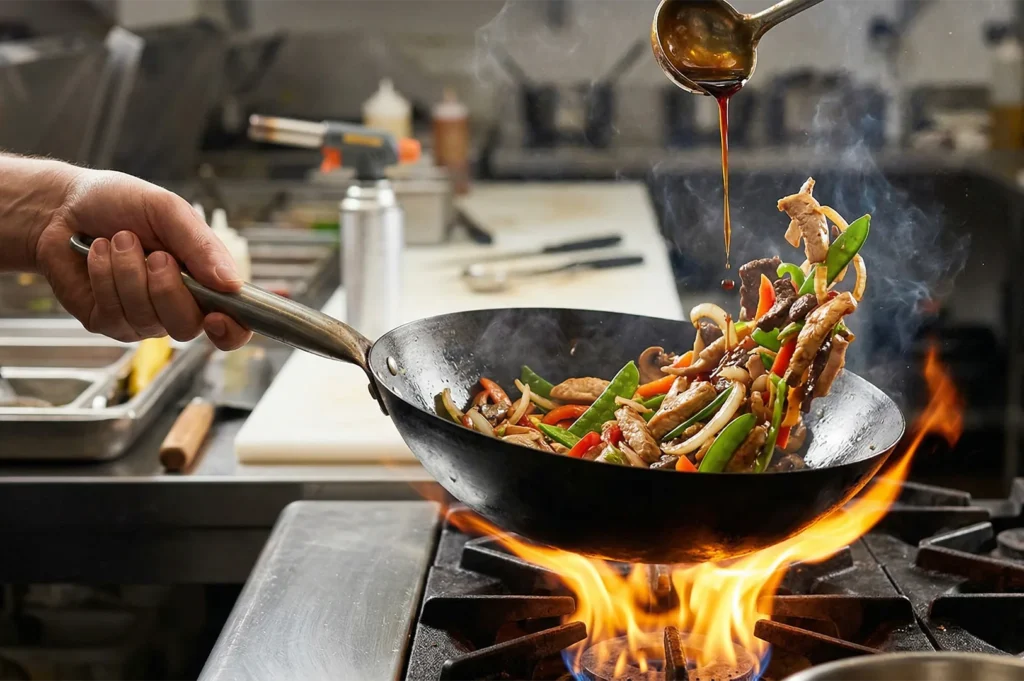
Stir-Frying Without Sogginess
- Prep everything first (mise en place)
- Use high heat to get that crispy, caramelized edge
- Cook in batches to avoid overcrowding the pan
- Add sauce last for a glossy, flavorful finish
Advanced trick: Some cooks use a blowtorch briefly for wok hei, experiment safely.
Velveting & “Passing-Through”
Lightly coat sliced meat or tofu with cornstarch and briefly par-cook in oil or water before stir-frying. This keeps protein tender and silky.
Rice Done Right
Three rules fix most problems:
- Rinse rice to remove excess starch
- Measure water and rice ratios precisely
- Rest rice after cooking for perfect texture
Use a rice cooker for easiest consistency, or stovetop with care.
Steaming Without Stress
- Use bamboo steamer or metal insert
- Keep water below food level to avoid sogginess
- Line baskets with parchment or cabbage leaves for easy cleanup
Steaming reheats leftovers beautifully without drying.
Knife Skills That Matter
- Uniform slices ensure even cooking
- Slice protein across the grain for tenderness
- Mince garlic and ginger efficiently to release flavors
You don’t need restaurant precision, just consistency.
Pitfalls for Beginners (And How to Fix Them)
Overcrowding the pan
→ Cook in two rounds to chase sear, not steam.
Saucing too early
→ Sauce finishes the dish, so add it last.
Wrong soy sauce confusion
→ Start with one all-purpose bottle; add dark soy only for color.
Fish sauce fear
→ Use drops, not splashes.
Mushy rice
→ Measure, rinse, and rest rice properly.
Obsessing over “authentic” without flexibility
→ Substitute by function: salt, acid, sweet, umami.
Where You Can Win: What Others Don’t Always Do
Many excellent sites exist:
- Just One Cookbook (Japanese clarity)
- Maangchi (Korean confidence)
- Hot Thai Kitchen (Thai balance logic)
- Serious Eats (technique depth)
What’s often missing?
- Cross-cuisine pantry by function
- A staged shopping plan
- Workflow design (one prep → multiple meals)
- Troubleshooting boxes
- Equipment advice for small modern kitchens
That’s where this guide stands apart.
Final Shift: Confidence Through Repetition
Cooking East and Southeast Asian food at home stopped feeling intimidating when I stopped chasing perfection and started mastering patterns.
Start with Egg Fried Rice.
Or Miso Soup.
Or Pad Thai.
Cook it three times.
Listen for garlic hitting hot oil.
Watch miso cloud broth.
Feel rice grains separate under your fork.
That moment, when it tastes right, is when the mystery disappears.
And when that happens, you’re no longer following recipes.
You’re cooking.

Padang Beef Rendang: The Complex Process Behind Indonesia’s Most Famous Dish
Eda Wong | October 30, 2025
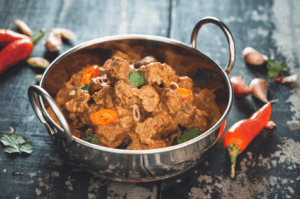
This post may contain affiliate links. For full transparency, this article may contain affiliate links. To call Padang beef rendang simply a dish is to miss the soul of Indonesian cuisine. This legendary slow-cooked dry curry, a centerpiece of both festive tables and humble meals, has earned its fame as one of the world’s most…
-
Teh Tarik Malaysia: The Art and Science Behind Iconic Pulled Tea
Eat Drink Asia Team | October 28, 2025
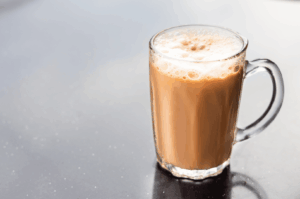
In Malaysia, ordering a cup of teh tarik is about so much more than just enjoying a hot drink. Teh tarik, literally translated as “pulled tea,” is Malaysia’s national beverage, famous for its sweet, creamy taste, frothy top, and the spectacular pulling technique seen in bustling mamak stalls and coffee shops across the country. A…
-
The Legendary Penang Char Kway Teow: A Culinary Journey
Dio Asahi | October 25, 2025
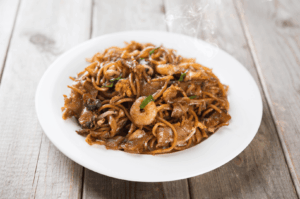
The air in Penang is thick with anticipation, carrying the sounds and smells of Malaysian street food being crafted with expert care. Your attention is captured by one of the many street vendors, a master standing before a seasoned wok glowing over an intense fire. The rhythmic clanging of metal on metal is the soundtrack…
-
Traditional Korean Sikhye: Sweet Rice Punch Through the Seasons
Eda Wong | October 23, 2025
In the vibrant world of Korean food, beyond the fiery spice of gochujang and the savoury comfort of bulgogi, lies a gentler, more subtle delight. Meet traditional Korean sikhye (식혜), a beloved Korean sweet rice punch that holds a special place in the nation’s heart. With its cloudy, amber hue and delicate sweetness, this drink…
-
Authentic Jeonju Bibimbap: Why Korea’s Culinary Capital Makes It Best
Eat Drink Asia Team | October 21, 2025
Picture this: A steaming Korean rice bowl is placed before you in Jeonju, South Korea. Vibrant arcs of seasoned bean sprouts, glossy strips of Korean beef, a golden runny yolk resting atop perfectly cooked mixed rice, and a dollop of rich red bibimbap sauce invite you to mix it all together. As you stir, the…
-
Communal Dining Traditions in Asia: Shared Meals, Lasting Bonds, and Cultural Heritage
Dio Asahi | October 18, 2025
Imagine a dining table crowded with large platters of steaming food, the smell of spices in the air, small bowls arranged neatly around the shared table, and laughter echoing across the room. Across Asia, dining tables play a central role in communal dining traditions, serving as the focal point for etiquette, social interaction, and the…
-
Century-Old Dumpling Techniques: Ancient Wisdom in Modern Kitchens
Eda Wong | October 16, 2025
Her hands move in a blur, a dance of muscle memory refined over sixty years. In a small, steam-filled kitchen in Shanghai, an elderly woman transforms a humble circle of dumpling dough into a perfect, 20-pleat xiao long bao. Each pinch and fold is a syllable in a story passed down through generations-prime examples of…
-
Ca Phe Sua Da: The Cultural Phenomenon of Authentic Vietnamese Coffee
Eat Drink Asia Team | October 14, 2025
The dawn breaks over Hanoi, and the city awakens not to alarm clocks but to the clatter of tiny spoons and the metallic click of filters. The air fills with the dark, roasted aroma of authentic Vietnamese coffee drifting from bustling corners and sidewalk stalls. They are not rushing. Instead, they are waiting-waiting for the…
-
Cao Lầu Noodles: Hoi An’s Legendary Noodle Dish with Japanese Origins
Dio Asahi | October 11, 2025
Imagine sitting on a low stool in a bustling alleyway of Hoi An’s ancient town. The warm, fragrant air is thick with the scent of sizzling marinated pork, fresh herbs, and the unmistakable aroma of fish sauce and fried rice crackers. In front of you, a bowl of Cao Lau noodles gleams, their golden brown…
-
Chinese Tea: 5,000-Year Tea Journey from Ancient Medicine to Global Beverage Phenomenon
Eda Wong | October 9, 2025
Every cup of tea enjoyed today, whether a brisk English breakfast or a delicate green tea in Tokyo, finds its lineage rooted in the heart of Chinese tea history. For nearly 5,000 years, the humble leaves of the Camellia sinensis tea plant have been cultivated, brewed, and cherished-first as ancient medicine in southern China, and…