Frost clings to the wooden window frames in the highlands of Gifu. Inside, the air is thick with the scent of woodsmoke and fermented soybeans. On the table, a small ceramic charcoal grill known as a shichirin radiates a gentle, localized heat. Resting directly above the glowing embers is a large, brittle brown leaf holding a dollop of dark paste, wild mushrooms, and scallions. As the heat rises, the paste begins to bubble at the edges, emitting a low, rhythmic hiss. The air turns intensely savory, anchoring everyone at the table to this exact moment.
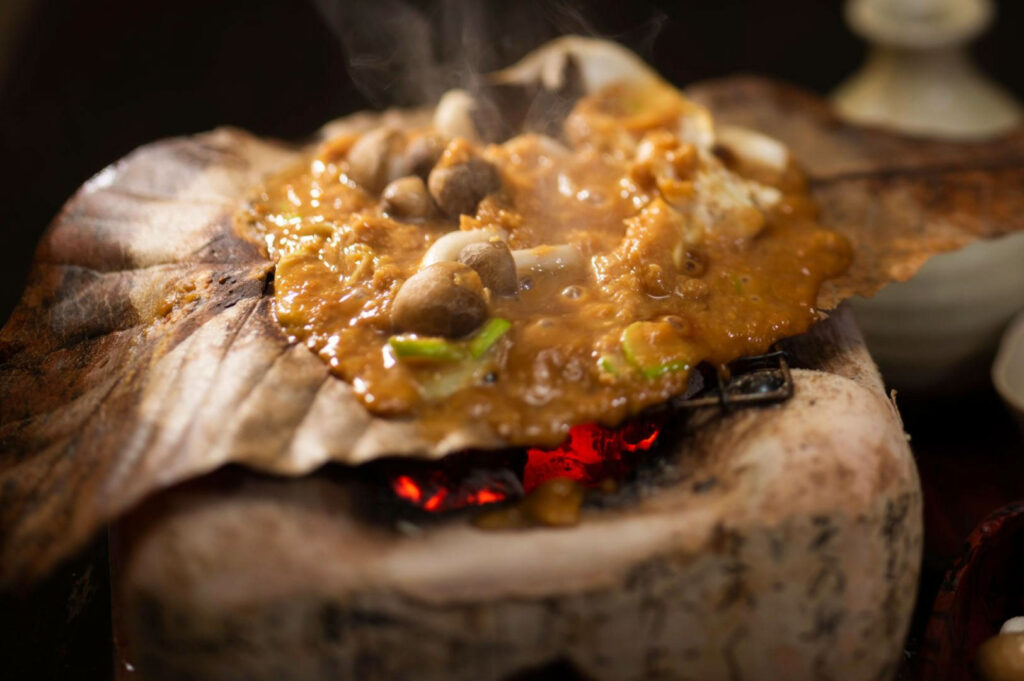
This is hoba miso, pronounced hoe bah mee so, a cornerstone of traditional mountain cooking in this region of central Japan. Stripped to its essence, it is simply miso paste roasted over fire. But the craft lies in the vessel. The hoba, or dried magnolia leaves, are foraged in the autumn and dried for winter to act as a natural skillet. They do not burn instantly. Instead, they slowly toast, releasing a faint, woodsy aroma into the miso. As the hoba miso heats, its texture shifts from thick clay to a glossy, bubbling reduction. The sweet, salty, and earthy notes intensify, mingling with the moisture of the mushrooms and the sharp bite of local scallions.
In the mountainous terrain of Gifu, where winters are long and isolating, hoba miso signals survival transformed into comfort. Historically, local farmers needed a way to thaw out frozen pickles and warm their miso without dirtying precious cookware, leading to this ingenious use of the forest floor. Today, it remains an everyday ritual of connection. While modern kitchens are equipped with gas stoves and microwave ovens, the act of gathering around a shared table to watch the magnolia leaves slowly scorch is an intentional pause. It requires patience and a communal rhythm. Diners must constantly tend the mixture with wooden chopsticks, scraping the edges before the miso burns, creating a shared responsibility over the meal.
In an era of rapid food delivery and instant gratification, hoba miso asks for your time. There is a quiet tension between the aesthetic beauty of the dried leaf and the practical appetite it serves. The leaf is ephemeral. It will eventually crack and turn to ash, useful for only one meal. Yet, it elevates a humble dollop of fermented soybeans into an event. It reminds us that mountain cooking does not always require manufactured metal. Sometimes, the landscape itself provides exactly what is needed to coax out the deepest flavors.
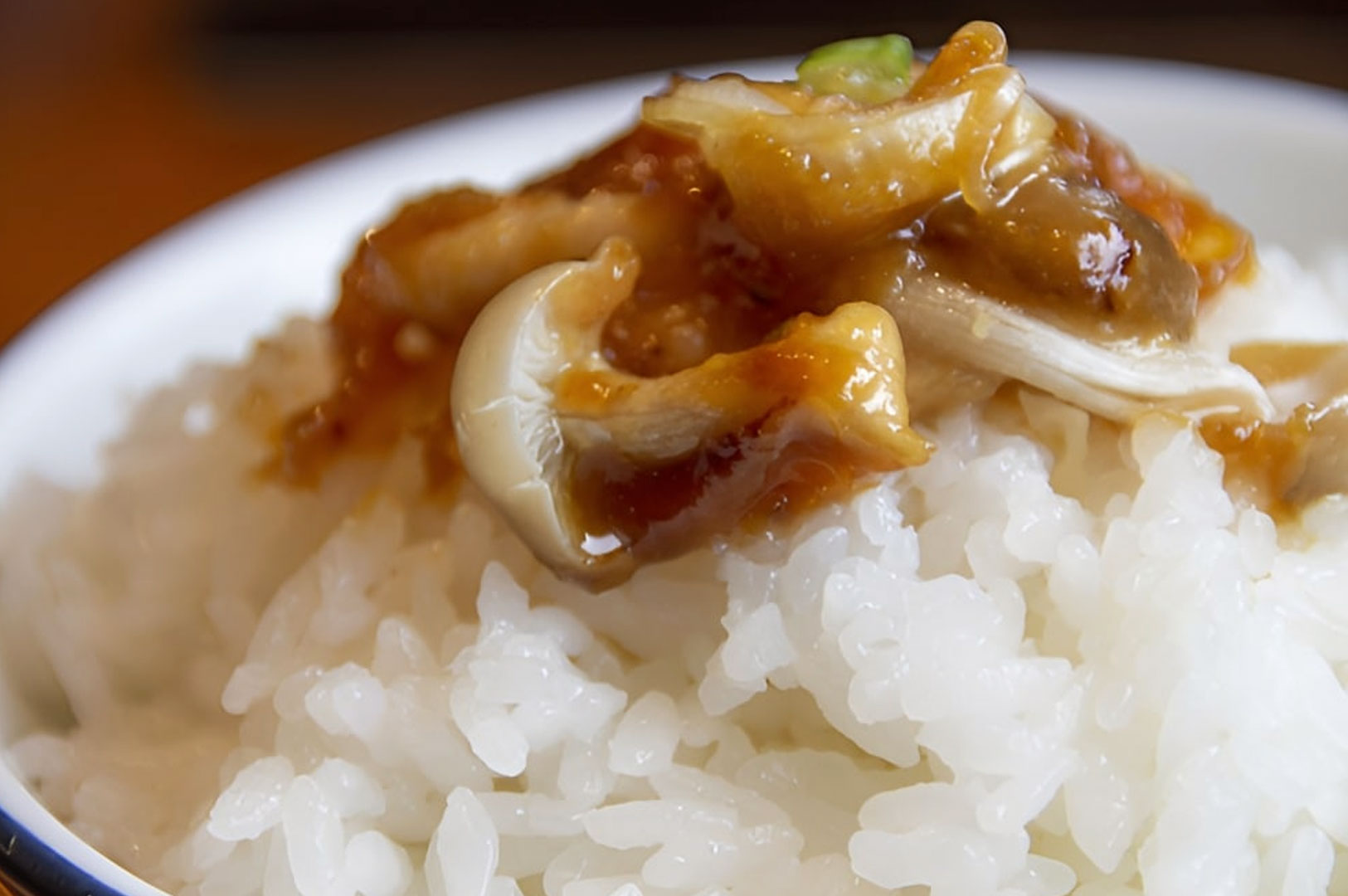
The bubbling eventually slows as the embers soften to a dull orange. A final scrape of the chopsticks pulls the caramelized, slightly scorched hoba miso from the center of the leaf, lifting it over a bowl of steamed white rice. The leaf is left to smolder, its task complete, leaving only the warmth it imparted.
For Eat Drink Asia, this wintertable scene in Gifu captures how a single leaf can turn miso into comfort.

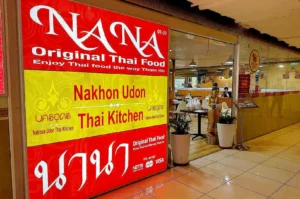
Nana Original Thai Food and the Thai Meal That Keeps Changing Its Accent
Eda Wong | September 1, 2026
The tom yum arrived first, and the first spoonful hit sour and hot at once, lime and chilli chasing each other down the throat. This classic Thai dish features a spicy sauce and aromatic herbs that awaken the taste buds straight away, setting the stage with its bold flavors. Then the pineapple rice came, sweet…
-
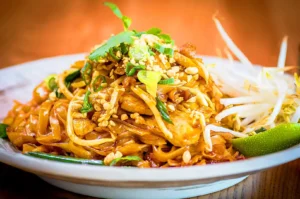
Pad Thai Recipe for People Who Know the Noodles Can’t Be an Afterthought
Dio Asahi | August 29, 2026
The first time I made Pad Thai, I ruined it before the wok was even hot. I’d left the noodles soaking while I answered a phone call. Ten minutes turned into forty. By the time I drained them, they were already soft, already surrendered. Everything I did in the pan after that was damage control….
-
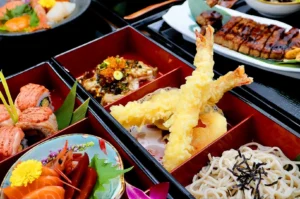
Best Japanese Restaurant Singapore: Places That Nail the “First Bite”
Eat Drink Asia Team | August 27, 2026
I built this list around a very specific feeling: that first bite where the room goes quiet for a second. I’ve tried enough Japanese restaurants in Singapore over the years to know that “best” does not always mean the most expensive, the rarest, or the hardest to book. Sometimes it is the warmth of the…
-
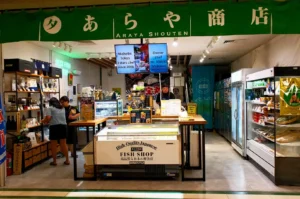
Not Just Seafood: How Araya Shouten Keeps Japanese Fishing Culture Alive in Singapore
Eat Drink Asia Team | August 26, 2026
Japanese cuisine has long been admired for its attention to seasonality, precision, and respect for ingredients. However, behind every piece of sashimi or carefully prepared seafood dish lies a story that begins far away from the dining table, often with fishermen, coastal communities, and generations of knowledge passed down through time. At Araya Shouten, seafood…
-
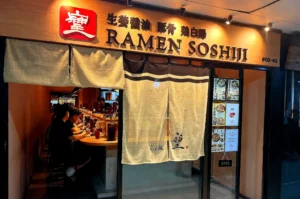
The Ginger Shoyu Ramen at Ramen Soshiji, Where Orchard Goes Quiet
Dio Asahi | August 26, 2026
By Dio Asahi for Eat Drink Asia. The lift opens on the third floor of Orchard Plaza, and for a second I don’t know which way to turn. The corridor is dim and still, the kind of quiet that feels almost accidental in this part of town. A few doors down, an unmarked entrance. Inside,…
-
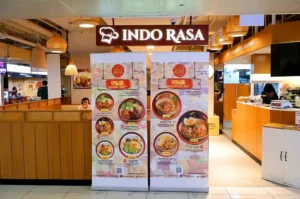
Indo Rasa Singapore and the Nasi Goreng That Measures a Kitchen’s Confidence
Eat Drink Asia Team | August 25, 2026
There’s a dish I order when I want to know a kitchen quickly. Not the specialty. Not the thing the menu is proud of. I order the fried rice. Because nasi goreng has nowhere to hide. It’s rice, chilli, chicken, egg, a few crackers, some cucumber. Everyone thinks they can make it. Most people can….
-
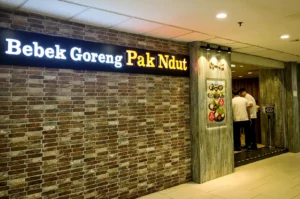
Bebek Goreng Pak Ndut and the Fried Duck That Makes Nasi Goreng Feel Too Polite
Eda Wong | August 22, 2026
The duck arrived and made a sound before I’d even touched it. Not the plate, the skin. When my fork pressed against it, there was a small, dry crackle, the kind you feel in your fingers before you hear it. That’s when I understood I wasn’t eating a soft meal. This was something with edges….
-
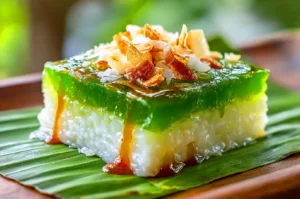
The Coconut Spoon That Shapes Nyonya Kueh Salat
Eda Wong | August 21, 2026
By Eda Wong for Eat Drink Asia. Steam curls up from a tray in the back of the kitchen, and the whole room smells green. Pandan, crushed and knotted, pushed through wet cloth until the leaves give up their colour. An auntie leans over the tray with a spoon carved from coconut shell, dark and…
-
Chicken Nasi Goreng Recipe: What Leftover Rice Becomes After the Wok Gets Serious
Dio Asahi | August 20, 2026
There’s a container of rice at the back of my fridge most weeks. Cold, a little hard, forgotten from a dinner two nights ago. Some people see that and think of waste. I see the start of something better. Because leftover rice doesn’t want to be reheated. It wants to be fried. And when it…
-
The First Ladle of Miso Soup in a Tokyo Breakfast Shop
Dio Asahi | August 19, 2026
By Dio Asahi for Eat Drink Asia. The shop is barely wider than a hallway. Seven stools, a counter worn smooth, and behind it a woman ladling soup into small ceramic bowls before anyone has ordered it. Steam lifts off the surface and fogs the window against the cold morning. The bowl reaches me warm…