Frost clings to the wooden window frames in the highlands of Gifu. Inside, the air is thick with the scent of woodsmoke and fermented soybeans. On the table, a small ceramic charcoal grill known as a shichirin radiates a gentle, localized heat. Resting directly above the glowing embers is a large, brittle brown leaf holding a dollop of dark paste, wild mushrooms, and scallions. As the heat rises, the paste begins to bubble at the edges, emitting a low, rhythmic hiss. The air turns intensely savory, anchoring everyone at the table to this exact moment.
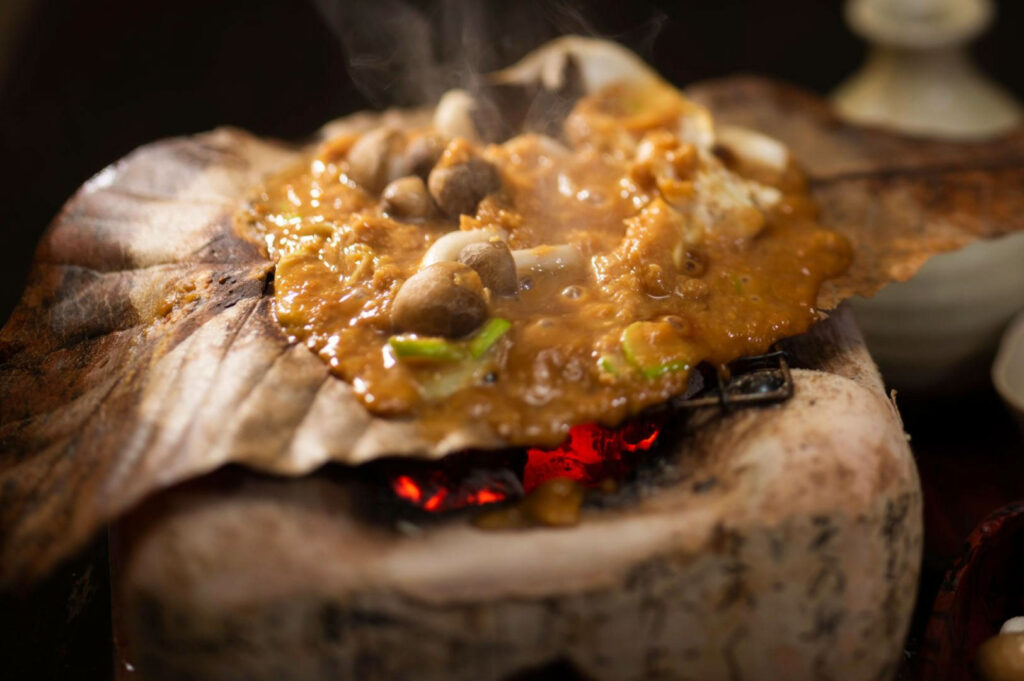
This is hoba miso, pronounced hoe bah mee so, a cornerstone of traditional mountain cooking in this region of central Japan. Stripped to its essence, it is simply miso paste roasted over fire. But the craft lies in the vessel. The hoba, or dried magnolia leaves, are foraged in the autumn and dried for winter to act as a natural skillet. They do not burn instantly. Instead, they slowly toast, releasing a faint, woodsy aroma into the miso. As the hoba miso heats, its texture shifts from thick clay to a glossy, bubbling reduction. The sweet, salty, and earthy notes intensify, mingling with the moisture of the mushrooms and the sharp bite of local scallions.
In the mountainous terrain of Gifu, where winters are long and isolating, hoba miso signals survival transformed into comfort. Historically, local farmers needed a way to thaw out frozen pickles and warm their miso without dirtying precious cookware, leading to this ingenious use of the forest floor. Today, it remains an everyday ritual of connection. While modern kitchens are equipped with gas stoves and microwave ovens, the act of gathering around a shared table to watch the magnolia leaves slowly scorch is an intentional pause. It requires patience and a communal rhythm. Diners must constantly tend the mixture with wooden chopsticks, scraping the edges before the miso burns, creating a shared responsibility over the meal.
In an era of rapid food delivery and instant gratification, hoba miso asks for your time. There is a quiet tension between the aesthetic beauty of the dried leaf and the practical appetite it serves. The leaf is ephemeral. It will eventually crack and turn to ash, useful for only one meal. Yet, it elevates a humble dollop of fermented soybeans into an event. It reminds us that mountain cooking does not always require manufactured metal. Sometimes, the landscape itself provides exactly what is needed to coax out the deepest flavors.
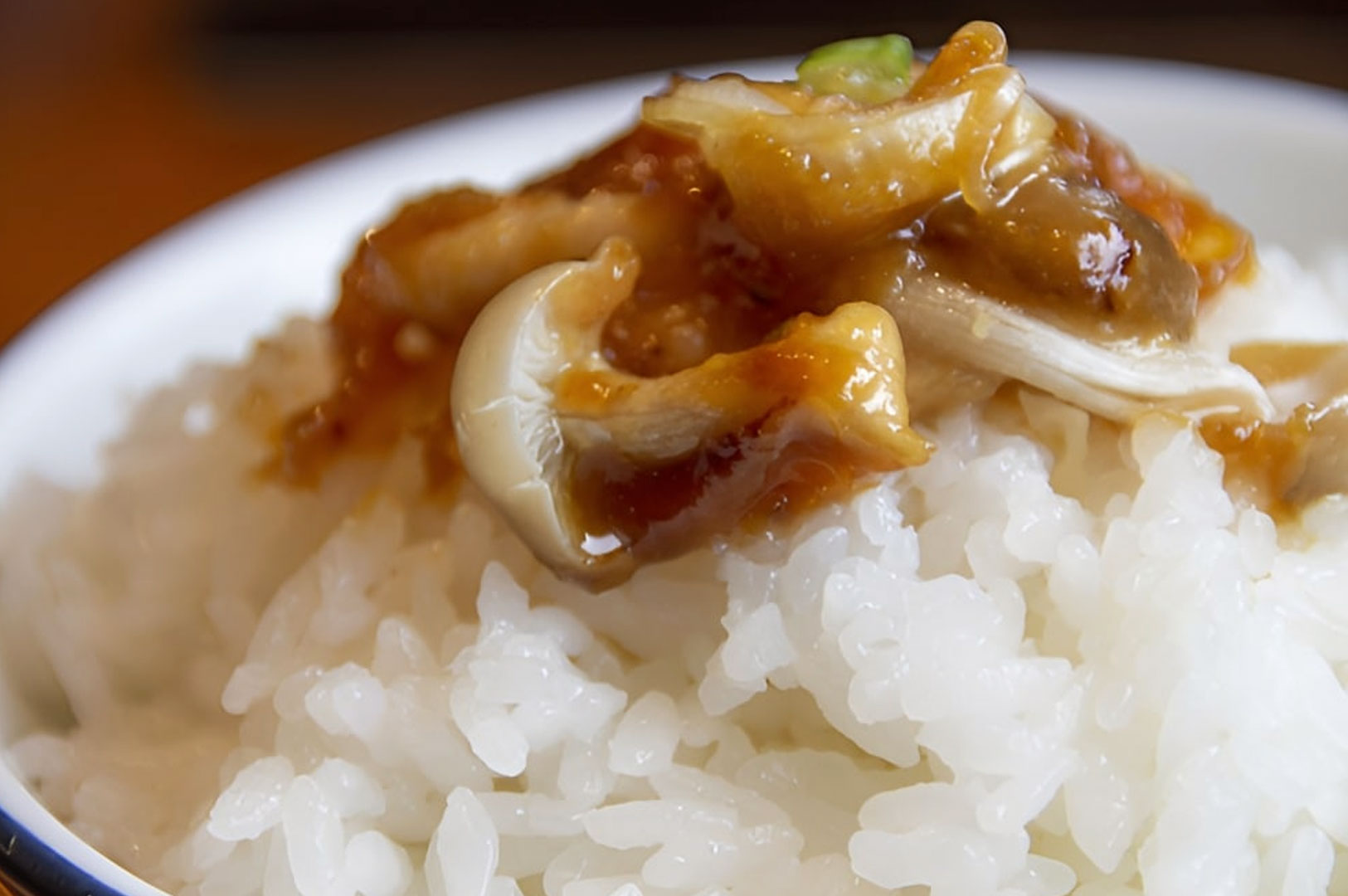
The bubbling eventually slows as the embers soften to a dull orange. A final scrape of the chopsticks pulls the caramelized, slightly scorched hoba miso from the center of the leaf, lifting it over a bowl of steamed white rice. The leaf is left to smolder, its task complete, leaving only the warmth it imparted.
For Eat Drink Asia, this wintertable scene in Gifu captures how a single leaf can turn miso into comfort.

Chirashi Don Best Picks When Bowls Between the Sushi Counter and Lunch Are the Current Mood
Eat Drink Asia Team | August 18, 2026
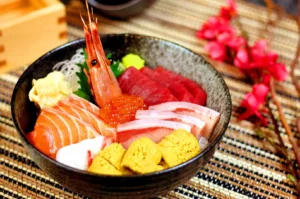
There’s a specific kind of hunger that a chirashi don answers. It’s not the hunger for a full sushi omakase, with its slow ceremony and its quiet counter watching. And it’s not the hunger for something thrown together and forgotten by three o’clock. It sits somewhere in between — fish and rice in one bowl,…
-
Kopi Through the Cloth: Why the Strain Matters
Eda Wong | August 17, 2026
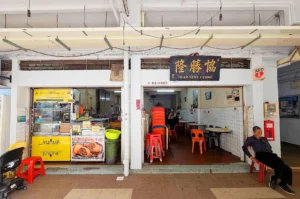
By Eda Wong for Eat Drink Asia. It is not yet seven, and the uncle at Heap Seng Leong has the pot going. He works the sock strainer over the tin cup with both hands, dipping and lifting, dipping and lifting, coaxing the coffee through the worn cloth. Steam rises between his fingers. The smell…
-
SBCD Korean Tofu House and the Comfort Logic of Bubbling Soondubu
Eda Wong | August 15, 2026
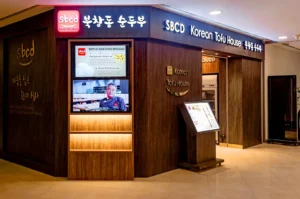
It was raining the afternoon I went. Not the polite kind, the sort that drums against the glass of Guoco Tower and makes you glad you’re already underground. I hadn’t planned on soondubu. I’d planned on something quick, something I could eat between the errands piling up in my head. But the rain does something…
-
The Knife Work at Hanashizuku Japanese Cuisine, Three Floors Above the Noise
Eda Wong | August 14, 2026
By Eda Wong for Eat Drink Asia. The lift doors open on a floor of Cuppage Plaza that has seen better decades. Peeling signage. A corridor that smells faintly of old carpet and cigarette smoke drifting from somewhere. Then a door slides shut behind me, and the noise falls away. Inside Hanashizuku Japanese Cuisine, the…
-
Todamgol Restaurant and the Comfort Logic Behind Famous Korean Foods
Dio Asahi | August 13, 2026
It was close to nine on a Friday when I finally found the door. Tanjong Pagar was doing its usual thing, full tables spilling onto five-foot ways, soju bottles catching the light, someone laughing too loudly two doors down. I almost walked past Todamgol. Then the smell reached me. Fermented, smoky, a little sharp. The…
-
The Same Grill, Three Decades On, at Kazu Sumiyaki Restaurant
Dio Asahi | August 12, 2026
By Dio Asahi for Eat Drink Asia. The lift opens on the fourth floor of Cuppage Plaza and the smoke finds me before the door does. Charcoal, dark and earthy, threaded through with something richer — fat meeting fire. I follow it down a narrow corridor, past shuttered shops and flickering signage, until I reach…
-
Popular Korean Cuisine Has a Memory: Why Famous Korean Food Feels So Complete
Eat Drink Asia Team | August 11, 2026
The first time I ordered kimchi jjigae in Singapore, I made a small mistake. It came bubbling in a stone pot, and I ate it like soup, spoonful after spoonful, straight down, until my mouth was on fire and the bowl was half gone. The auntie across the counter watched me for a moment, then…
-
Raffles Place Food Has the Restaurants That Understand the CBD Lunch Rush
Eda Wong | August 8, 2026
I used to think lunch in the CBD was a lost cause. You get an hour, maybe less. The lift takes ten minutes just to reach the ground floor. By the time you’ve queued, ordered, and found a corner to eat in, you’re already checking the clock. For a while, I gave up and just…
-
The Tamarind Sourness Inside a Filipino Sinigang Pot
Eda Wong | August 7, 2026
By Eda Wong for Eat Drink Asia. The pot has been going for a while now, and the whole kitchen knows it. Steam curls up from the surface, carrying that sharp-sour smell that reaches you before anything else. It’s not a gentle aroma. It pricks at the back of your throat a little, makes your…
-
Vegetarian Asian Dishes at The Boneless Kitchen: A Korean Meal Built on Kimchi, Rice, and Restraint
Dio Asahi | August 6, 2026
I didn’t expect to find Korean comfort food in an office building near Tai Seng. But there I was, on a Wednesday a little past 7pm, standing outside The Commerze @ Irving wondering if I’d read the address wrong. This isn’t the part of Singapore you go to for dinner. It’s the part you leave…