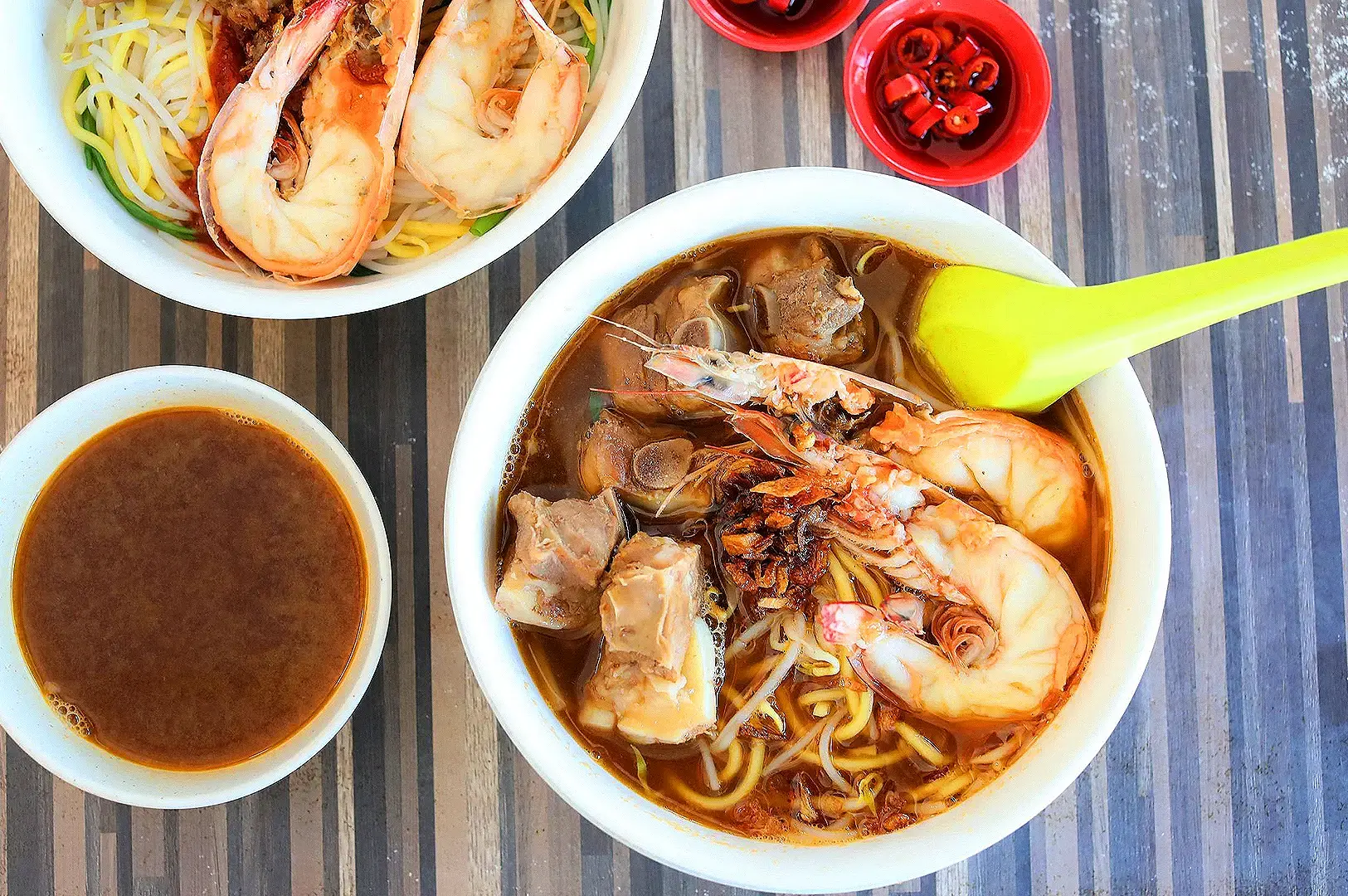
I do not remember the first bowl of prawn mee I ever ate. But I remember the smell: that deep, roasted-shell darkness that fills a coffee shop before you have even sat down. My grandfather used to say you could tell a good prawn noodle stall from the doorway, just by breathing.
Over the years, I have gone looking for that smell all over the island. Some mornings, I travelled across town for a single bowl. Some afternoons, I stood in a queue longer than the meal itself. What I kept looking for was not just a jumbo prawn or a famous name. It was broth with memory, the kind that tastes like prawn shells, prawn heads, pork bones, patience, and someone waking early enough to make all that effort disappear into one spoonful.
This guide is for comparing prawn noodles in Singapore, not ranking them. Some are darker and more old-school. Some are built around big prawn noodles. Some are better dry, with sambal chilli, fried shallots, and pork lard doing the heavy lifting. Start with the bowl that matches your mood, then work your way slowly through the rest.
How to Choose Your Best Prawn Noodles
| Venue Name | If You Want | What To Expect |
|---|---|---|
| Hup Lok 合樂 | Prawn noodles with a seafood-first restaurant approach | Signature Prawn Noodles with a savoury broth, prawns, noodles, and the deeper seafood sourcing story behind the bowl |
| Da Dong Prawn Noodles | Soup-first hae mee | Concentrated crustacean broth, modest portions, and a bowl built around the first spoonful |
| Da Shi Jia Big Prawn Mee | Big prawns with wok hei | Wok-fried white bee hoon, large prawns, prawn stock, and a saucier noodle texture |
| Zhi Wei Xian Zion Road Big Prawn Noodle | Dry prawn noodles with lard and sambal | Springy noodles, crispy pork lard, big prawns, pork ribs, and a slightly sweet dry sauce |
| Wah Kee Big Prawn Noodles | One impressive prawn as the main event | Large wild sea prawns, rich soup, premium pricing, and a prawn-focused bowl |
| River South Hoe Nam Prawn Noodles | A loaded pork-and-shellfish bowl | Prawns, tender pork ribs, pig’s tail, intestines, abalone clams, and a heavier broth |
| Jalan Sultan Prawn Mee | Old-school dry prawn mee | Sambal-coated noodles, fried shallots, side soup, modest portions, and optional ngoh hiang |
1. Hup Lok: Prawn Mee Through a Fishmonger Family’s Lens
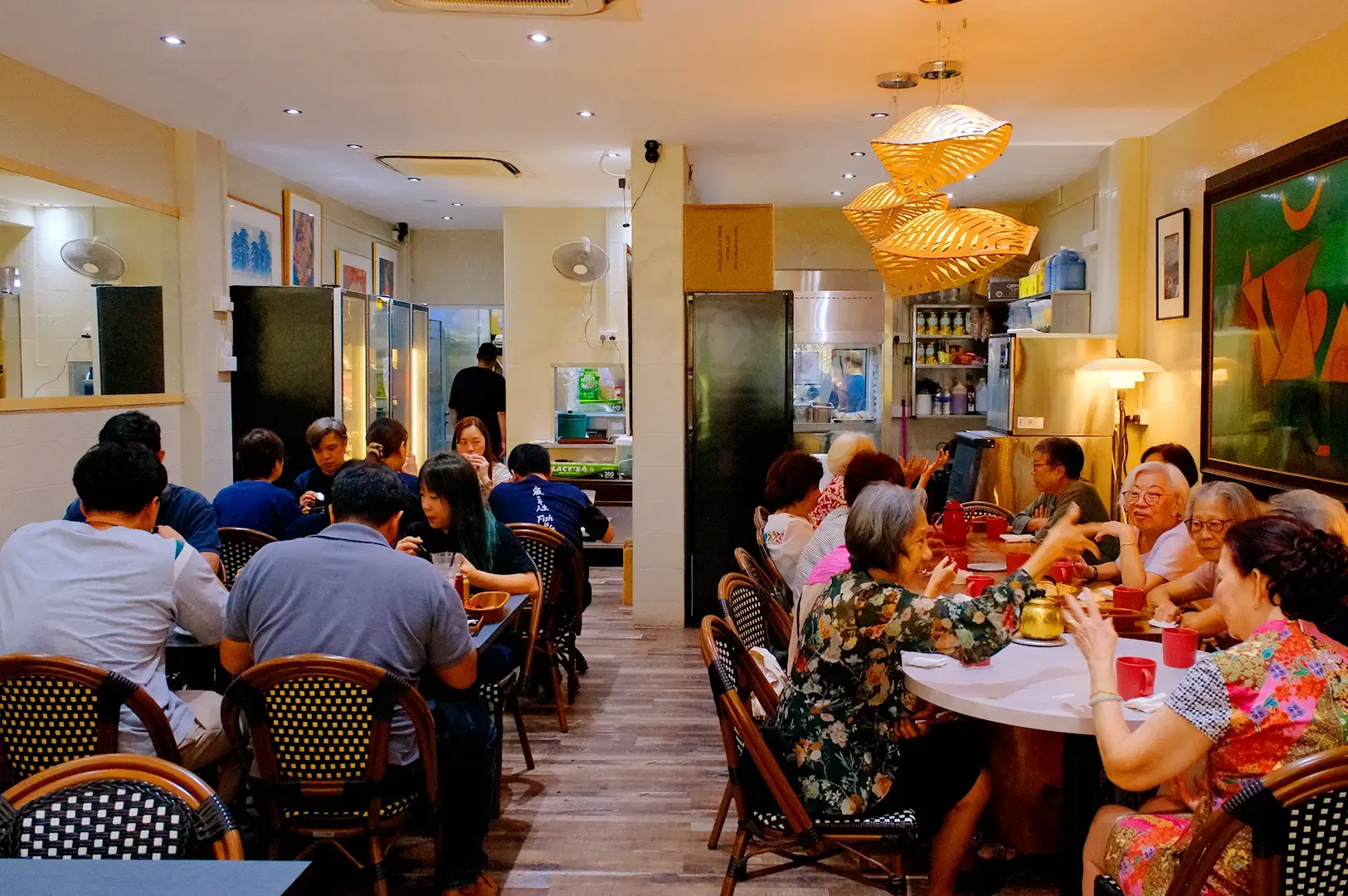
Nearest MRT: Havelock, around 10 minutes on foot
Price: $$
Hup Lok is not an old-school prawn mee stall, and that is precisely why it belongs in this conversation. The Havelock Road restaurant comes from a family with three generations in the fish trade, so its Signature Prawn Noodles approach the familiar bowl from the seafood side first.
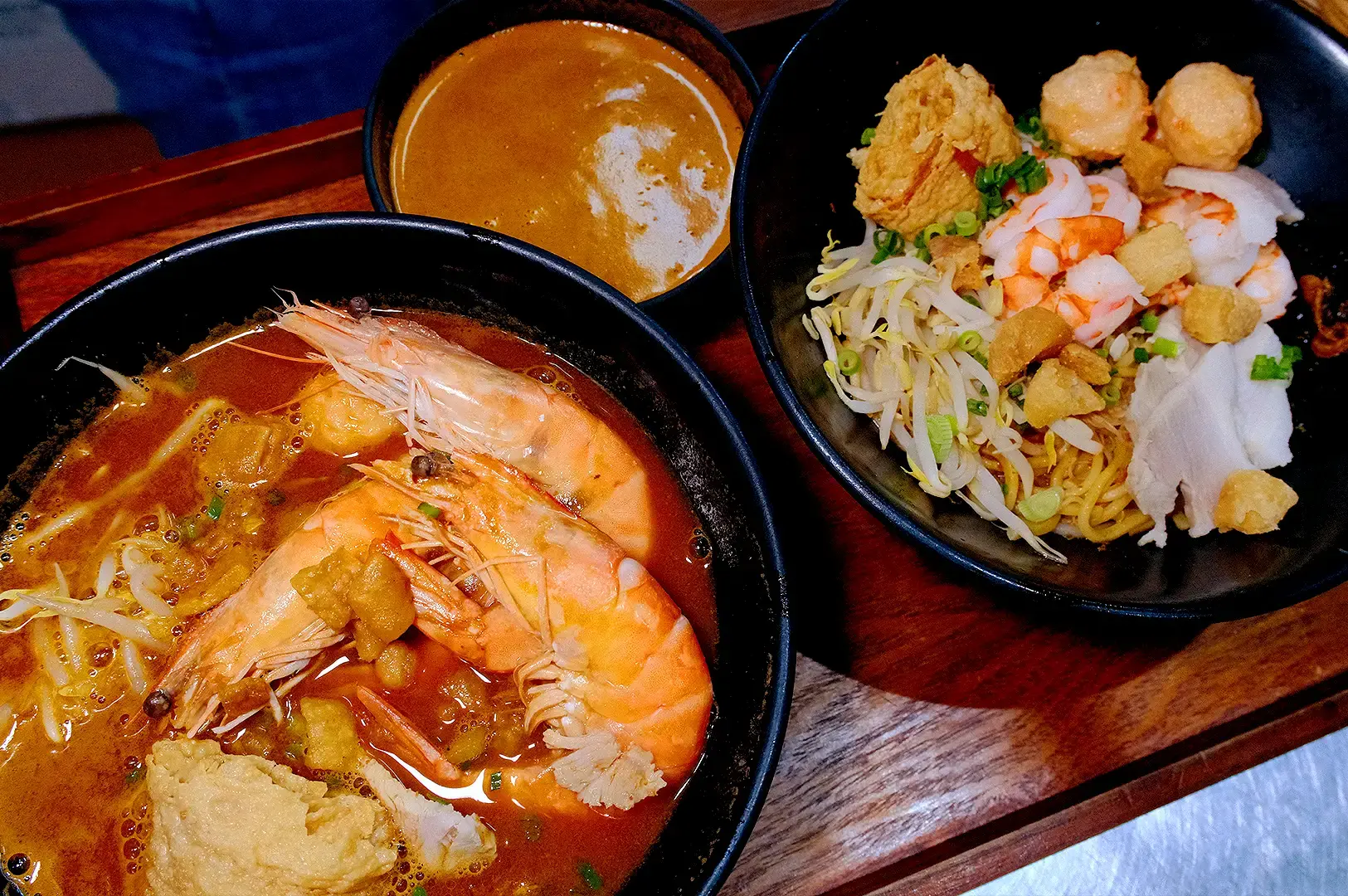
The current menu lists the Signature Prawn Noodles at S$12.80, built around premium Kb in a rich collagen-packed broth. There is also a Peeled Prawn Noodles version at S$14.80 for diners who want the same idea without dealing with shells.
Why It Stands Out
If your idea of prawn mee comes from pork rib prawn noodles, sliced pork, pork belly or pork skin, Hup Lok takes a different route. The emphasis is on the prawn and broth rather than building the bowl around heavier pork additions.
That makes it an interesting contrast to the bowls found around Airport Road Food Centre, Tiong Bahru, Geylang Lorong or the neighbourhood stalls that sit beside Hokkien mee stalls and other hawker favourites. Even if your usual food crawl ends with Famous Punggol Nasi Lemak or a plate of Hokkien mee, Hup Lok feels more like a deliberate sit-down stop than a quick hawker detour.
The bowl is also generous by design. Hup Lok describes its wider menu philosophy around seafood served in generous portions, and the prawn noodles fit neatly into that approach.
What To Order
Start with the Signature Prawn Noodles if you want the clearest read on Hup Lok’s own taste. If you prefer convenience, the peeled version removes the shell work without changing the basic idea of the bowl.
The bowl itself felt straightforward in the best way. The prawns stayed at the centre, with the broth doing most of the heavy lifting rather than relying on a long list of extras. I did not miss the usual distractions of lime juice, kang kong, or an overly complicated noodle mix; the pleasure here was in the prawn flavour and the richness of the soup.
What also makes Hup Lok more interesting now is that the restaurant has just launched its new Teochew Pomfret Steamboat. If the prawn noodles are the easier one-bowl introduction, the steamboat is the version I would come back with a group for: boneless pomfret, fried yam, napa cabbage, fried tofu, seaweed and tomato in a savoury broth, with optional additions such as Alaskan king crab, Japanese Kami No Ebi prawns and Hokkaido scallops.
Planning Notes: Come hungry. The prawn noodles are substantial enough to stand alone, but Hup Lok also makes sense when shared with other seafood dishes. Check the current food news or menu updates before visiting if you are after a specific version, as availability can change. The restaurant currently opens Tuesday to Sunday for lunch and dinner, and is closed on Mondays.
2. Da Dong Prawn Noodles: Soup First, Everything Else Second
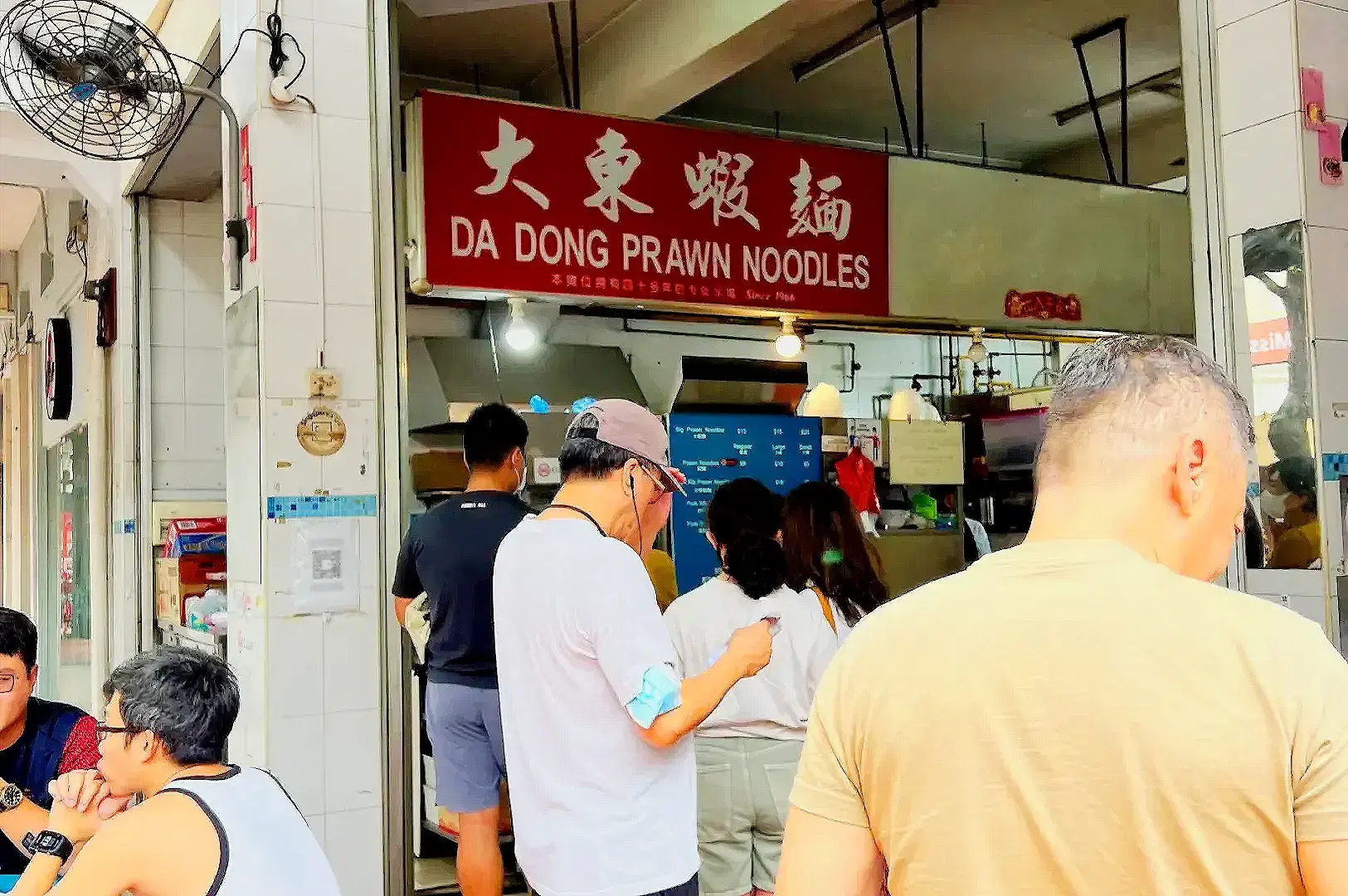
Nearest MRT: Marine Parade, about 12 minutes on foot
Price: $
Da Dong Prawn Noodles sits at 354 Joo Chiat Road and has been around since 1966, with Time Out noting its second-generation hawker story and rich crustacean-and-pork broth.
Why It Stands Out
Some prawn noodle shops make you notice the toppings first. Da Dong Prawn Noodles makes you notice the soup. The broth is concentrated, savoury, and unmistakably crustacean, the kind that tastes like it began long before the doors opened.
It is not the biggest bowl, and that matters to say honestly. But when the prawn noodle soup is on form, the first spoonful has that clean, umami-heavy pull that explains why people still talk about this Joo Chiat hae mee.
What To Order
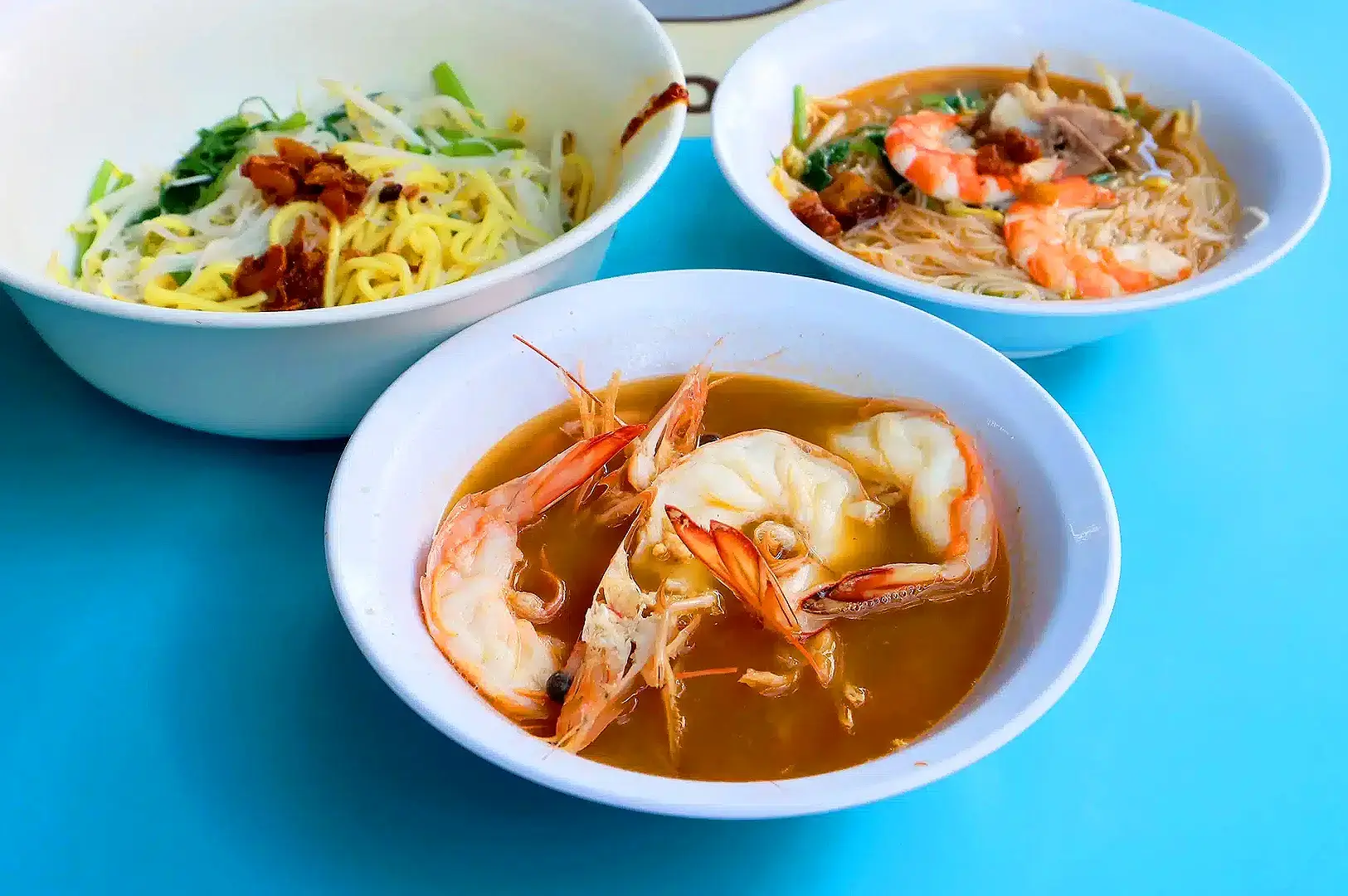
Start with the soup prawn noodles. This gives you the clearest read on the stall’s identity: broth, prawns, noodles, and very little to hide behind. The prawns are not the most dramatic in Singapore, but they serve the soup well.
If you like contrast, order the dry version on a return visit. The dry noodles come tossed in chilli and seasoning, with soup on the side, giving you both noodle bite and the prawn broth Da Dong is known for. Treat the soup as your anchor.
Planning Notes: Portions can feel modest if you are judging purely by size. Queues can test your patience too. But if your idea of good prawn mee begins with broth, this is still a serious stop.
3. Da Shi Jia Big Prawn Mee: Big Prawn, Wok Hei, and White Bee Hoon
Nearest MRT: Somerset, about 6 minutes on foot
Price: $$
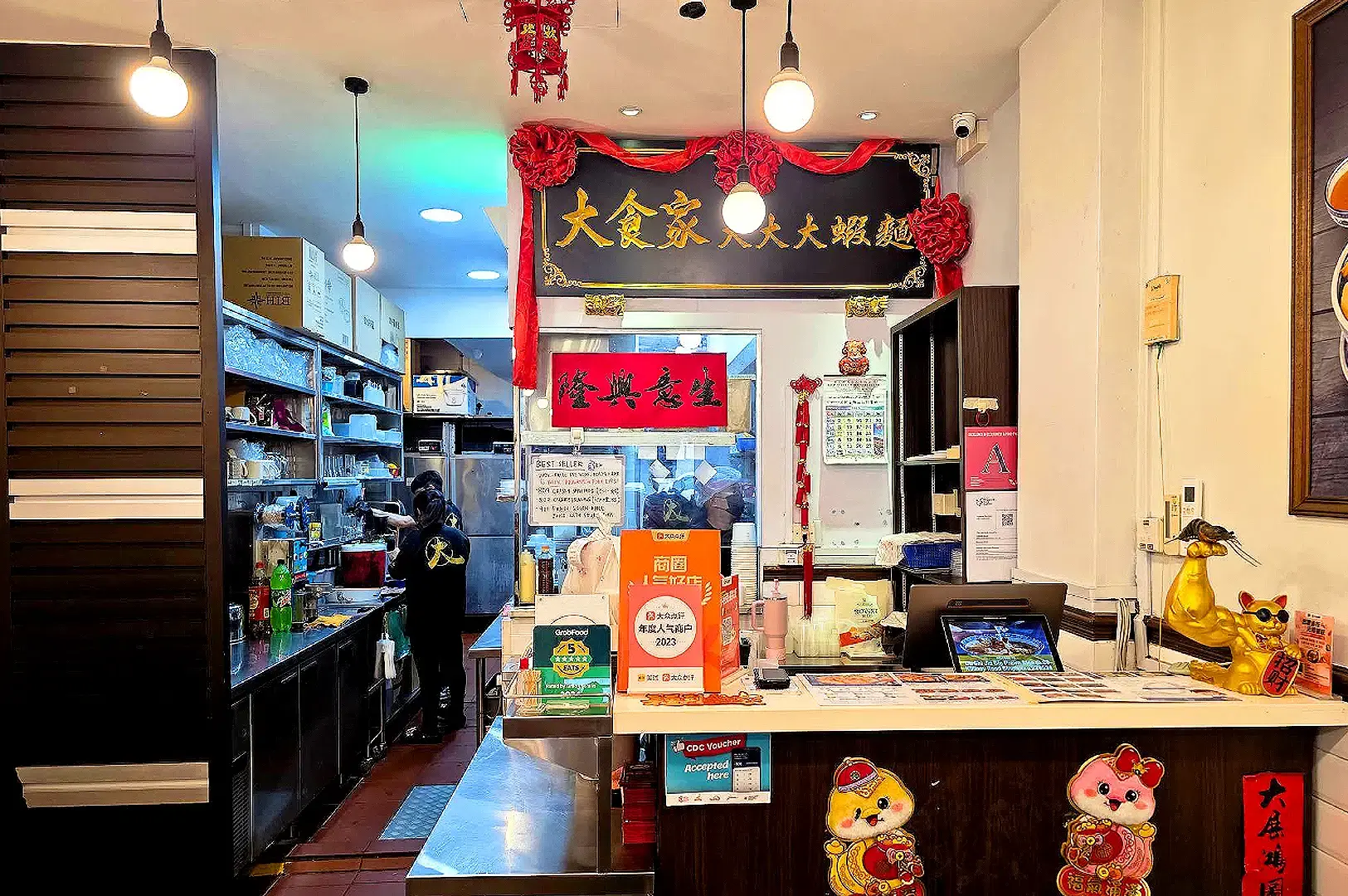
Da Shi Jia Big Prawn Mee is located at 89 Killiney Road. The Michelin Guide describes its format clearly: diners choose between prawn noodle soup and fried prawn bee hoon. If this Killiney Road stop turns into a wider Orchard lunch plan, 313 Somerset food crawl keeps the same quick-shopping-lunch energy nearby.
Why It Stands Out
Da Shi Jia is the most flexible stop here. You can choose soup or fried, noodle type, prawn size, and add-ons. It is also air-conditioned, which matters more than people admit when lunch in town turns humid. The prawns are genuinely large, but what gives this place its own voice is the wok-fried white bee hoon. Instead of relying only on broth, Da Shi Jia lets stock, starch, and wok hei work together. The result is softer, wetter, and more aromatic than the usual prawn mee bowl.
What To Order
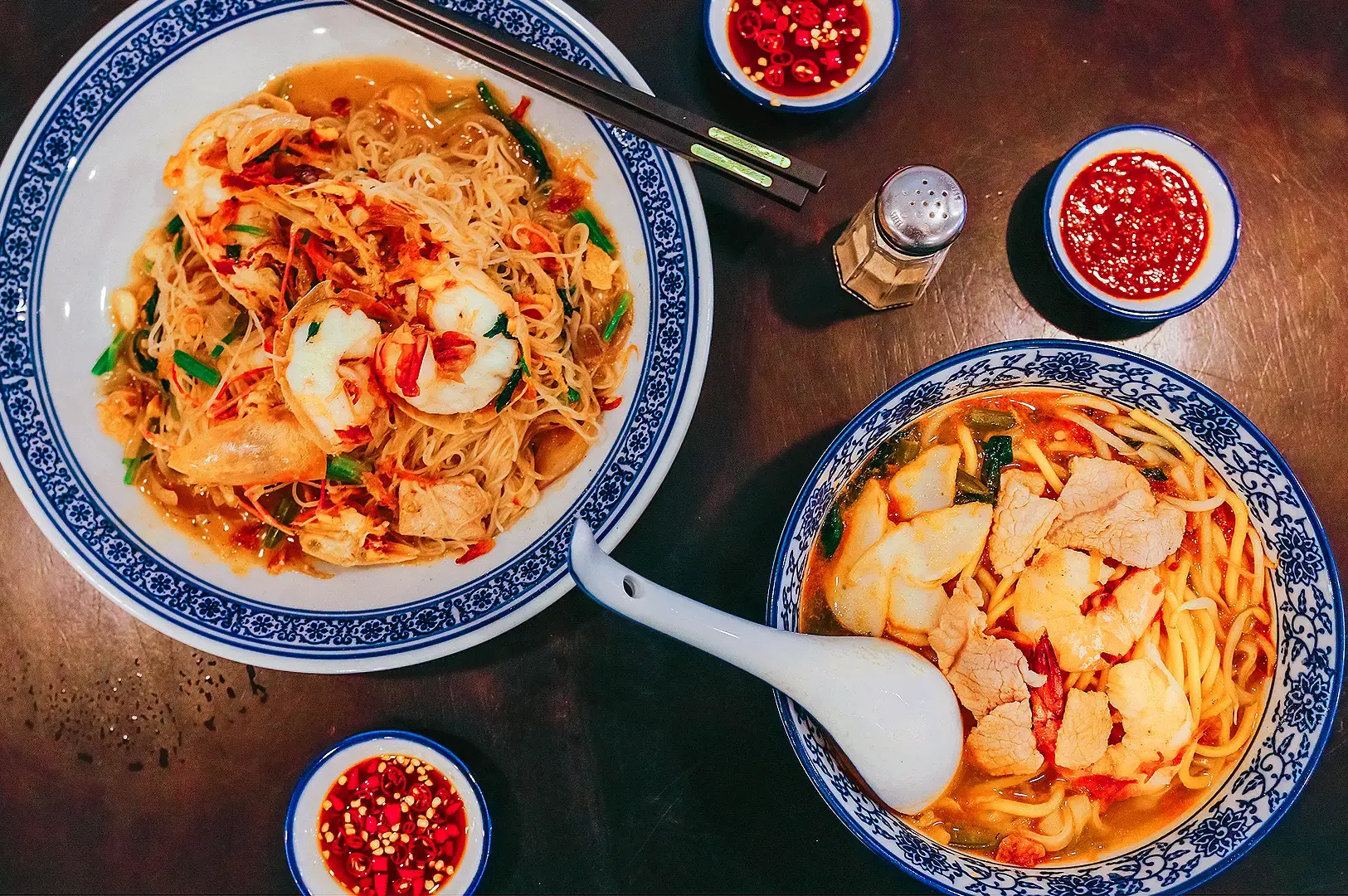
The Wok-Fried Big Prawn White Bee Hoon is the dish worth building the visit around. The white bee hoon should be soft but not limp, soaked with prawn stock, and touched by wok heat. When it works, you get that smoky breath of the wok rising through the noodles, with fresh prawns resting on top like the obvious luxury.
If you prefer soup, choose a big prawn mee bowl and upgrade the prawn size only if seafood is your main priority. The soup is satisfying, but the wok-fried bee hoon gives Da Shi Jia a clearer reason to be on your route.
Planning Notes: It is pricier once you upgrade the prawns. Go before noon or between meal peaks if you want a smoother experience and more consistent cooking.
4. Zhi Wei Xian Zion Road Big Prawn Noodle: Food Centre Dry Noodles With Lard and Bite
Nearest MRT: Great World, about 4 minutes on foot
Price: $ to $$
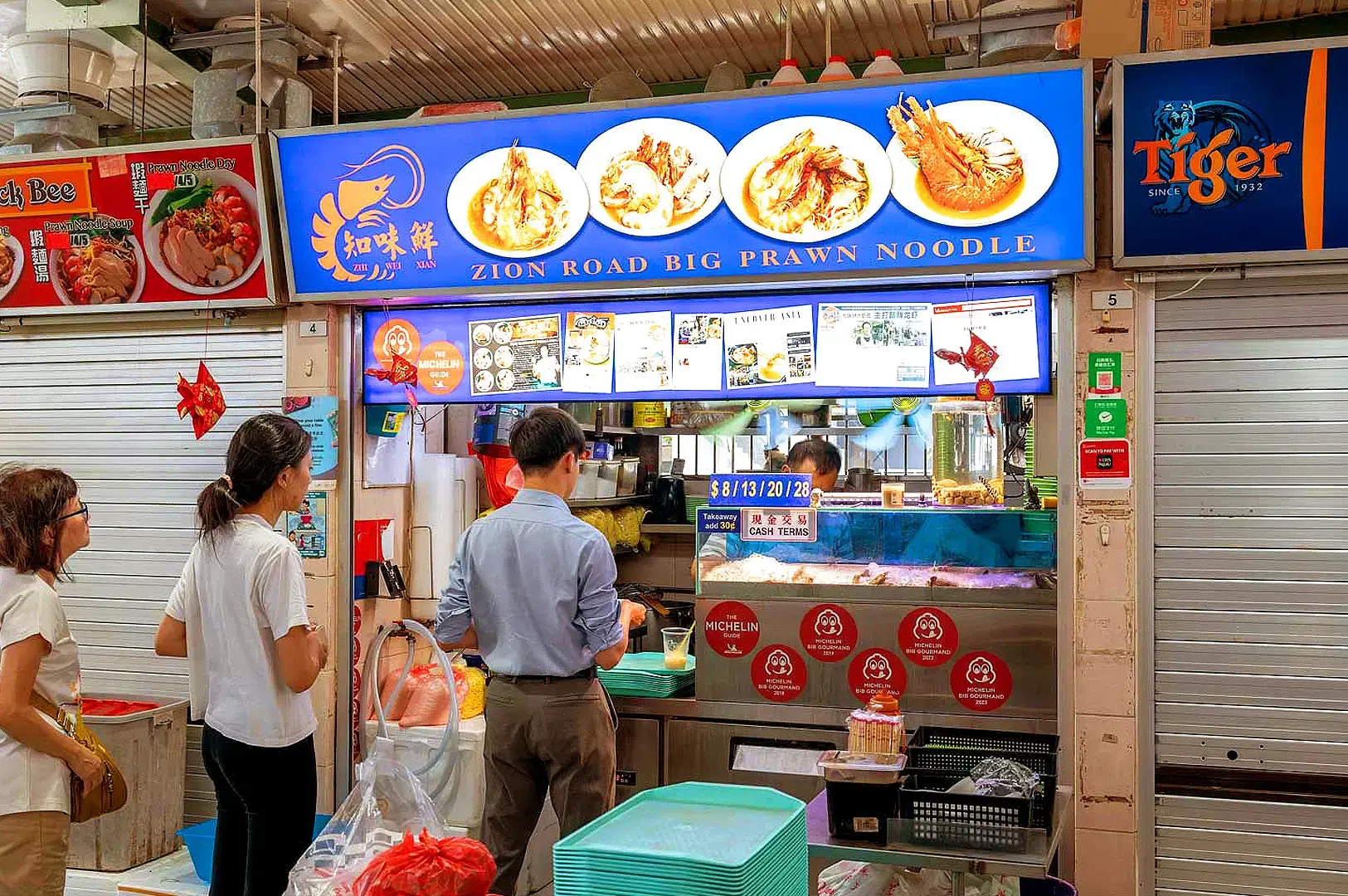
Zhi Wei Xian Zion Road Big Prawn Noodle operates at Zion Riverside Food Centre. Recent coverage describes its broth as simmered for up to six hours, with cuttlefish left out so the prawn sweetness stays clean and direct.
Why It Stands Out
This is the food centre bowl that reminds you how much personality dry prawn noodles can have. The broth matters, but the dry version is where the stall really finds its voice. The noodles come tossed in chilli, seasoning, and a slightly sweet ketchup-like note, then finished with fried shallots and crispy pork lard. That lard is the small, cruel genius of the bowl. It gives crunch, fat, and a smoky edge that makes the noodles taste louder.
What To Order
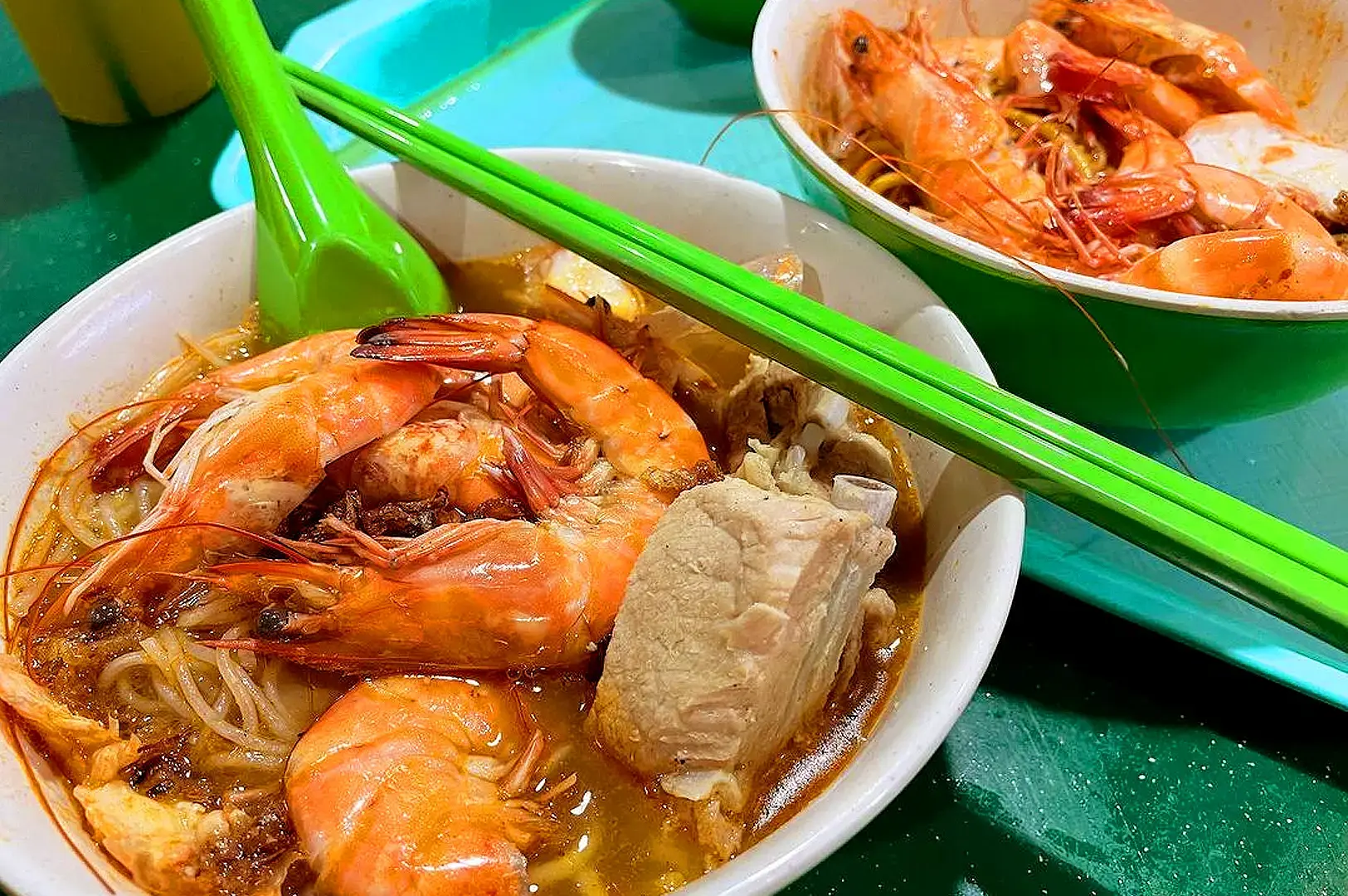
Go for the dry big prawn noodles with pork ribs. The best bite is not just one prawn or one rib. It is noodle, sambal chilli, lard, prawn, pork, and a little soup after. The pork rib adds tender meatiness, while the side soup reminds you that the prawn broth is still doing real work.
If you dislike sweet sauces, ask whether they can reduce or leave out the ketchup note. The bowl still has enough savoury weight without it. If you like more heat, add chilli sauce slowly rather than drowning the noodles from the start.
Planning Notes: This is not a pork-free bowl, and the dry sauce style may divide people. Come when you want a proper hawker stall meal with texture, fat, and patience in the same plate.
5. Wah Kee Big Prawn Noodles: Jumbo Prawn Mee at Pek Kio Market
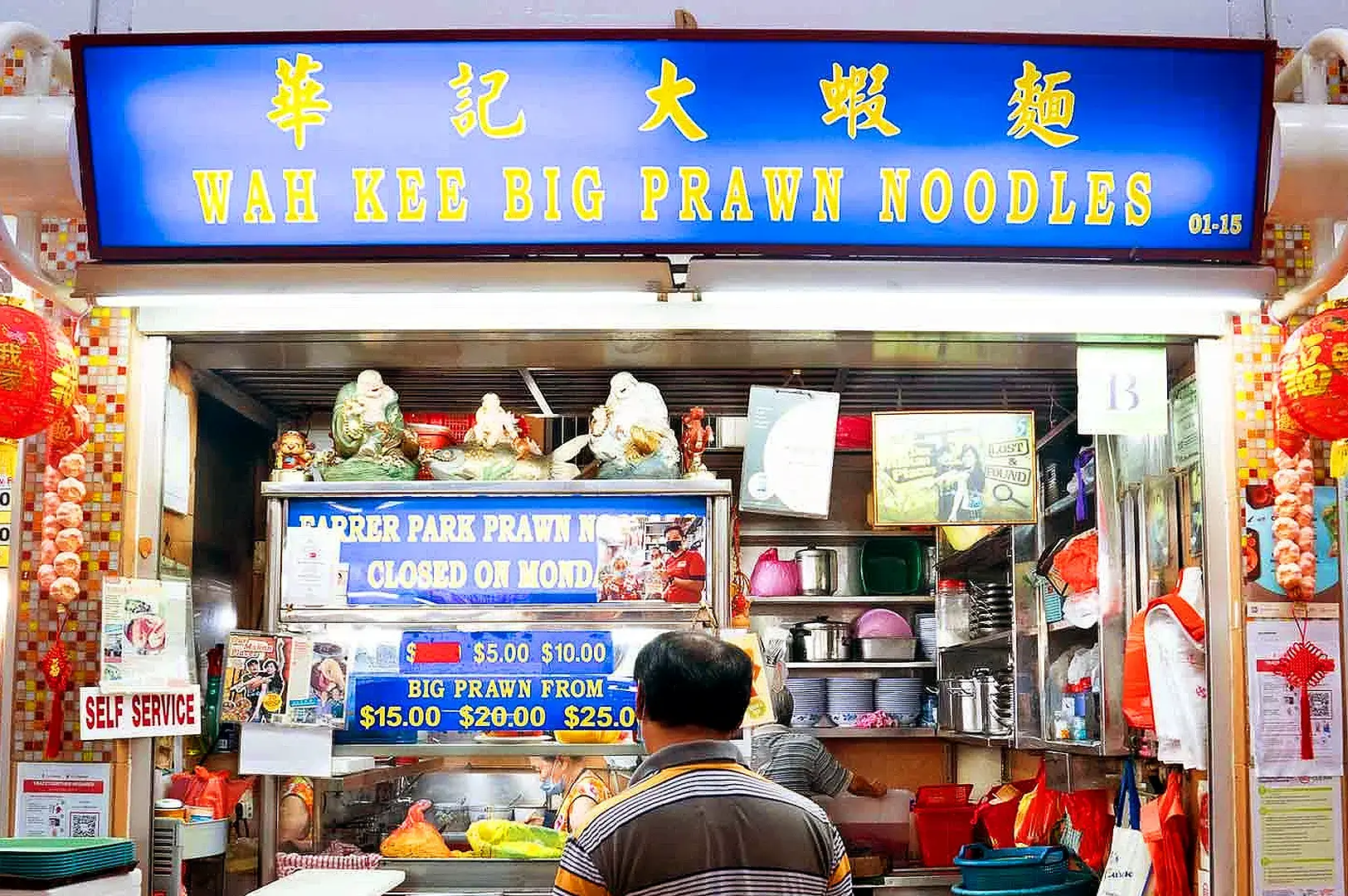
Nearest MRT: Farrer Park, about 7 minutes on foot
Price: $ to $$$
Wah Kee Big Prawn Noodles is a longtime Pek Kio Market stall known for giant wild sea prawns and rich soup. CNA Lifestyle reported its 2026 reopening after a months-long closure linked to supply and health concerns.
Why It Stands Out
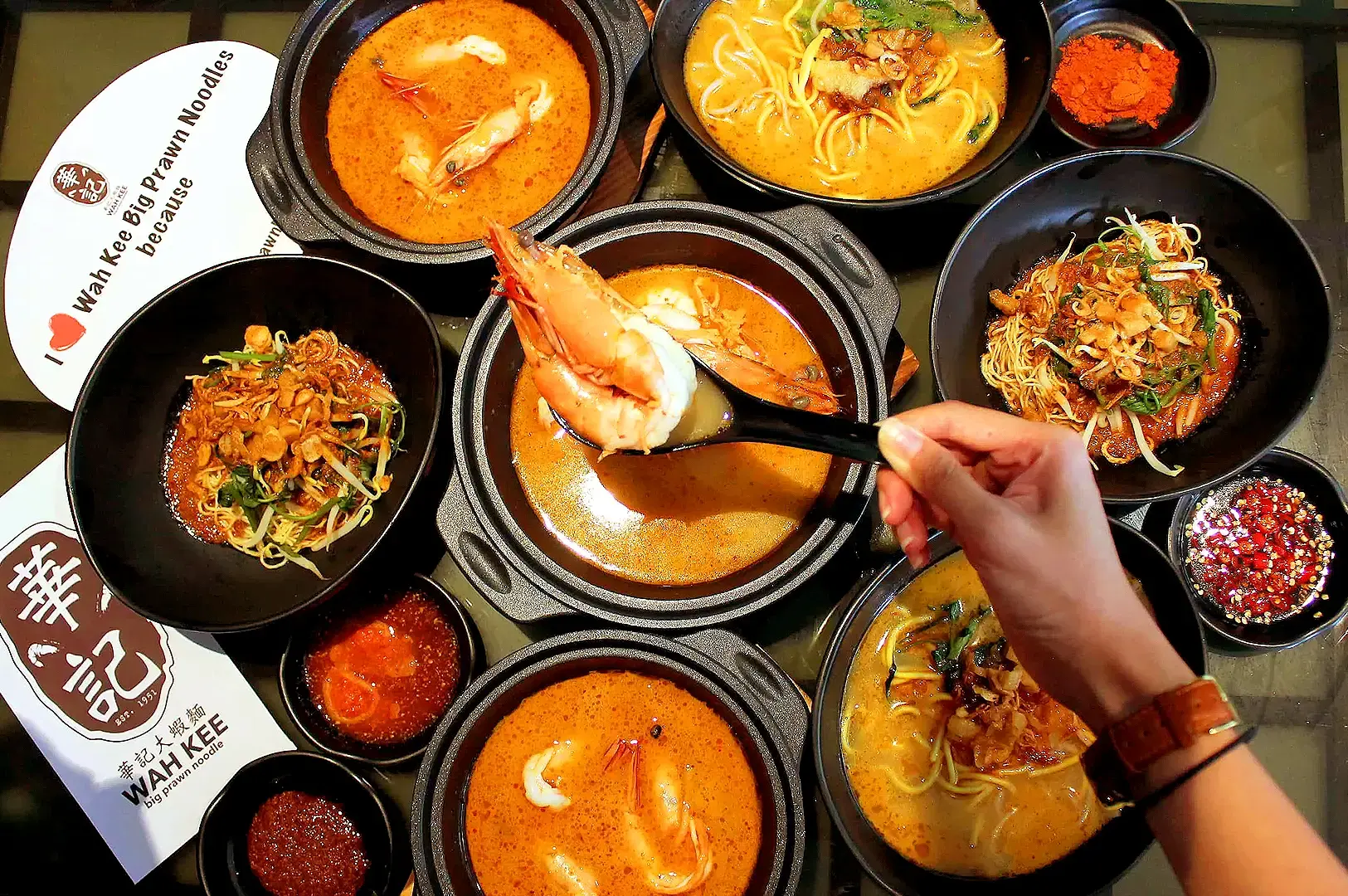
Wah Kee is about the prawn itself. Not just prawn flavour in the broth, but the drama of a large sea prawn arriving in the bowl and making everyone nearby glance over.
The soup is rich, but the prawn is the point. The best bowls feel almost ceremonial: shell, flesh, broth, and that moment when you stop talking because the prawn deserves attention. If your idea of jumbo prawn mee is one magnificent prawn rather than many smaller ones, this is the stall.
What To Order
Ask what special prawns are available that day before you commit. Wah Kee is famous for large wild sea prawns, and prices can climb depending on size and supply. CNA notes the stall’s reputation for giant wild-caught prawns and rich soup.
If you are going for the experience, choose the larger prawn and keep the noodles simple. You come for firm, sweet prawn flesh, a rich soup base, and the old-school confidence of a stall that knows exactly what people queue for.
Planning Notes: The service is famously direct, and the stall can sell out. Go in the morning if you want the best chance at the larger prawns.
6. River South Hoe Nam Prawn Noodles: Loaded Hae Mee With Pork Ribs and Abalone Clams
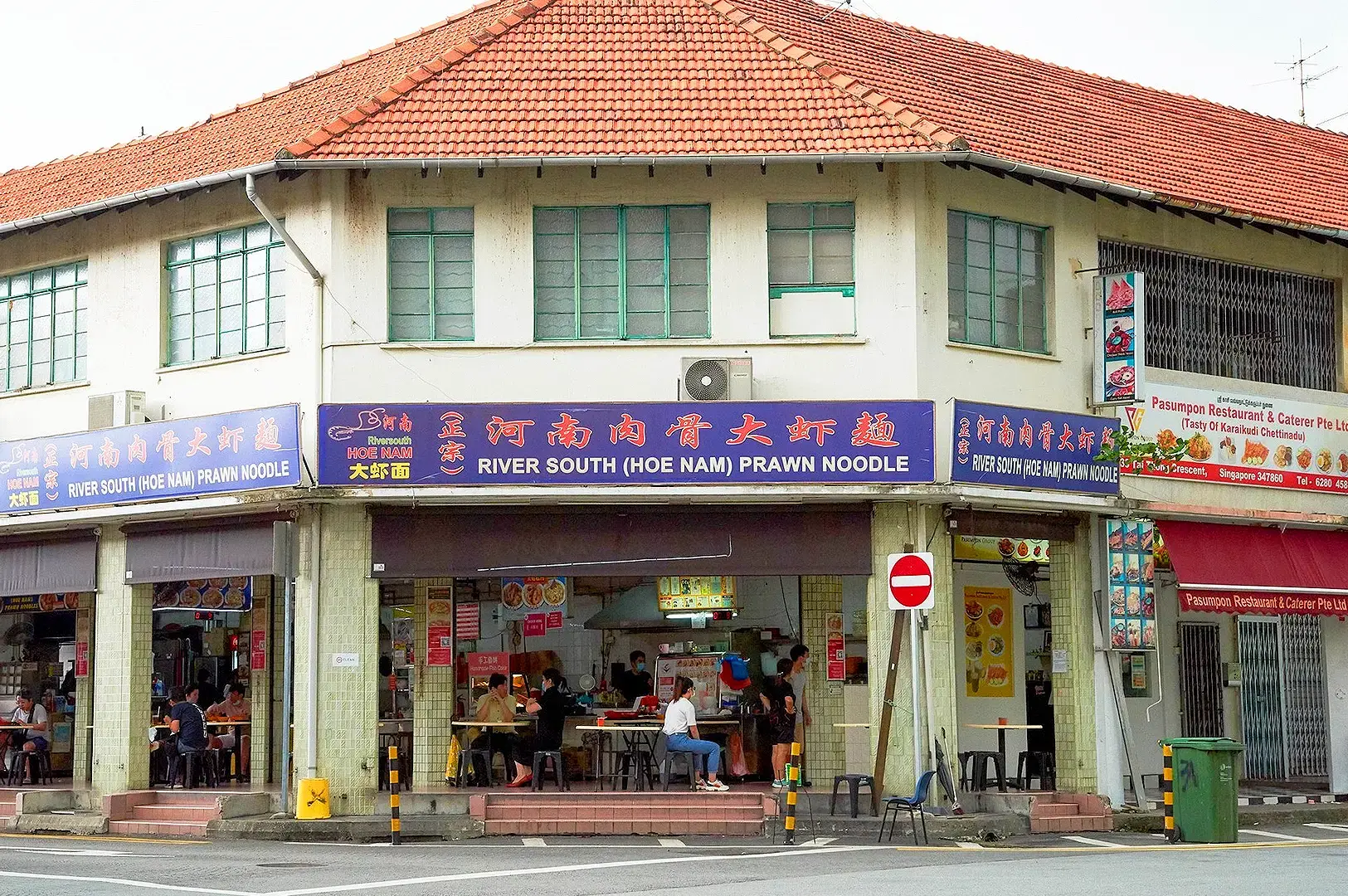
Nearest MRT: Potong Pasir, about 4 minutes on foot
Price: $ to $$
River South Hoe Nam Prawn Noodles is a long-standing Potong Pasir name, with listings highlighting combinations of prawns, pork ribs, pig’s tail, intestines, and abalone clams.
Why It Stands Out
River South Hoe Nam is for the days when you want everything in the bowl. The menu stretches beyond simple prawn noodles into pork ribs, pig’s tail, intestines, abalone clams, pork slices, and shellfish add-ons. This is generous eating rather than tidy eating. The broth is robust, the toppings pile high, and the table tends to get messy in the best way. It is the opposite of minimalist hokkien prawn mee.
What To Order
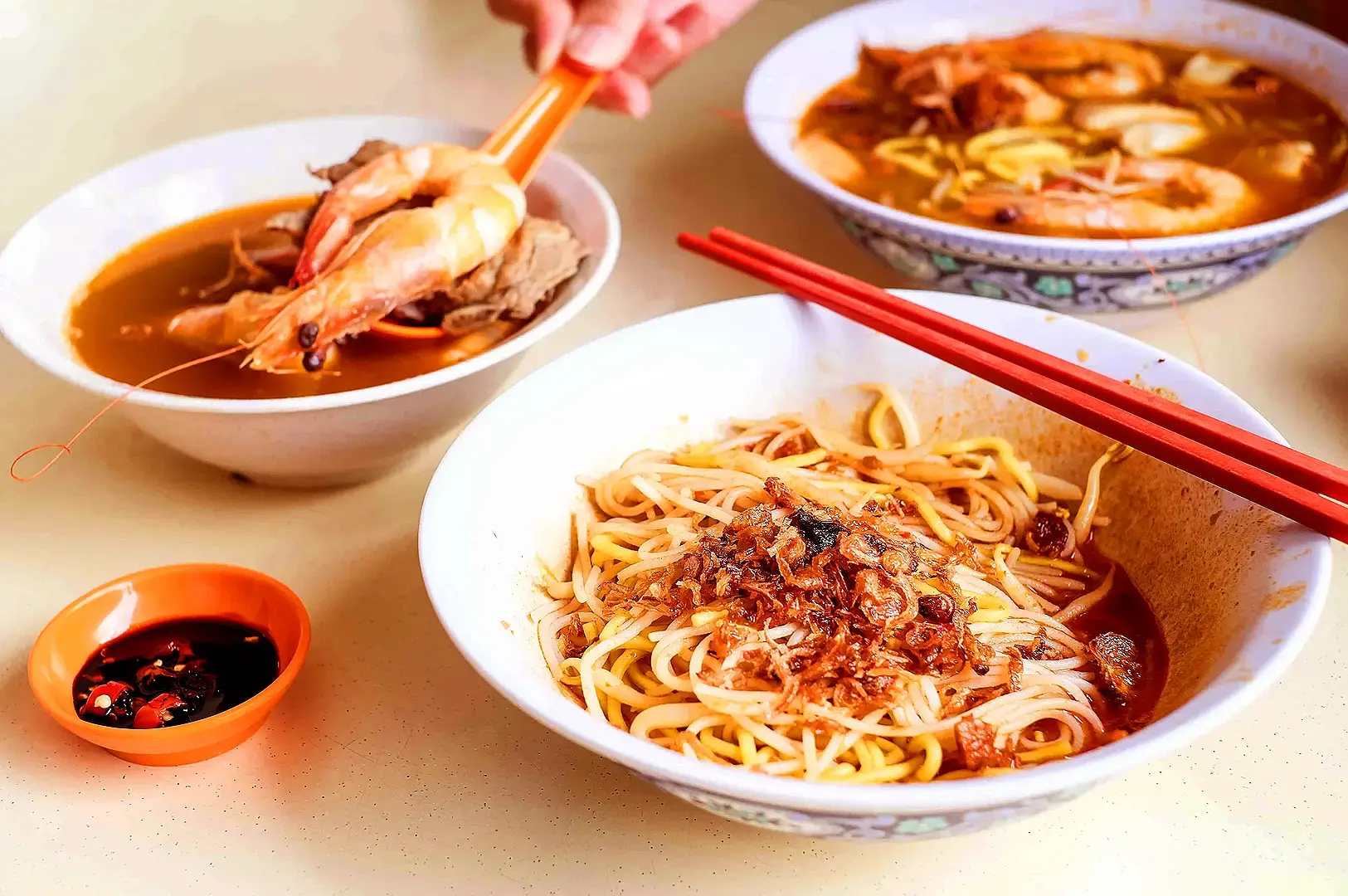
The prawn, pork ribs, and abalone clam combination shows what Hoe Nam does well: seafood sweetness, pork depth, and a robust broth strong enough to tie the toppings together. Time Out points to the pork ribs big prawn noodles as a must-try, especially in the dry version with soup served separately.
If you like offal, this is one of the better places to lean into it. Pig’s tail adds gelatinous richness, intestines bring chew and funk, and ribs give the bowl something familiar to hold onto. If that sounds like too much, stick with prawns and ribs, or ask about a simpler combination with thin bee hoon, mee kia, or yellow noodles.
Planning Notes: This is a pork-heavy style of prawn mee, so it will not suit everyone. Delivery can also be less reliable for complex bowls, so dine in if the toppings matter to you.
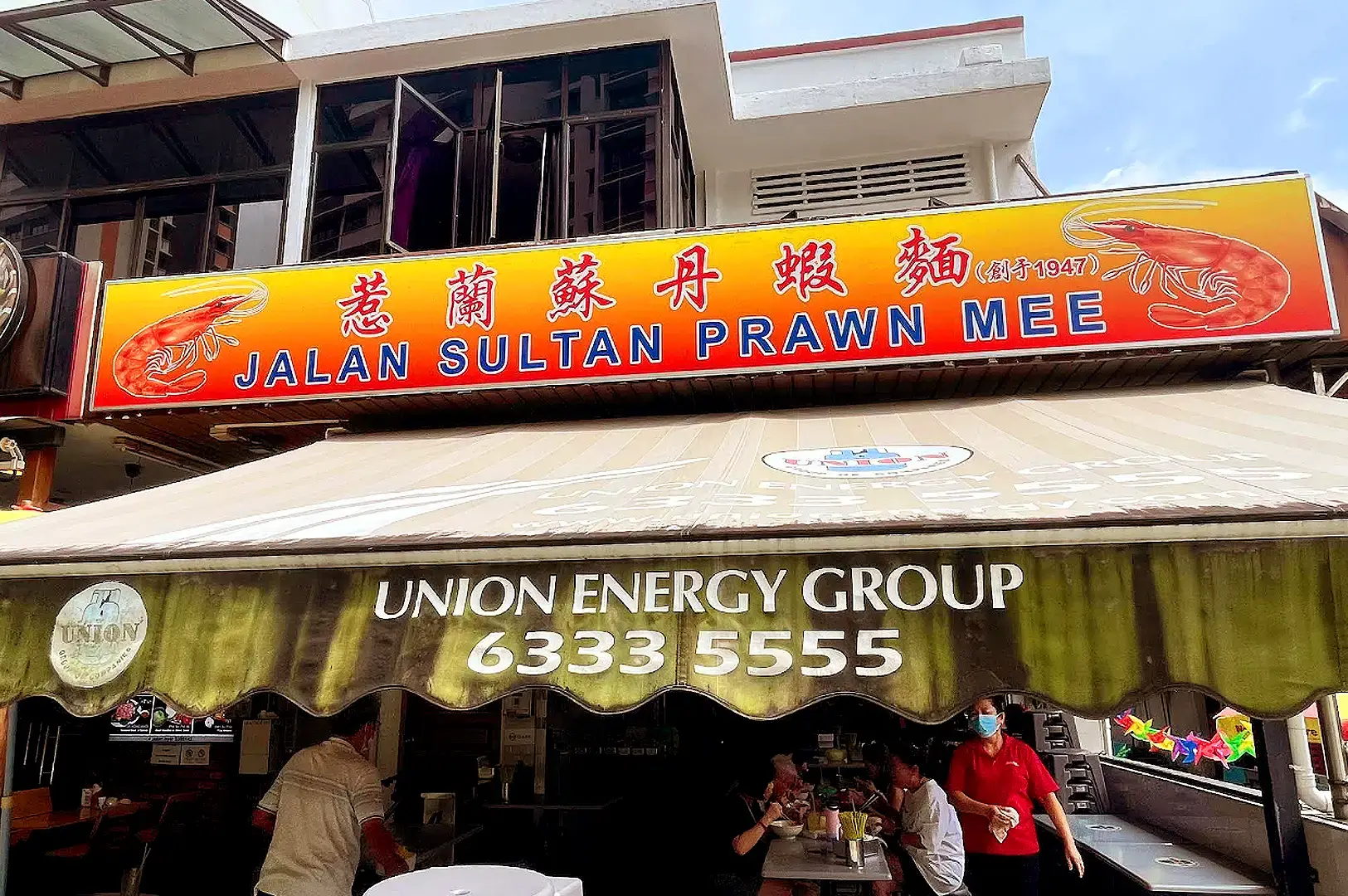
7. Jalan Sultan Prawn Mee: Old-School Dry Prawn Mee Near Kallang
Nearest MRT: Kallang, about 3 minutes on foot
Price: $
Jalan Sultan Prawn Mee is a long-running Kallang prawn mee name. Recent coverage notes its Michelin Bib Gourmand recognition and more than 70 years of history.
Why It Stands Out
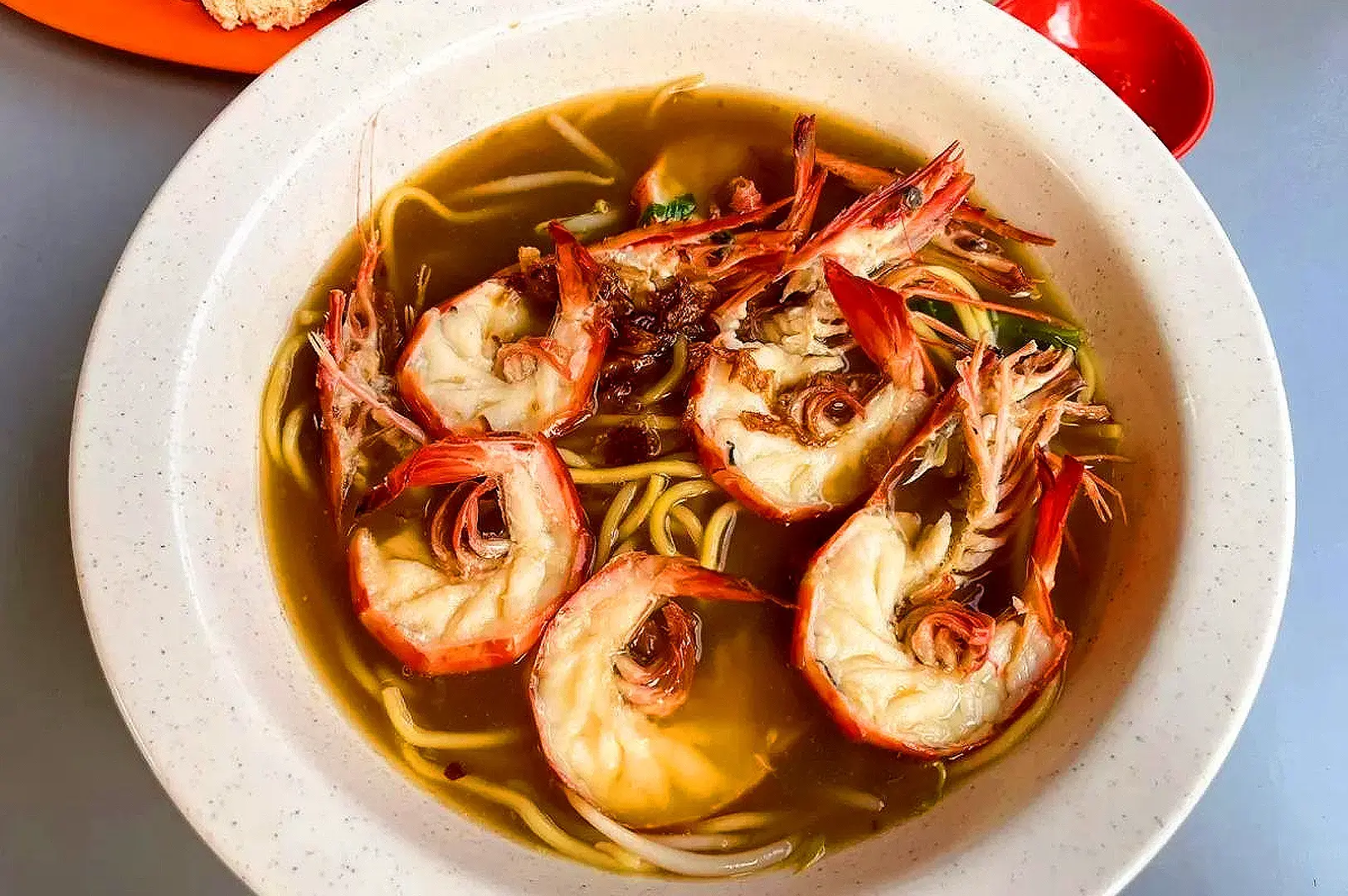
The dry version is the reason to come. The noodles are slicked with sambal, lifted by fried shallots, and seasoned with an old-school steadiness that feels practiced rather than showy. The soup on the side is rich without being heavy. It gives you prawn sweetness and umami without weighing the meal down. Compared with heavier, opaque broths, this one can feel darker yet clearer, with a prawn note that comes through cleanly.
What To Order
Order the dry prawn mee if you want the stall at its clearest. The sambal, shallots, and noodle seasoning carry the bowl, while the soup sits beside it as a steady counterpoint. If you want a fuller meal, add ngoh hiang or fish cakes if available nearby. It makes sense with this style: crisp fried rolls, savoury filling, and prawn mee soup are old-school coffee shop chemistry.
Planning Notes: Portions can be modest, and popular items may sell out. Go earlier rather than later, especially if you are making a special trip.
The Spoonful That Tells You Everything
Prawn mee rewards attention. Before you stir, breathe in. Before you add chilli powder or chilli sauce, taste the broth. Notice whether it leans sweet, dark, salty, smoky, porky, or sharply prawn-forward.
You do not need to chase every famous stall at once. Start with the one closest to home, or the one that sounds most like your kind of comfort. Sit down, let the steam hit your face, and taste for the hours behind it.
That is the thing worth travelling for: not just the prawn, not just the price, but the time someone spent so the broth could taste the way it does.

Traditional Korean Sikhye: Sweet Rice Punch Through the Seasons
Eda Wong | October 23, 2025
In the vibrant world of Korean food, beyond the fiery spice of gochujang and the savoury comfort of bulgogi, lies a gentler, more subtle delight. Meet traditional Korean sikhye (식혜), a beloved Korean sweet rice punch that holds a special place in the nation’s heart. With its cloudy, amber hue and delicate sweetness, this drink…
-
Authentic Jeonju Bibimbap: Why Korea’s Culinary Capital Makes It Best
Eat Drink Asia Team | October 21, 2025
Picture this: A steaming Korean rice bowl is placed before you in Jeonju, South Korea. Vibrant arcs of seasoned bean sprouts, glossy strips of Korean beef, a golden runny yolk resting atop perfectly cooked mixed rice, and a dollop of rich red bibimbap sauce invite you to mix it all together. As you stir, the…
-
Communal Dining Traditions in Asia: Shared Meals, Lasting Bonds, and Cultural Heritage
Dio Asahi | October 18, 2025
Imagine a dining table crowded with large platters of steaming food, the smell of spices in the air, small bowls arranged neatly around the shared table, and laughter echoing across the room. Across Asia, dining tables play a central role in communal dining traditions, serving as the focal point for etiquette, social interaction, and the…
-
Century-Old Dumpling Techniques: Ancient Wisdom in Modern Kitchens
Eda Wong | October 16, 2025
Her hands move in a blur, a dance of muscle memory refined over sixty years. In a small, steam-filled kitchen in Shanghai, an elderly woman transforms a humble circle of dumpling dough into a perfect, 20-pleat xiao long bao. Each pinch and fold is a syllable in a story passed down through generations-prime examples of…
-
Ca Phe Sua Da: The Cultural Phenomenon of Authentic Vietnamese Coffee
Eat Drink Asia Team | October 14, 2025
The dawn breaks over Hanoi, and the city awakens not to alarm clocks but to the clatter of tiny spoons and the metallic click of filters. The air fills with the dark, roasted aroma of authentic Vietnamese coffee drifting from bustling corners and sidewalk stalls. They are not rushing. Instead, they are waiting-waiting for the…
-
Cao Lầu Noodles: Hoi An’s Legendary Noodle Dish with Japanese Origins
Dio Asahi | October 11, 2025
Imagine sitting on a low stool in a bustling alleyway of Hoi An’s ancient town. The warm, fragrant air is thick with the scent of sizzling marinated pork, fresh herbs, and the unmistakable aroma of fish sauce and fried rice crackers. In front of you, a bowl of Cao Lau noodles gleams, their golden brown…
-
Chinese Tea: 5,000-Year Tea Journey from Ancient Medicine to Global Beverage Phenomenon
Eda Wong | October 9, 2025
Every cup of tea enjoyed today, whether a brisk English breakfast or a delicate green tea in Tokyo, finds its lineage rooted in the heart of Chinese tea history. For nearly 5,000 years, the humble leaves of the Camellia sinensis tea plant have been cultivated, brewed, and cherished-first as ancient medicine in southern China, and…
-
The Complete Guide to Authentic Cantonese Dim Sum: Beyond Har Gow and Siu Mai
Eat Drink Asia Team | October 7, 2025
If you think eating dim sum is all about har gow and siu mai, think again. Authentic Cantonese dim sum is a dazzling showcase of Chinese culture, filled with an array of flavors, textures, and traditions that run much deeper than the classics. For both seasoned aficionados and first-time food explorers, venturing beyond the familiar…
-
Traditional Indian Lassi: Cooling Yogurt Drinks for Every Season and Region
Eda Wong | October 4, 2025
On a sweltering Indian afternoon, there is no greater relief than a tall, chilled glass of traditional Indian lassi. From bustling city streets to quiet village homes, lassi is a beloved staple that offers a moment of pure, cooling bliss. Frothy, creamy, and deeply satisfying, this yogurt drink is more than just a refreshment; it’s…
-
Gujarati Thali Guide: Western India’s Plant-Based Feast
Dio Asahi | October 2, 2025
Imagine a large, gleaming steel plate arriving at your table, a vibrant constellation of small bowls each filled with colourful and fragrant preparations. In the centre, fluffy plain rice sits next to a pile of wafer-thin, ghee-brushed Indian bread. This isn’t just an Indian meal; it’s a traditional Gujarati thali, an immersive culinary journey through…