Whenever I smell toasted sesame oil hitting a hot wok, I am instantly transported back to a tiny, bustling kitchen from my childhood. The air would be thick with the aroma of ginger, garlic, and slow-simmering soy sauce. Before a single word was spoken, the meal was already telling a story.
For many of us, the kitchen is the true heart of the home. It is where we learn who we are and where we come from. When we explore the expansive, diverse realm of Asiatic food, we quickly realise it is about far more than just sustenance. It is a vibrant, living timeline.
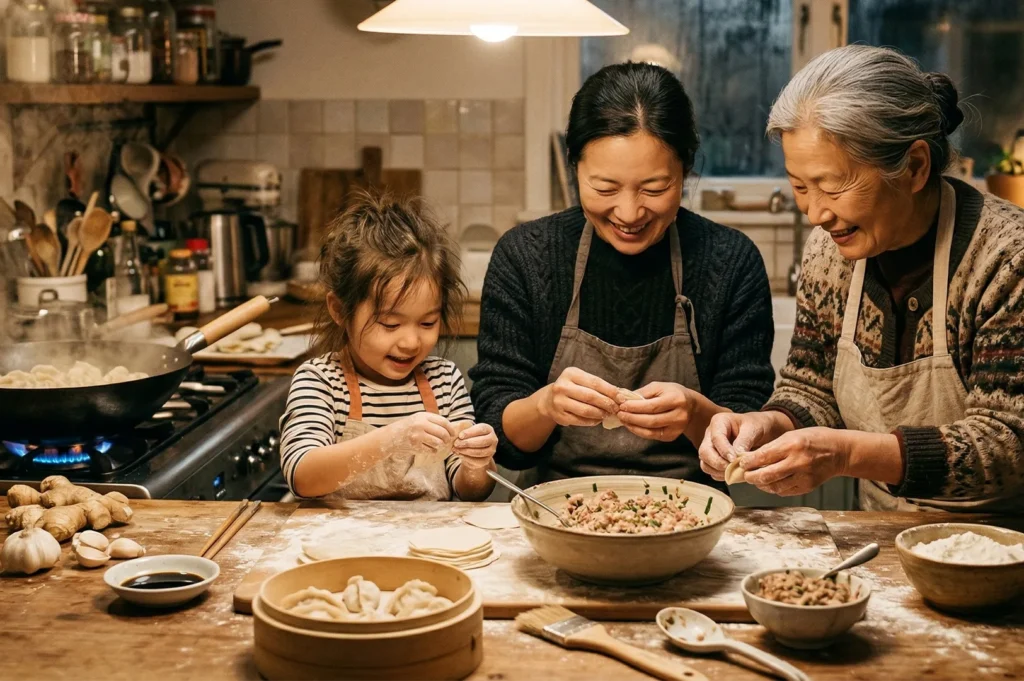
Food acts as a bridge spanning decades, linking grandparents, parents, and children through a shared culinary journey. Every bowl of hand-pulled noodles and every steaming pot of broth carries the weight of history, survival, and love. Let us take a closer look at exactly how the simple act of preparing and sharing a meal binds us together across the generations.
Asiatic Food & Family: Culture at the Table
If you want to understand a culture, watch how it eats.
In many Asian households, the greeting isn’t “How are you?” — it’s “Have you eaten?” That question reveals the central role of asiatic food in daily life. Food is not peripheral. It is structure. It is care. It is continuity.
Across south east asia, south asia, and even into central asia and the middle east, the table becomes a site of memory transmission. A meal is rarely just sustenance. It is inheritance.
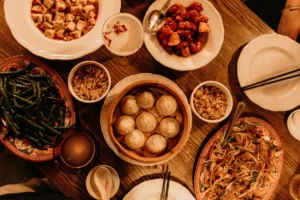
I remember visiting relatives in Singapore and noticing that no one ever ate alone. Even a simple bowl of rice and soup became communal. Plates of vegetables, braised pork, and stir-fried noodles would appear instinctively, turning a modest dinner into a shared ritual.
Lunar New Year Feasts: Chinese Food, Dim Sum & Symbolism
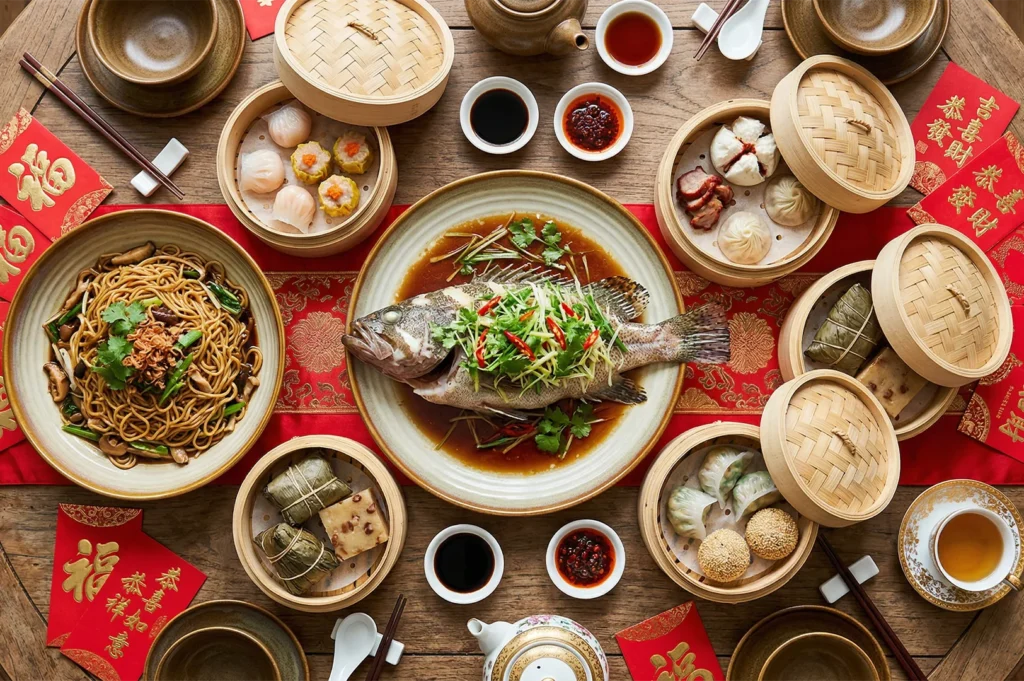
During Lunar New Year, the symbolism of chinese cuisine becomes explicit. Every traditional dish carries encoded meaning.
Whole Fish with Soy Sauce & Black Pepper
A whole fresh fish is always served intact — head and tail — symbolising surplus.
- Flesh: tender, flaky, subtly sweet
- Sauce: warm soy sauce infused with scallions
- Finish: light dusting of black pepper
The steam rises gently. The aroma is clean and marine. Someone always claims the cheek meat — the most tender bite.
Long Noodles
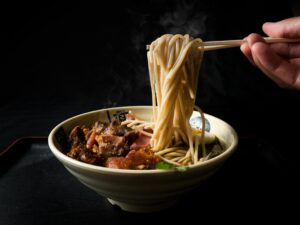
Uncut egg noodles or rice noodles glide across chopsticks, coated lightly in oil.
They are never sliced — length equals longevity.
I remember being scolded once for breaking a strand. It wasn’t about etiquette; it was about hope.
Dumplings & Dim Sum
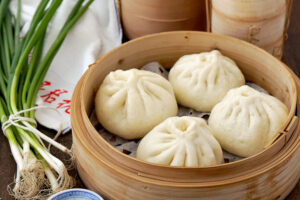
Dumplings resemble ancient ingots — wealth rendered edible.
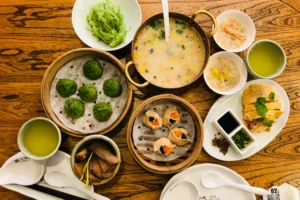
Plates of dim sum expand the table:
- Sesame seeds scattered over buns
- Fillings of minced pork or beef
- Wrappers pleated with careful food styling
This is chinese food as edible metaphor.
The Japanese Tea Ceremony & Japan Sushi: Precision in Restraint
Not all rituals are loud.
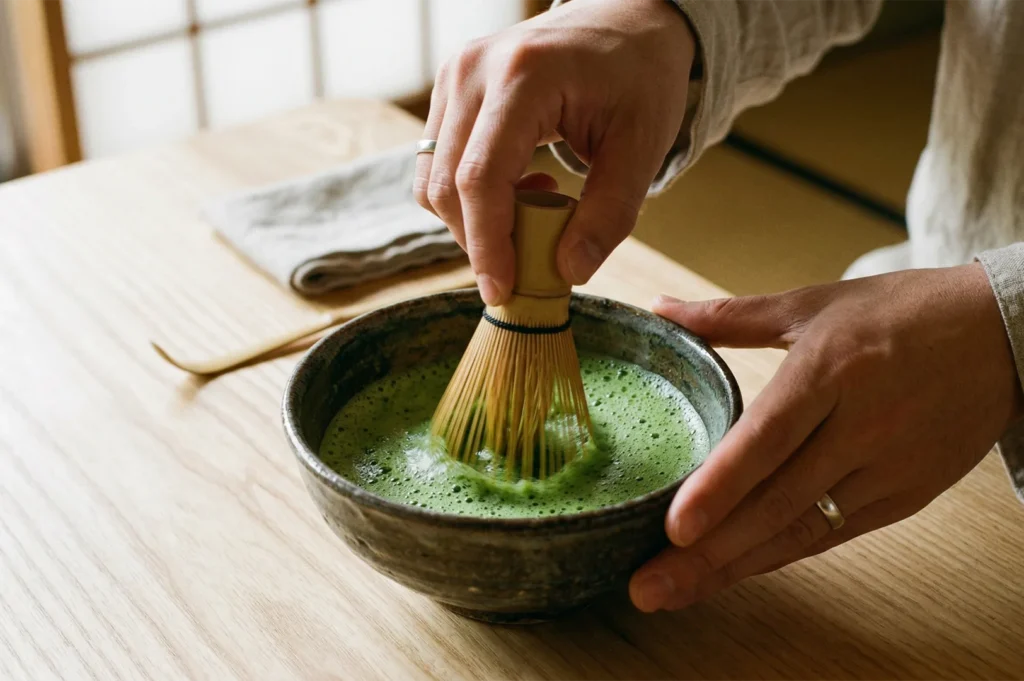
The Japanese tea ceremony — chanoyu — is the opposite of a banquet. It is controlled, meditative. The bowl of matcha is whisked until frothy, grassy, slightly bitter.
The philosophy of ichigo ichie — one time, one meeting — frames the experience.
Similarly, in japan sushi, precision defines value. A slice of fresh fish over vinegared rice must balance temperature, pressure, and timing. A sliver of pickled ginger cleanses the palate between bites.
Silence is part of the culinary traditions here. The focus narrows.
Whether it is exuberant chinese cuisine or quiet sushi, these forms of asiatic food slow us down.
Recipes as Heirlooms: Pork Belly, Fried Tofu & Sensory Memory
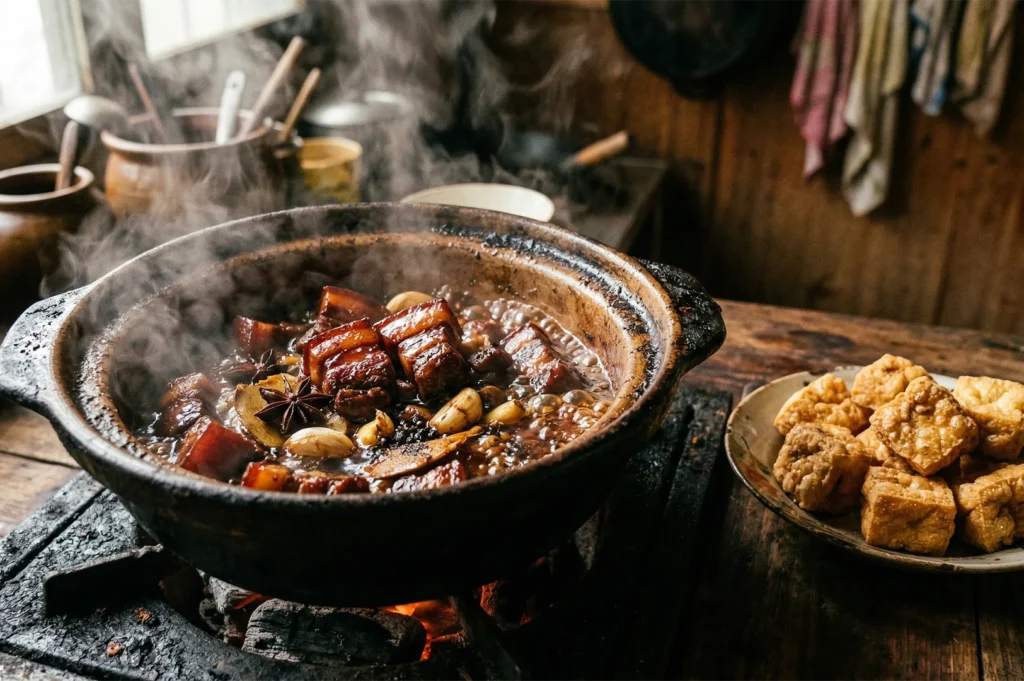
We often think heirlooms are objects. But the most durable inheritances are traditional recipes.
I remember trying to document my aunt’s braised pork belly — glossy, mahogany cubes simmered in dark soy sauce, star anise, and garlic.
When I asked for measurements, she laughed.
“Until it looks right.”
That answer frustrated me — until I realised she was teaching through sensation.
You learn:
- The exact shade of golden-brown during deep frying
- The aroma of shrimp paste blooming in coconut milk
- The crisp exterior and custardy centre of fried tofu
Across southeast asian cuisine, these skills are transmitted shoulder-to-shoulder, not via textbooks.
From Central Asia to Southeast Asia: Evolution of Traditional Dishes
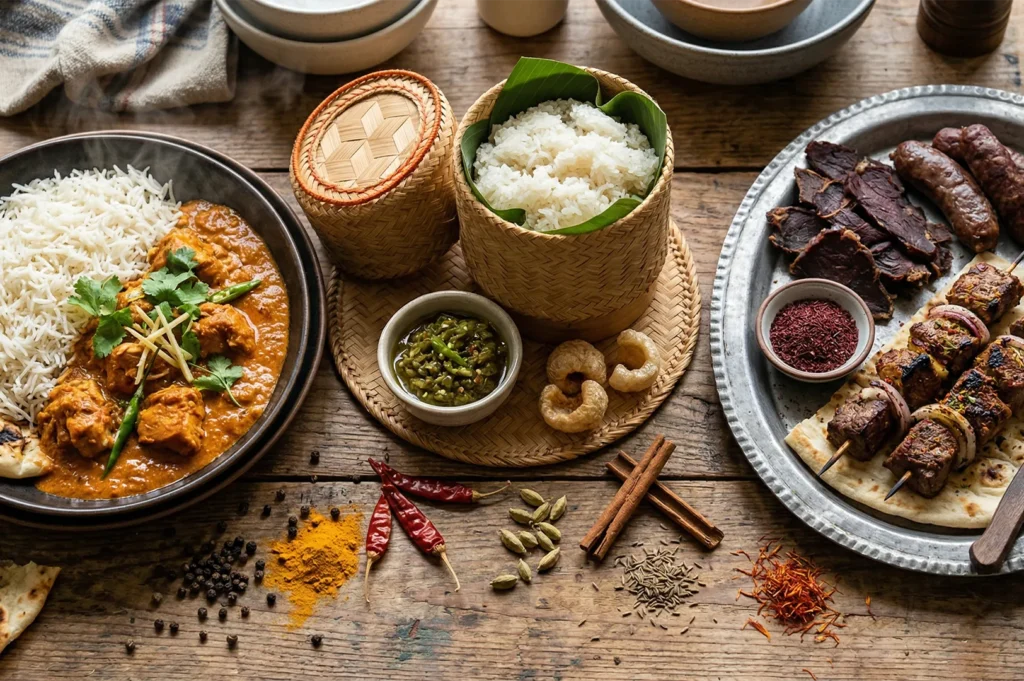
Migration reshapes flavour.
In south asia, basmati rice functions as staple food — long, aromatic grains forming the base of curry and beef dishes. In bangladeshi cuisine, rice is paired with fish stews and lentils.
Move east into southeast asia, and sticky rice dominates certain regions, especially in northeastern thailand, often paired with grilled meats and spicy dips.
Further north, mongolian cuisine in central asia emphasises lamb, dairy, and dried meats — climate-driven adaptation.
Consider tandoori chicken from the clay tandoor oven in South Asia:
- Yogurt marinade
- Aromatic spices
- Glaze of clarified butter
Contrast that with grilled chicken in southeast asia, brightened with lime juice, herbs, and often slightly caramelised with palm sugar.
These differences are not contradictions. They are regional responses to climate, trade, and ingredient availability.
Communal Cooking: Fried Rice, Peking Duck & Shared Labor
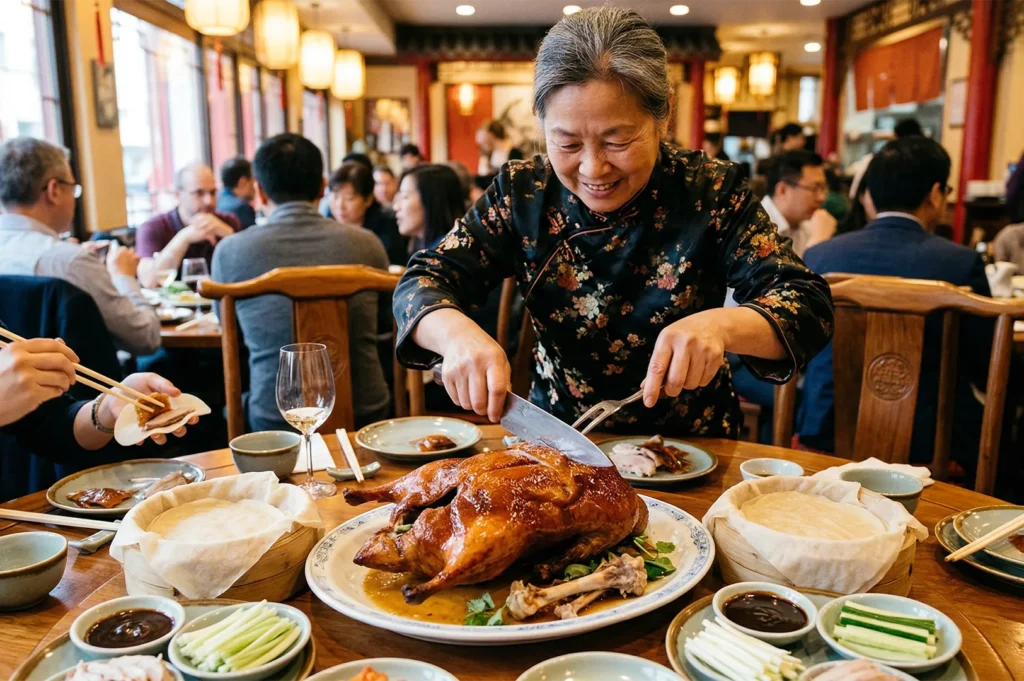
Family dining in Asian cultures is rarely individual plating.
It is collective action.
Hot Pot & Shared Soup
A pot of bubbling broth sits at the centre. Plates of raw vegetables, bean sprouts, sliced beef, and succulent meat circulate. Everyone participates in the cooking.
Fried Rice & Mixed Rice
A wok of fried rice — grains separated, lightly charred, flecked with fried egg — becomes a neutral base for bolder side dishes.
Mixed rice stalls in Singapore display trays of curries, braised tofu, stir-fried greens. You point. They scoop. A custom meal forms.
Peking Duck
When peking duck arrives, carved at the table, the crisp skin fractures audibly. Thin pancakes wrap slices of duck with scallions and sauce.
You assemble your own bite.
Participation deepens connection.
Street Food & Bánh Mì: Regional Specialties on the Move
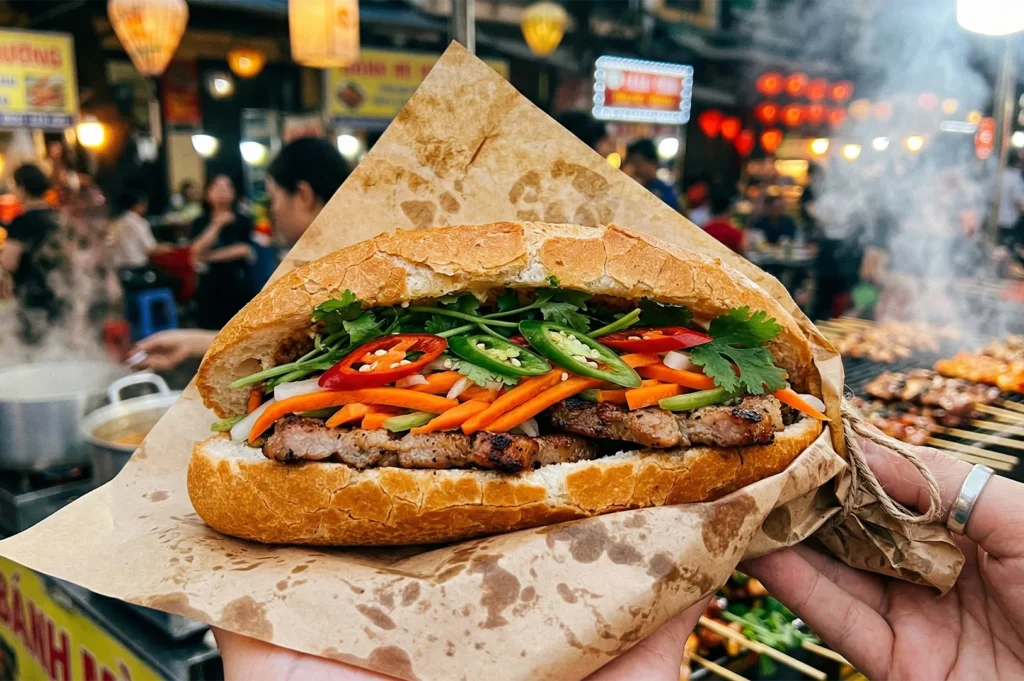
Beyond formal banquets, street food sustains everyday life.
In Vietnam, the bánh mì sandwich — crusty baguette, grilled pork or chicken, pickled vegetables, herbs — reflects colonial history layered onto local taste.
The bread shatters. The filling is juicy, slightly spicy, sharpened with lemon juice or vinegar.
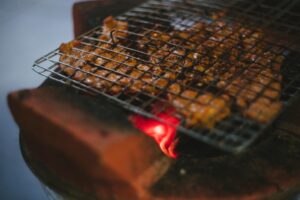
In night markets across south east asia, skewers of grilled chicken, bowls of rice noodles, and soups perfumed with spices define urban rhythm.
These popular dishes are portable archives of migration.
The Unspoken Language of Love: Food as Affection
Affection in many Asian families is rarely verbal. It is plated.
- A grandmother sliding the best piece of fresh fish onto your bowl of white rice
- A parent peeling fruit late at night
- A sibling saving you the crispiest piece of fried chicken
These gestures are quiet but profound.
I remember once reaching for the last cube of pork and noticing it had already been placed on my plate. No announcement. Just intention.
The table teaches generosity.
Preserving Asiatic Food in a Modern World
Urban life accelerates. Six-hour stocks feel unrealistic. Delivery apps dominate.
But adaptation is part of culinary traditions.
Modern Preservation Methods
- Batch cooking dumplings or curry pastes for freezing
- Pressure cookers replicating slow braises
- Documenting elders on video to archive traditional recipes
Even viral clips showing perfect stir fried fried rice or precise food styling of dumplings serve preservation.
The renaissance of asiatic food lies in evolution, not rigidity.
The Enduring Power of the Dinner Table
Ultimately, Asiatic food is a testament to resilience and connection. It survives wars, migrations, and the relentless march of time because we refuse to let the flavours of our childhood fade away. Every time we take the time to prepare a traditional meal, we are honouring the hands that originally taught us how to cook.
Food is the thread that seamlessly stitches the generations together. It provides comfort in times of sorrow, joy in times of celebration, and a deep, grounding sense of belonging no matter where in the world we find ourselves.
What is your family’s most treasured recipe? Is there a specific dish that instantly transports you back to your childhood kitchen? I would love to hear your stories. Dive into your own family history, ask your elders for their hidden culinary secrets, and get into the kitchen. The best way to honour the past is to ensure it has a place at your table today.
Asian food, with its rich tapestry of flavors and traditions, continues to inspire and unite people across the globe. Whether enjoyed in a bustling city street or a quiet home kitchen, it reminds us of our shared humanity and the power of food to bridge cultures and generations.

Fortune Centre Food Guide: Vegetarian Finds, Quick Lunches, and Hidden Dinner Spots
Eda Wong | May 9, 2026
May 9, 2026 | Eda Wong | Last Updated: November 19, 2026 I have spent the last six months navigating the tight corridors and bustling walkways of Fortune Centre, determined to map out the Fortune Centre food scene beyond its best-known stalls. I’ve tried all of these famous stalls, sampling everything from intricate plant-based creations to…

Types of Chinese Food Hidden in Plain Sight: Imperial Treasure, Reviewed Through Their Orders
Eat Drink Asia Team | May 7, 2026
For a long time, many viewed Chinese food as one giant, delicious monolith, characterized by intense heat, heavy sauces, and wok-tossed brilliance. However, as more time is spent exploring Singapore’s incredible dining scene, it becomes clear that true culinary mastery often whispers rather than shouts. To demonstrate this to visitors, a table at Imperial Treasure…
-
Famous Food in China Isn’t Loud: Din Tai Fung’s Dumplings and the Power of Precision
Dio Asahi | May 5, 2026
There is a common misconception that the most authentic culinary journeys involve loud, chaotic kitchens with massive wok flames and shouting chefs. I used to think the same thing until I started paying closer attention to the quieter corners of Asian cooking. I visited Din Tai Fung on a Tuesday around 2:30 pm, hoping to…
-
The Morning Steam of Baozi Along a Beijing Street
Eda Wong | May 2, 2026
The first thing I noticed was the steam. It rose in soft, continuous bursts from stacked bamboo baskets, drifting into the cold Beijing morning like breath made visible. The vendor lifted each lid with practiced rhythm, a quick tilt, a release of heat, then the faint scent of yeast, pork, and warm flour rolling outward….
-
Moo Ping and the Structure of Thai Grilled Street Meat
Dio Asahi | April 30, 2026
The first thing I noticed was the smoke, thin, controlled, rising steadily from a charcoal grill along a Bangkok street. Skewers of pork turned in a quiet rhythm, fat dripping and hissing as it met the heat. The air carried layers of scent: sweet palm sugar, garlic, and a faint fermented depth beneath it. I…
-
Where Kuala Lumpur Actually Begins: Reading the City Through Its Food
Eat Drink Asia Team | April 30, 2026
There are cities you can understand through maps, and then there are cities like Kuala Lumpur that only begin to make sense when you follow what people eat. Not what is recommended or ranked, but what is repeated. The same stall visited every week, the same dish ordered without hesitation, the same flavours that feel…
-
The Silent Language of the Table: How Traditional Food in China Speaks Through Generations
Eda Wong | April 28, 2026
When I first tried to navigate a traditional Cantonese family dinner, I made a spectacularly embarrassing mistake. I sat down, looked at the sprawling, beautifully written menu, and confidently ordered an individual plate of sweet and sour pork just for myself. The table went completely quiet. My host gently nudged the menu back towards the…

The Golden Roux Revolution: Best Japanese Curry Singapore Spots That Redefine Comfort Food
Eat Drink Asia Team | April 25, 2026
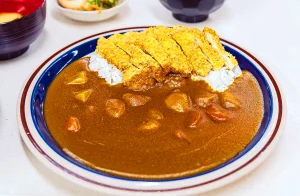
April 25, 2026 | Eat Drink Asia Team Last updated: October 15, 2026 We have always believed that a brilliant plate of Japanese curry is the ultimate culinary hug. Over the past eight months, we made it our personal mission to embark on a comprehensive curry journey across Singapore, hunting down the best Japanese curry…

Noodle Masterpieces: Celebrating the Craft
Eat Drink Asia Team | April 24, 2026
Noodles have a timeless place in the world of food, and Taste Our Traditions can attest that only few dishes are as universally loved. What makes a bowl of noodles truly stand out is not just the ingredients, but the artistry and skill behind their creation. Noodle-making is an ancient craft that demands patience, precision,…
-
Charcoal Smoke and Yakitori Evenings in Osaka
Eda Wong | April 24, 2026
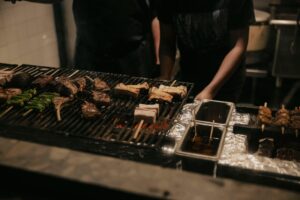
The first thing I noticed was the smoke. It didn’t rise all at once, but in thin, steady ribbons that curled upward from a narrow grill set just inches from the counter. The scent came first, warm and unmistakable, a mix of rendered chicken fat and binchōtan charcoal, clean but deeply present. Inside the small…