A wok sits over a low flame, and a handful of raw sticky rice slides across its dry surface. No oil, no water—nothing but heat and patience. The grains pale, then blush amber, then deepen toward the color of weak tea. Someone shakes the pan in a slow, even rhythm, listening as much as watching. The kitchen fills with a smell that is part popcorn, part roasted nut, part something older and harder to name. When the rice is ready, it goes into a stone mortar, still warm, and a pestle begins to turn it into coarse, fragrant dust.
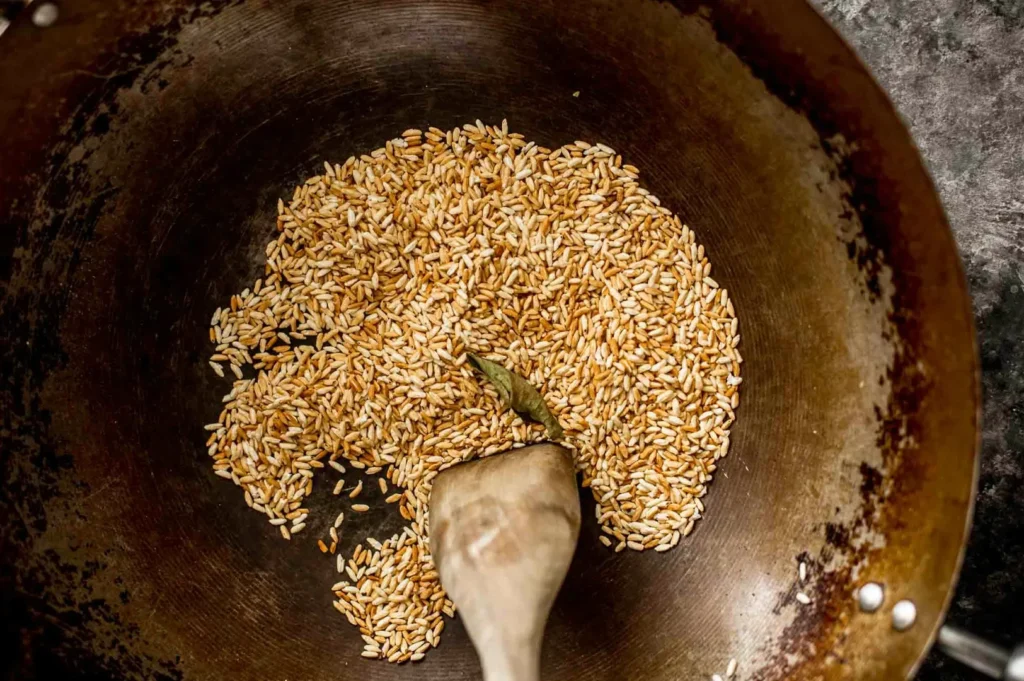
This dust is khâo khua (roughly khao koo-ah): toasted rice powder. In thailand food, it’s the kind of near-invisible seasoning that quietly decides whether a dish feels merely dressed or fully composed. The process is exactly what it sounds like: uncooked glutinous rice, dry-toasted until it browns and smells nutty, then ground while still warm so it keeps its aroma. The result is not flour. It is deliberately coarse, somewhere between fine sand and cracked pepper, with enough grit to register on the tongue.
In a dish like larb, the minced meat salad of the north and northeast, this powder does quiet structural work. It absorbs the loose liquid pooling at the bottom of the bowl, gives the lime and fish sauce something to cling to, and adds a toasted backbone beneath the bright, sour, chili-sharp surface. Without it, larb tastes thinner, wetter, less anchored.
You notice khâo khua most when it is missing. At a shared table, where bowls of larb sit beside sticky rice pressed into balls by hand, the powder is the reason a pinch of salad holds together on your fingers. It explains why the dish feels dry in the deliberate sense—not parched, but composed, each bite clinging rather than running. Cooks make it in small batches because it goes stale, losing the very nuttiness that justified the toasting. A jar kept too long turns flat and dull. So the grinding becomes part of the cooking rhythm itself, done close to the meal, often by whoever is already standing at the mortar pounding chilies.
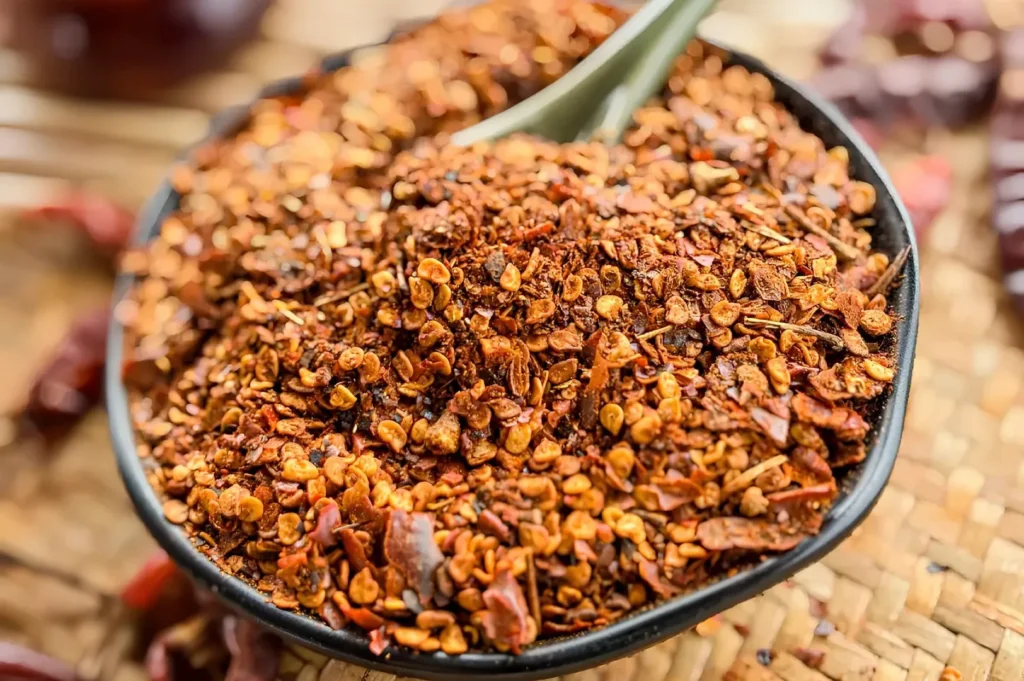
What feels worth noticing now is how easily this step disappears. Pre-ground rice powder sits on shelves, convenient and consistent, and it works well enough that many never toast their own. But fresh khâo khua carries a depth the packaged kind cannot hold, a warmth that fades within days of grinding. The tension is small but real: a few minutes of attention against a shortcut that costs almost nothing. The powder is nearly invisible in the bowl, yet it decides whether larb sings or merely sits.
I keep returning to that contradiction. The most essential element in the dish is the one you can barely see: a scatter of toasted dust that asks for patience and gives back texture, aroma, and the simple logic of dryness.

Noodle Masterpieces: Celebrating the Craft
Eat Drink Asia Team | April 24, 2026
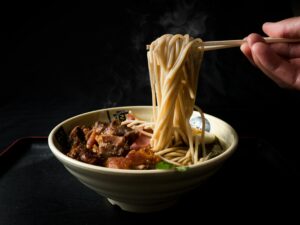
Noodles have a timeless place in the world of food, and Taste Our Traditions can attest that only few dishes are as universally loved. What makes a bowl of noodles truly stand out is not just the ingredients, but the artistry and skill behind their creation. Noodle-making is an ancient craft that demands patience, precision,…

Charcoal Smoke and Yakitori Evenings in Osaka
Eda Wong | April 24, 2026
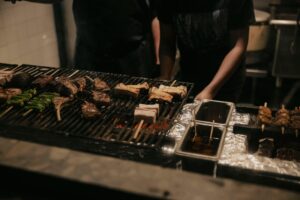
The first thing I noticed was the smoke. It didn’t rise all at once, but in thin, steady ribbons that curled upward from a narrow grill set just inches from the counter. The scent came first, warm and unmistakable, a mix of rendered chicken fat and binchōtan charcoal, clean but deeply present. Inside the small…
-
Cracking the Code of Telur Thai: Inside Egg Thai West Mall, a Kitchen That Tells a Story
Dio Asahi | April 23, 2026
I visited on a Tuesday around 7pm, completely exhausted from a long day of meetings and staring at screens. I wasn’t looking for a fancy culinary journey or a trend-setting dining experience. Honestly, I just wanted a quick, comforting meal that would hit the spot without emptying my wallet. That specific craving led me to…

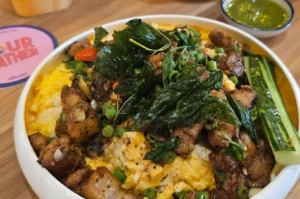
Sanook Kitchen’s Thai Omelette Rice: A Heartland Answer to Singapore’s Thai Food Saturation
Eda Wong | April 21, 2026
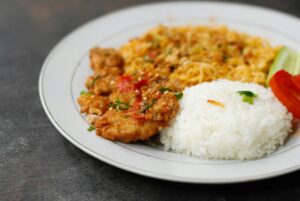
If you live in Singapore, you know that finding Thai food is about as difficult as finding a humid day. We are spoiled for choice. From gritty hawker stalls serving fiery basil pork to upscale restaurants where a bowl of tom yum costs more than a taxi ride, the options are endless. But sometimes, you…
-
The Golden Fold: How Thailand’s Street-Side Omelette Became a Morning Ritual
Dio Asahi | April 18, 2026
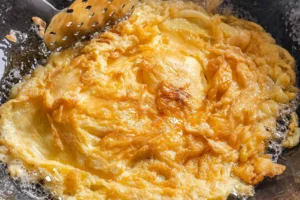
Dawn breaks over Bangkok with a familiar symphony. Before the intense heat settles and the traffic swells into a steady roar, the city streets belong to the food vendors. Amid the clatter of metal tools and the hum of early commuters, one sound stands out: the furious, bubbling sizzle of eggs hitting smoking-hot oil. This…

Lesson I Didn’t Expect: How Fourgather’s Easy Asian Recipes Taught Me to Cook at Home
Eda Wong | April 16, 2026
For the longest time, I was convinced that cooking authentic Thai food at home was out of my league. I imagined complex pastes, hours of simmering, and a mountain of ingredients I couldn’t pronounce. I was happy to leave it to the experts. But a casual dinner at Fourgather, a stylish Thai eatery in Telok…
-
Between Aesthetic and Appetite: The Modern Food Blogger’s Dilemma
Eda Wong | April 15, 2026
In our first, would probably say, emotional editorial, I would like to open with how there is a particular kind of silence that happens before a dish is eaten now. Not the quiet of anticipation, but the pause of positioning, a hand hovering just above the plate, adjusting the angle of a bowl so the…
-
Chasing Flavor: How Fook Kin Taught Us to Cook Asian Cuisine Recipes the Right Way
Eat Drink Asia Team | April 14, 2026
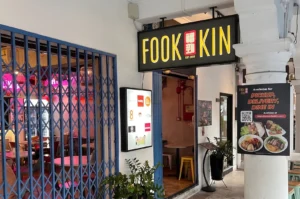
For years, we told ourselves that truly great Asian cooking was a mystical art form, a craft reserved for seasoned hawker uncles or Michelin-starred chefs with decades of experience. Our own attempts at home often felt like pale imitations, lacking that deep, smoky flavour or that perfect textural contrast we craved. Then, we had dinner…
-
Connecting Generations: How Asiatic Food Builds Family Bonds Across Time
Dio Asahi | April 11, 2026
Whenever I smell toasted sesame oil hitting a hot wok, I am instantly transported back to a tiny, bustling kitchen from my childhood. The air would be thick with the aroma of ginger, garlic, and slow-simmering soy sauce. Before a single word was spoken, the meal was already telling a story. For many of us,…
-
A Comprehensive Resource for Oriental Foods Recipes for the Modern Home Cook
Eda Wong | April 10, 2026
For years, I thought cooking Asian food at home required something mystical. My stir-fries were soggy, lacking that smoky breath of the wok. My fried rice was inconsistent, sometimes clumpy, other times dry. My sauces tasted flat, missing the balance of savory, sweet, and tangy flavors I craved. I assumed restaurants had secrets I’d never…