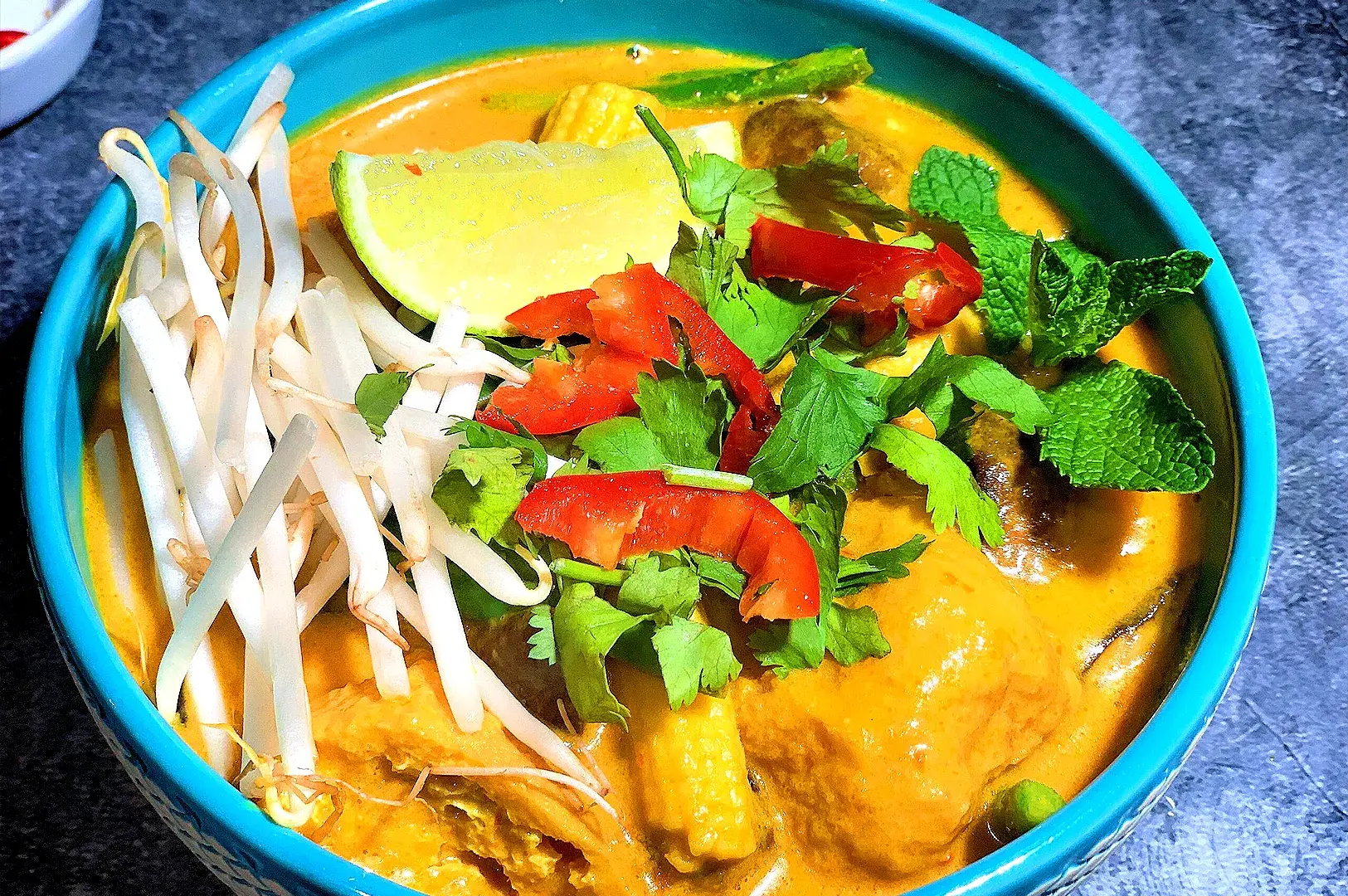
The first vegetarian laksa I made tasted like coconut soup with chilli, not laksa.
I thought I was doing it right, stirring paste into warm coconut milk with tofu puffs. It looked the part but lacked depth. Seafood usually provides that depth, prawn shells, dried shrimp, fish cake sweetness.
I learned that depth can’t be added at the end; it must be built from the start. A vegetarian laksa lives or dies in the broth. Get the rempah right, fry it well, and the missing seafood won’t feel like a gap.
So we start with the pot, not the toppings.
What Kind of Laksa This Is: A Coconut-Rich Curry Paste Journey
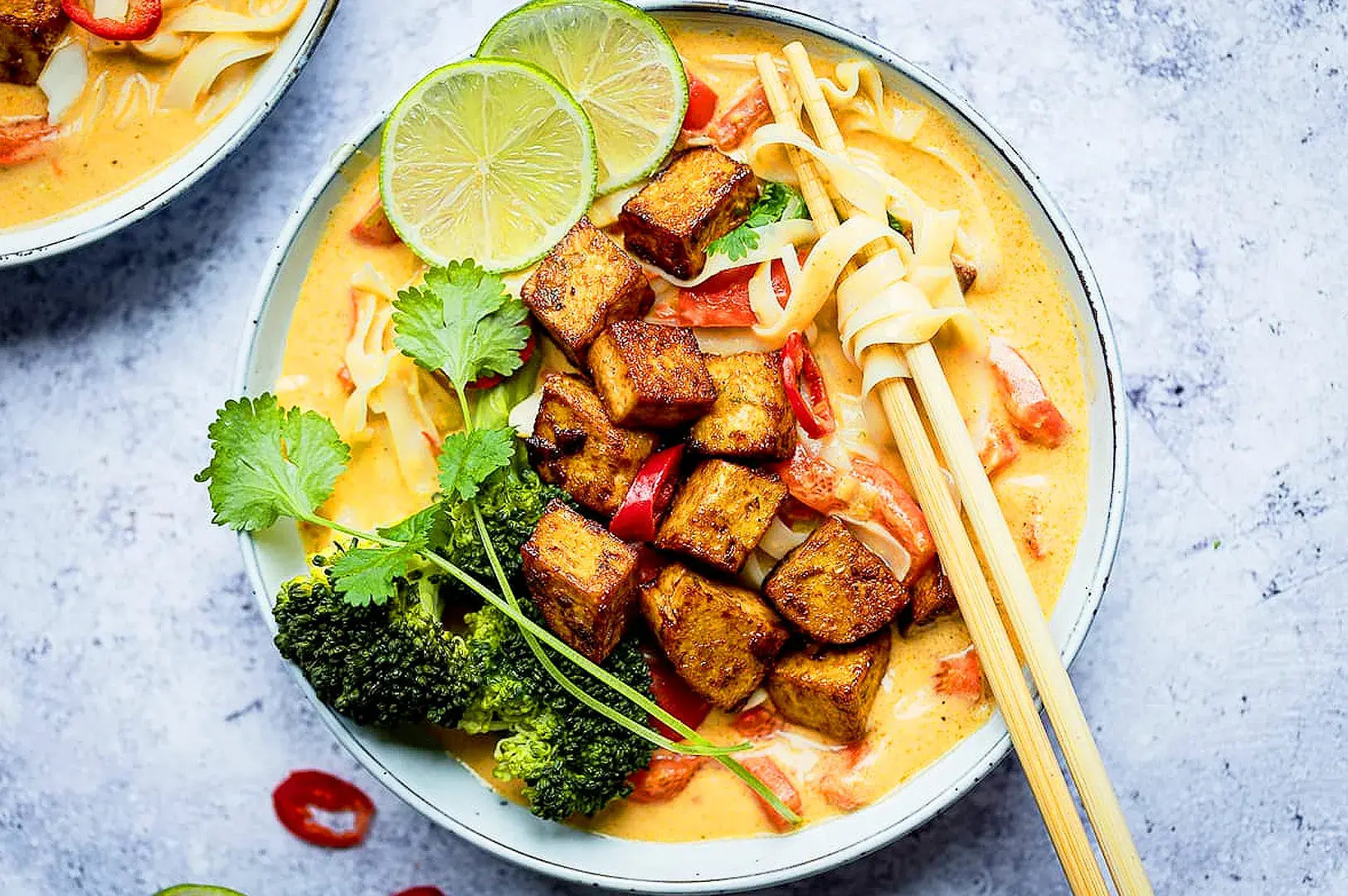
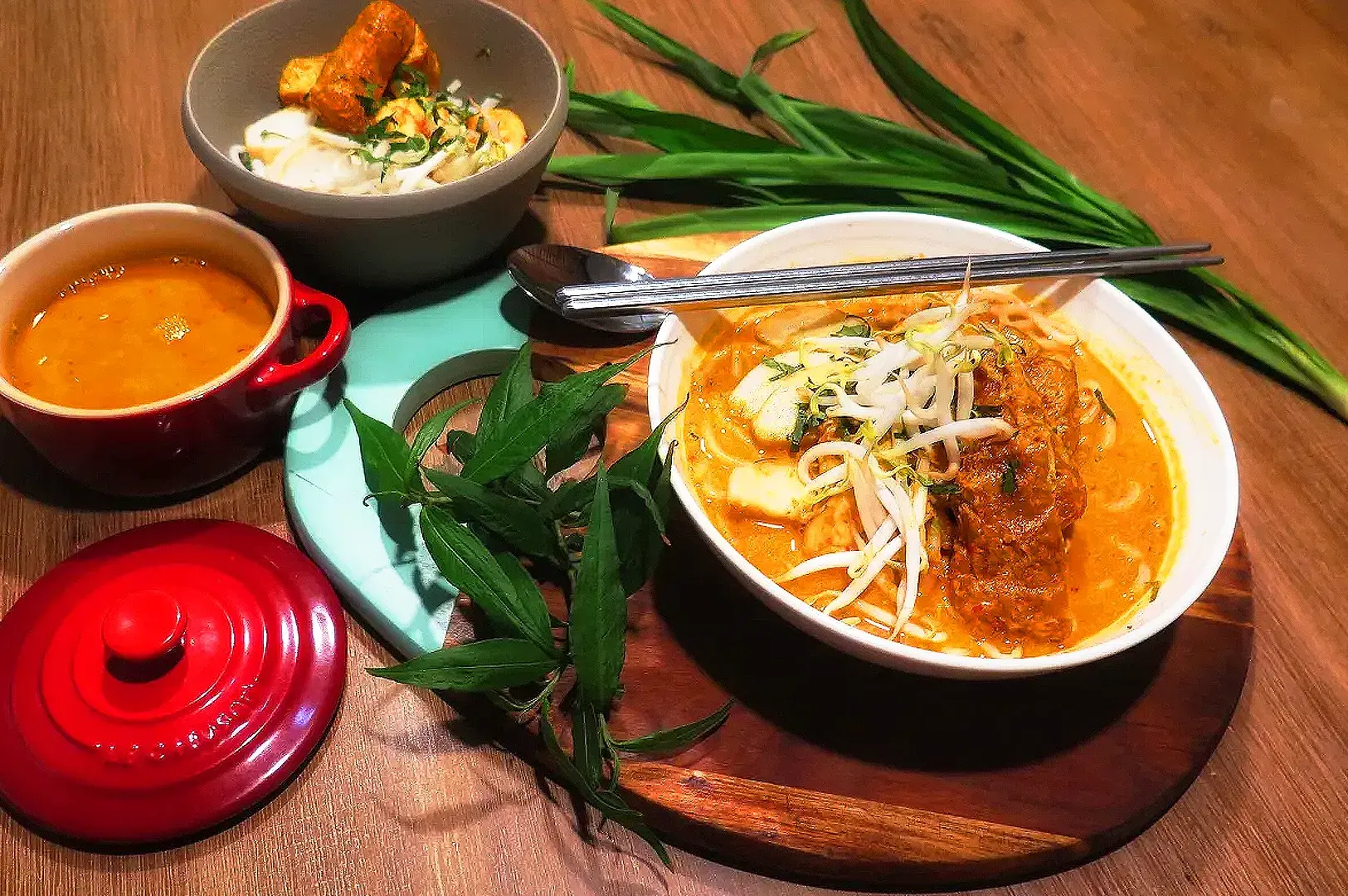
This is a vegetarian curry laksa, a creamy, coconut-rich laksa lemak built to cradle noodles and fresh vegetables. Unlike the tangy, sour asam laksa, which leans heavily on fish-based broths, this version embraces a plant based identity without sacrificing the soul of the dish.
I want to be honest: this won’t replicate the exact briny, seafood-infused Katong laksa you might be craving. There are no cockles, no fish cakes, no fish sauce to deepen the broth. Instead, it keeps the comforting logic of curry laksa alive, a fragrant laksa paste fried until aromatic, a luscious coconut broth, springy rice noodles, spongy tofu puffs, and a bright lift of herbs and lime juice. That’s the delicious soup we’re aiming for here.
You may also check an Asian vegetarian meal reviewed at Herbivore Japanese Vegetarian Restaurant, which explores vegetarian twists on Japanese cuisine, blending tradition with innovative plant-based ingredients.
The Ingredients (Serves 3–4)
For the broth:
- 4–5 tablespoons store bought laksa paste or homemade (more on this below)
- 4 tablespoons neutral oil for a gentle stir fry
- 1 litre vegetable or mushroom stock (for umami depth)
- 400ml coconut milk (add more coconut milk if you like it creamier)
- 1 tablespoon soy sauce (or vegan alternative)
- 1 teaspoon coconut sugar or brown sugar, plus more to taste
- Salt to taste
- Aromatic additions: chopped onions, minced garlic, fresh ginger, lemongrass, and kaffir lime leaves
For the bowl:
- 1 packet Unicurd tofu puffs, halved to soak up the broth
- A handful of mushrooms (shiitake or oyster)
- Fresh greens like broccoli or bok choy
- 2 large handfuls bean sprouts
- Thick bee hoon or rice vermicelli (cooked noodles prepared separately)
To finish:
- Torn laksa leaf (or substitute with Vietnamese coriander or mint)
- Crispy fried shallots
- Halved calamansi or lime for a squeeze of fresh acidity
- Sambal or dipping sauce on the side for those who crave heat
Eatdrinkers Tip: Many curry pastes labeled vegetarian sneak in dried shrimp or fish extract. Always check the label carefully or visit specialty vegetarian stores for assured plant based options.
The Method, Step by Step: Building a Delicious Laksa Soup
Step 1 — Fry the Laksa Paste Like You Mean It
Heat oil in a pot over medium heat. Add the laksa paste and stir fry patiently.
Watch for these signs:
- The paste darkens to a deep orange
- The sharp raw aroma mellows into a rich, rounded fragrance
- Oil begins to bead around the edges, signaling the spices have bloomed
This step takes 5 to 10 minutes depending on moisture content. It’s the foundation of your broth’s depth, so don’t rush.
Eatdrinkers Tip: Use enough oil to prevent scorching. The fat is essential to coax out the complex flavors of other spices in the paste.
Step 2 — Add Stock and Aromatics
Pour in your vegetable or mushroom stock along with chopped onions, minced garlic, sliced ginger, bruised lemongrass, and kaffir lime leaves.
Simmer gently for 5 to 10 minutes, letting the broth soak up the fragrant layers. This step builds the savory backbone that replaces seafood depth.
Step 3 — Gently Incorporate Coconut Milk
Lower the heat and stir in the coconut milk slowly. Maintain a soft simmer, never a boil, to prevent the broth from splitting into oily curds.
Taste and adjust seasoning with soy sauce, coconut sugar, and salt. A squeeze of lime juice at the end brightens the rich, creamy base.
Step 4 — Simmer Tofu Puffs and Vegetables
Halve the tofu puffs so they absorb the broth fully. Add them along with mushrooms and greens like broccoli.
Simmer 5 to 8 minutes, pressing gently with a ladle to help the broth seep in, while keeping the vegetables crisp-tender.
Step 5 — Prepare the Noodles Separately
Cook your rice noodles or ramen in boiling water according to package instructions. Drain and toss with a little oil to prevent sticking.
Never cook the noodles directly in the laksa broth, they will soak up all the liquid and leave you with a dry, thin soup.
Step 6 — Assemble and Garnish
Layer the bowl with noodles first, then bean sprouts, tofu puffs, and greens.
Ladle the hot, fragrant laksa soup over the top.
Sprinkle torn laksa leaves and fried shallots. Serve immediately with lime wedges and your favorite dipping sauce or sambal.
A 45-Minute Workflow for Weeknight Laksa
| Time | Task |
|---|---|
| 0:00 | Prep tofu puffs, vegetables, and noodles |
| 0:10 | Measure or blend your smooth paste |
| 0:15 | Fry the laksa paste until aromatic and darkened |
| 0:25 | Add stock and aromatics, simmer |
| 0:30 | Stir in coconut milk gently; add tofu and veggies |
| 0:35 | Cook noodles separately |
| 0:42 | Taste, adjust seasoning, assemble bowls |
| 0:45 | Garnish and serve |
Using store bought laksa paste and pre-cut veggies, you can have this delicious soup ready in under 30 minutes.
For those interested in exquisite dining experiences, be sure to check out our article on the best omakase Singapore: https://eatdrinkasia.com/best-omakase-singapore/
Avoid These Laksa Blunders
These are the ones I've made myself, or watched friends make.
Flat broth that tastes like vegetable soup. The paste wasn't fried long enough. For the pot in front of you, stir in a little soy sauce, mushroom stock, or a teaspoon of white miso. Next time, fry the rempah longer.
Split coconut milk. Heat was too high. Lower it, stir, and finish with lime. The texture suffers but the flavour survives.
Soggy noodles. They sat in the broth. Blanch separately and only assemble what you'll eat right away. Store leftovers in separate containers.
Bland tofu puffs. Added too late, or left whole. Cut them, simmer them at least 5 minutes, press them into the soup.
Too spicy for the family. Add more coconut milk and stock, serve extra noodles to dilute. Brighten with lime rather than fighting heat with more chilli.
Eatdrinkers tip: If the broth ever tastes "vegetarian in a bad way," the fix is almost always umami, not more chilli. Soy sauce, miso, shiitake water, fried shallots. Build the savoury, not the spice.
FAQ: Honest Answers to Common Laksa Questions
- Can it really taste rich without seafood?
Yes, but only if you build the broth intentionally with fried rempah, coconut milk, mushrooms, and tofu puffs soaking up the flavors. - Do I need homemade paste?
No. Store-bought laksa paste works well for quick meals. Homemade lets you tailor the spice blend and control ingredients, but it’s a weekend project, not a weeknight must. - What about low carb options?
Swap out rice noodles for spiralized zucchini or shirataki noodles to keep it low carb while still enjoying the creamy broth. - Can I freeze leftovers?
The broth freezes beautifully. Keep cooked noodles and fresh toppings separate and add them fresh when reheating.
This recipe is a testament to how plant based recipes can capture the soul of traditional dishes without compromise. The balance of fragrant curry paste, creamy coconut, and fresh herbs creates a hot soup that comforts and satisfies every craving.
One Last Thing
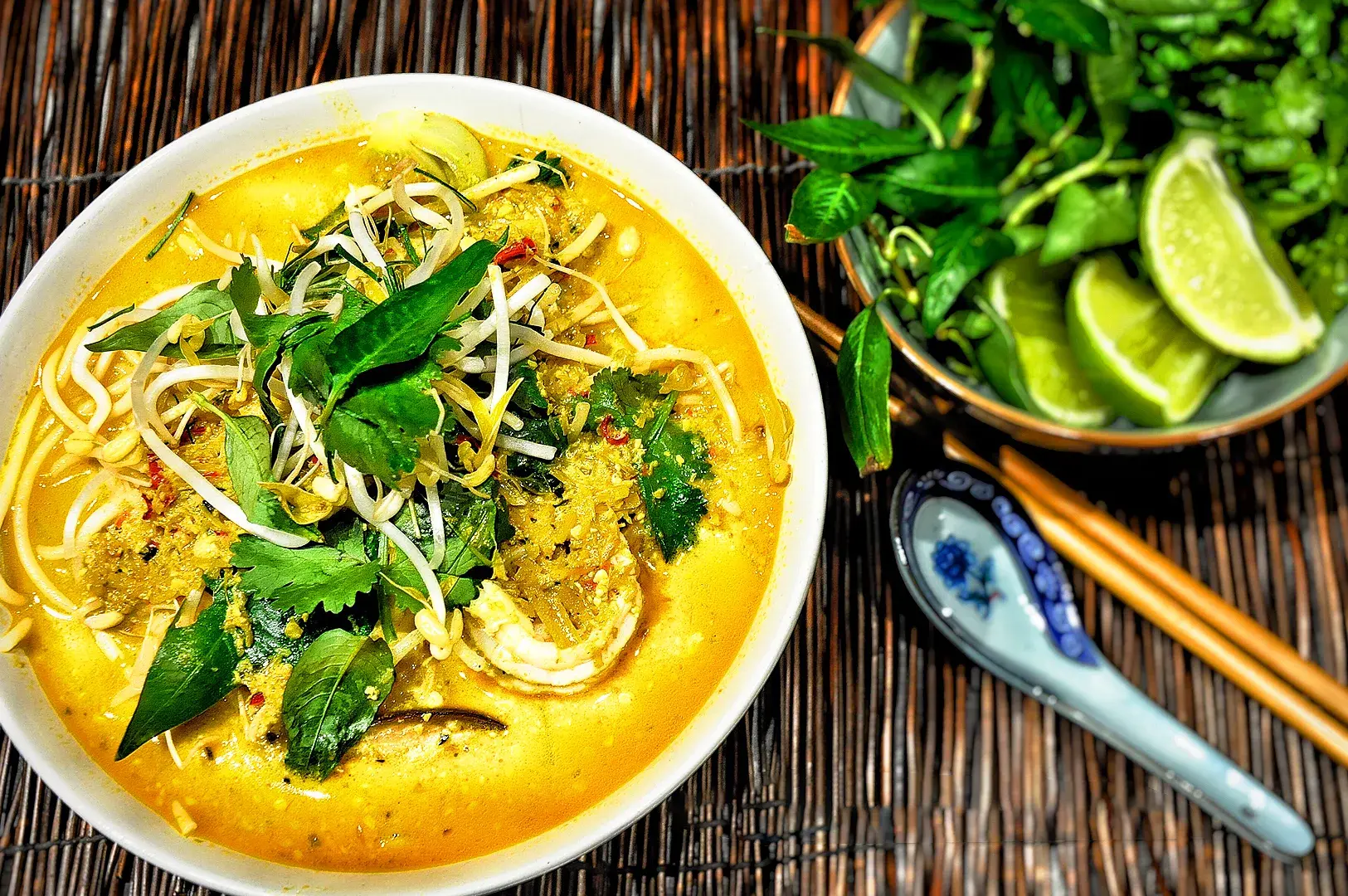
The version that finally tasted right wasn't the one with the fanciest ingredients. It was the one where I stood over the pot and fried the paste until it smelled cooked, then let the coconut milk in gently, off the boil.
That's the whole secret, really. A vegetarian laksa doesn't win by pretending the seafood was never there. It wins by building depth somewhere else, patiently, from the bottom of the pot up.
So don't be discouraged if your first bowl tastes a little hollow. Mine did. Fry the rempah longer next time. Taste as you go. The bowl that stays with you is closer than you think.

Why My Quest Ended at Yummy Western (409 AMK)
Dio Asahi | March 10, 2026
There’s a specific magic to a late-night supper hunt in Singapore. It’s the ritual of chasing a craving through the humidity to find that one stall that hits the spot. For me, that meant a pilgrimage to Ang Mo Kio Avenue 10. I arrived at 10 PM on a Friday, just as the ‘supper soul’…
-
A Taste of Time: My Dinner at Guan Hoe Soon
Eda Wong | March 7, 2026
There’s something special about visiting a place that has seen decades of Singapore’s history unfold. Guan Hoe Soon, tucked away on Joo Chiat Road, holds the title of Singapore’s oldest Nyonya restaurant, and you can feel that heritage the moment you step inside. I’d heard about it for years, a place where recipes aren’t just…
-
The 6 Best Halal Restaurant in Singapore for Authentic Nasi Padang
Eda Wong | March 5, 2026
There are few meals as satisfying as Nasi Padang, a colourful feast where you choose from a variety of dishes to create your perfect plate. Over the years, I’ve explored Singapore’s Nasi Padang scene, especially in Kampong Glam, sampling everything from humble hawker stalls to renowned spots. This list highlights the best halal Nasi Padang…
-
The Global Soup Bowl: How Indonesian Soto Shapes the Future of Asiatic Food Traditions
Dio Asahi | March 3, 2026
I still remember my first “real” bowl of Indonesian soto. Sitting on a low plastic stool in a cramped warung, I ordered Soto Betawi, expecting it to be like the clear Soto Ayam from Singaporean weddings. I was wrong. The rich, milky broth was intense, creamy, and boldly spiced. That first spoonful rewired my idea…
-
Shun: Japan’s Seasonal Treasures – A Deep Dive Into the Ingredients Behind True Omakase
Eat Drink Asia Team | February 28, 2026
In the world of Asian food, few dining experiences capture the soul of traditional Japanese food culture like omakase. At a premier omakase restaurant, diners entrust their meal entirely to the chef, whose artistry is guided not just by mastery, but by shun—the appreciation of seasonal and fresh ingredients at the absolute peak of their…

My Trip to Bánh Mì Saigon and How It Compares to Best Food in Singapore
Eda Wong | February 26, 2026
Located in the bustling neighborhood of Ang Mo Kio, Bánh Mì Saigon offers a taste of Vietnam right here in Singapore. From traditional bánh mì sandwiches to hearty pho bowls and refreshing Vietnamese iced coffee, this restaurant has it all. I arrived at Bánh Mì Saigon on a busy Saturday evening and was immediately drawn…
-
Tea Room by Ki-setsu: A Curated Journey Through Chinese Tea in the Heart of Singapore
Dio Asahi | February 25, 2026
Most people arrive at Chinese tea the way they arrive at any beverage: thirsty, curious, maybe looking for something sweet or soothing. But traditional chinese tea isn’t built like a single drink. It’s a network: leaf origin, processing choices, vessel physics, water, pacing, and the quiet social technology of sitting down long enough for a…
-
Tandoori Chicken: The Signature Indian Chicken Dish
Eda Wong | February 24, 2026
Tandoori chicken stands tall among the best Indian chicken recipes. With its vibrant hue and smoky aroma, this iconic Indian chicken dish is celebrated in Indian restaurants worldwide. Emerging from Punjab, it pairs perfectly with fragrant basmati rice or fresh naan and is a favorite for anyone who loves bold flavors. The hallmark of tandoori…
-
Chicken 65: A Fiery Indian Chicken Recipe You Must Try
Eat Drink Asia Team | February 21, 2026
We’ve spent months tracking the ‘shatter-rate’ of chicken across the South, and here’s the truth: most of what you find is a pale, food-colored imitation. The real Chicken 65 isn’t just spicy; it’s an atmospheric experience. It starts with the sharp, herbal snap of curry leaves hitting 180°C oil and ends with a deep, earthy…
-
Mastering the Art of Indian Dishes with Chicken
Eda Wong | February 19, 2026
The story of India’s culinary identity is deeply tied to its poultry dishes. I remember my first attempt at an Indian chicken recipe, failing to brown the onions properly left the dish hollow, missing its soul. The sound of mustard seeds popping in hot oil signals layers of flavor to come. The steam from the…