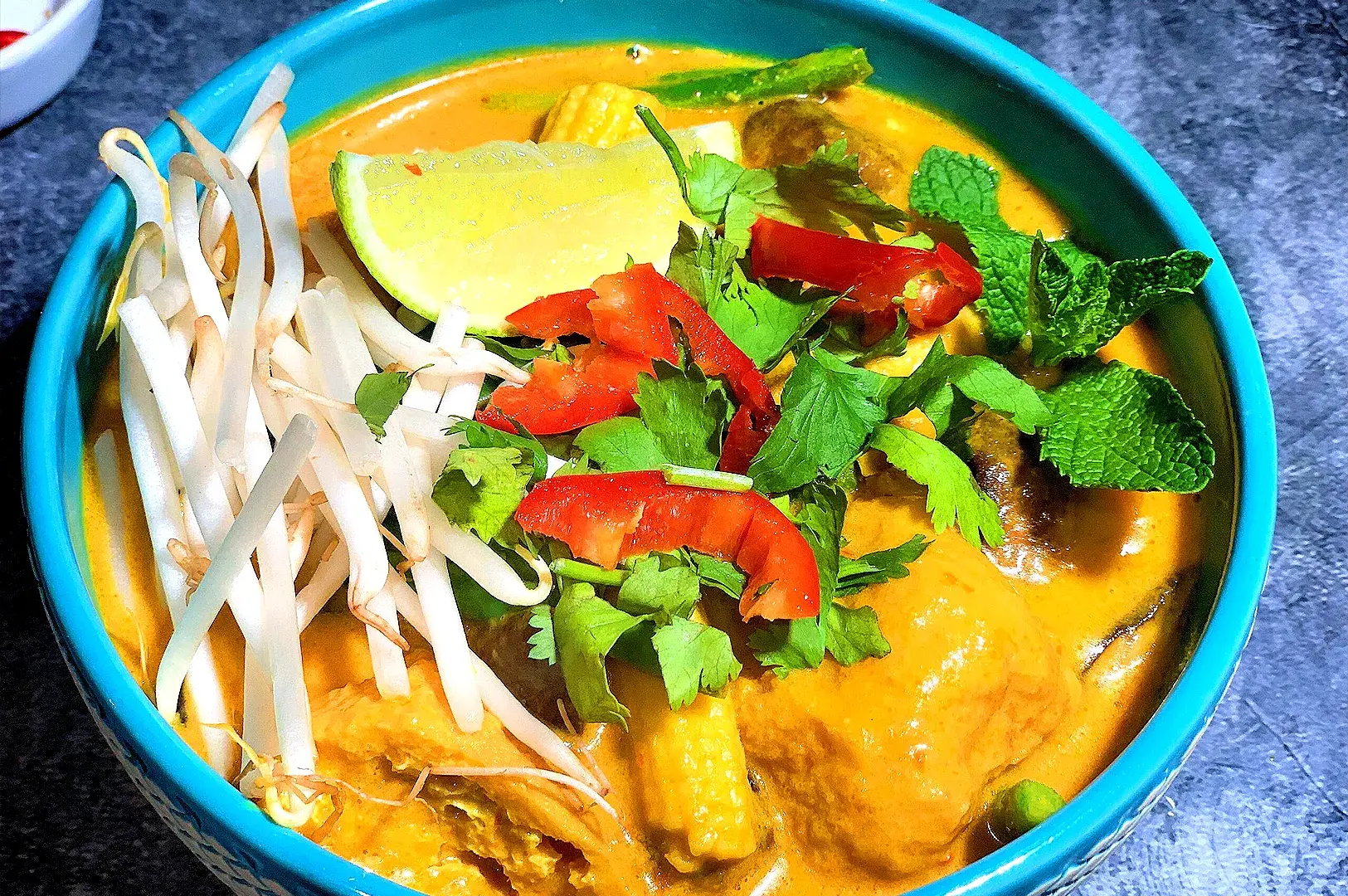
The first vegetarian laksa I made tasted like coconut soup with chilli, not laksa.
I thought I was doing it right, stirring paste into warm coconut milk with tofu puffs. It looked the part but lacked depth. Seafood usually provides that depth, prawn shells, dried shrimp, fish cake sweetness.
I learned that depth can’t be added at the end; it must be built from the start. A vegetarian laksa lives or dies in the broth. Get the rempah right, fry it well, and the missing seafood won’t feel like a gap.
So we start with the pot, not the toppings.
What Kind of Laksa This Is: A Coconut-Rich Curry Paste Journey
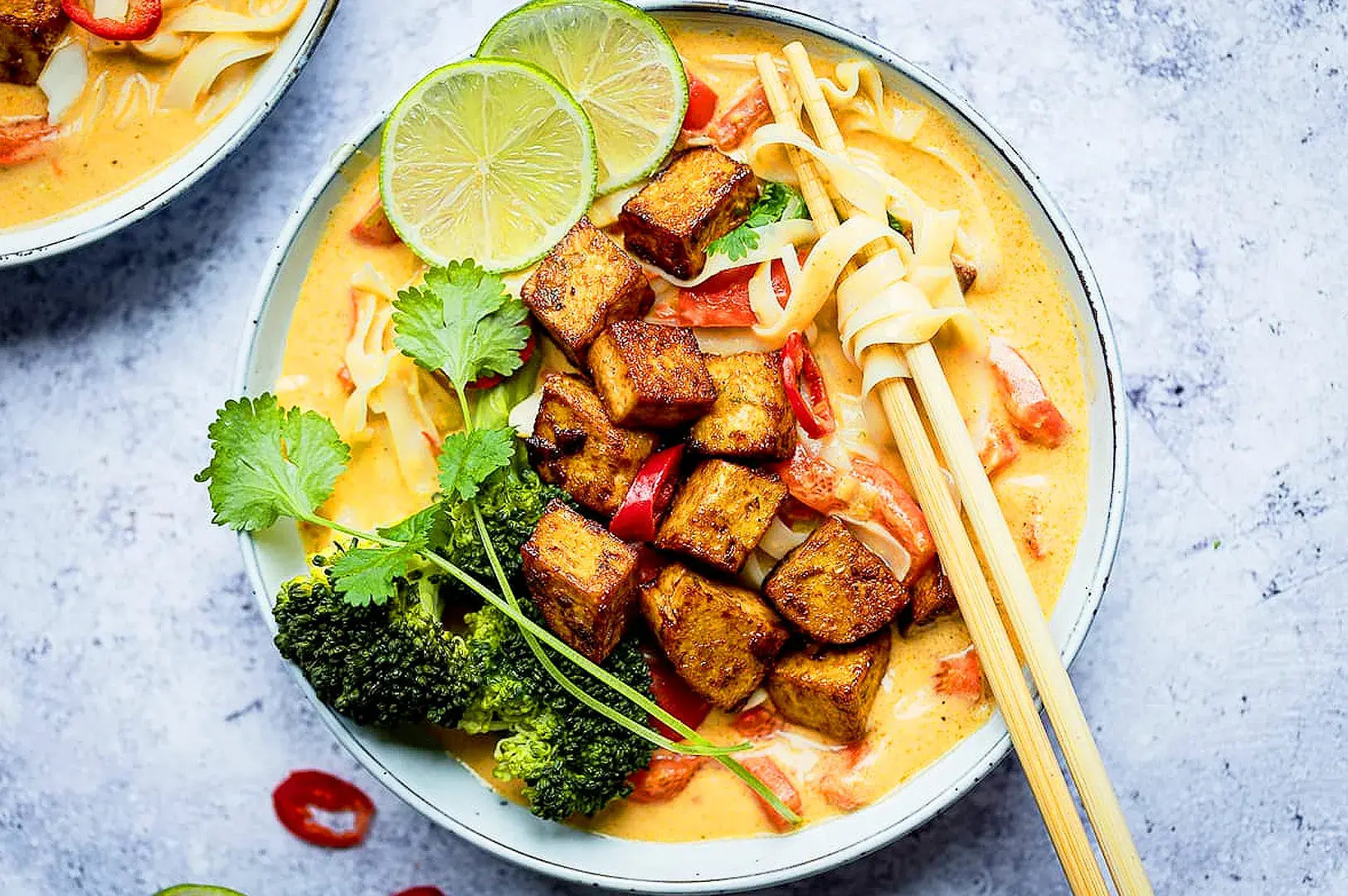
This is a vegetarian curry laksa, a creamy, coconut-rich laksa lemak built to cradle noodles and fresh vegetables. Unlike the tangy, sour asam laksa, which leans heavily on fish-based broths, this version embraces a plant based identity without sacrificing the soul of the dish.
I want to be honest: this won’t replicate the exact briny, seafood-infused Katong laksa you might be craving. There are no cockles, no fish cakes, no fish sauce to deepen the broth. Instead, it keeps the comforting logic of curry laksa alive, a fragrant laksa paste fried until aromatic, a luscious coconut broth, springy rice noodles, spongy tofu puffs, and a bright lift of herbs and lime juice. That’s the delicious soup we’re aiming for here.
You may also check an Asian vegetarian meal reviewed at Herbivore Japanese Vegetarian Restaurant, which explores vegetarian twists on Japanese cuisine, blending tradition with innovative plant-based ingredients.
The Ingredients (Serves 3–4)
For the broth:
- 4–5 tablespoons store bought laksa paste or homemade (more on this below)
- 4 tablespoons neutral oil for a gentle stir fry
- 1 litre vegetable or mushroom stock (for umami depth)
- 400ml coconut milk (add more coconut milk if you like it creamier)
- 1 tablespoon soy sauce (or vegan alternative)
- 1 teaspoon coconut sugar or brown sugar, plus more to taste
- Salt to taste
- Aromatic additions: chopped onions, minced garlic, fresh ginger, lemongrass, and kaffir lime leaves
For the bowl:
- 1 packet Unicurd tofu puffs, halved to soak up the broth
- A handful of mushrooms (shiitake or oyster)
- Fresh greens like broccoli or bok choy
- 2 large handfuls bean sprouts
- Thick bee hoon or rice vermicelli (cooked noodles prepared separately)
To finish:
- Torn laksa leaf (or substitute with Vietnamese coriander or mint)
- Crispy fried shallots
- Halved calamansi or lime for a squeeze of fresh acidity
- Sambal or dipping sauce on the side for those who crave heat
Eatdrinkers Tip: Many curry pastes labeled vegetarian sneak in dried shrimp or fish extract. Always check the label carefully or visit specialty vegetarian stores for assured plant based options.
The Method, Step by Step: Building a Delicious Laksa Soup
Step 1 — Fry the Laksa Paste Like You Mean It
Heat oil in a pot over medium heat. Add the laksa paste and stir fry patiently.
Watch for these signs:
- The paste darkens to a deep orange
- The sharp raw aroma mellows into a rich, rounded fragrance
- Oil begins to bead around the edges, signaling the spices have bloomed
This step takes 5 to 10 minutes depending on moisture content. It’s the foundation of your broth’s depth, so don’t rush.
Eatdrinkers Tip: Use enough oil to prevent scorching. The fat is essential to coax out the complex flavors of other spices in the paste.
Step 2 — Add Stock and Aromatics
Pour in your vegetable or mushroom stock along with chopped onions, minced garlic, sliced ginger, bruised lemongrass, and kaffir lime leaves.
Simmer gently for 5 to 10 minutes, letting the broth soak up the fragrant layers. This step builds the savory backbone that replaces seafood depth.
Step 3 — Gently Incorporate Coconut Milk
Lower the heat and stir in the coconut milk slowly. Maintain a soft simmer, never a boil, to prevent the broth from splitting into oily curds.
Taste and adjust seasoning with soy sauce, coconut sugar, and salt. A squeeze of lime juice at the end brightens the rich, creamy base.
Step 4 — Simmer Tofu Puffs and Vegetables
Halve the tofu puffs so they absorb the broth fully. Add them along with mushrooms and greens like broccoli.
Simmer 5 to 8 minutes, pressing gently with a ladle to help the broth seep in, while keeping the vegetables crisp-tender.
Step 5 — Prepare the Noodles Separately
Cook your rice noodles or ramen in boiling water according to package instructions. Drain and toss with a little oil to prevent sticking.
Never cook the noodles directly in the laksa broth, they will soak up all the liquid and leave you with a dry, thin soup.
Step 6 — Assemble and Garnish
Layer the bowl with noodles first, then bean sprouts, tofu puffs, and greens.
Ladle the hot, fragrant laksa soup over the top.
Sprinkle torn laksa leaves and fried shallots. Serve immediately with lime wedges and your favorite dipping sauce or sambal.
A 45-Minute Workflow for Weeknight Laksa
| Time | Task |
|---|---|
| 0:00 | Prep tofu puffs, vegetables, and noodles |
| 0:10 | Measure or blend your smooth paste |
| 0:15 | Fry the laksa paste until aromatic and darkened |
| 0:25 | Add stock and aromatics, simmer |
| 0:30 | Stir in coconut milk gently; add tofu and veggies |
| 0:35 | Cook noodles separately |
| 0:42 | Taste, adjust seasoning, assemble bowls |
| 0:45 | Garnish and serve |
Using store bought laksa paste and pre-cut veggies, you can have this delicious soup ready in under 30 minutes.
For those interested in exquisite dining experiences, be sure to check out our article on the best omakase Singapore: https://eatdrinkasia.com/best-omakase-singapore/
Avoid These Laksa Blunders
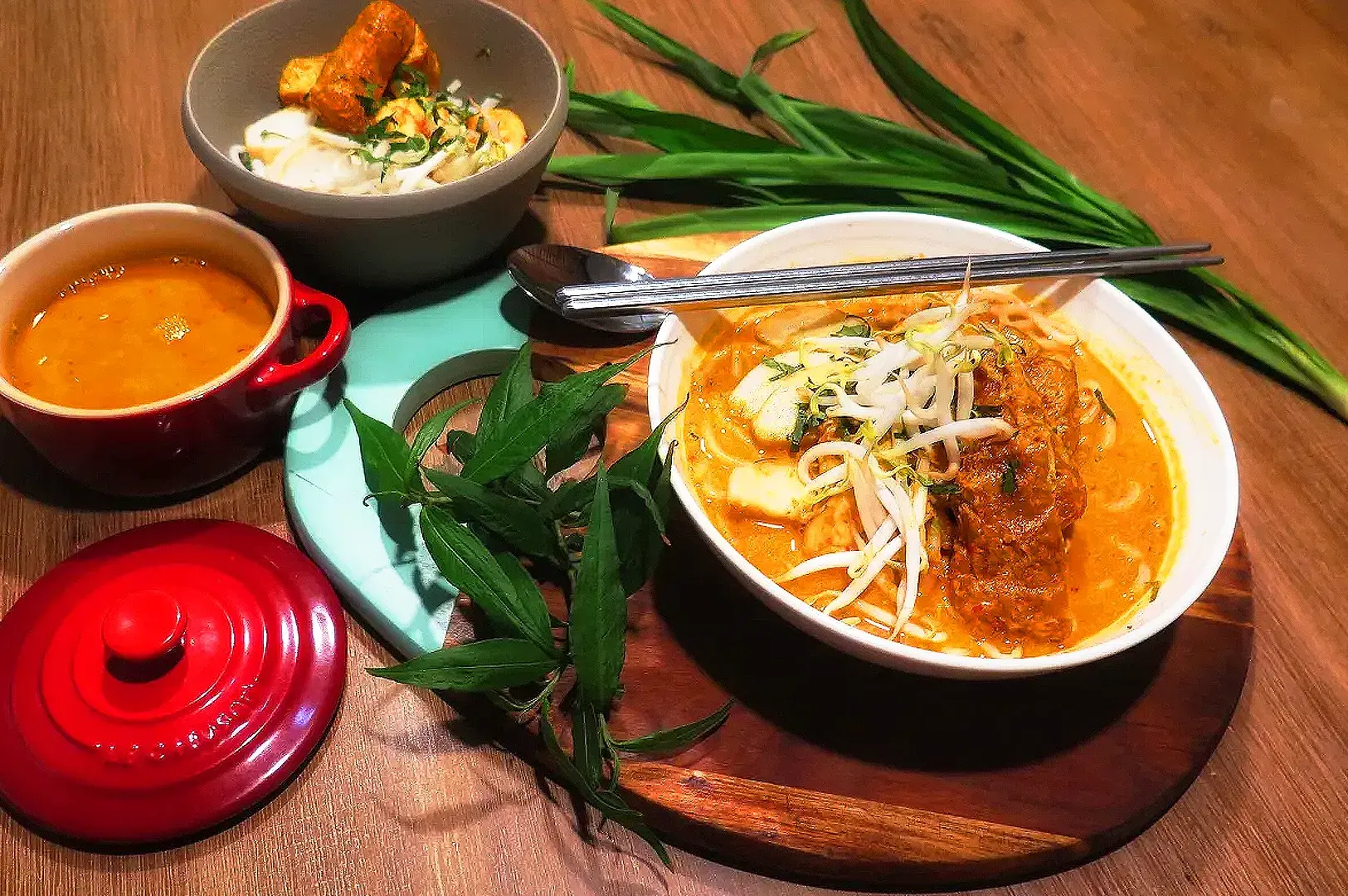
These are the ones I've made myself, or watched friends make.
Flat broth that tastes like vegetable soup. The paste wasn't fried long enough. For the pot in front of you, stir in a little soy sauce, mushroom stock, or a teaspoon of white miso. Next time, fry the rempah longer.
Split coconut milk. Heat was too high. Lower it, stir, and finish with lime. The texture suffers but the flavour survives.
Soggy noodles. They sat in the broth. Blanch separately and only assemble what you'll eat right away. Store leftovers in separate containers.
Bland tofu puffs. Added too late, or left whole. Cut them, simmer them at least 5 minutes, press them into the soup.
Too spicy for the family. Add more coconut milk and stock, serve extra noodles to dilute. Brighten with lime rather than fighting heat with more chilli.
Eatdrinkers tip: If the broth ever tastes "vegetarian in a bad way," the fix is almost always umami, not more chilli. Soy sauce, miso, shiitake water, fried shallots. Build the savoury, not the spice.
FAQ: Honest Answers to Common Laksa Questions
- Can it really taste rich without seafood?
Yes, but only if you build the broth intentionally with fried rempah, coconut milk, mushrooms, and tofu puffs soaking up the flavors. - Do I need homemade paste?
No. Store-bought laksa paste works well for quick meals. Homemade lets you tailor the spice blend and control ingredients, but it’s a weekend project, not a weeknight must. - What about low carb options?
Swap out rice noodles for spiralized zucchini or shirataki noodles to keep it low carb while still enjoying the creamy broth. - Can I freeze leftovers?
The broth freezes beautifully. Keep cooked noodles and fresh toppings separate and add them fresh when reheating.
This recipe is a testament to how plant based recipes can capture the soul of traditional dishes without compromise. The balance of fragrant curry paste, creamy coconut, and fresh herbs creates a hot soup that comforts and satisfies every craving.
One Last Thing
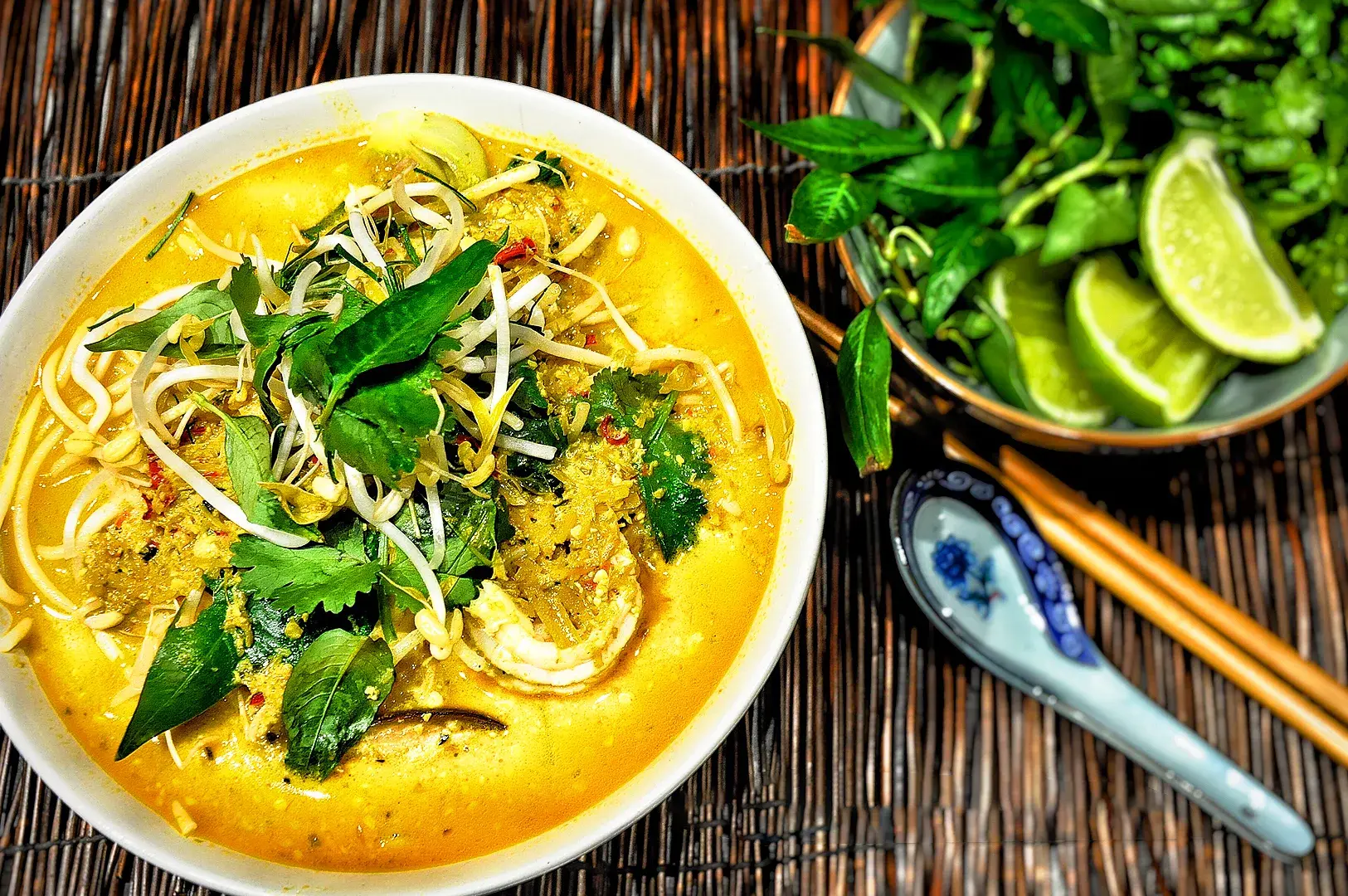
The version that finally tasted right wasn't the one with the fanciest ingredients. It was the one where I stood over the pot and fried the paste until it smelled cooked, then let the coconut milk in gently, off the boil.
That's the whole secret, really. A vegetarian laksa doesn't win by pretending the seafood was never there. It wins by building depth somewhere else, patiently, from the bottom of the pot up.
So don't be discouraged if your first bowl tastes a little hollow. Mine did. Fry the rempah longer next time. Taste as you go. The bowl that stays with you is closer than you think.

The Clay Pot Rice Crust That Hong Kong Cooks Wait For
Eda Wong | May 29, 2026
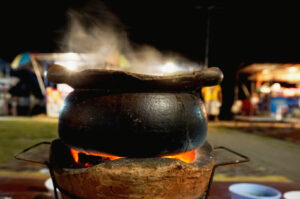
The December wind cuts sharply through the narrow alleys of Temple Street, but the ambient heat from the glowing charcoal stoves pushes the chill away. A cook stands before a long row of blackened clay pots, working with a rhythmic, almost meditative focus. Plumes of white steam rise into the night air, carrying the heavy,…
-
The Velvet Logic Behind a Chinese Eggplant Recipe: When ‘Eggplant Recipes Asian’ Means Silk
Eda Wong | May 28, 2026
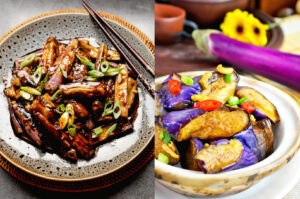
I vividly remember standing over my stove a few years ago, staring into a wok full of what can only be described as a greasy, grey disaster. When I first tried this dish at home, I assumed that tossing chopped eggplant into a hot pan with a generous glug of cooking oil would naturally yield…
-
Cambodia’s Prahok Pots and the Ferment Beneath the Meal
Dio Asahi | May 27, 2026
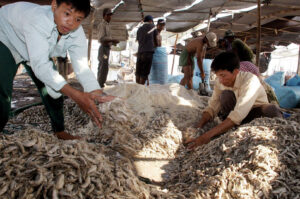
The afternoon heat in the outskirts of Phnom Penh settles like a thick blanket over the wooden stilt houses. Underneath the corrugated tin roof of an open-air kitchen, the air carries a heavy, sharp scent that instantly commands attention, a deeply pungent, earthen aroma of crushed fish and salt. An elderly woman sits on a…
-
Heat Has a Shape: Reading the Samyang Spicy Level Like a Flavour Map, Not a Dare
Eat Drink Asia Team | May 26, 2026
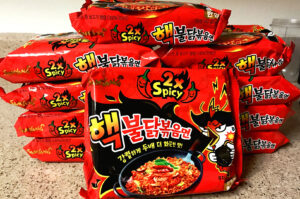
When we first tried the notorious Samyang 2x Spicy Buldak noodles, we treated it exactly how the internet told us to: like a dare. We boiled the noodles, poured in every last drop of the blood-red sauce, and braced ourselves. Within three bites, our palates were completely blown out. We could not taste the savoury…
-
313 Somerset Food Crawl: Spots That Turn ‘Quick Shopping Lunch’ Into a Full Day Plan
Eda Wong | May 23, 2026
Over the past three months, I have spent countless weekends navigating the energetic crowds of Orchard Road, determined to map out the ultimate dining itinerary. I must have visited over twenty different eateries in the area, hunting for those brilliant culinary experiences that elevate a standard shopping trip into a true celebration of flavours. Finding…
-
Benguet’s Pinikpikan and the Ethics of Mountain Broth
Eda Wong | May 22, 2026
The mist in Benguet settles low over the pine-studded ridges, carrying the sharp, woody scent of a wood fire. In a quiet backyard in La Trinidad, a small gathering watches as a live chicken is prepared for the pot. The rhythm of a short, thick stick striking the bird’s wings and neck echoes softly, a…
-
The Quiet Trick Behind Loud Noodles: A Samyang Instant Noodle Recipe Built on Emulsion
Eda Wong | May 21, 2026
When I first tried making Samyang Buldak noodles at home, I expected the fiery heat but was surprised by the watery, separated red oil at the bottom of my bowl. I had boiled the noodles, drained them, and dumped the flavor packets on top, ending with a dry, clumpy mess that burned my throat without…
-
Taiwan’s Iron Egg and the Patience of Soy-Braised Time
Dio Asahi | May 20, 2026
The wind coming off the Tamsui River carries a sharp, saline chill, but the narrow lanes bordering the waterfront offer a different atmosphere entirely. Here, the air is thick with the heavy, sweet-savoury aroma of star anise, cassia bark, and boiling soy sauce. Behind a modest storefront, dark liquid bubbles in massive, dented metal vats….

Not Just ‘Fresh Fish’: The Best Omakase Singapore Has for Storytelling Courses & Seasonal Bites
Eat Drink Asia Team | May 19, 2026
May 19, 2026 | Eat Drink Asia Team | Last Updated September 7, 2026 When you sit at an omakase counter, you’re paying for a culinary journey. A memorable omakase is more than fresh fish; it’s a delicate celebration of flavors. The best chefs act as storytellers, sequencing each bite to build anticipation and contrast, guiding…
-
Indonesian Traditional Food at Warong Nasi Pariaman: A Plate That Doesn’t Explain Itself—It Proves It
Dio Asahi | May 16, 2026
It’s always a little heartbreaking when a true culinary landmark decides to close its doors. Warong Nasi Pariaman, the iconic nasi padang spot at 738 North Bridge Road, served its final plates in January 2026. For decades, it stood as a testament to heritage, feeding generations of Singaporeans and becoming an essential part of the…