For a long time, many viewed Chinese food as one giant, delicious monolith, characterized by intense heat, heavy sauces, and wok-tossed brilliance. However, as more time is spent exploring Singapore’s incredible dining scene, it becomes clear that true culinary mastery often whispers rather than shouts.
To demonstrate this to visitors, a table at Imperial Treasure Cantonese Cuisine was booked to experience a proper culinary journey, breaking down the different regional techniques and philosophies that make up this vast cuisine. At Imperial Treasure, every dish points back to the same idea: Cantonese cuisine isn’t about bold flavours, but about how well restraint is handled.
A visit during lunch service in 2026 imperial treasure allowed for tasting their famous dim sum menu alongside heavier mains. Through carefully planned orders, the defining pillars of Cantonese cooking were mapped out. This review explores the Chinese food hiding in plain sight and how this renowned kitchen executes them.
Entering Imperial Treasure: Premier Chinese Restaurant
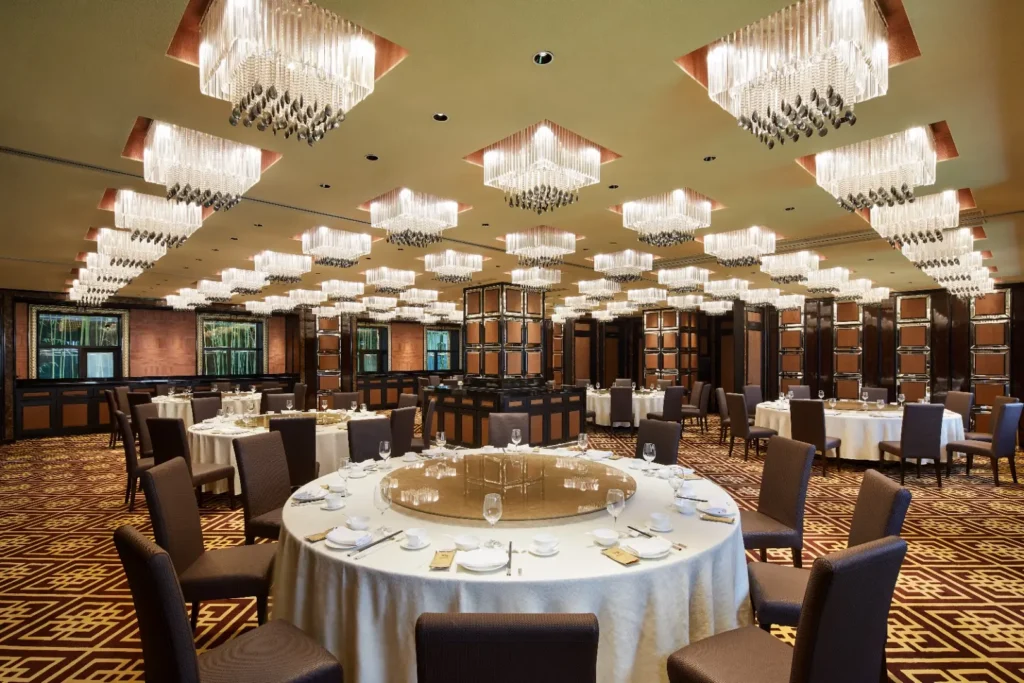
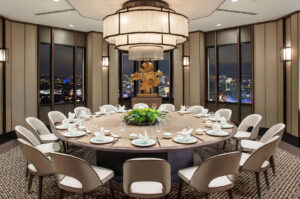
At Imperial Treasure, particularly at one of the selected Imperial Treasure outlets in Great World, the transition from mall to chinese restaurant is immediate and intentional. The noise of the mall fades, replaced by a calm, controlled environment that reflects fine Chinese dining standards in Singapore.
White tablecloths, plush carpeting, and measured lighting create a space designed for focus. I remember noticing how even the smallest sounds, porcelain against porcelain, felt softened. It signals that this is a place built not just to eat, but to dine with attention.
The air conditioning runs strong, almost deliberately, sharpening the appetite and keeping dishes at ideal temperature. If you can, request a corner table. It offers a full view of the room while maintaining distance from the service flow, a small but meaningful advantage.
Dim Sum as Precision Craft in Chinese Cuisine
The first category to understand here is dim sum, often misunderstood as casual food, but in reality, one of the most technical forms of chinese cuisine.
When the bamboo baskets arrived, steam rose clean and fragrant. Then came the details:
- Har Gow (Steamed Prawn Dumplings)
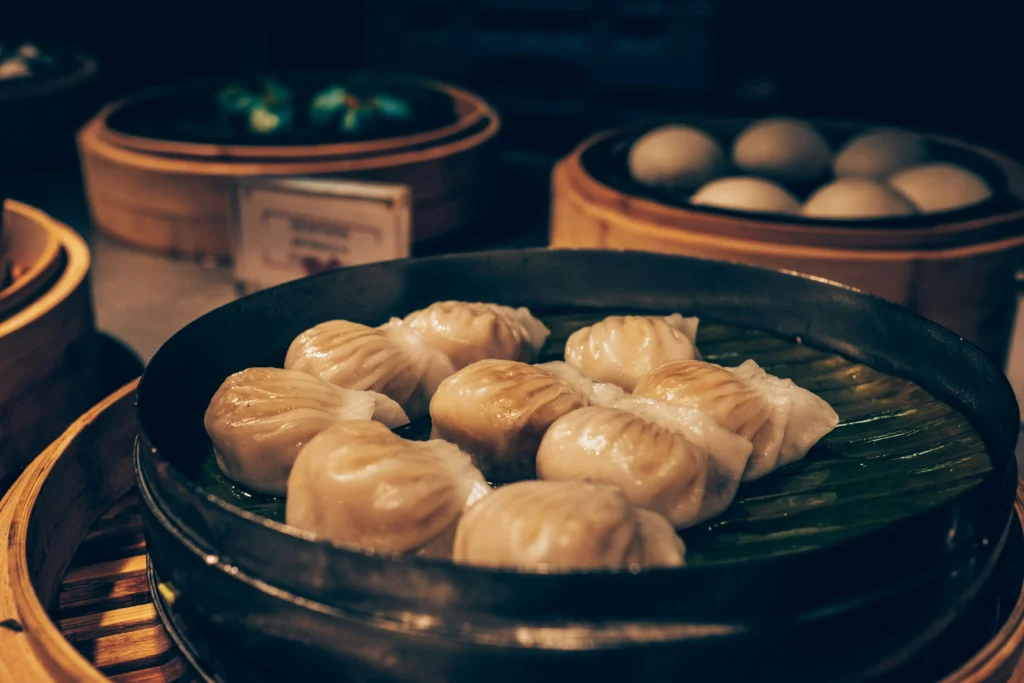
The wrapper was translucent, revealing the prawn inside. It held its structure perfectly, delivering a delicate elasticity before giving way to a firm prawn bite. - Siew Mai (Pork and Prawn Dumplings)
Dense, well-seasoned, and balanced, no excess oil, no heaviness.
What stands out is not just taste, but control. These dishes reflect years of repetition, part of the daily discipline required in top-tier Cantonese kitchens. Many members and regulars return precisely for this consistency.
The Roast Tradition: The Signature Super Peking Duck
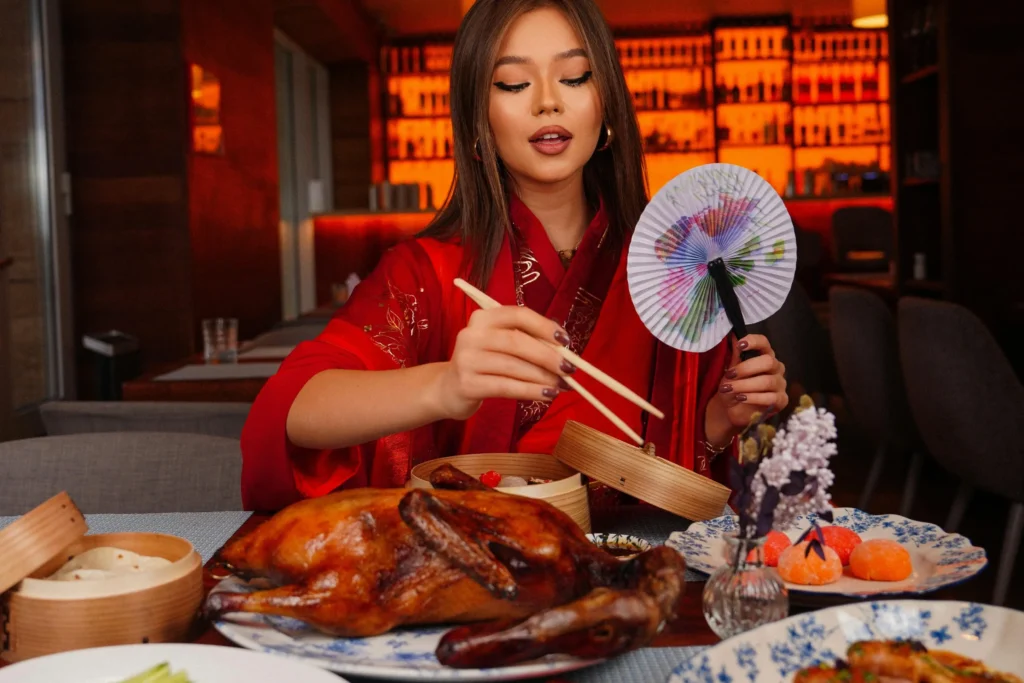
The centerpiece of the meal, and arguably one of the most iconic dishes across types of Chinese food, is the Super Peking Duck.
The experience begins before the first bite. The trolley arrives, followed by the aroma: rendered fat, faint smoke, and sweet glaze. Then comes the carving, swift, precise, almost theatrical.
The super peking skin is the highlight:
- ultra-thin
- crisp to the point of shattering
- rich but not greasy
Wrapped in pancakes with hoisin sauce, cucumber, and spring onion, the balance becomes clear. Fat meets freshness. Crisp meets soft.
This dish alone explains why 2026 Imperial Treasure continues to be recognized among the leaders in fine Chinese dining in Singapore.
Slow-Cooked Heritage: Soup and Preserved Black Olives
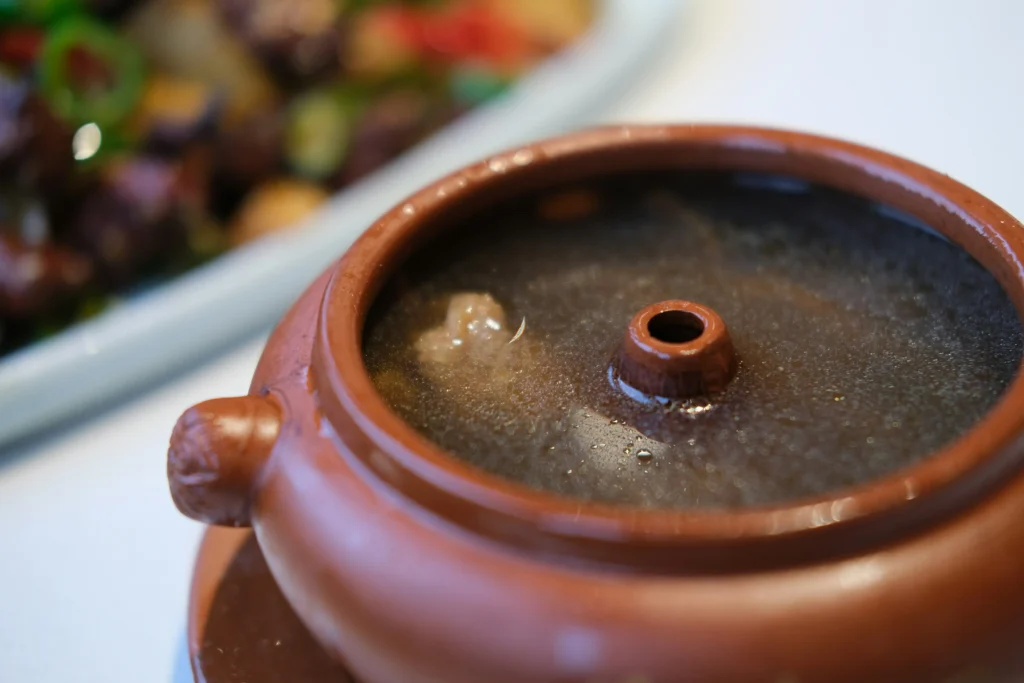
If roast meats represent mastery of heat, soup represents mastery of time.
The Double-Boiled Chicken Soup with Fish Maw arrives clear and understated. But one sip reveals depth built over hours of controlled simmering.
The broth is:
- clean, without oil
- concentrated in flavor
- quietly complex
The fish maw absorbs the broth, adding a soft, layered texture. The inclusion of preserved black olives introduces a subtle salinity that deepens the overall profile without overpowering it.
I remember pausing after the first sip, it felt less like eating and more like resetting the palate. This is the philosophy behind Cantonese soup: nourishment before indulgence.
Understanding Types of Chinese Food Through the Menu
Dining at Imperial Treasure is not just about individual dishes, it’s about understanding the types of Chinese food through structure.
From the meal, several core categories emerge:
1. Dim Sum (Technique and Precision)
- Examples: Har Gow, Siew Mai
- Focus: texture, balance, craftsmanship
- Role: opening the meal with refined small bites
2. Roast Meats (Heat and Fat Control)
- Example: Super Peking Duck
- Focus: crisp skin, rendering technique
- Role: centerpiece of the meal
3. Double-Boiled Soups (Time-Based Cooking)
- Example: Chicken Soup with Fish Maw
- Focus: clarity, depth, nourishment
- Role: grounding the meal
4. Banquet-Style Dishes (Implied in Menu)
- Includes seafood, braised dishes
- Focus: sharing, variety
- Role: completing the dining experience
This layered approach explains why Cantonese meals feel balanced. You are not just ordering randomly, you are assembling a system.
Service Experience at a Fine Chinese Restaurant
Service at Imperial Treasure reflects its positioning as a premium chinese restaurant.
Staff are:
- well-trained
- knowledgeable about the menu
- attentive to tea service
Tea refills are consistent, a non-negotiable in Cantonese dining culture. However, during peak hours, pacing can slow.
I remember waiting longer than expected between courses during lunch rush. It wasn’t disruptive, but noticeable, a reminder that even highly regarded selected Imperial Treasure outlets must manage volume.
Practical Dining Strategy in Singapore
To fully appreciate this experience in Singapore, planning matters.
Best Approach
- Visit during weekday lunch
- Arrive before noon or after 2pm
- Come with a group to explore multiple categories
Considerations
- Reservations are recommended
- Prices reflect premium ingredients and technique
- Portions are designed for sharing, not individual meals
The restaurant rewards those who approach it with intention.
Beyond Cantonese: The Vast Array of Chinese Cuisine
While Imperial Treasure focuses on Cantonese cooking, it represents only one part of the vast array of chinese cuisine.
Across China, different regions emphasize different principles:
- Sichuan: bold spice, mala heat
- Jiangsu: delicate sweetness and presentation
- Northern regions: wheat-based dishes, dumplings
Cantonese cuisine, by contrast, prioritizes:
- ingredient freshness
- balance
- restraint
For those interested in exploring further, many platforms and even official videos from restaurants and culinary groups showcase how authentic Chinese cuisine differ. Understanding these distinctions transforms how you experience Chinese food.
The End of the Culinary Journey with Imperial Treasure
Imperial Treasure Cantonese Cuisine is a phenomenal destination for those wishing to understand classic cuisine types. It shatters the illusion that all Chinese food is heavy, greasy, or overly spiced. Instead, it offers a masterclass in subtlety, showcasing fresh ingredients and refined techniques.
This restaurant suits important business meals, celebratory family gatherings, and urban food enthusiasts who value consistency over flashy trends. It offers a reliable, high-quality environment where customers know what to expect every time.
For those seeking an educational, delicious meal highlighting the restraint and elegance of Cantonese cooking, Imperial Treasure is an outstanding choice. Taking time to order across different culinary categories reveals the subtle, brilliant nuances hidden in plain sight.
In complementing their culinary experience with traditional beverages, Tea Room by Ki-setsu offers a curated journey through Chinese tea in the heart of Singapore, providing a perfect transition from exquisite dining to refined tea appreciation.

The Stir Fried Egg Plant That Taught Me Restraint at Si Chuan Dou Hua Restaurant
Eat Drink Asia Team | June 2, 2026
I’ve always had a love-hate relationship with Sichuan food. Usually, you walk into a spot, order your food, and spend the rest of the night sweating through your shirt, chugging ice water, and wondering why you did this to yourself. But when I visited Si Chuan Dou Hua Restaurant on a Tuesday around 7 pm,…
-
What the Wok Is Really Doing to the Vegetable: The Question Behind Every ‘Brinjal Recipe Chinese Style’
Dio Asahi | May 30, 2026
When I first tried cooking brinjal at home, I was completely convinced that all I needed was a hot pan, some oil, and a good recipe. I chopped the vibrant purple vegetable, threw it into a standard frying pan with a generous pour of oil, and waited for the magic to happen. Instead of the…
-
The Clay Pot Rice Crust That Hong Kong Cooks Wait For
Eda Wong | May 29, 2026
The December wind cuts sharply through the narrow alleys of Temple Street, but the ambient heat from the glowing charcoal stoves pushes the chill away. A cook stands before a long row of blackened clay pots, working with a rhythmic, almost meditative focus. Plumes of white steam rise into the night air, carrying the heavy,…
-
The Velvet Logic Behind a Chinese Eggplant Recipe: When ‘Eggplant Recipes Asian’ Means Silk
Eda Wong | May 28, 2026
I vividly remember standing over my stove a few years ago, staring into a wok full of what can only be described as a greasy, grey disaster. When I first tried this dish at home, I assumed that tossing chopped eggplant into a hot pan with a generous glug of cooking oil would naturally yield…
-
Cambodia’s Prahok Pots and the Ferment Beneath the Meal
Dio Asahi | May 27, 2026
The afternoon heat in the outskirts of Phnom Penh settles like a thick blanket over the wooden stilt houses. Underneath the corrugated tin roof of an open-air kitchen, the air carries a heavy, sharp scent that instantly commands attention, a deeply pungent, earthen aroma of crushed fish and salt. An elderly woman sits on a…
-
Heat Has a Shape: Reading the Samyang Spicy Level Like a Flavour Map, Not a Dare
Eat Drink Asia Team | May 26, 2026
When we first tried the notorious Samyang 2x Spicy Buldak noodles, we treated it exactly how the internet told us to: like a dare. We boiled the noodles, poured in every last drop of the blood-red sauce, and braced ourselves. Within three bites, our palates were completely blown out. We could not taste the savoury…
-
313 Somerset Food Crawl: Spots That Turn ‘Quick Shopping Lunch’ Into a Full Day Plan
Eda Wong | May 23, 2026
Over the past three months, I have spent countless weekends navigating the energetic crowds of Orchard Road, determined to map out the ultimate dining itinerary. I must have visited over twenty different eateries in the area, hunting for those brilliant culinary experiences that elevate a standard shopping trip into a true celebration of flavours. Finding…
-
Benguet’s Pinikpikan and the Ethics of Mountain Broth
Eda Wong | May 22, 2026
The mist in Benguet settles low over the pine-studded ridges, carrying the sharp, woody scent of a wood fire. In a quiet backyard in La Trinidad, a small gathering watches as a live chicken is prepared for the pot. The rhythm of a short, thick stick striking the bird’s wings and neck echoes softly, a…
-
The Quiet Trick Behind Loud Noodles: A Samyang Instant Noodle Recipe Built on Emulsion
Eda Wong | May 21, 2026
When I first tried making Samyang Buldak noodles at home, I expected the fiery heat but was surprised by the watery, separated red oil at the bottom of my bowl. I had boiled the noodles, drained them, and dumped the flavor packets on top, ending with a dry, clumpy mess that burned my throat without…
-
Taiwan’s Iron Egg and the Patience of Soy-Braised Time
Dio Asahi | May 20, 2026
The wind coming off the Tamsui River carries a sharp, saline chill, but the narrow lanes bordering the waterfront offer a different atmosphere entirely. Here, the air is thick with the heavy, sweet-savoury aroma of star anise, cassia bark, and boiling soy sauce. Behind a modest storefront, dark liquid bubbles in massive, dented metal vats….