For a long time, many viewed Chinese food as one giant, delicious monolith, characterized by intense heat, heavy sauces, and wok-tossed brilliance. However, as more time is spent exploring Singapore’s incredible dining scene, it becomes clear that true culinary mastery often whispers rather than shouts.
To demonstrate this to visitors, a table at Imperial Treasure Cantonese Cuisine was booked to experience a proper culinary journey, breaking down the different regional techniques and philosophies that make up this vast cuisine. At Imperial Treasure, every dish points back to the same idea: Cantonese cuisine isn’t about bold flavours, but about how well restraint is handled.
A visit during lunch service in 2026 imperial treasure allowed for tasting their famous dim sum menu alongside heavier mains. Through carefully planned orders, the defining pillars of Cantonese cooking were mapped out. This review explores the Chinese food hiding in plain sight and how this renowned kitchen executes them.
Entering Imperial Treasure: Premier Chinese Restaurant
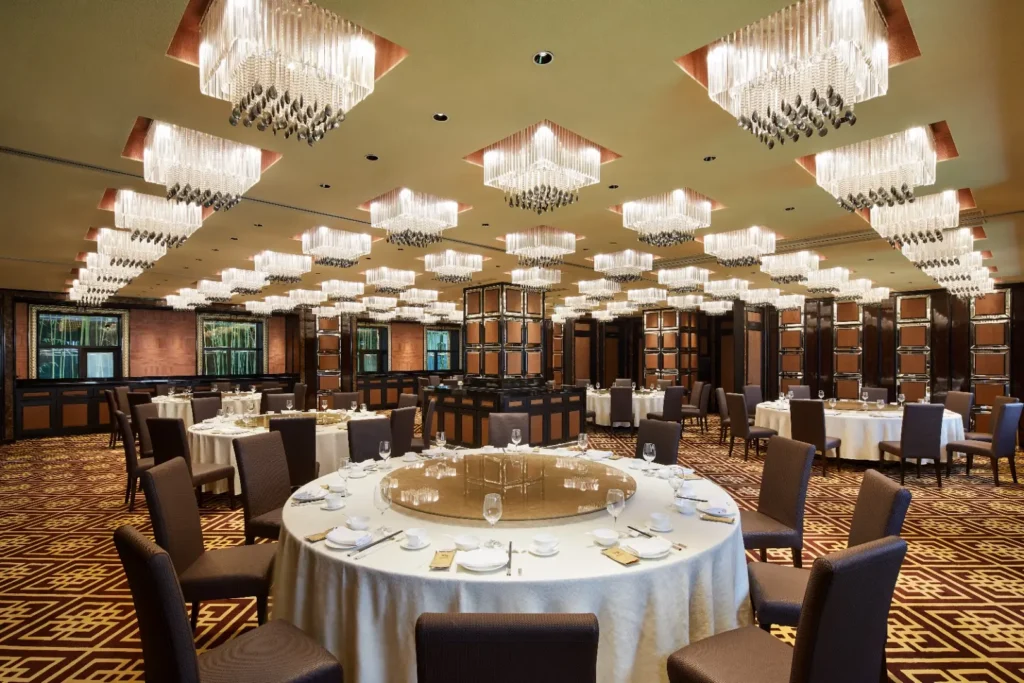
At Imperial Treasure, particularly at one of the selected Imperial Treasure outlets in Great World, the transition from mall to chinese restaurant is immediate and intentional. The noise of the mall fades, replaced by a calm, controlled environment that reflects fine Chinese dining standards in Singapore.
White tablecloths, plush carpeting, and measured lighting create a space designed for focus. I remember noticing how even the smallest sounds, porcelain against porcelain, felt softened. It signals that this is a place built not just to eat, but to dine with attention.
The air conditioning runs strong, almost deliberately, sharpening the appetite and keeping dishes at ideal temperature. If you can, request a corner table. It offers a full view of the room while maintaining distance from the service flow, a small but meaningful advantage.
Dim Sum as Precision Craft in Chinese Cuisine
The first category to understand here is dim sum, often misunderstood as casual food, but in reality, one of the most technical forms of chinese cuisine.
When the bamboo baskets arrived, steam rose clean and fragrant. Then came the details:
- Har Gow (Steamed Prawn Dumplings)
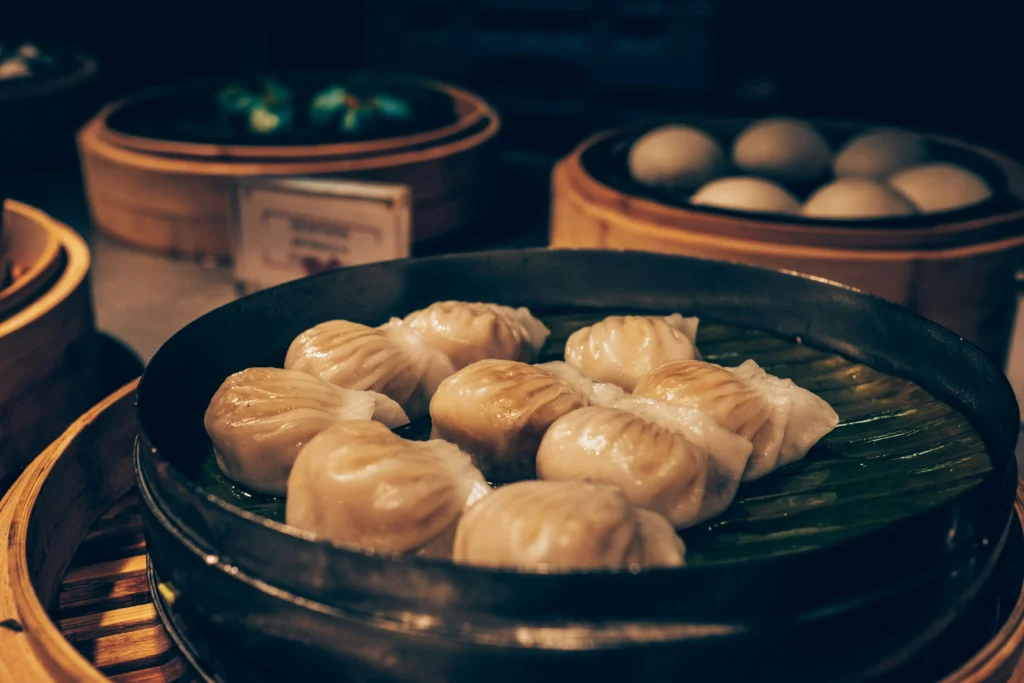
The wrapper was translucent, revealing the prawn inside. It held its structure perfectly, delivering a delicate elasticity before giving way to a firm prawn bite. - Siew Mai (Pork and Prawn Dumplings)
Dense, well-seasoned, and balanced, no excess oil, no heaviness.
What stands out is not just taste, but control. These dishes reflect years of repetition, part of the daily discipline required in top-tier Cantonese kitchens. Many members and regulars return precisely for this consistency.
The Roast Tradition: The Signature Super Peking Duck
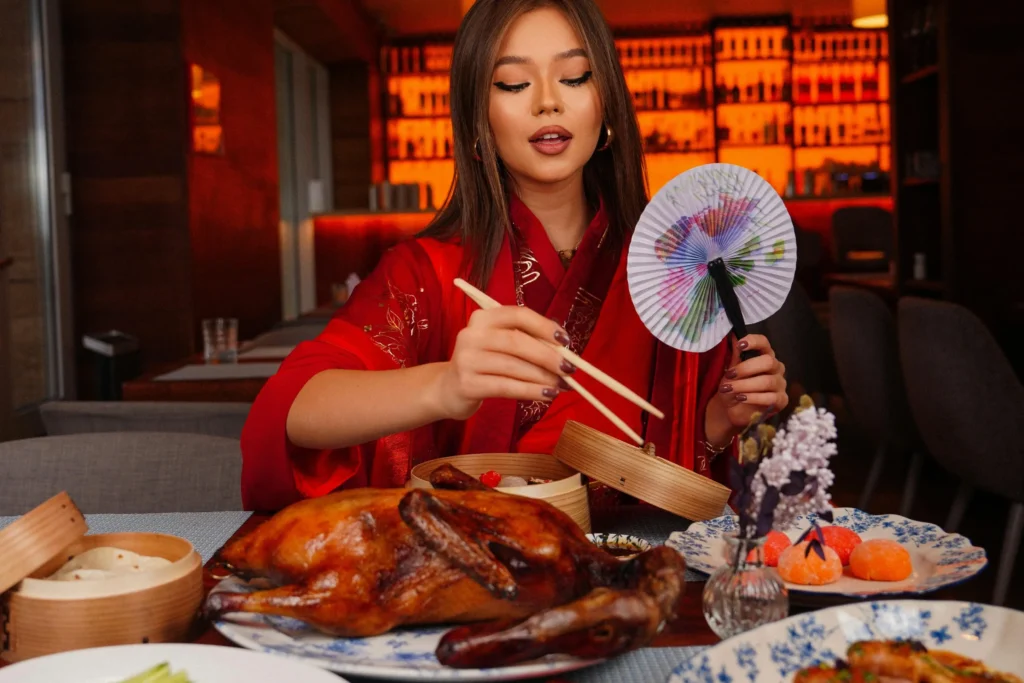
The centerpiece of the meal, and arguably one of the most iconic dishes across types of Chinese food, is the Super Peking Duck.
The experience begins before the first bite. The trolley arrives, followed by the aroma: rendered fat, faint smoke, and sweet glaze. Then comes the carving, swift, precise, almost theatrical.
The super peking skin is the highlight:
- ultra-thin
- crisp to the point of shattering
- rich but not greasy
Wrapped in pancakes with hoisin sauce, cucumber, and spring onion, the balance becomes clear. Fat meets freshness. Crisp meets soft.
This dish alone explains why 2026 Imperial Treasure continues to be recognized among the leaders in fine Chinese dining in Singapore.
Slow-Cooked Heritage: Soup and Preserved Black Olives
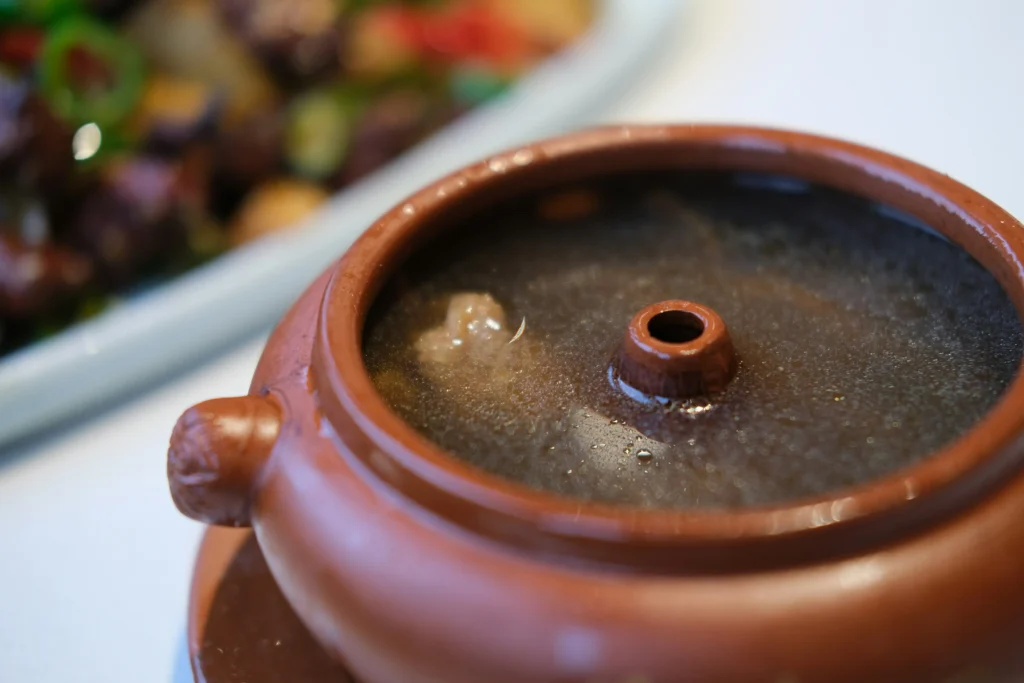
If roast meats represent mastery of heat, soup represents mastery of time.
The Double-Boiled Chicken Soup with Fish Maw arrives clear and understated. But one sip reveals depth built over hours of controlled simmering.
The broth is:
- clean, without oil
- concentrated in flavor
- quietly complex
The fish maw absorbs the broth, adding a soft, layered texture. The inclusion of preserved black olives introduces a subtle salinity that deepens the overall profile without overpowering it.
I remember pausing after the first sip, it felt less like eating and more like resetting the palate. This is the philosophy behind Cantonese soup: nourishment before indulgence.
Understanding Types of Chinese Food Through the Menu
Dining at Imperial Treasure is not just about individual dishes, it’s about understanding the types of Chinese food through structure.
From the meal, several core categories emerge:
1. Dim Sum (Technique and Precision)
- Examples: Har Gow, Siew Mai
- Focus: texture, balance, craftsmanship
- Role: opening the meal with refined small bites
2. Roast Meats (Heat and Fat Control)
- Example: Super Peking Duck
- Focus: crisp skin, rendering technique
- Role: centerpiece of the meal
3. Double-Boiled Soups (Time-Based Cooking)
- Example: Chicken Soup with Fish Maw
- Focus: clarity, depth, nourishment
- Role: grounding the meal
4. Banquet-Style Dishes (Implied in Menu)
- Includes seafood, braised dishes
- Focus: sharing, variety
- Role: completing the dining experience
This layered approach explains why Cantonese meals feel balanced. You are not just ordering randomly, you are assembling a system.
Service Experience at a Fine Chinese Restaurant
Service at Imperial Treasure reflects its positioning as a premium chinese restaurant.
Staff are:
- well-trained
- knowledgeable about the menu
- attentive to tea service
Tea refills are consistent, a non-negotiable in Cantonese dining culture. However, during peak hours, pacing can slow.
I remember waiting longer than expected between courses during lunch rush. It wasn’t disruptive, but noticeable, a reminder that even highly regarded selected Imperial Treasure outlets must manage volume.
Practical Dining Strategy in Singapore
To fully appreciate this experience in Singapore, planning matters.
Best Approach
- Visit during weekday lunch
- Arrive before noon or after 2pm
- Come with a group to explore multiple categories
Considerations
- Reservations are recommended
- Prices reflect premium ingredients and technique
- Portions are designed for sharing, not individual meals
The restaurant rewards those who approach it with intention.
Beyond Cantonese: The Vast Array of Chinese Cuisine
While Imperial Treasure focuses on Cantonese cooking, it represents only one part of the vast array of chinese cuisine.
Across China, different regions emphasize different principles:
- Sichuan: bold spice, mala heat
- Jiangsu: delicate sweetness and presentation
- Northern regions: wheat-based dishes, dumplings
Cantonese cuisine, by contrast, prioritizes:
- ingredient freshness
- balance
- restraint
For those interested in exploring further, many platforms and even official videos from restaurants and culinary groups showcase how authentic Chinese cuisine differ. Understanding these distinctions transforms how you experience Chinese food.
The End of the Culinary Journey with Imperial Treasure
Imperial Treasure Cantonese Cuisine is a phenomenal destination for those wishing to understand classic cuisine types. It shatters the illusion that all Chinese food is heavy, greasy, or overly spiced. Instead, it offers a masterclass in subtlety, showcasing fresh ingredients and refined techniques.
This restaurant suits important business meals, celebratory family gatherings, and urban food enthusiasts who value consistency over flashy trends. It offers a reliable, high-quality environment where customers know what to expect every time.
For those seeking an educational, delicious meal highlighting the restraint and elegance of Cantonese cooking, Imperial Treasure is an outstanding choice. Taking time to order across different culinary categories reveals the subtle, brilliant nuances hidden in plain sight.
In complementing their culinary experience with traditional beverages, Tea Room by Ki-setsu offers a curated journey through Chinese tea in the heart of Singapore, providing a perfect transition from exquisite dining to refined tea appreciation.

In Luang Prabang, Or Lam Carries the Taste of Sakhan
Eda Wong | June 12, 2026
The damp morning mist still clings to the teakwood houses of Luang Prabang as an elderly cook tends to a glowing charcoal brazier. Sparks jump lightly into the cool air, illuminating the blackened belly of an aluminium pot. Inside, a thick, dark liquid bubbles rhythmically, releasing an incredibly aromatic cloud of charred lemongrass, sweet Thai…

The Malayan Council, Reviewed: Local Food in Malaysia, Plated Like a Memory
Eat Drink Asia Team | June 11, 2026
Our Eat Drink Asia team spends a lot of time debating what makes a truly unforgettable meal. The team has previously published articles exploring the redefinition of comfort food. That is exactly what led me to The Malayan Council at 71 Bussorah Street. I visited on a Friday around 7:30 pm, just as the weekend…
-
Sushi in Singapore: Why There Is a Style for Every Budget
Eda Wong | June 11, 2026
Few Japanese dishes have travelled as successfully across Asia as sushi. What began as a culinary tradition deeply rooted in Japan has evolved into something remarkably diverse in Singapore. Today, sushi in Singapore can mean many different things. It can be a quick lunch grabbed from a conveyor belt restaurant, a carefully curated omakase meal…
-
The Quiet Pull of Lahpet in Myanmar’s Tea Leaf Salad
Dio Asahi | June 10, 2026
The afternoon humidity presses against the open-air teahouse in downtown Yangon, where the sharp clatter of a silver spoon against ceramic cuts through the low hum of conversation. A small plate sits in the centre of a low plastic table, holding a dense, dark green cluster that smells faintly of damp earth and sharp lime….
-
Dining at Suntec: The Restaurants That Feel Like Different Cities in One Mall
Eda Wong | June 9, 2026
Over the past six months, I’ve navigated the sprawling, sometimes disorientating corridors of Suntec City more times than I can count. What started as a simple quest to find decent spots for post-meeting lunches quickly turned into a genuine culinary journey. I have tried over a dozen venues within this massive complex, and I’ve found…
-
PappaRich SG and the Comfort of Malaysian Staple Food: A Restaurant Review in Familiar Flavours
Dio Asahi | June 6, 2026
There is a very specific kind of exhaustion that hits you right before a flight or just after you land. You are dragging your suitcase, staring blankly at the departure boards, and suddenly, you realize you are starving. But you don’t want just any food. You want something warm, familiar, and deeply comforting. I felt…
-
Sri Lanka’s Ambul Thiyal and the Sourness of Goraka
Eda Wong | June 5, 2026
In the open-air kitchen of a coastal home in southern Sri Lanka, a low fire crackles under a wide, unglazed clay pot. The air is thick with the scent of roasted black pepper and something deeply, aggressively tart. A wooden spoon scrapes the bottom of the pot, turning cubes of firm yellowfin tuna until they…
-
Traditional Malaysian Foods Aren’t a Museum: They’re a Living Argument at the Table
Eda Wong | June 4, 2026
When I first really started digging into traditional Malaysian food, I made a classic rookie mistake. I was sitting at a crowded kopitiam in Kuala Lumpur, looking at a plate of nasi lemak, and I thought I understood exactly what it was supposed to be. I thought it was a fixed, rigid recipe, a museum…
-
In Gifu, Hoba Miso Warms Slowly Over Magnolia Leaves
Dio Asahi | June 3, 2026
Frost clings to the wooden window frames in the highlands of Gifu. Inside, the air is thick with the scent of woodsmoke and fermented soybeans. On the table, a small ceramic charcoal grill known as a shichirin radiates a gentle, localized heat. Resting directly above the glowing embers is a large, brittle brown leaf holding…
-
The Stir Fried Egg Plant That Taught Me Restraint at Si Chuan Dou Hua Restaurant
Eat Drink Asia Team | June 2, 2026
I’ve always had a love-hate relationship with Sichuan food. Usually, you walk into a spot, order your food, and spend the rest of the night sweating through your shirt, chugging ice water, and wondering why you did this to yourself. But when I visited Si Chuan Dou Hua Restaurant on a Tuesday around 7 pm,…