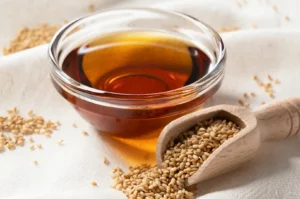
The sharp winter wind rattles the low stone walls of a Jeju Island kitchen, but inside, the air is thick with steam and the deeply marine scent of boiling kelp. An elderly woman stands by a bubbling steel pot, watching the dark green fronds swell and twist in the rolling water. She adds a splash of toasted sesame oil, and the liquid hisses, sending up a rich, nutty aroma that temporarily masks the salt air. She is not rushing. She carefully adjusts the flame, allowing the broth to simmer until it turns a milky, opaque jade. It is a slow, methodical morning rhythm, a quiet act of preparation that fills the room with warmth.
This is miyeok-guk (pronounced mee-yuhk-gook), the traditional Korean seaweed soup. At its core, the dish is an exercise in extracting profound depth from minimalist ingredients. While mainland versions often rely on a heavy beef broth, the Jeju iteration draws its power straight from the surrounding ocean, frequently incorporating fresh abalone, sea urchin, or delicate white fish. The true craft, however, lies in the preparation of the kelp itself. Before water ever touches the pot, the dried seaweed is soaked until soft, then aggressively kneaded by hand and sautéed in sesame oil and minced garlic. This crucial friction releases the seaweed’s natural starches, transforming what could be a thin, watery liquid into a velvety, substantial broth that coats the spoon.
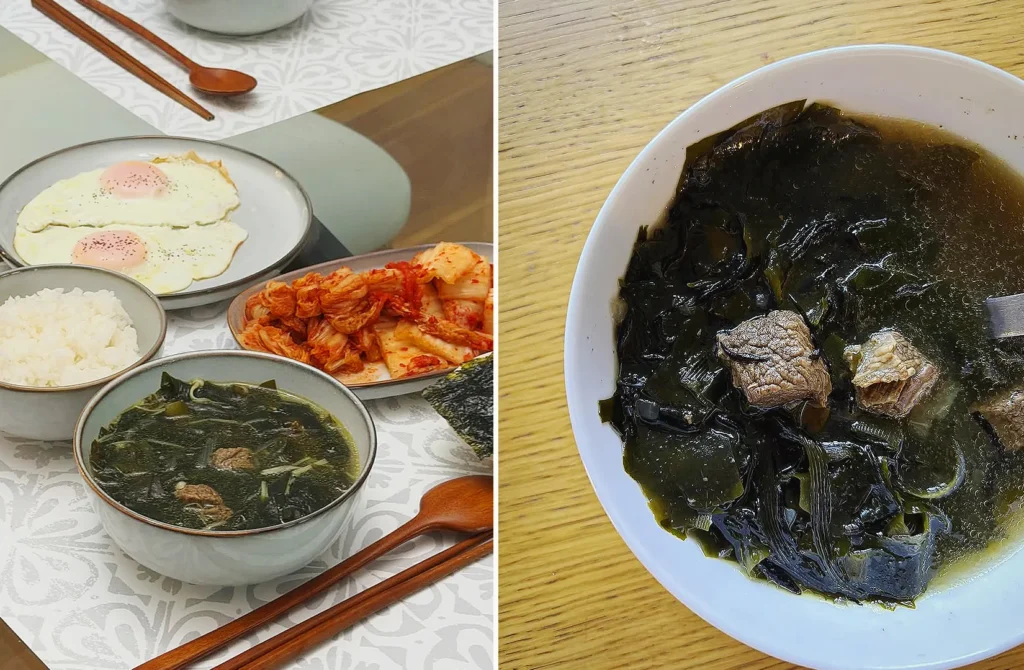
Across the Korean peninsula, this simple soup carries a massive cultural weight. In its quietly Asiatic way; ritualistic, elemental, and rooted in place, it links the body to ancestry through taste. It is the mandatory birthday breakfast, a culinary journey repeated every year to honour the exact meal a mother consumes for postpartum recovery. Waking up to a bowl of miyeok-guk signals care; it is an edible reminder of birth, sacrifice, and shared lineage. In the coastal villages of Jeju, where the female free divers known as haenyeo harvest the kelp directly from the cold currents, the soup feels even more tethered to the environment. Serving it is an act of deep familial devotion, a celebration of flavours that grounds the individual within their immediate community.
What makes this traditional preparation so compelling today is its quiet defiance of the instant food era. Supermarket shelves are currently lined with freeze-dried, microwaveable packets of seaweed soup that promise the taste of home in three minutes. Yet, those thin, uniform broths completely lack the heavy, oily emulsion that only comes from physically kneading the kelp and coaxing out its depth over a low, persistent flame. The authentic soup demands tactile interaction and patience. It reminds us that convenience cannot replicate the specific texture and emotional resonance born from deliberate human effort.
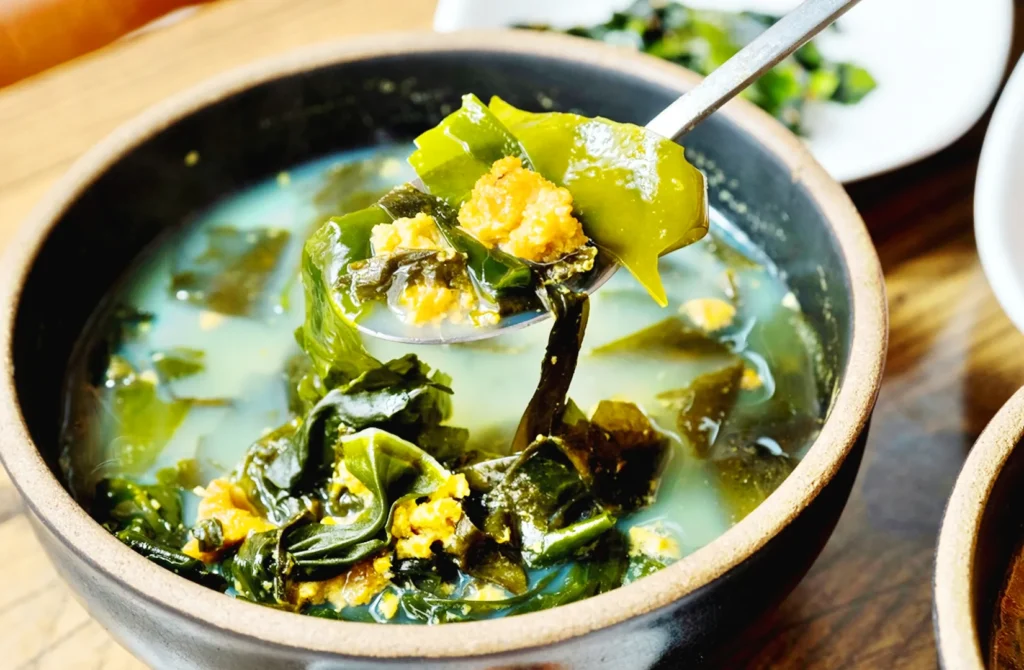
Taking a slow sip of the hot, opaque broth, the taste of the island is immediate. It is savoury, oceanic, and deeply grounding. It remains a profound reminder that our most meaningful food rituals are often the simplest ones, woven quietly into the fabric of our everyday lives.

Sesame Oil at the End: Finishing, Not Flavoring
Eda Wong | July 24, 2026
The wok is already off the heat. The greens sit glossy and dark, steam still curling off them. My mother lifts a small bottle, tilts it, and lets a thin line of sesame oil fall across the top. It hisses faintly against the warm leaves, and the smell rises all at once — toasted, nutty,…
-
Long Phung Vietnamese Cuisine, Where the Menu Doesn’t Waste Words: A Good Restaurant Close to Me
Eda Wong | July 23, 2026
I came in from the rain on a Tuesday, somewhere past 8pm, hungry and a little defeated by the day. The fan was clacking. A queue of three or four people stood near the doorway, dripping. Someone shouted an order toward the kitchen in Vietnamese, and a bowl of pho slid onto a nearby table…
-
The First Squeeze of Calamansi in a Noodle Stall Bowl
Dio Asahi | July 22, 2026
The bowl lands in front of me, broth still trembling from the walk across the stall. Steam rises and fogs the edge of my glasses. To the side sits a small dish of calamansi halves, cut and waiting, their skins slick under the fluorescent light. I pick one up. It gives slightly between my fingers,…
-
Isshin Machi East Coast: Where Comfort Food Turns Addictive
Dio Asahi | July 21, 2026
Let me clear up the first puzzle right away. The name “Isshin Machi” sounds unmistakably Japanese, and I’ll admit I walked in half-expecting ramen and gyoza. What I found instead was a Taiwanese kitchen, plates of lu rou fan, braised beef noodles, and golden fried chicken that trace straight back to the island’s home cooking….

Best Cafe Singapore: A Map of Brunch Plates, Quiet Corners, and Dangerous Pastries
Dio Asahi | July 18, 2026
I didn’t set out to make a list. I made a habit. Over the years, cafes became the places I went to think, to wait out the rain, to sit with a coffee I didn’t have to rush. Some I returned to for the food. Others, I returned to for the feeling — the way…
-
Pickled Mustard Greens: The Sour Note in Clear Broth
Eda Wong | July 17, 2026
Steam lifts from a bowl of clear pork broth, and a spoonful of chopped pickled greens slides in. The broth shifts at once, its richness suddenly cut by a sharp, clean sourness that sits high and bright on the tongue. The greens have softened in the heat but keep a faint, springy crunch. Someone leans…
-
The Potato Curry That Teaches You How Spices Wake Up: A Beginner’s Indian Cooking Lesson
Eda Wong | July 16, 2026
The first time I made aloo curry on my own, I burned the cumin. I remember standing in my tiny HDB kitchen, watching those little seeds go from golden to black in what felt like one breath, and thinking: this is harder than it looks. But here’s what that bitter, smoky disaster taught me, the…
-
Bamboo Skewers and Smoke: Street Grills in Chiang Mai
Dio Asahi | July 15, 2026
The cart glows at the edge of the lane just as the heat of the day finally loosens. A woman fans the coals with a flattened piece of cardboard, and the embers brighten orange under a row of skewers. Fat slides off the pork, hits the charcoal, and hisses upward in a thin curl of…
-
Chana Masala With Warm Roti, Built for Weeknights: Quick Vegetarian Dinner Recipes Indian
Dio Asahi | July 14, 2026
The first time I made chana masala, I started with dried chickpeas at 7:30 on a weeknight, soaking and boiling like the recipe said. By the time the curry was actually done, it was nearly ten and I’d already eaten half a loaf of bread out of sheer hunger. That night taught me something I…
-
One-Pan Chicken Curry With Jeera Rice and Cucumber Raita: Food for Dinner Indian, Made Practical
Eat Drink Asia Team | July 11, 2026
The first time we cooked a full Indian dinner on a weeknight, the curry, rice, and raita felt like three separate tasks—three pans, three timers, and a kitchen full of wonderful smells but chaos. The curry was good, the rice sticky, and the raita watery from being made too early. That night taught us a…