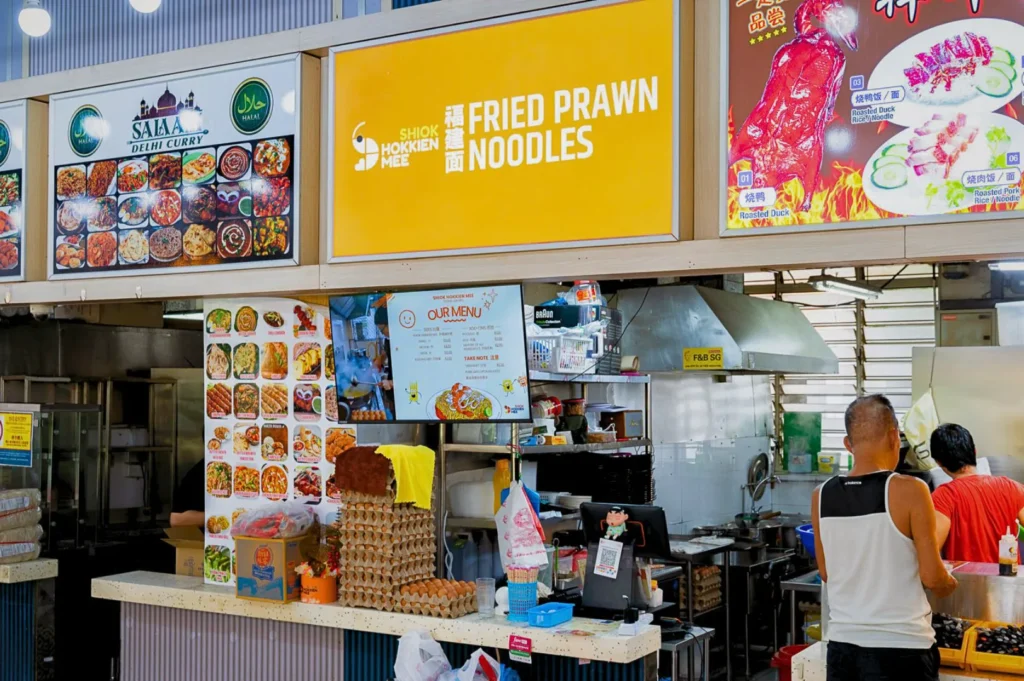
I have always believed that the true test of a neighbourhood’s food scene happens right in the middle of the day. When the midday hunger hits, you don’t want a tasting menu; you want a fast, flavourful culinary journey that hits the spot. That is exactly what led me, representing the Eat Drink Asia team, to a bustling coffeeshop in Tiong Bahru.
I visited on a Wednesday around 11:15 am, just before the lunch rush descended. I had heard whispers online about a pair of Gen Z hawkers serving up a remarkably wet-style Hokkien mee that was drawing serious crowds. Naturally, I had to see if it lived up to the hype.
If you are hunting for an authentic, deeply comforting plate of noodles that clings to every drop of seafood stock, you will want to pay attention. But I’ve got to be honest, if you are a die-hard fan of aggressively dry, smoky wok hei, this might challenge your expectations. Here is exactly what you need to know about Shiok Hokkien Mee.
A Bright, Bustling Coffeeshop Vibe: The Heart of Tiong Bahru Hokkien Mee
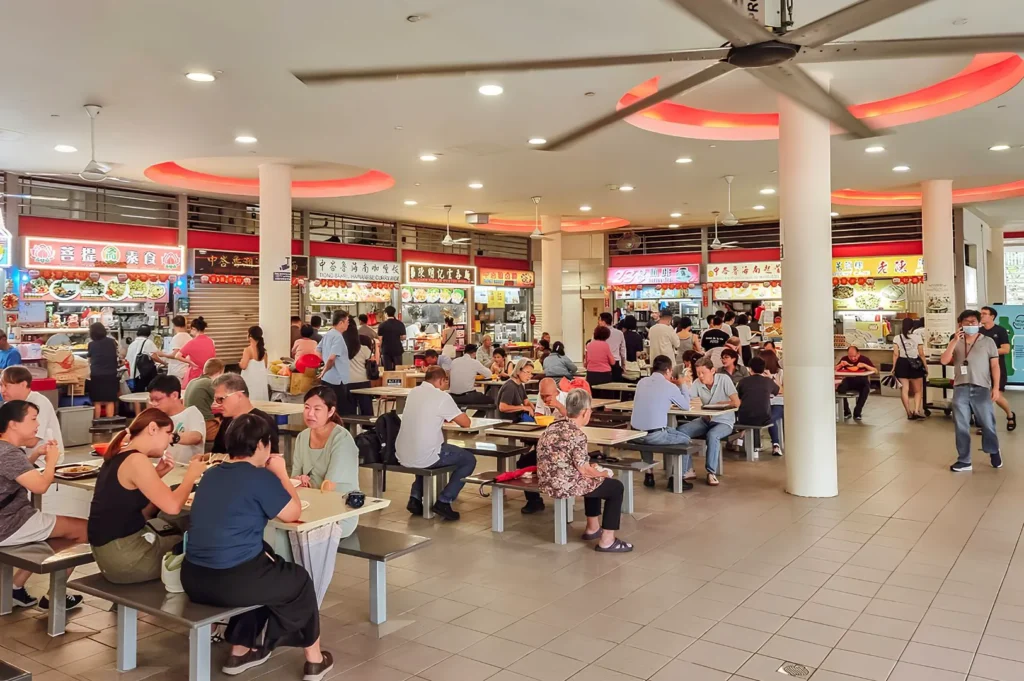
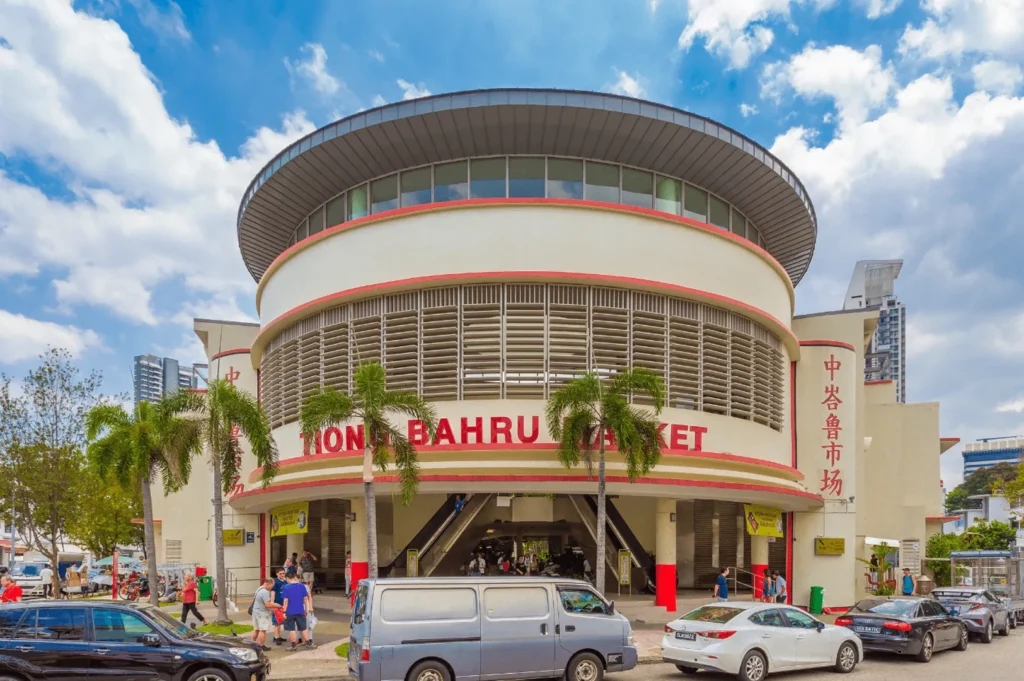
Shiok Hokkien Mee operates out of Food Paradise, a vibrant, everyday coffeeshop nestled at 11B Boon Tiong Road in Tiong Bahru. This well-known hokkien mee stall is incredibly easy to find, just a brief four-minute walk from Tiong Bahru MRT station. As soon as I arrived, I felt the familiar, chaotic energy of a classic Singaporean hawker space, alive with the sizzling sounds and enticing aromas that only a great hokkien mee can bring.
The atmosphere here is wonderfully practical. You are surrounded by bright coffeeshop lighting, the clatter of shared tables, and the relentless, rhythmic scraping of woks fired up with wok hey, that smoky, charred breath of the wok that so many hokkien mee lovers crave. It isn’t a polished restaurant, nor does it try to be; it’s a stall where the focus is on delivering a delicious, tasty plate packed with umami goodness.
The ceiling fans were working hard, but I still felt a bit warm, I’d definitely suggest wearing something light if you plan to visit at noon. I managed to grab a table slightly tucked away from the main walkway. It is a bit tight during peak hours, but that shared experience is just part of the charm of this Tiong Bahru place. Hong Heng Fried Sotong Prawn Mee, another multi-generation hawker stall in Tiong Bahru, offers a similar authentic vibe with its well-loved wet-style noodles and rich seafood flavors, as noted by Eat Drink Asia.
The Dishes at Shiok Hokkien Mee: A Mixture of Tradition and Innovation
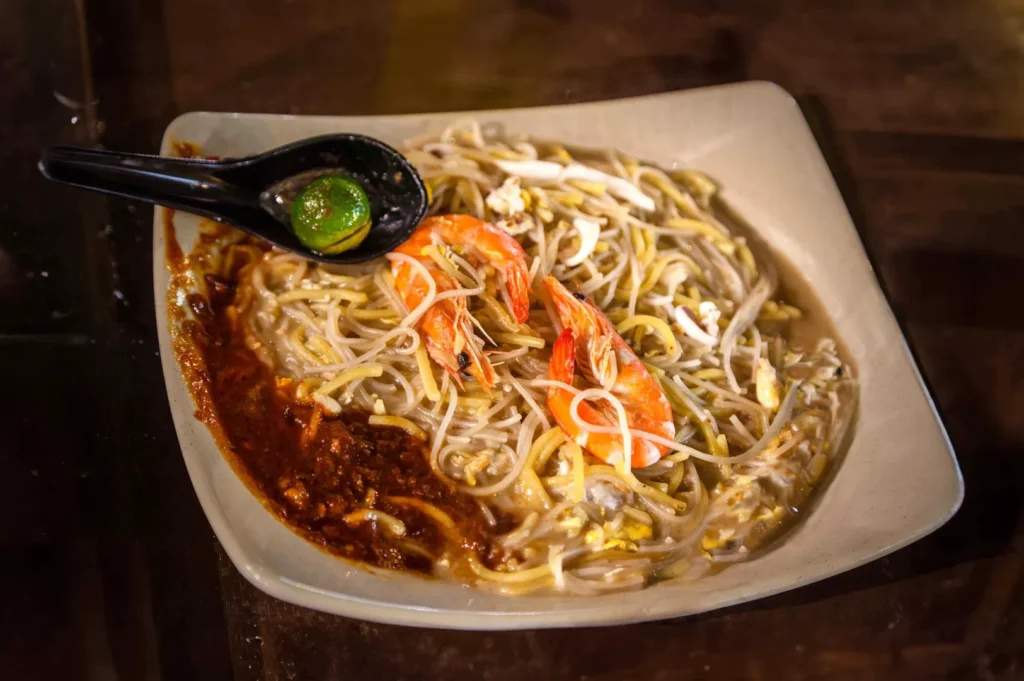
Shiok Hokkien Mee offers a delicious mixture of tender prawns, chewy yellow noodles and bee hoon, and a savory broth that highlights the umami flavors of traditional hokkien mee dishes. The wet hokkien mee here is a sinful yet satisfying dish, especially when topped with crispy pork lard that adds a contrasting crunch.
Shiok Hokkien Mee Signature Dish: A Plate That Clings
I went straight for their signature shiok hokkien mee, ordering the regular $8 portion. You can also get it in $6 or $10 sizes, but the $8 plate felt like the perfect portion to enjoy. When the dish arrived, it looked like a brilliant, glossy mess in the best way possible.
This is firmly a wet-style hokkien mee. The yellow noodles and thin bee hoon were practically swimming in a rich, shiny gravy, infused with a broth simmered overnight to develop deep seafood flavour. I took my first bite before mixing anything in, and the depth of the seafood stock was incredible. The mee absorbed the taste beautifully, ensuring every mouthful was packed with flavour.
The plate came dotted with fresh-tasting prawns, firm little pieces of sotong (squid), and thin strips of pork belly. However, I wished the meat pieces were bigger to add more texture and substance. The wok hey was present but milder than I expected, if you’re after that aggressively dry, smoky char, this might not be the best hokkien for you.
The Innovative Budget Pick: Kosong Mee
Curious about the buzz online, I also ordered their Kosong Mee ($3.50), a nice innovation in the hawker scene. This dish removes the usual seafood and meat toppings, focusing purely on stir-fried noodles cooked in the same seafood broth and topped with crispy pork lard and a side of house-made chilli.
It’s a smart, value-driven option for those who want the essence of hokkien mee without the heaviness of meat. The crispy pork lard pieces scattered on top provided a pleasant crunch, though I personally prefer my lard a bit more densely fatty. At $3.50, it’s a steal and a fantastic midday carbohydrate hit.
The Magic of the House-Made Chilli and Lime
What truly elevates the dish is the house-made sambal belacan chilli served on the side. This coarse, fiery paste packed with visible chilli seeds adds a sharp, lingering heat that cuts through the richness of the seafood stock and the pork lard. A squeeze of fresh lime over the top brightens the entire plate, balancing the sinful richness with a zesty punch.
Wok this way: Don’t dump the entire spoonful of chilli right away. Start with half, mix it in, and taste. The heat builds gradually, letting you enjoy the full flavour of the broth and noodles without being overwhelmed.
Hawker Efficiency in Action: The Pulse of a Tiong Bahru Hokkien Mee Stall
The service at Shiok Hokkien Mee is exactly what you want from a busy hokkien mee stall. The crew, led by young owners Mitchell and Kendrick, is down-to-earth and highly efficient. There’s no tableside service or lengthy chatting, you join the queue, order, pay, and wait for your buzzer.
Despite their speed, the wait time during peak lunch hours can stretch to 20-30 minutes as office workers and young diners flood the coffeeshop. The queue is a testament to the stall’s growing popularity in the Tiong Bahru area. Similarly, Fortune Centre food establishments offer a diverse range of Singaporean delights, making the area another vibrant spot that best represents Singapore’s rich culinary scene.
Practical Information for Your Visit: Check the Details
If you’re planning your own culinary journey to this Tiong Bahru hokkien mee hotspot, timing is key. Here’s what you need to know:
- Open Tuesday to Sunday, 10:30 am to 8:30 pm; closed Mondays.
- Located at 11B Boon Tiong Road, Singapore 163011.
- Expect to budget between $3.50 and $10 depending on your portion size.
- Public transport is highly recommended; the nearest MRT is Tiong Bahru.
- Parking is limited and stressful during lunch; avoid driving if possible.
- Not halal-certified due to pork lard and pork belly usage.
- Grab a seat near the outer edges of the coffeeshop to avoid the heat of the woks and the bustling queue.
Closing the Chapter on Shiok Hokkien Mee
Shiok Hokkien Mee is a fantastic addition to the Tiong Bahru neighbourhood. It isn’t the smokiest, most aggressively charred plate of noodles in Singapore, but that isn’t the point. It succeeds because it understands the pure, simple pleasure of noodles that hold onto flavour.
This stall is best suited for fans of wet-style Hokkien mee who want to taste a rich, overnight seafood broth. It is also perfect for budget-conscious diners looking to try the innovative Kosong Mee, or anyone interested in supporting young hawkers keeping traditional foods alive.
I’d suggest avoiding it if you absolutely need air-conditioned dining, detest queuing for your lunch, or are strictly looking for a dry, old-school plate packed with intense wok hei.
But if you are in the area and want a highly satisfying, flavourful lunch that won’t break the bank, join the queue. Grab a plate, mix in that fiery sambal, and enjoy a dish that clings quietly, yet brilliantly, to every single expectation.

Moo Ping and the Structure of Thai Grilled Street Meat
Dio Asahi | April 30, 2026
The first thing I noticed was the smoke, thin, controlled, rising steadily from a charcoal grill along a Bangkok street. Skewers of pork turned in a quiet rhythm, fat dripping and hissing as it met the heat. The air carried layers of scent: sweet palm sugar, garlic, and a faint fermented depth beneath it. I…
-
Where Kuala Lumpur Actually Begins: Reading the City Through Its Food
Eat Drink Asia Team | April 30, 2026
There are cities you can understand through maps, and then there are cities like Kuala Lumpur that only begin to make sense when you follow what people eat. Not what is recommended or ranked, but what is repeated. The same stall visited every week, the same dish ordered without hesitation, the same flavours that feel…
-
The Silent Language of the Table: How Traditional Food in China Speaks Through Generations
Eda Wong | April 28, 2026
When I first tried to navigate a traditional Cantonese family dinner, I made a spectacularly embarrassing mistake. I sat down, looked at the sprawling, beautifully written menu, and confidently ordered an individual plate of sweet and sour pork just for myself. The table went completely quiet. My host gently nudged the menu back towards the…
-
The Golden Roux Revolution: Best Japanese Curry Singapore Spots That Redefine Comfort Food
Eat Drink Asia Team | April 25, 2026
April 25, 2026 | Eat Drink Asia Team Last updated: September 17, 2026 We have always believed that a brilliant plate of Japanese curry is the ultimate culinary hug. Over the past eight months, we made it our personal mission to embark on a comprehensive culinary journey across Singapore, hunting down the absolute best bowls…

Noodle Masterpieces: Celebrating the Craft
Eat Drink Asia Team | April 24, 2026
Noodles have a timeless place in the world of food, and Taste Our Traditions can attest that only few dishes are as universally loved. What makes a bowl of noodles truly stand out is not just the ingredients, but the artistry and skill behind their creation. Noodle-making is an ancient craft that demands patience, precision,…
-
Charcoal Smoke and Yakitori Evenings in Osaka
Eda Wong | April 24, 2026
The first thing I noticed was the smoke. It didn’t rise all at once, but in thin, steady ribbons that curled upward from a narrow grill set just inches from the counter. The scent came first, warm and unmistakable, a mix of rendered chicken fat and binchōtan charcoal, clean but deeply present. Inside the small…
-
Cracking the Code of Telur Thai: Inside Egg Thai West Mall, a Kitchen That Tells a Story
Dio Asahi | April 23, 2026
I visited on a Tuesday around 7pm, completely exhausted from a long day of meetings and staring at screens. I wasn’t looking for a fancy culinary journey or a trend-setting dining experience. Honestly, I just wanted a quick, comforting meal that would hit the spot without emptying my wallet. That specific craving led me to…

Sanook Kitchen’s Thai Omelette Rice: A Heartland Answer to Singapore’s Thai Food Saturation
Eda Wong | April 21, 2026
If you live in Singapore, you know that finding Thai food is about as difficult as finding a humid day. We are spoiled for choice. From gritty hawker stalls serving fiery basil pork to upscale restaurants where a bowl of tom yum costs more than a taxi ride, the options are endless. But sometimes, you…
-
The Golden Fold: How Thailand’s Street-Side Omelette Became a Morning Ritual
Dio Asahi | April 18, 2026
Dawn breaks over Bangkok with a familiar symphony. Before the intense heat settles and the traffic swells into a steady roar, the city streets belong to the food vendors. Amid the clatter of metal tools and the hum of early commuters, one sound stands out: the furious, bubbling sizzle of eggs hitting smoking-hot oil. This…

Lesson I Didn’t Expect: How Fourgather’s Easy Asian Recipes Taught Me to Cook at Home
Eda Wong | April 16, 2026
For the longest time, I was convinced that cooking authentic Thai food at home was out of my league. I imagined complex pastes, hours of simmering, and a mountain of ingredients I couldn’t pronounce. I was happy to leave it to the experts. But a casual dinner at Fourgather, a stylish Thai eatery in Telok…