The bowl arrives before anything else does.
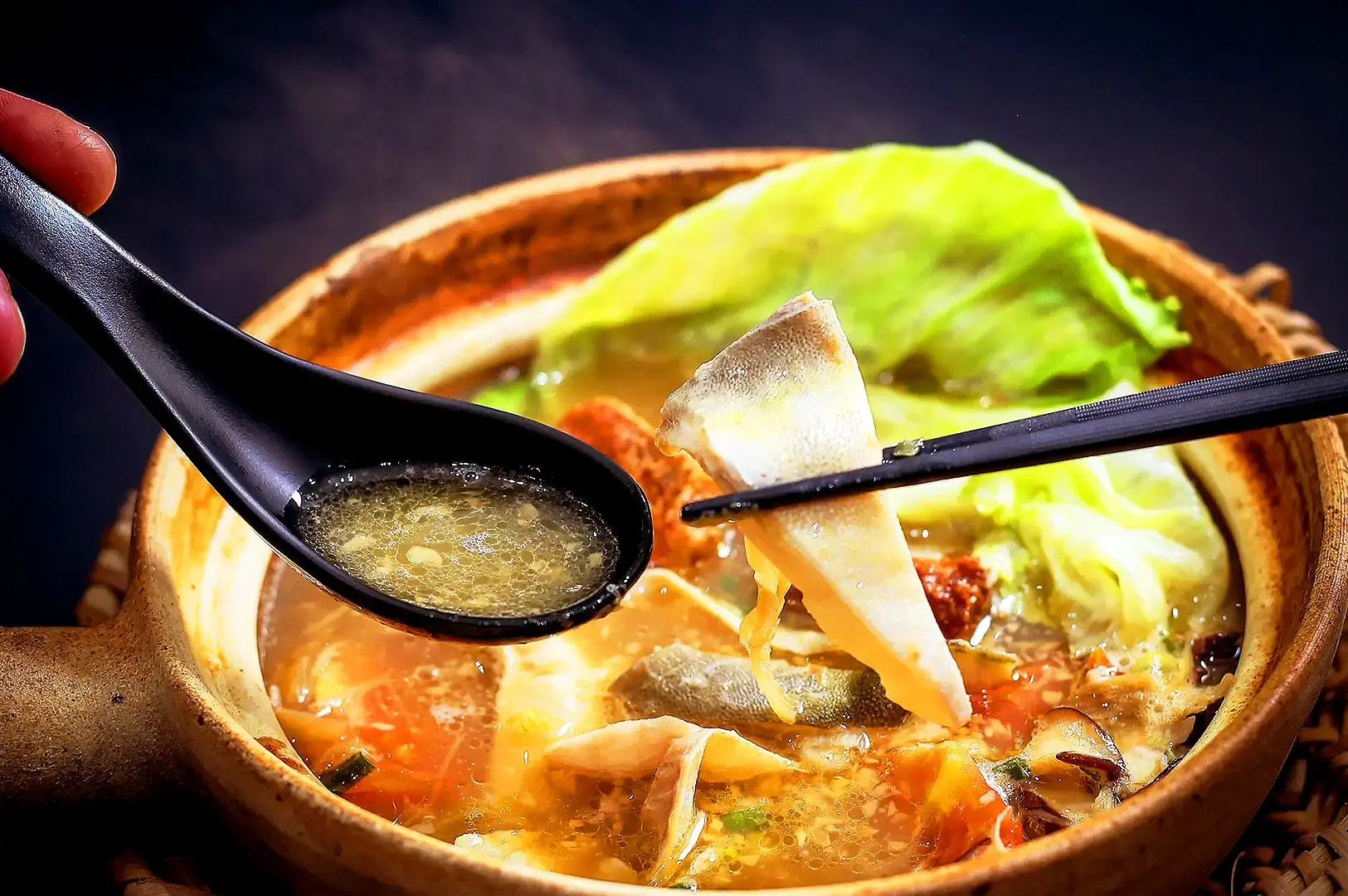
Steam lifts off it in slow ribbons, carrying the smell of ginger and something warmer underneath: the round, boozy note of hua tiao wine settling into fish. I lean in before I even pick up my spoon. The broth is pale gold and cloudy, thick enough that it clings a little to the sides of the bowl. Pieces of pomfret sit half-submerged, pale and generous.
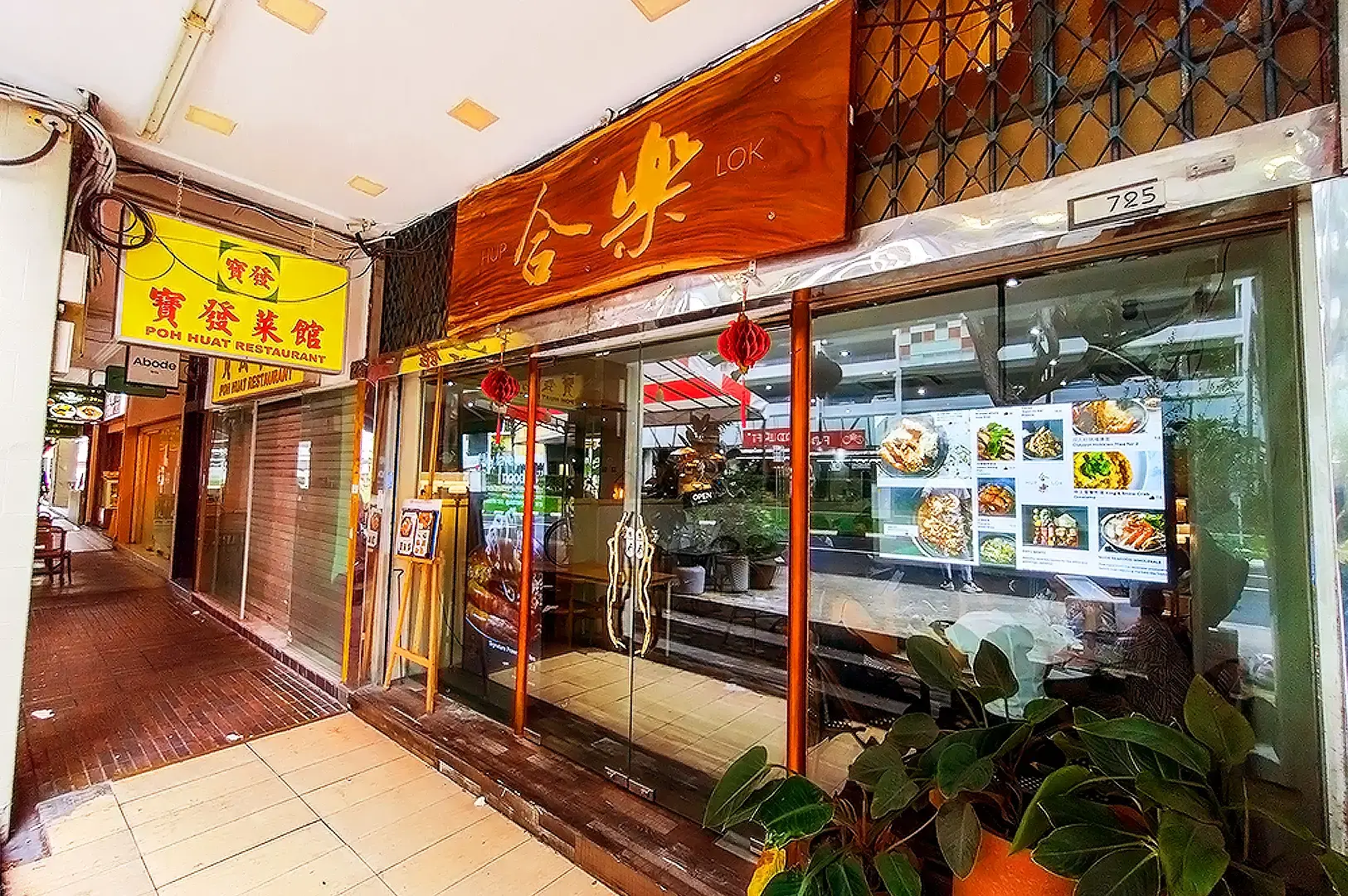
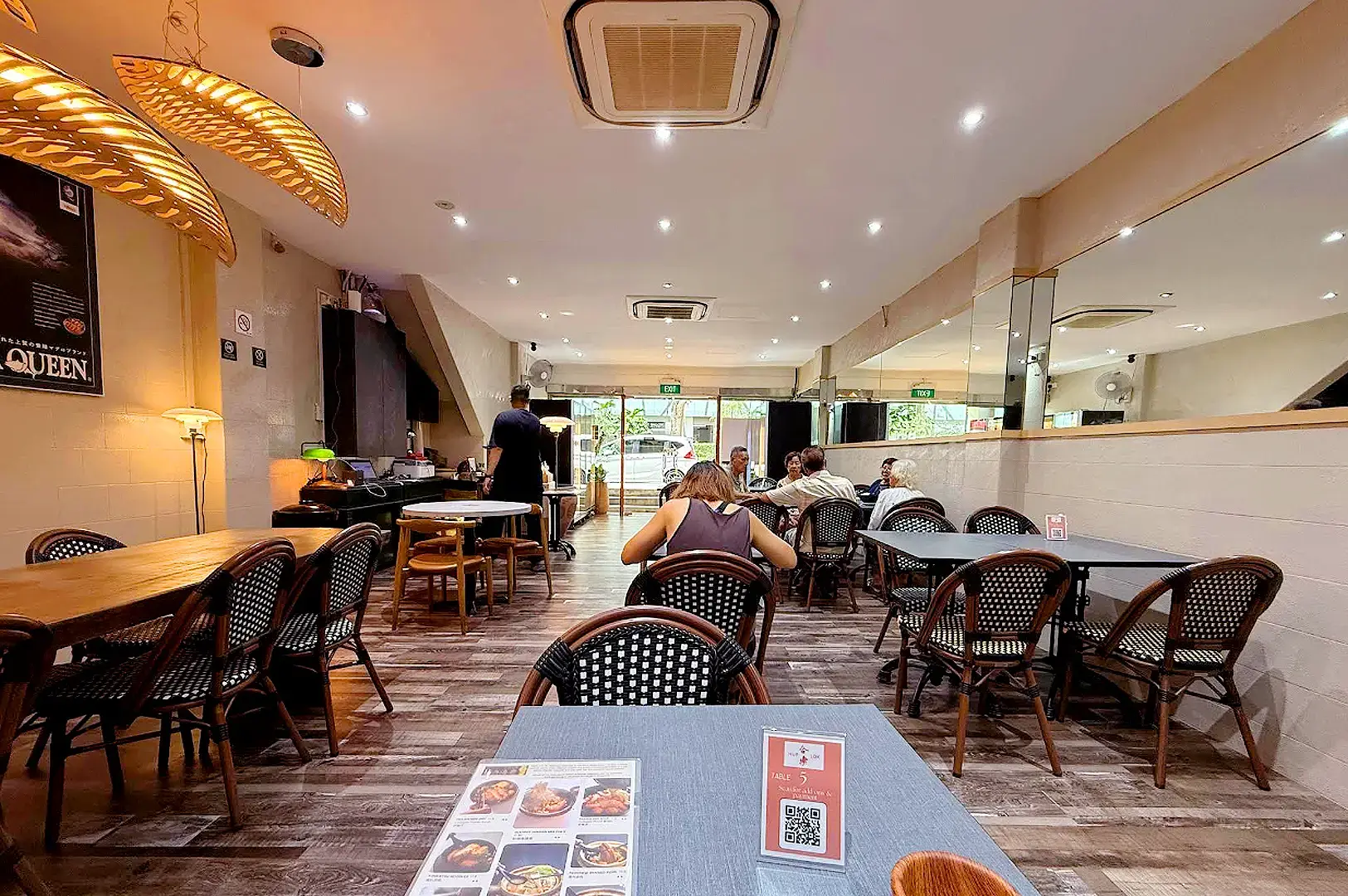
This is Grandpa’s Pomfret Soup at Hup Lok, a young restaurant tucked along 725 Havelock Road. The place opened in September 2025, which makes the whole thing a small contradiction. The room is new. The taste in the bowl is not.
Here, the menu features this signature dish, known for its tender fish slices and rich broth, which many gave positive reviews online. Which lead me here, experience the it myself.
What the Broth Carries
I eat the fish first, because you have to.
The soup keeps working even after it reaches the table, and the residual heat will carry on cooking the pomfret if you let it sit. So I go in early, while the flesh is still just barely set. It comes away in soft, meaty flakes: clean-tasting, without the muddiness that lesser fish soups sometimes hide behind. There’s a lot of it, too. This isn’t a bowl rationing its protein.
Then the broth.
It’s the kind of soup that looks like it should be heavy, but isn’t. There’s real body to it, a savoury weight that coats the tongue, and my first instinct is to assume milk. There isn’t any. That richness comes from fish bones: batang bones simmered down until the collagen loosens and thickens the liquid on its own. It’s a quiet lesson in how a broth earns its texture honestly, without a shortcut.
The rest of the bowl keeps it from turning one-note. Salted plums cut through with a soft, tart edge. Tomatoes add a rounder acidity. Shiitake and julienned ginger sit in the background, and the hua tiao wine ties everything together with that low, warming hum. It’s umami, but it’s also bright; which is exactly what a good teochew pomfret fish soup should be.
Tradition Without Pretending the Recipe Is Ancient
Here’s the part I keep turning over.
The recipe in front of me isn’t old. Chef Keeling built it during COVID, when kitchens were cooking for delivery boxes rather than dining rooms, and it later found a permanent home at Hup Lok. So this is not some family formula guarded through the decades, unchanged.
And yet the flavour vocabulary is older than the dish.
The owner, Hong Junchen, comes from a family that has worked in Singapore’s fish trade across three generations; his father started at street level before the trade grew into wholesale. Three generations in the trade, one restaurant to show for it. That connection to seafood is part of what sets traditional Chinese restaurants apart: the ingredients aren’t just components, but part of the cuisine’s history.
So the soup isn’t repeating an inherited recipe. It’s carrying something quieter forward: Teochew taste memory, seafood knowledge, the logic of how these flavours are supposed to sit together. That, to me, is what tradition actually is. Not a frozen thing. A remembered one.
Claypot Hokkien Mee: Abundance at the Same Table
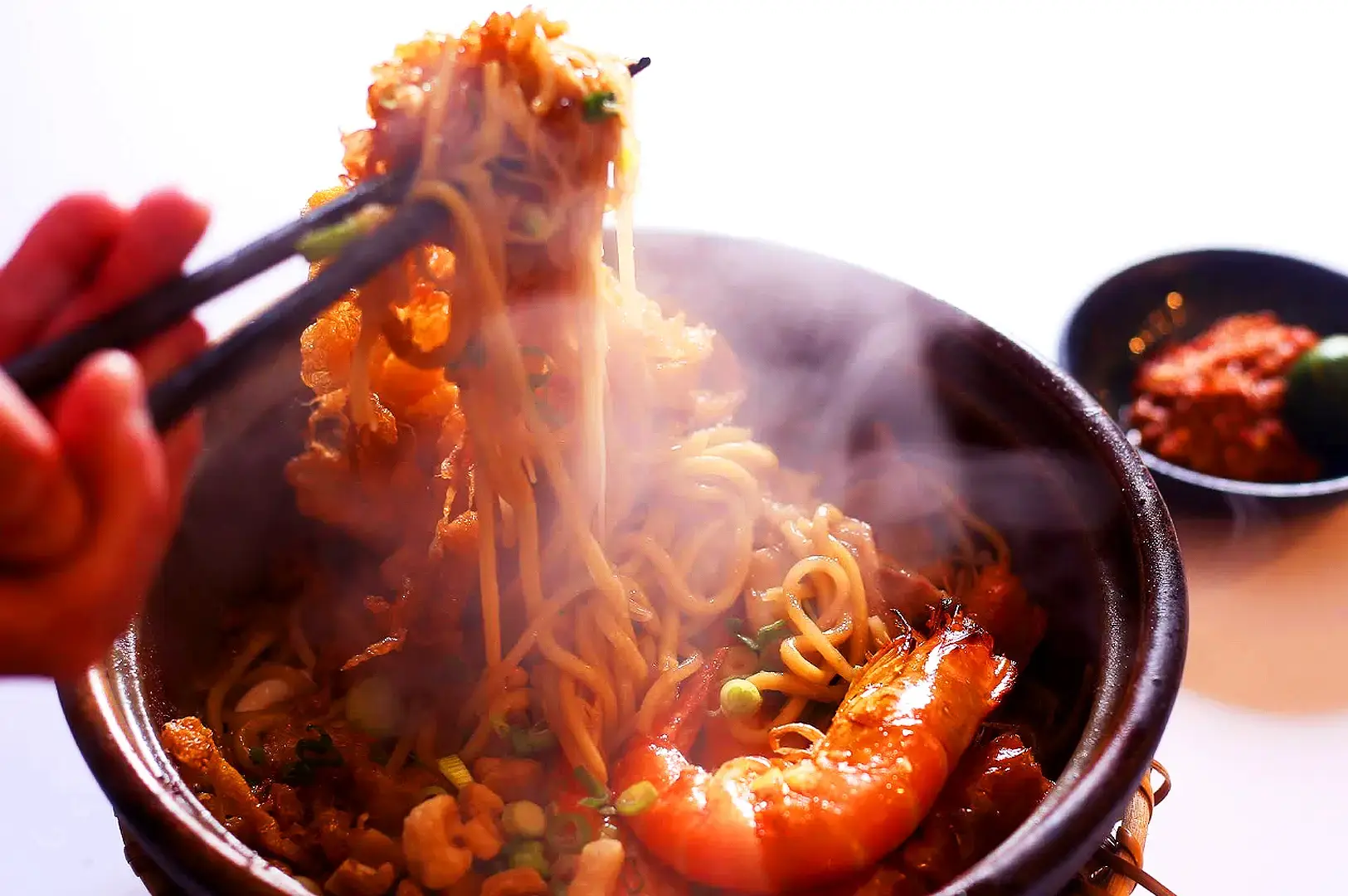
The Claypot Hokkien Mee arrives loud where the soup was gentle.
It comes still bubbling in its claypot, the heat trapped and hissing at the edges. This generous portions dish is perfect for sharing as a communal meal: noodles slick with a rich seafood sauce, studded with big Kami no Ebi prawns, slices of pork belly, and squid rings that hold their bite. A lacy omelette drapes over part of it. Crispy little cubes of lard are scattered through, and they crackle against the soft noodles.
There’s sambal on the side, spooned in for a tasty spike of heat, though it doesn’t try to run the show. The claypot keeps everything hot right down to the last strands. It’s the kind of dish you want to order and dig into with other people, shoulders leaning in.
Good as it is, it isn’t the centre. It’s the loud cousin at a table where the quiet one has more to say, adding just a bit of spice to the overall experience.
What Deserves to Continue
I come back to the fish soup.
By the end, the pomfret is gone and I’m just spooning up the last of the broth, still warm, still holding its body. Over time and years of tasting, I’ve noticed that what stays with me isn’t the technique or the collagen or any single ingredient. It’s the sense of nostalgia that someone decided these flavours were worth keeping alive and then simply kept cooking them.
That’s how food memory actually survives. Not through perfect replication of an old recipe. Through someone understanding the ingredients, trusting the taste and putting the bowl back on the table exactly what you expect from a place like Hup Lok.
Hup Lok does that. Quietly and well.

Yuja Tea: Korea’s Traditional Citron Tea
Dio Asahi | January 27, 2026
The golden, aromatic steam rising from a cup of yuja tea carries centuries of Korean tradition and wellness wisdom. This caffeine-free citrus beverage has warmed Korean hearts through countless winters, offering both comfort and powerful health benefits in every sip. Made from the Korean citron known as yuja fruit, this simple Korean tea represents one…
-
The Global Phenomenon of Korean Instant Noodle: A Cultural and Culinary Journey
Eda Wong | January 24, 2026
In the high-octane streets of South Korea, where the “pali-pali” (hurry-hurry) culture defines the pace of life, one dish stands as the ultimate equalizer of speed and satisfaction: Korean ramyeon. While the world often uses the terms ramen and ramyeon interchangeably, the Korean version is a distinct entity. It is not merely a quick snack…
-
Traditional Ramyeon: The Soulful Heart of Korean Noodle Culture
Eat Drink Asia Team | January 20, 2026
In the bustling culinary landscape of South Korea, few comfort foods can match the satisfaction of a steaming bowl of ramyeon. While outside of Korea, “ramyeon” often brings to mind Korean instant noodles or instant ramen, true ramyeon Korean style refers to the artful, freshly prepared noodle soup enjoyed in homes and at local restaurants…
-
The Heart of the Korean Noodles: History and Texture
Eda Wong | January 17, 2026
In Korea, a bowl of noodles is far more than a simple dish; it is a cultural anchor that has weathered centuries of change. For generations, the length of the strand has symbolized a long and prosperous life, making Korean noodles a staple at birthdays, weddings, and the milestone 60th birthday celebration known as hwangap….
-
Preserving the ‘Big Bowl’ Tradition with Pen Cai Delivery in the Age of Doorstep Dining
Eat Drink Asia Team | January 15, 2026
Modern Festive Menu: Bringing the Big Bowl Home There is a special, undeniable magic to the Chinese New Year reunion dinner. For many families, Chinese New Year 2026 is another chance to gather loved ones at the table and celebrate with a glorious pen cai—sometimes called the “big bowl feast”—overflowing with premium ingredients and festive…
-
Sencha: Traditions, Flavors, and the Essence of Japanese Tea
Eat Drink Asia Team | January 15, 2026
When people around the world think of Japanese tea, images of tranquil tea ceremonies in small rooms or frothy bowls of matcha often come to mind. Yet, the reality of tea drinking in Japan is much broader, woven deeply into the culture and daily habits. For the vast majority, sencha is the beloved tea that…
-
The Best Restaurants Tokyo Are Rarely the Ones You Plan For
Eda Wong | January 12, 2026
Tokyo, Japan’s capital, does not reward urgency. It rewards return. On my first visit, I chased what everyone told me were the best restaurants Tokyo had to offer. I spent weeks highlighting maps, bookmarking digital “must-eat” lists, and refreshing reservation pages until my eyes blurred. I thought that by conquering the top-tier establishments, I would…
-
Japan and Food: Culinary Harmony – The Deep Connection Between Japanese Food and Culture
Eat Drink Asia Team | January 11, 2026
When it comes to Japan and food, the two are intertwined in ways that captivate taste buds and awaken the senses. Japanese cuisine stands as one of the world’s most revered traditions—more than nourishing meals, it is an art reflecting centuries of philosophy and a window into Japanese culture itself. Every bowl of miso soup,…
-
The Verdant Cup: A Celebration of Green Tea in Japan
Eda Wong | January 10, 2026
In Japan, green tea is much more than a beverage. It marks a moment of pause, hospitality, and tradition. The story of green tea in Japan weaves through centuries of culture, artistry, and daily life—bridging ancient rituals like the Japanese tea ceremony to everyday meals enjoyed at home. The origins and beginning of Japanese tea…
-
Japanese Green Tea from Japan: The Story of Matcha
Dio Asahi | January 8, 2026
On a misty April morning in Kyoto, I knelt on tatami in a small tea room outside Uji, Japan. The host, dressed in kimono, moved with quiet skill as she scooped matcha powder into a ceramic bowl. The air was filled with the aroma of aged wood mixed with the grassy scent of high quality…