The afternoon humidity presses against the open-air teahouse in downtown Yangon, where the sharp clatter of a silver spoon against ceramic cuts through the low hum of conversation. A small plate sits in the centre of a low plastic table, holding a dense, dark green cluster that smells faintly of damp earth and sharp lime. Surrounding it are neat little mounds of toasted peanuts, fried garlic, roasted sesame seeds, and dried shrimp. As the server pours pale, steaming green tea into small handleless cups, the diner begins to toss the ingredients together. The rhythmic crunch of the fried aromatics blending into the wet, bruised leaves creates a sound that is entirely distinct: the quiet, constant percussion of a shared culinary journey.
Communal dining traditions in Asia are shaped by shared meals that forge lasting bonds, carrying cultural heritage forward from one table to the next.
At the heart of this dish is lahpet (pronounced lah-pet), the fermented tea leaves that define Myanmar’s signature tea leaf salad, or lahpet thoke. Unlike the rest of the world, which primarily drinks its tea, Myanmar eats it. The process of transforming a bitter, astringent leaf into an edible delicacy is an exercise in profound patience. After the young leaves are harvested, they are steamed to halt oxidation, packed tightly into bamboo vats or clay pots, and buried underground or weighed down with heavy stones for months. This slow, anaerobic fermentation breaks down the rigid cellular structure. Once unearthed, the leaves are thoroughly rinsed and kneaded by hand with peanut oil, garlic, and chilli until they yield a soft, velvety texture. The result is an intensely complex ingredient: tart, slightly bitter, and deeply savoury, offering a celebration of flavours that grounds the entire dish.
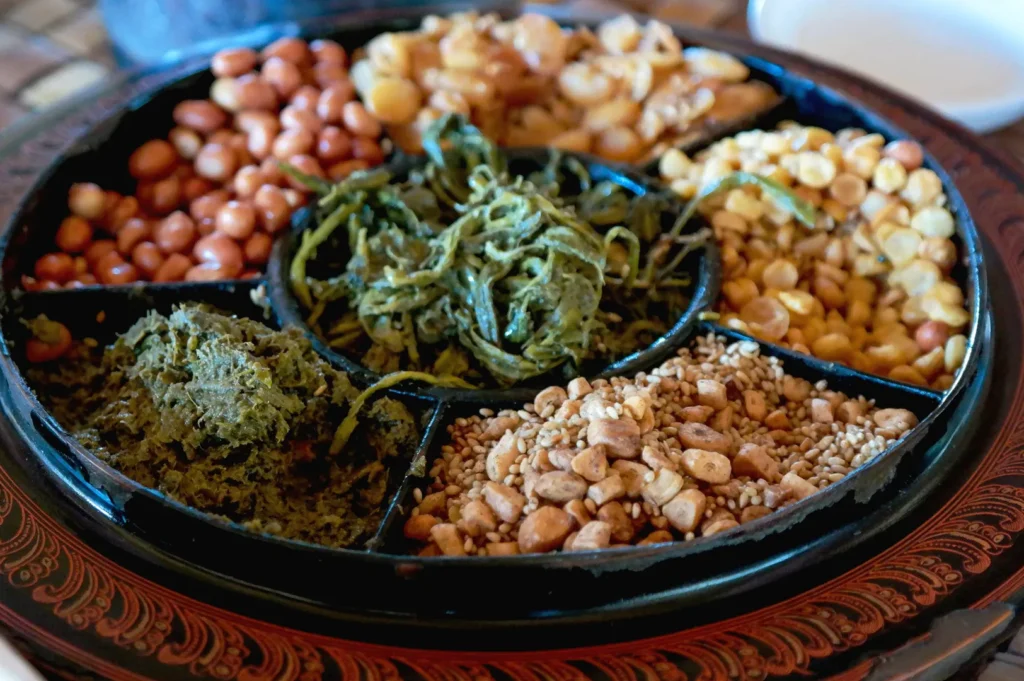
To understand lahpet is to understand the mechanics of Burmese hospitality. It is rarely consumed alone; rather, it is the anchor of shared experiences. Historically presented to guests in a shallow, compartmentalised lacquerware tray called a lahpet ohk, the leaves sit in the centre while the crunchy garnishes occupy the outer ring. This deliberate separation allows each person to customise their bite, negotiating the exact ratio of sour tea to rich nuts and sharp garlic. Serving it is an act of welcoming, an unspoken etiquette that transforms a simple visit into an occasion. It functions as both a stimulant and a social lubricant, keeping conversations going long into the evening while providing a bright, textural contrast to the heavy heat of the day.
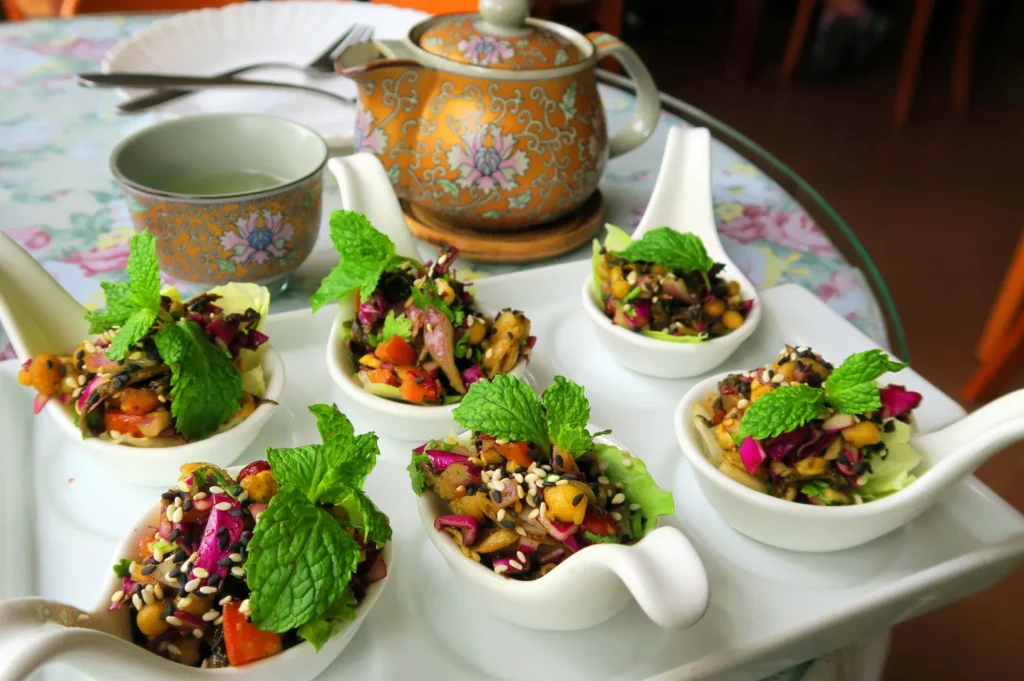
What feels vital about this dish right now is its resistance to complete uniform convenience. While modern urbanisation has introduced vacuum-sealed, ready-to-mix packets for quick consumption on the go, a true lahpet thoke demands physical interaction. The aesthetic appeal of a pre-mixed, visually flawless salad cannot replace the tactile appetite required to build the bitter-sour balance yourself. The tension between the soft, oily leaves and the brittle crunch of the fried beans must be immediate; if left sitting too long, the texture collapses. It is an innovative yet ancient approach to eating that requires the diner to be entirely present in the moment.
Scraping the last remaining cluster of seeds and tea from the bottom of the plate, the lingering astringency leaves a clean, waking sensation on the palate. It is a quiet reminder that the most compelling foods do not just feed us; they invite us to taste the world through the slow, deliberate work of time and shared tables.

Popular Korean Cuisine Has a Memory: Why Famous Korean Food Feels So Complete
Eat Drink Asia Team | August 11, 2026
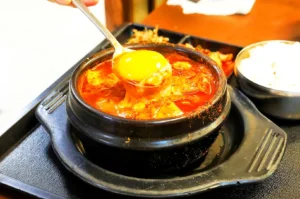
The first time I ordered kimchi jjigae in Singapore, I made a small mistake. It came bubbling in a stone pot, and I ate it like soup, spoonful after spoonful, straight down, until my mouth was on fire and the bowl was half gone. The auntie across the counter watched me for a moment, then…
-
Raffles Place Food Has the Restaurants That Understand the CBD Lunch Rush
Eda Wong | August 8, 2026
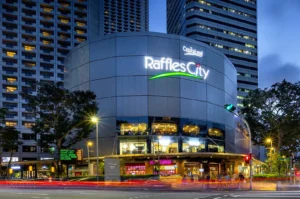
I used to think lunch in the CBD was a lost cause. You get an hour, maybe less. The lift takes ten minutes just to reach the ground floor. By the time you’ve queued, ordered, and found a corner to eat in, you’re already checking the clock. For a while, I gave up and just…
-
The Tamarind Sourness Inside a Filipino Sinigang Pot
Eda Wong | August 7, 2026
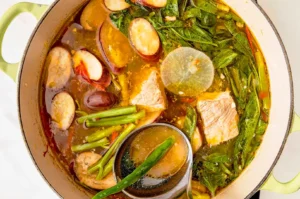
By Eda Wong for Eat Drink Asia. The pot has been going for a while now, and the whole kitchen knows it. Steam curls up from the surface, carrying that sharp-sour smell that reaches you before anything else. It’s not a gentle aroma. It pricks at the back of your throat a little, makes your…
-
Vegetarian Asian Dishes at The Boneless Kitchen: A Korean Meal Built on Kimchi, Rice, and Restraint
Dio Asahi | August 6, 2026
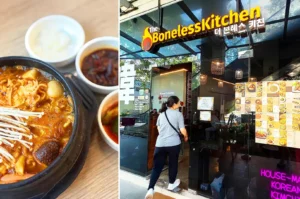
I didn’t expect to find Korean comfort food in an office building near Tai Seng. But there I was, on a Wednesday a little past 7pm, standing outside The Commerze @ Irving wondering if I’d read the address wrong. This isn’t the part of Singapore you go to for dinner. It’s the part you leave…
-
The Soy Glaze on Kyoto’s Forgotten Rice Crackers
Dio Asahi | August 5, 2026
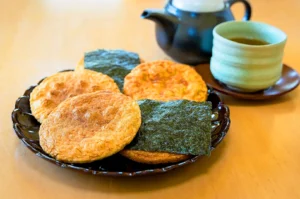
By Dio Asahi for Eat Drink Asia. The old man works close to the coals, and the smell reaches me before I see what he’s doing. Soy meeting heat. That dark, caramel-edged smell that tightens something in your chest. His brush moves in short strokes across a rack of rice crackers, back and forth, patient….
-
Vegetarian Laksa Without the Usual Seafood Shadow: Asian Vegetarian Recipes Begin With the Broth
Eat Drink Asia Team | August 4, 2026
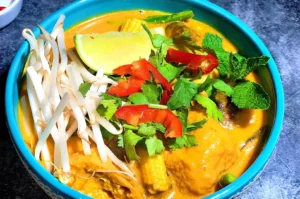
The first vegetarian laksa I made tasted like coconut soup with chilli, not laksa. I thought I was doing it right, stirring paste into warm coconut milk with tofu puffs. It looked the part but lacked depth. Seafood usually provides that depth, prawn shells, dried shrimp, fish cake sweetness. I learned that depth can’t be…
-
A Bowl Built by Hand at Hi Noodle, Three Floors Below Somerset
Eda Wong | July 31, 2026
The escalator carries me down to Basement 3, past the lunch noise of 313 Somerset, and the air changes somewhere along the way. Less mall, more kitchen. The smell finds me first — chilli, vinegar, something warm and sharp that cuts through the perfume of the shops above. Hi Noodle sits there, plain and bright….
-
An Asian Vegetarian Meal at Herbivore Japanese Vegetarian Restaurant: When Japanese Comfort Food Learns a New Body
Eda Wong | July 30, 2026
I didn’t grow up eating eel. But I grew up watching my grandmother turn one thing into another — gluten into “duck,” beancurd skin into “fish,” mushrooms into something that tasted of the sea without ever touching it. Buddhist vegetarian cooking does that. It doesn’t pretend so much as it remembers, building familiar shapes out…
-
A Table for One, and a Grill That Belongs to You in Yakiniku Like
Dio Asahi | July 29, 2026
The grill glows orange in front of me before the meat arrives. It’s a small thing, set into the counter at my single seat, and it hums faintly under the chatter of the room. No flame. No charcoal. Just a low electric warmth I can feel rising toward my face. A plate comes. Thin slices…
-
Best Buffet Singapore: Where Hotel Buffets Turn Abundance Into Order
Dio Asahi | July 28, 2026
I used to think buffets were about greed. Pile the plate high, go back for thirds, leave feeling like you got your money’s worth. That was the whole game, or so I believed. After years of exploring this city’s hotel buffets, I learned the good ones focus on order. They transform a wall of food…