The afternoon heat in the outskirts of Phnom Penh settles like a thick blanket over the wooden stilt houses. Underneath the corrugated tin roof of an open-air kitchen, the air carries a heavy, sharp scent that instantly commands attention, a deeply pungent, earthen aroma of crushed fish and salt. An elderly woman sits on a low stool, a heavy cleaver rhythmically striking a scarred wooden block. She is mincing small, silvery fish into a coarse paste, the sound of metal on wood echoing through the humid air. Nearby, large earthen clay pots sit quietly in the shadows. Inside them, the true work is already happening, hidden from view.
In that pungency is a familiar truth of Asian cuisine: fermentation is often the quiet engine of flavour. What lies inside those heavy pots is prahok (pronounced prah-hok), the fermented fish paste that forms the unapologetic backbone of Cambodian cuisine. At its core, prahok is an exercise in preservation and patience. During the brief dry season, millions of small mudfish are harvested from the Tonle Sap lake, crushed, heavily salted, and packed into earthen jars. Left to ferment for months or even years under the intense tropical heat, the fish breaks down completely. The proteins transform into a dense, greyish-brown paste that is remarkably high in umami. It is a profoundly intense ingredient. A single spoonful tastes aggressively salty and sharp on its own, but when dissolved into a boiling broth or mashed with lime and chillies, it creates a rich, complex depth that defines the authentic taste of Khmer cooking.
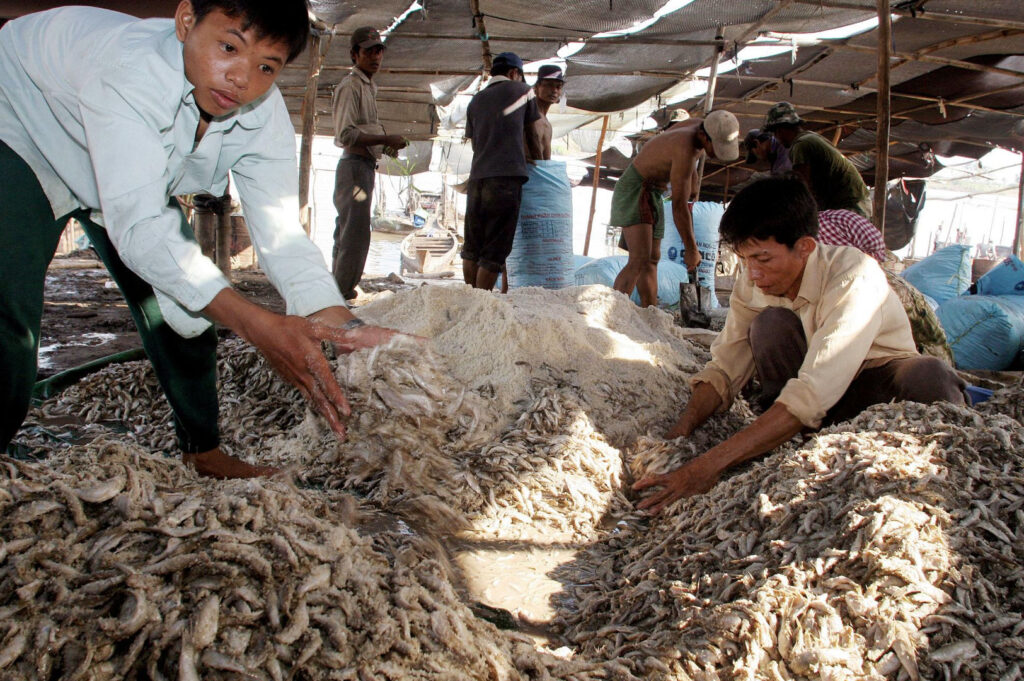
In Cambodia, the prahok pot is far more than a pantry staple; it is an anchor of everyday food memory and a record of the shifting seasons. The rhythm of rural life is tied to the annual fish harvest, turning the messy, communal work of scaling and salting into vital shared experiences for the entire village. A meal without prahok often feels incomplete to a local palate. It is the invisible force that gives body to a clear green papaya soup and the savoury edge to a fiery dipping sauce. It signals a deep connection to the land and water, offering families a reliable source of protein and deep, flavourful comfort long after the floodwaters of the great lake have receded.
Today, this ancient culinary journey faces a quiet tension. Modern urbanisation brings the convenience of factory-produced seasoning cubes and imported MSG, which offer an easier, odourless shortcut to flavour. For many younger city dwellers, the pungent aesthetic of a bubbling clay pot of fermenting fish feels out of step with fast-paced, modern life. Yet, authentic prahok demands that we confront the visceral reality of our food. It refuses to be sanitised or neatly packaged. It requires a surrender to time and the slow, microbial breakdown of nature, standing as a stubborn reminder that the most profound flavours cannot be rushed by industrial efficiency.
Watching the woman carefully seal her earthen jar, the air remains thick with the scent of salt and time. There is no rush, no immediate gratification. The paste will sit in the dark, slowly transforming, quietly waiting to bring life to a future meal.

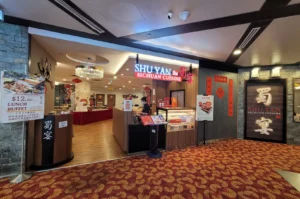
A Shu Yan Sichuan Cuisine Review Written in Pepper and Smoke: Chicken Pao That Wakes Up the Table
Dio Asahi | June 13, 2026
I used to think of authentic Sichuan food as a sheer test of endurance. For a long time, I assumed the goal was simply to survive the fiery onslaught of chillies rather than actually taste anything. But my recent culinary journey at Shu Yan Sichuan Cuisine completely rewired how I understand this region’s flavour map….
-
In Luang Prabang, Or Lam Carries the Taste of Sakhan
Eda Wong | June 12, 2026
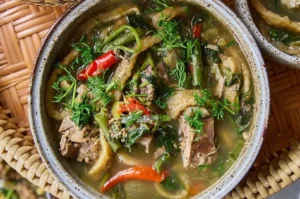
The damp morning mist still clings to the teakwood houses of Luang Prabang as an elderly cook tends to a glowing charcoal brazier. Sparks jump lightly into the cool air, illuminating the blackened belly of an aluminium pot. Inside, a thick, dark liquid bubbles rhythmically, releasing an incredibly aromatic cloud of charred lemongrass, sweet Thai…

The Malayan Council, Reviewed: Local Food in Malaysia, Plated Like a Memory
Eat Drink Asia Team | June 11, 2026
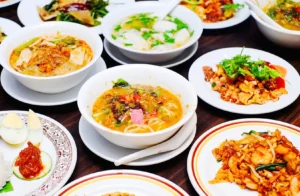
Our Eat Drink Asia team spends a lot of time debating what makes a truly unforgettable meal. The team has previously published articles exploring the redefinition of comfort food. That is exactly what led me to The Malayan Council at 71 Bussorah Street. I visited on a Friday around 7:30 pm, just as the weekend…
-
Sushi in Singapore: Why There Is a Style for Every Budget
Eda Wong | June 11, 2026
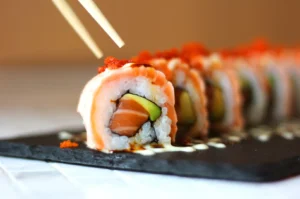
Few Japanese dishes have travelled as successfully across Asia as sushi. What began as a culinary tradition deeply rooted in Japan has evolved into something remarkably diverse in Singapore. Today, sushi in Singapore can mean many different things. It can be a quick lunch grabbed from a conveyor belt restaurant, a carefully curated omakase meal…
-
The Quiet Pull of Lahpet in Myanmar’s Tea Leaf Salad
Dio Asahi | June 10, 2026
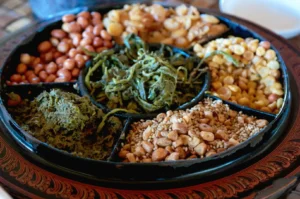
The afternoon humidity presses against the open-air teahouse in downtown Yangon, where the sharp clatter of a silver spoon against ceramic cuts through the low hum of conversation. A small plate sits in the centre of a low plastic table, holding a dense, dark green cluster that smells faintly of damp earth and sharp lime….
-
Dining at Suntec: The Restaurants That Feel Like Different Cities in One Mall
Eda Wong | June 9, 2026
Over the past six months, I’ve navigated the sprawling, sometimes disorientating corridors of Suntec City more times than I can count. What started as a simple quest to find decent spots for post-meeting lunches quickly turned into a genuine culinary journey. I have tried over a dozen venues within this massive complex, and I’ve found…
-
PappaRich SG and the Comfort of Malaysian Staple Food: A Restaurant Review in Familiar Flavours
Dio Asahi | June 6, 2026
There is a very specific kind of exhaustion that hits you right before a flight or just after you land. You are dragging your suitcase, staring blankly at the departure boards, and suddenly, you realize you are starving. But you don’t want just any food. You want something warm, familiar, and deeply comforting. I felt…
-
Sri Lanka’s Ambul Thiyal and the Sourness of Goraka
Eda Wong | June 5, 2026
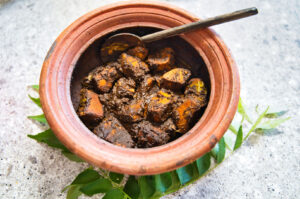
In the open-air kitchen of a coastal home in southern Sri Lanka, a low fire crackles under a wide, unglazed clay pot. The air is thick with the scent of roasted black pepper and something deeply, aggressively tart. A wooden spoon scrapes the bottom of the pot, turning cubes of firm yellowfin tuna until they…
-
Traditional Malaysian Foods Aren’t a Museum: They’re a Living Argument at the Table
Eda Wong | June 4, 2026
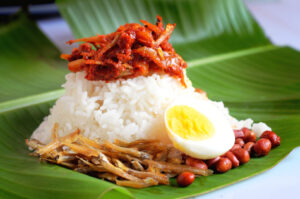
When I first really started digging into traditional Malaysian food, I made a classic rookie mistake. I was sitting at a crowded kopitiam in Kuala Lumpur, looking at a plate of nasi lemak, and I thought I understood exactly what it was supposed to be. I thought it was a fixed, rigid recipe, a museum…
-
In Gifu, Hoba Miso Warms Slowly Over Magnolia Leaves
Dio Asahi | June 3, 2026
Frost clings to the wooden window frames in the highlands of Gifu. Inside, the air is thick with the scent of woodsmoke and fermented soybeans. On the table, a small ceramic charcoal grill known as a shichirin radiates a gentle, localized heat. Resting directly above the glowing embers is a large, brittle brown leaf holding…