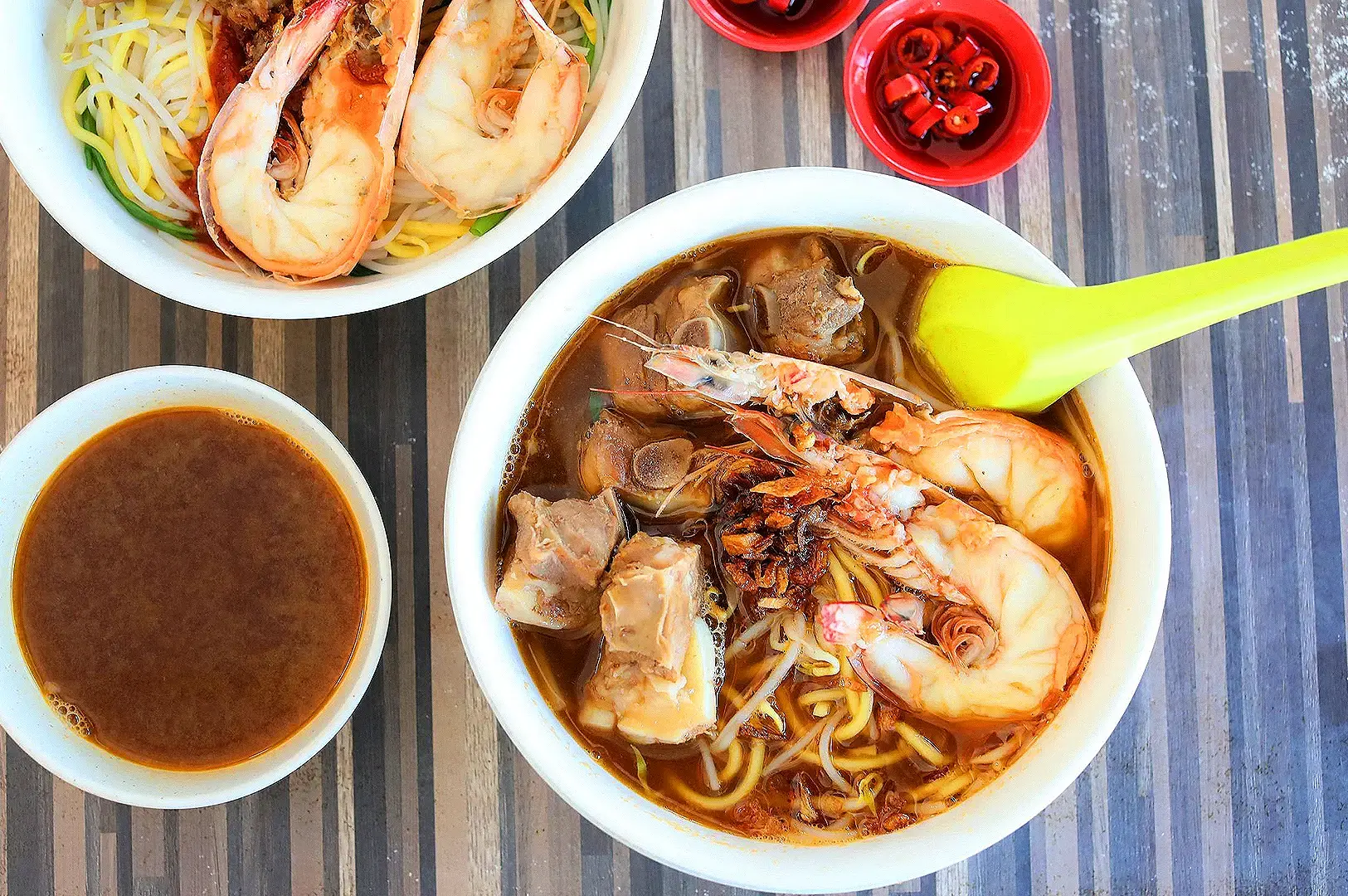
I do not remember the first bowl of prawn mee I ever ate. But I remember the smell: that deep, roasted-shell darkness that fills a coffee shop before you have even sat down. My grandfather used to say you could tell a good prawn noodle stall from the doorway, just by breathing.
Over the years, I have gone looking for that smell all over the island. Some mornings, I travelled across town for a single bowl. Some afternoons, I stood in a queue longer than the meal itself. What I kept looking for was not just a jumbo prawn or a famous name. It was broth with memory, the kind that tastes like prawn shells, prawn heads, pork bones, patience, and someone waking early enough to make all that effort disappear into one spoonful.
This guide is for comparing prawn noodles in Singapore, not ranking them. Some are darker and more old-school. Some are built around big prawn noodles. Some are better dry, with sambal chilli, fried shallots, and pork lard doing the heavy lifting. Start with the bowl that matches your mood, then work your way slowly through the rest.
How to Choose Your Best Prawn Noodles
Venue Name | If You Want | What To Expect |
|---|---|---|
Heritage soup with old-school depth | Dark prawn broth, pork ribs, pig’s tail, halved prawns, and a bowl that leans rich and nostalgic | |
Soup-first hae mee | Concentrated crustacean broth, modest portions, and a bowl built around the first spoonful | |
Big prawns with wok hei | Wok-fried white bee hoon, large prawns, prawn stock, and a saucier noodle texture | |
Dry prawn noodles with lard and sambal | Springy noodles, crispy pork lard, big prawns, pork ribs, and a slightly sweet dry sauce | |
One impressive prawn as the main event | Large wild sea prawns, rich soup, premium pricing, and a prawn-focused bowl | |
A loaded pork-and-shellfish bowl | Prawns, tender pork ribs, pig’s tail, intestines, abalone clams, and a heavier broth | |
Old-school dry prawn mee | Sambal-coated noodles, fried shallots, side soup, modest portions, and optional ngoh hiang |
1. Blanco Court Prawn Mee: Heritage Broth, Beach Road Prawn Noodle
Nearest MRT: Bugis or Nicoll Highway, about 10 minutes on foot
Price: $
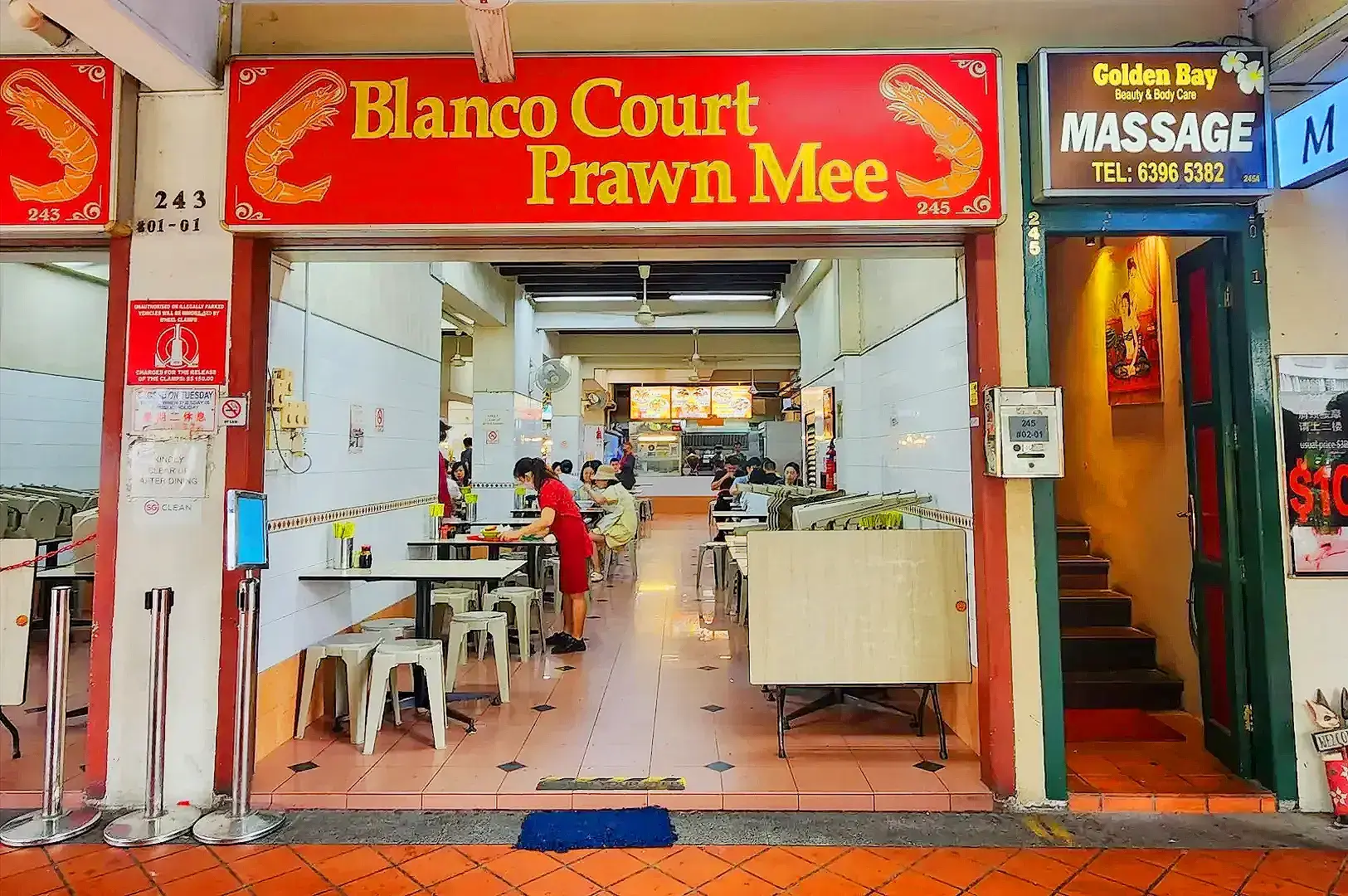
Blanco Court Prawn Mee is one of the great old names for prawn mee in Singapore. Singapore’s Roots project records the business as starting in 1928, with the stall now known for its Beach Road location at 243 Beach Road.
If your Beach Road prawn mee stop becomes a longer Bugis-area food crawl, Eat Drink Asia’s Fortune Centre food guide offers a nearby contrast of quick lunches and hidden dinner finds.
Why It Stands Out
This is the bowl for people who want traditional prawn noodles with a long memory behind it. The Blanco Court prawn broth is dark, savoury, and prawn-forward, with roasted-shell depth that clings to the steam before the spoon even reaches your mouth.
The pleasure here is not delicacy. It is density: prawn shells, prawn heads, pork bones, and time working together until the soup tastes almost bronzed. On a good day, this Beach Road prawn noodle lands with a salty-sweet punch, then settles into deep crustacean warmth.
What To Order
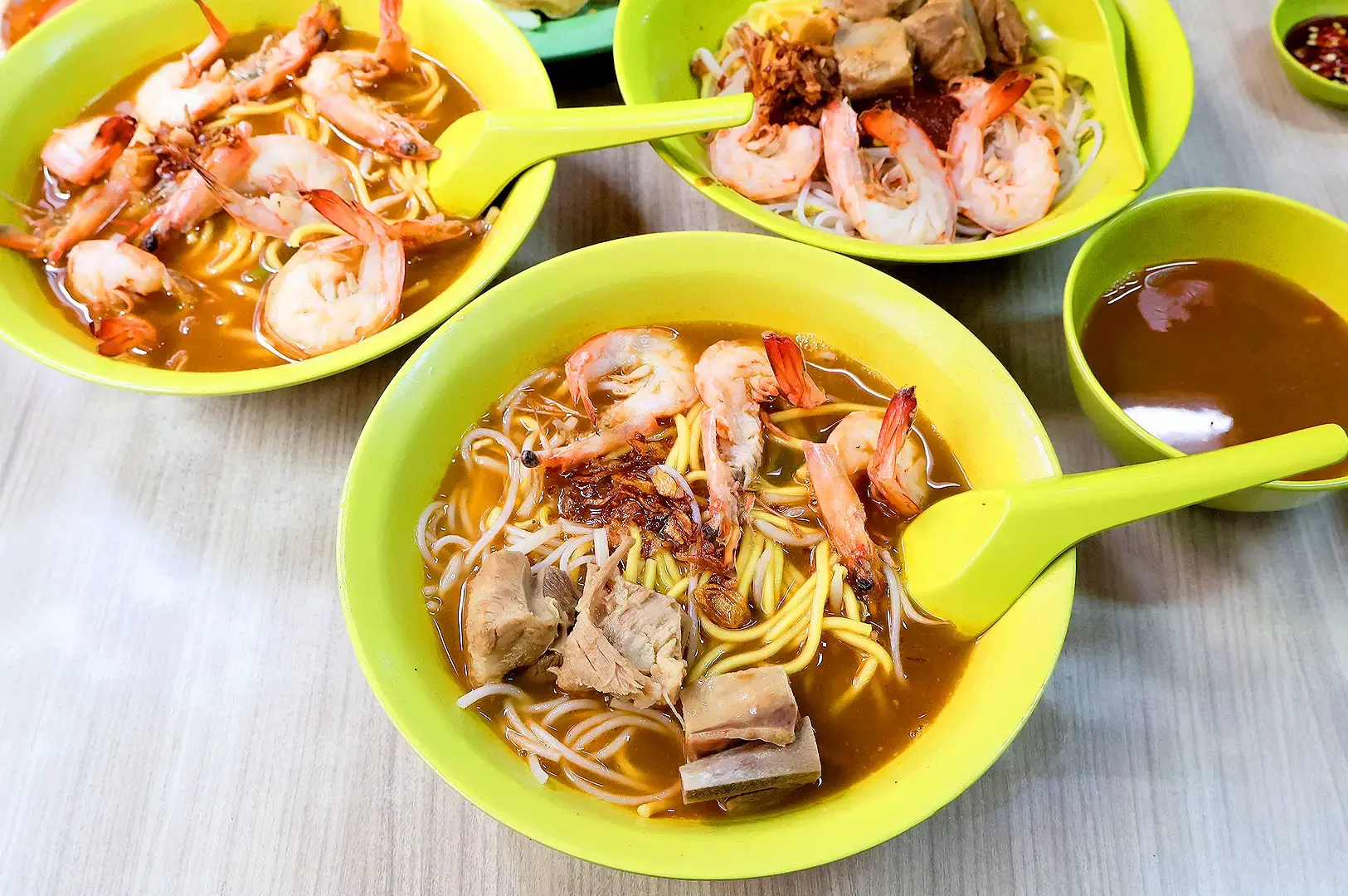
The 3-in-1 bowl is the order if you want the full Blanco Court Prawn Mee experience: prawns, pork ribs, and pig’s tail in one bowl. The halved prawns make peeling easier and let the broth soak into the exposed flesh. The ribs bring softness, while the pig’s tail adds gelatinous richness.
Ask for yellow noodles and bee hoon mixed. The yellow noodles give chew and alkaline bite, while the bee hoon drinks in the broth more quietly. If you want the clearest read on the soup base, begin with the soup version before trying the dry.
Planning Notes: Lunch hour can get crowded, and the broth can lean salty on heavy days. Come at odd hours if you want a calmer bowl and more space to breathe.
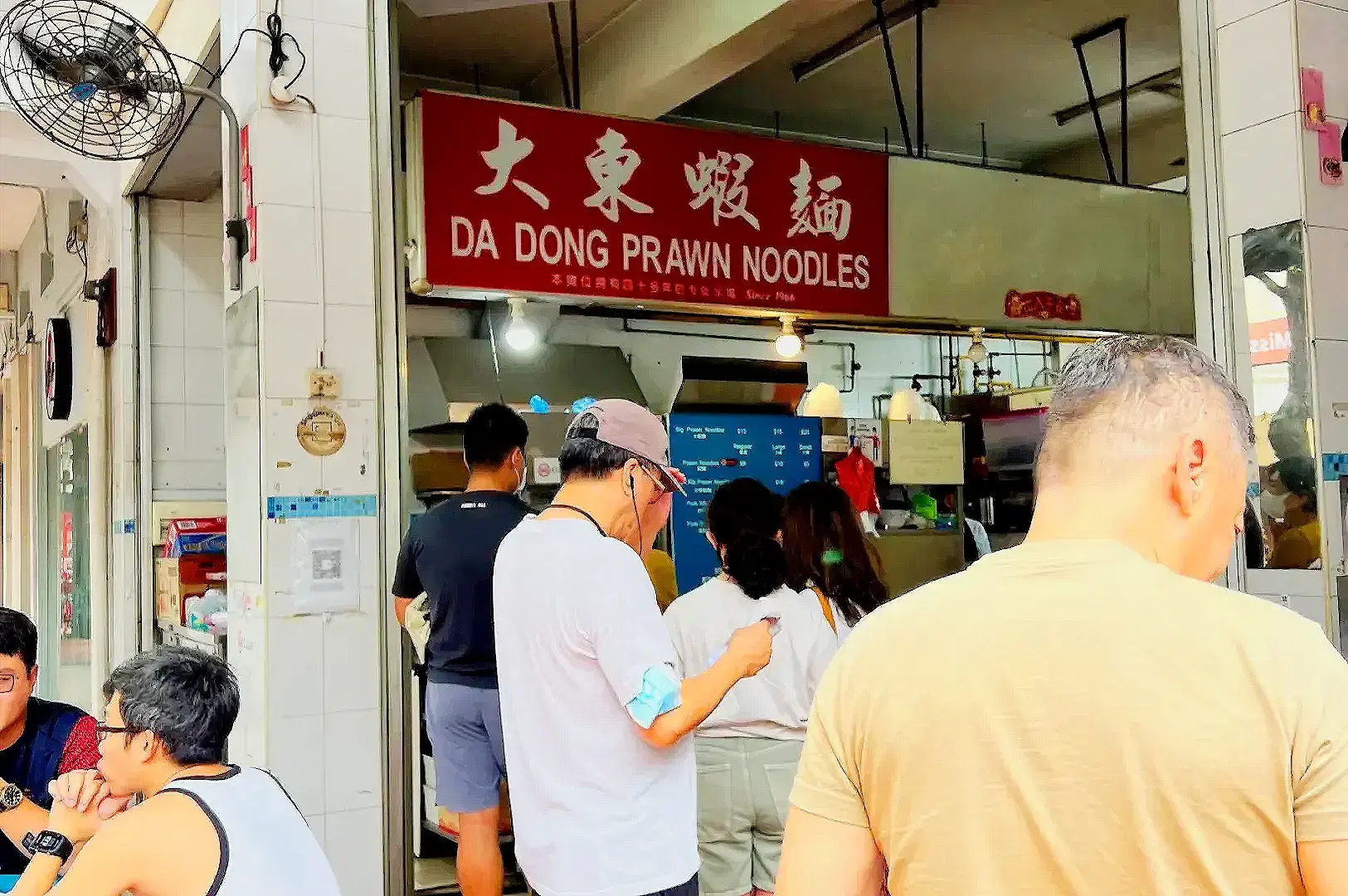
2. Da Dong Prawn Noodles: Soup First, Everything Else Second
Nearest MRT: Marine Parade, about 12 minutes on foot
Price: $
Da Dong Prawn Noodles sits at 354 Joo Chiat Road and has been around since 1966, with Time Out noting its second-generation hawker story and rich crustacean-and-pork broth.
Why It Stands Out
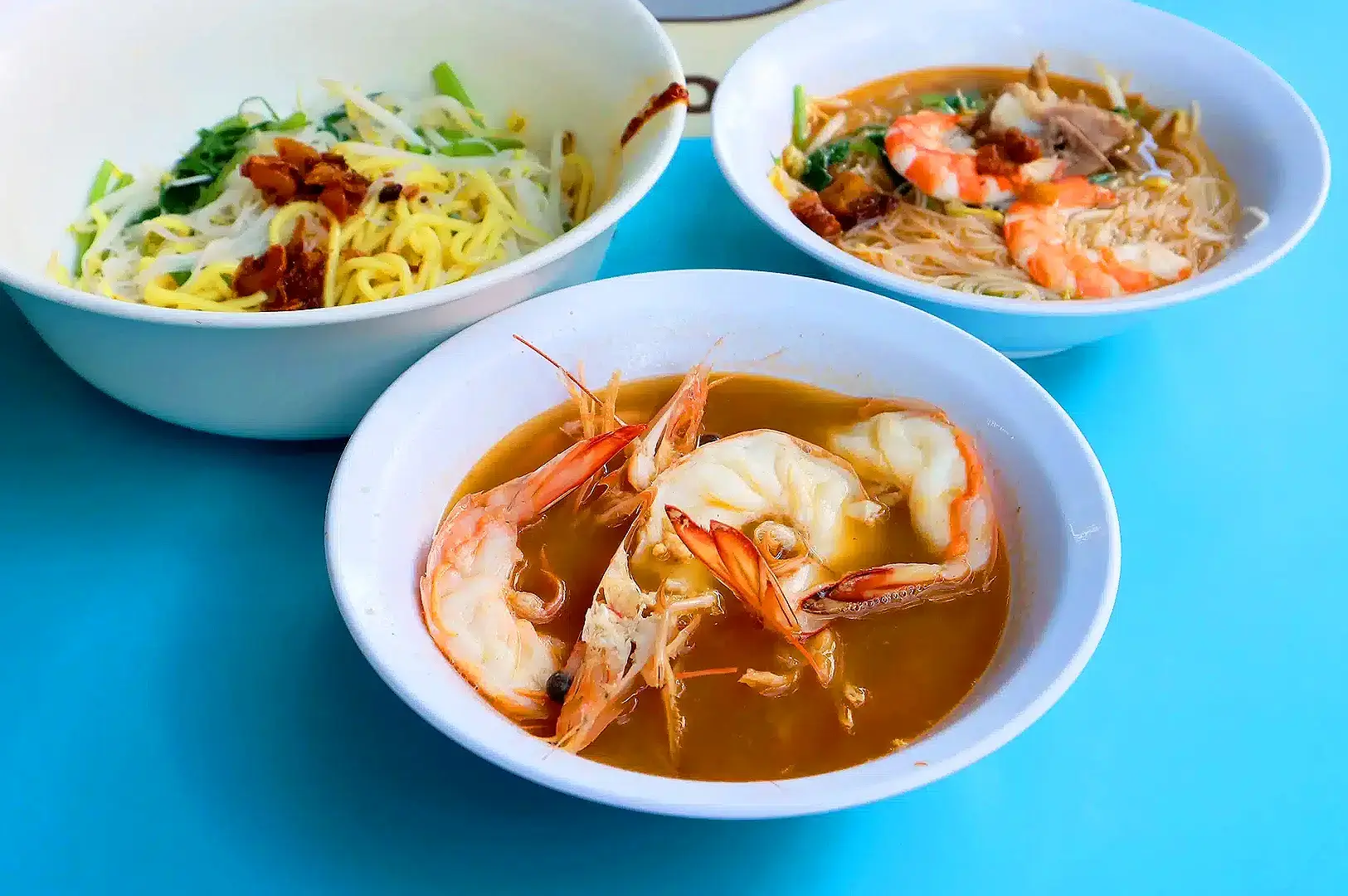
Some prawn noodle shops make you notice the toppings first. Da Dong Prawn Noodles makes you notice the soup. The broth is concentrated, savoury, and unmistakably crustacean, the kind that tastes like it began long before the doors opened.
It is not the biggest bowl, and that matters to say honestly. But when the prawn noodle soup is on form, the first spoonful has that clean, umami-heavy pull that explains why people still talk about this Joo Chiat hae mee.
What To Order
Start with the soup prawn noodles. This gives you the clearest read on the stall’s identity: broth, prawns, noodles, and very little to hide behind. The prawns are not the most dramatic in Singapore, but they serve the soup well.
If you like contrast, order the dry version on a return visit. The dry noodles come tossed in chilli and seasoning, with soup on the side, giving you both noodle bite and the prawn broth Da Dong is known for. Treat the soup as your anchor.
Planning Notes: Portions can feel modest if you are judging purely by size. Queues can test your patience too. But if your idea of good prawn mee begins with broth, this is still a serious stop.
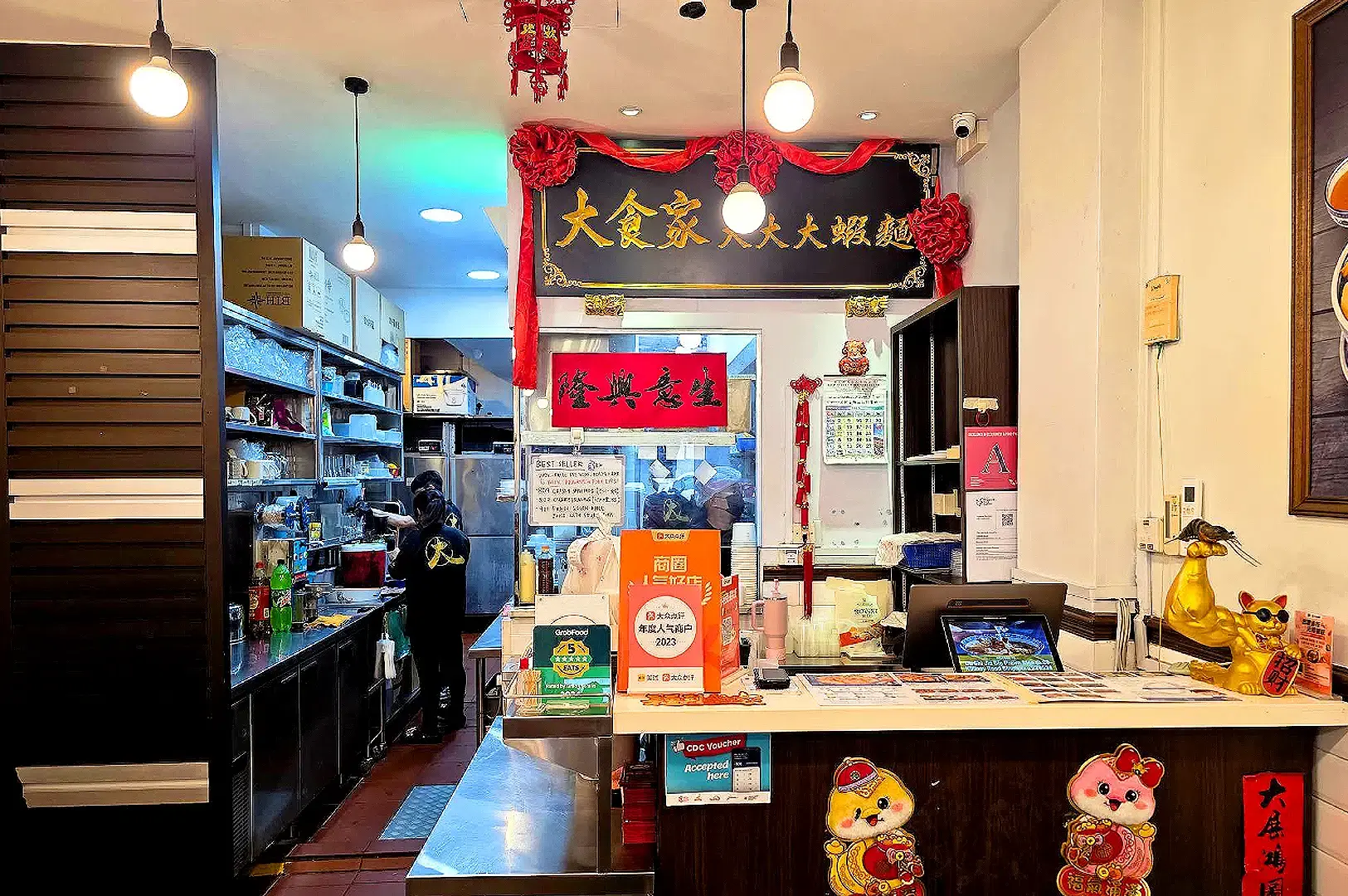
3. Da Shi Jia Big Prawn Mee: Big Prawn, Wok Hei, and White Bee Hoon
Nearest MRT: Somerset, about 6 minutes on foot
Price: $$
Da Shi Jia Big Prawn Mee is located at 89 Killiney Road. The Michelin Guide describes its format clearly: diners choose between prawn noodle soup and fried prawn bee hoon. If this Killiney Road stop turns into a wider Orchard lunch plan, 313 Somerset food crawl keeps the same quick-shopping-lunch energy nearby.
Why It Stands Out
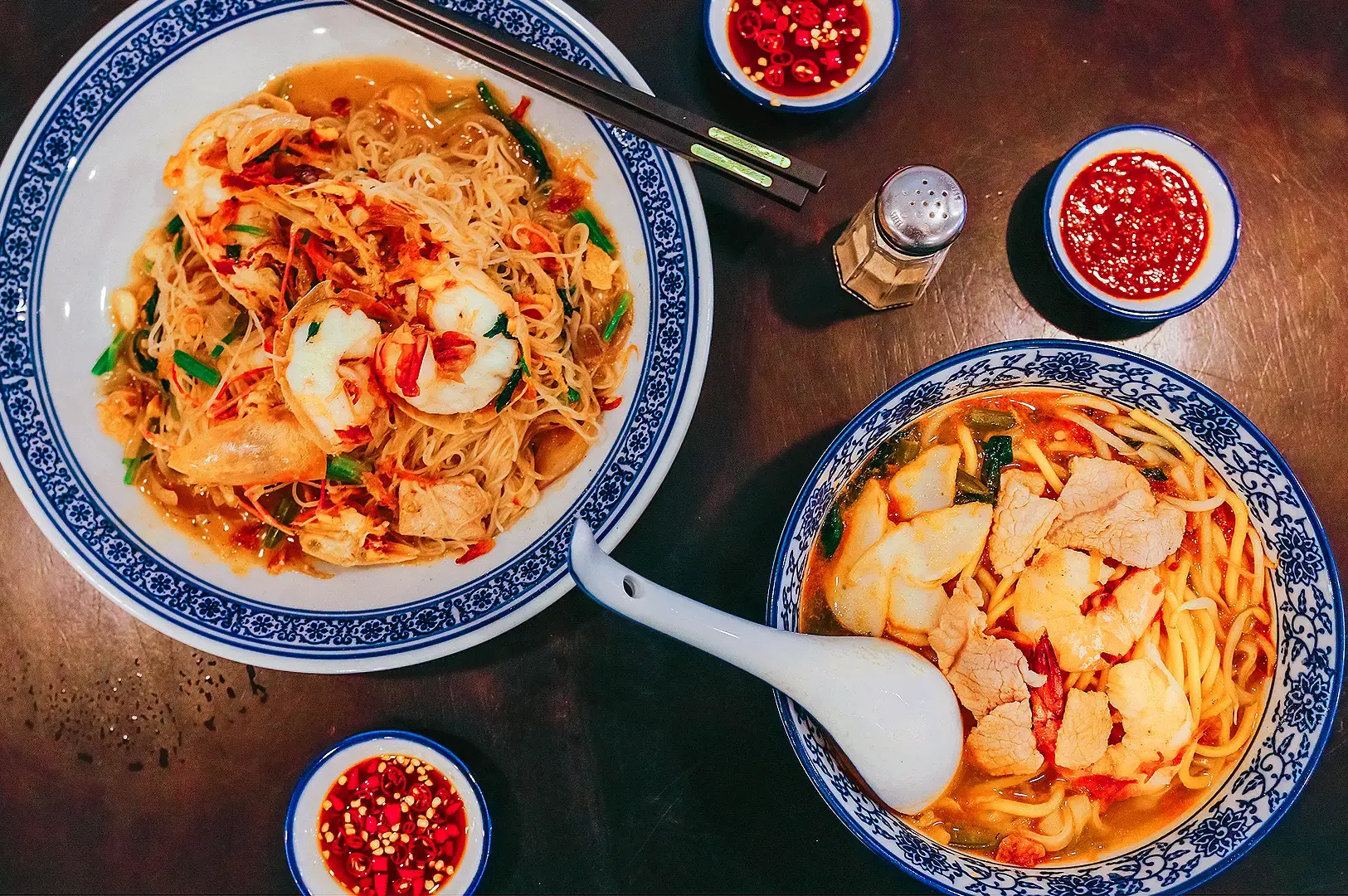
Da Shi Jia is the most flexible stop here. You can choose soup or fried, noodle type, prawn size, and add-ons. It is also air-conditioned, which matters more than people admit when lunch in town turns humid. The prawns are genuinely large, but what gives this place its own voice is the wok-fried white bee hoon. Instead of relying only on broth, Da Shi Jia lets stock, starch, and wok hei work together. The result is softer, wetter, and more aromatic than the usual prawn mee bowl.
What To Order
The Wok-Fried Big Prawn White Bee Hoon is the dish worth building the visit around. The white bee hoon should be soft but not limp, soaked with prawn stock, and touched by wok heat. When it works, you get that smoky breath of the wok rising through the noodles, with fresh prawns resting on top like the obvious luxury.
If you prefer soup, choose a big prawn mee bowl and upgrade the prawn size only if seafood is your main priority. The soup is satisfying, but the wok-fried bee hoon gives Da Shi Jia a clearer reason to be on your route.
Planning Notes: It is pricier once you upgrade the prawns. Go before noon or between meal peaks if you want a smoother experience and more consistent cooking.
4. Zhi Wei Xian Zion Road Big Prawn Noodle: Food Centre Dry Noodles With Lard and Bite
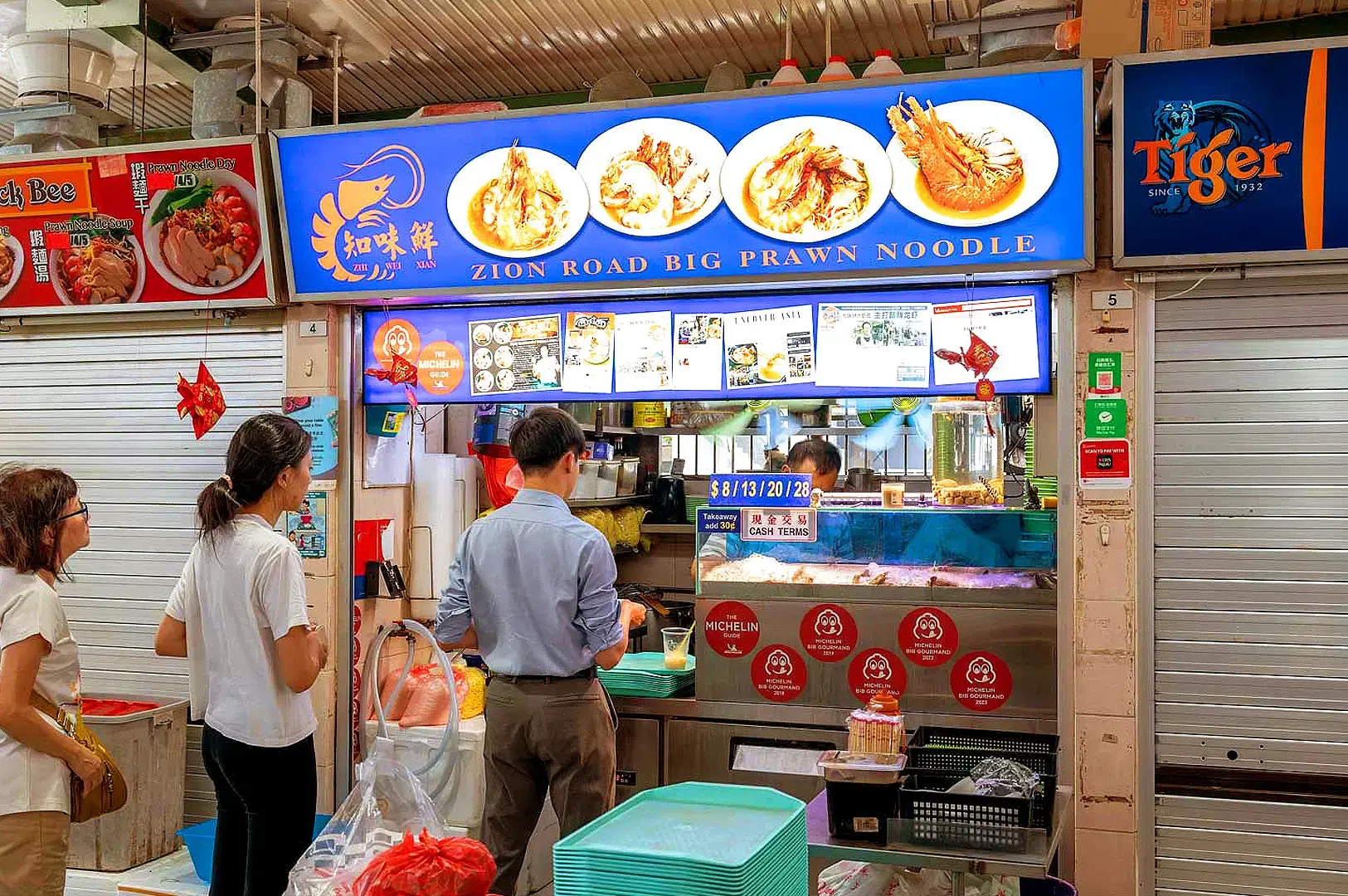
Nearest MRT: Great World, about 4 minutes on foot
Price: $ to $$
Zhi Wei Xian Zion Road Big Prawn Noodle operates at Zion Riverside Food Centre. Recent coverage describes its broth as simmered for up to six hours, with cuttlefish left out so the prawn sweetness stays clean and direct.
Why It Stands Out
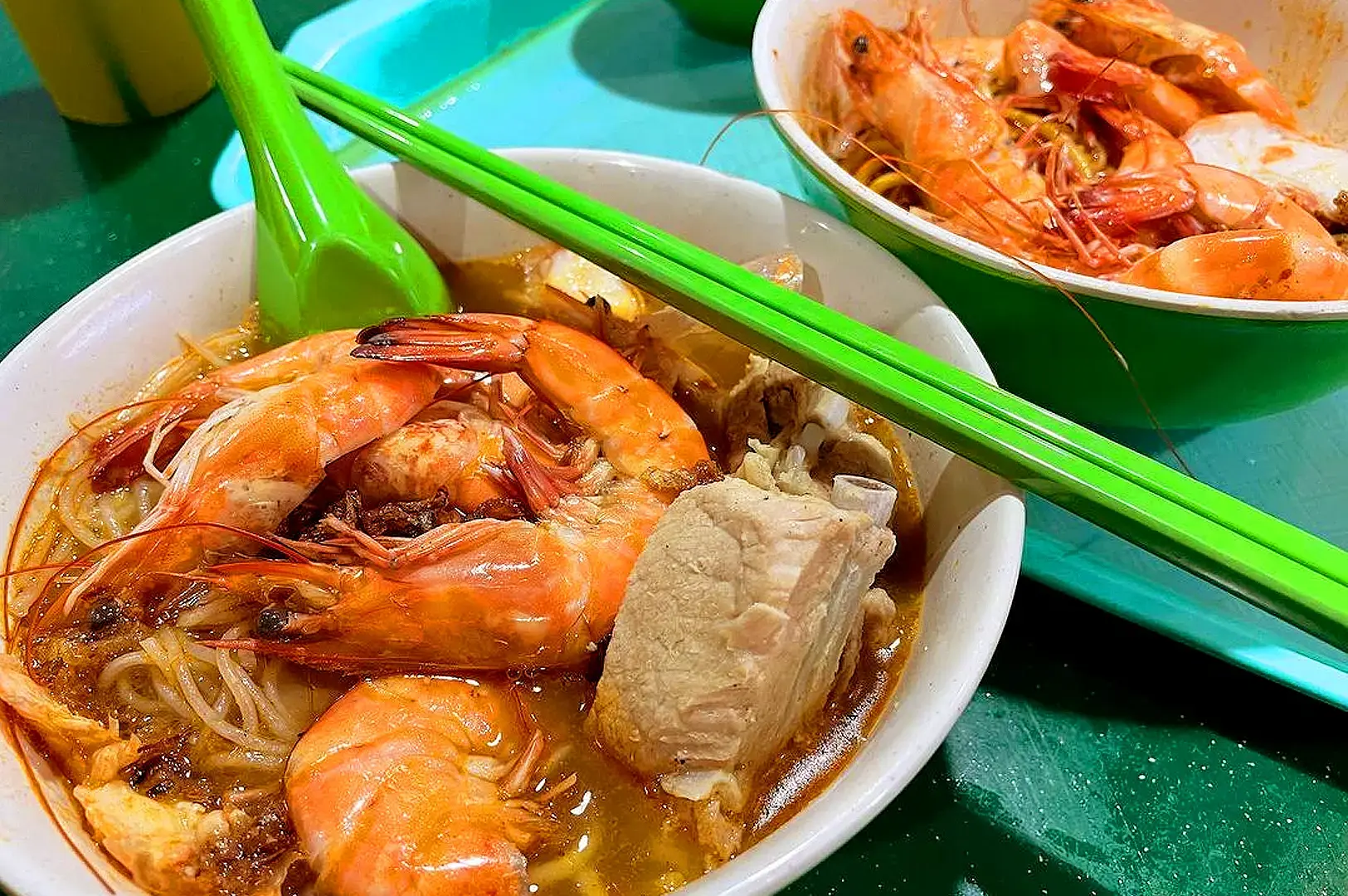
This is the food centre bowl that reminds you how much personality dry prawn noodles can have. The broth matters, but the dry version is where the stall really finds its voice. The noodles come tossed in chilli, seasoning, and a slightly sweet ketchup-like note, then finished with fried shallots and crispy pork lard. That lard is the small, cruel genius of the bowl. It gives crunch, fat, and a smoky edge that makes the noodles taste louder.
What To Order
Go for the dry big prawn noodles with pork ribs. The best bite is not just one prawn or one rib. It is noodle, sambal chilli, lard, prawn, pork, and a little soup after. The pork rib adds tender meatiness, while the side soup reminds you that the prawn broth is still doing real work.
If you dislike sweet sauces, ask whether they can reduce or leave out the ketchup note. The bowl still has enough savoury weight without it. If you like more heat, add chilli sauce slowly rather than drowning the noodles from the start.
Planning Notes: This is not a pork-free bowl, and the dry sauce style may divide people. Come when you want a proper hawker stall meal with texture, fat, and patience in the same plate.
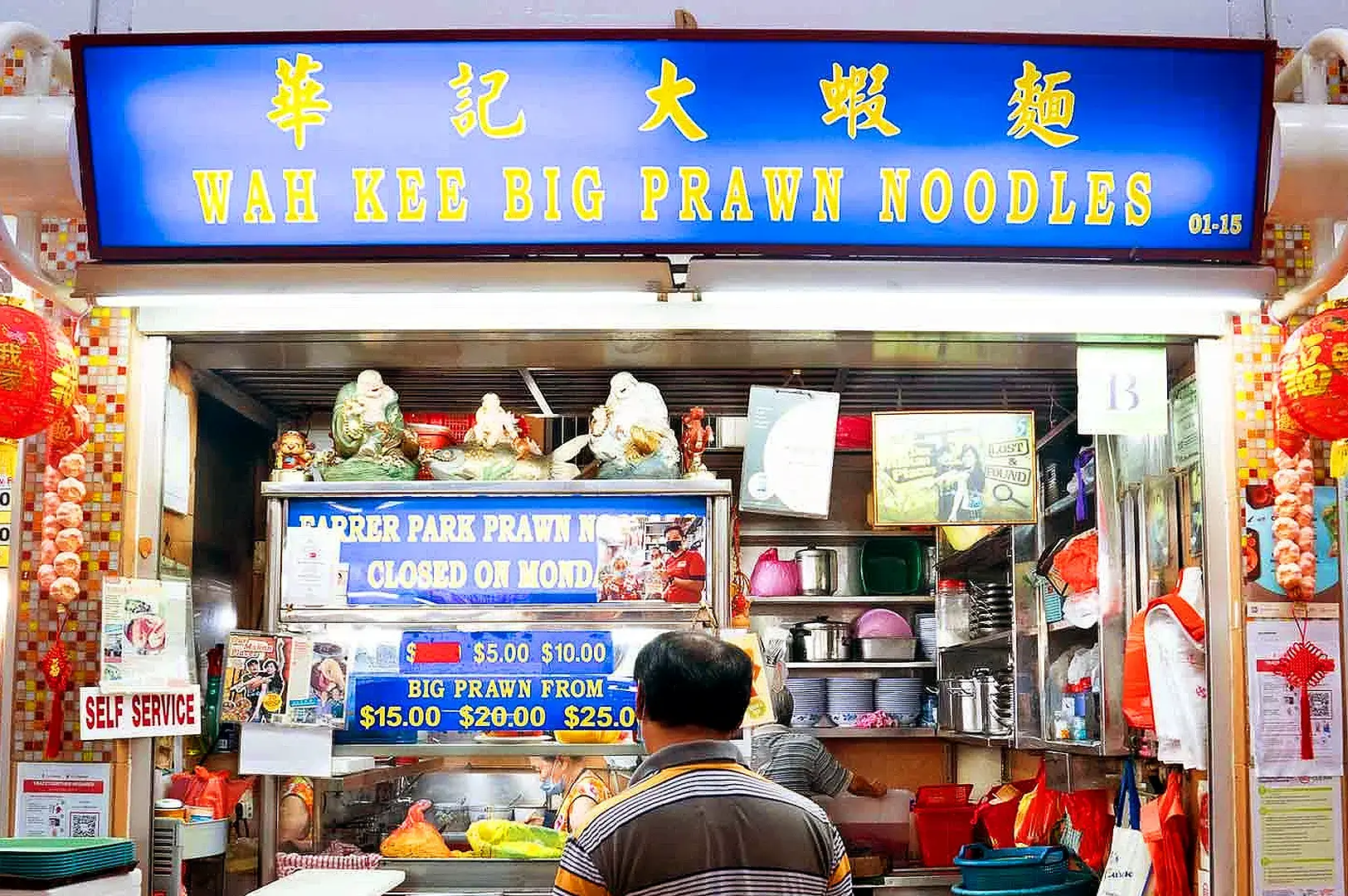
5. Wah Kee Big Prawn Noodles: Jumbo Prawn Mee at Pek Kio Market
Nearest MRT: Farrer Park, about 7 minutes on foot
Price: $ to $$$
Wah Kee Big Prawn Noodles is a longtime Pek Kio Market stall known for giant wild sea prawns and rich soup. CNA Lifestyle reported its 2026 reopening after a months-long closure linked to supply and health concerns.
Why It Stands Out
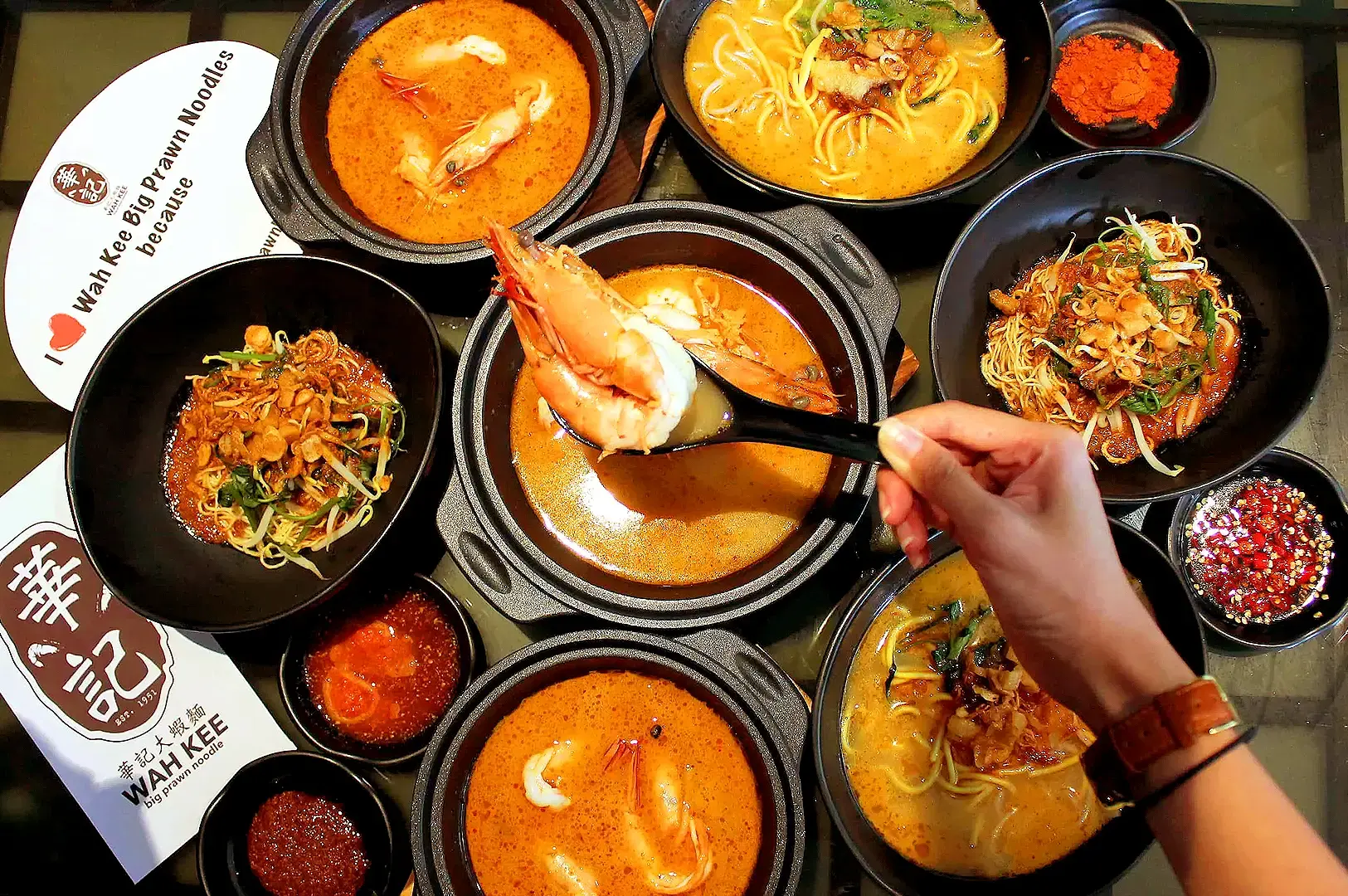
Wah Kee is about the prawn itself. Not just prawn flavour in the broth, but the drama of a large sea prawn arriving in the bowl and making everyone nearby glance over.
The soup is rich, but the prawn is the point. The best bowls feel almost ceremonial: shell, flesh, broth, and that moment when you stop talking because the prawn deserves attention. If your idea of jumbo prawn mee is one magnificent prawn rather than many smaller ones, this is the stall.
What To Order
Ask what special prawns are available that day before you commit. Wah Kee is famous for large wild sea prawns, and prices can climb depending on size and supply. CNA notes the stall’s reputation for giant wild-caught prawns and rich soup.
If you are going for the experience, choose the larger prawn and keep the noodles simple. You come for firm, sweet prawn flesh, a rich soup base, and the old-school confidence of a stall that knows exactly what people queue for.
Planning Notes: The service is famously direct, and the stall can sell out. Go in the morning if you want the best chance at the larger prawns.
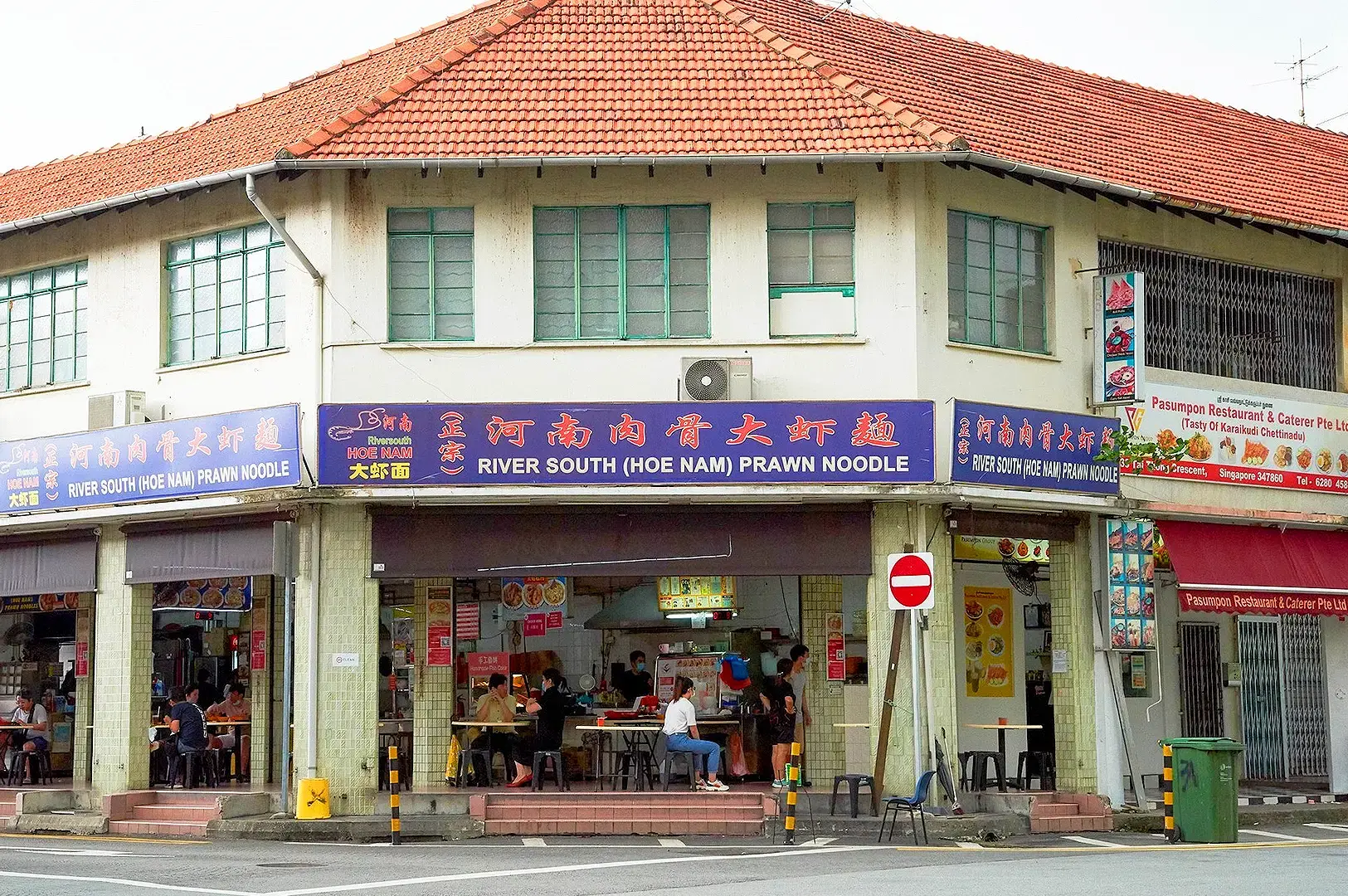
6. River South Hoe Nam Prawn Noodles: Loaded Hae Mee With Pork Ribs and Abalone Clams
Nearest MRT: Potong Pasir, about 4 minutes on foot
Price: $ to $$
River South Hoe Nam Prawn Noodles is a long-standing Potong Pasir name, with listings highlighting combinations of prawns, pork ribs, pig’s tail, intestines, and abalone clams.
Why It Stands Out
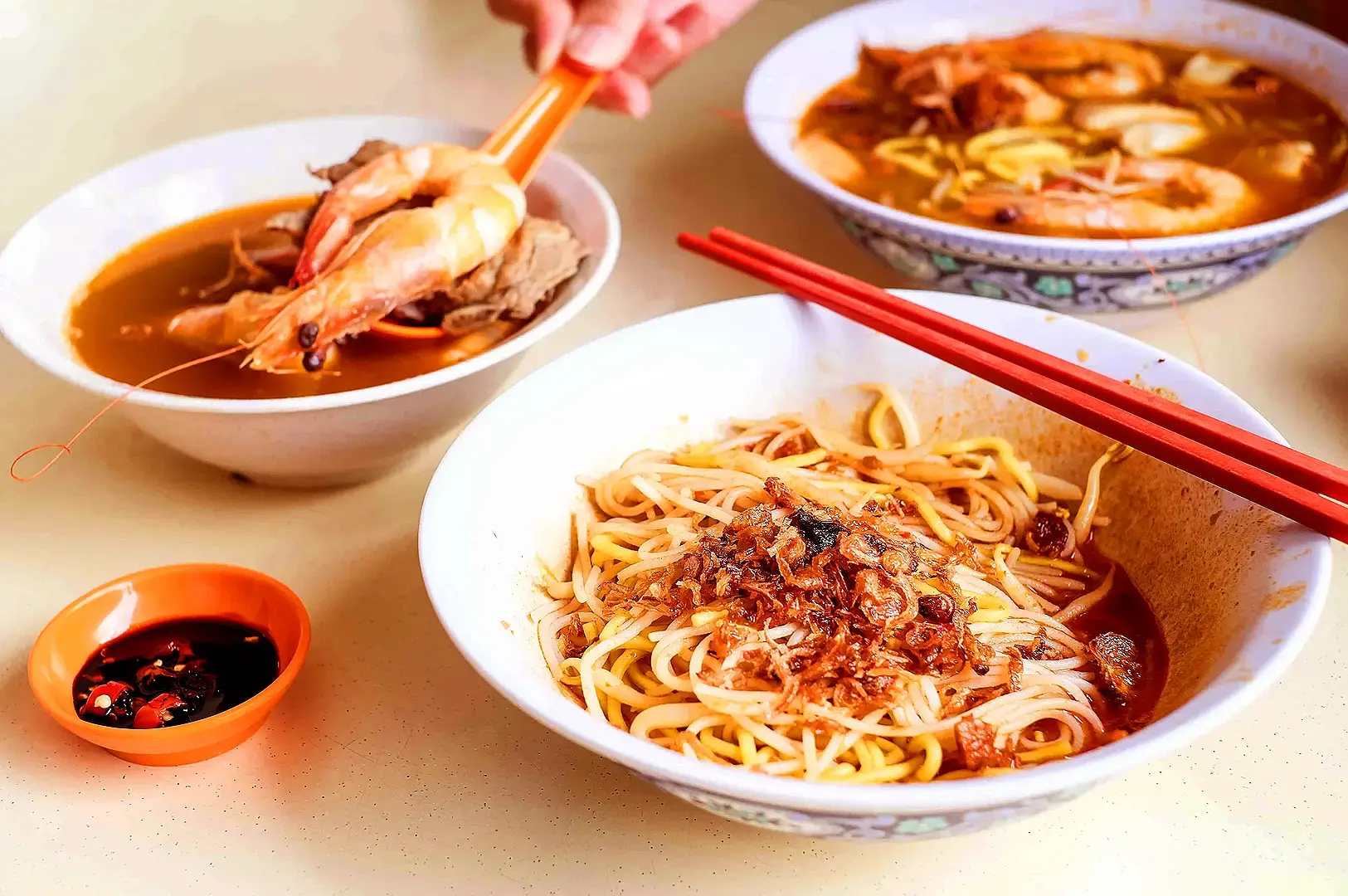
River South Hoe Nam is for the days when you want everything in the bowl. The menu stretches beyond simple prawn noodles into pork ribs, pig’s tail, intestines, abalone clams, pork slices, and shellfish add-ons. This is generous eating rather than tidy eating. The broth is robust, the toppings pile high, and the table tends to get messy in the best way. It is the opposite of minimalist hokkien prawn mee.
What To Order
The prawn, pork ribs, and abalone clam combination shows what Hoe Nam does well: seafood sweetness, pork depth, and a robust broth strong enough to tie the toppings together. Time Out points to the pork ribs big prawn noodles as a must-try, especially in the dry version with soup served separately.
If you like offal, this is one of the better places to lean into it. Pig’s tail adds gelatinous richness, intestines bring chew and funk, and ribs give the bowl something familiar to hold onto. If that sounds like too much, stick with prawns and ribs, or ask about a simpler combination with thin bee hoon, mee kia, or yellow noodles.
Planning Notes: This is a pork-heavy style of prawn mee, so it will not suit everyone. Delivery can also be less reliable for complex bowls, so dine in if the toppings matter to you.
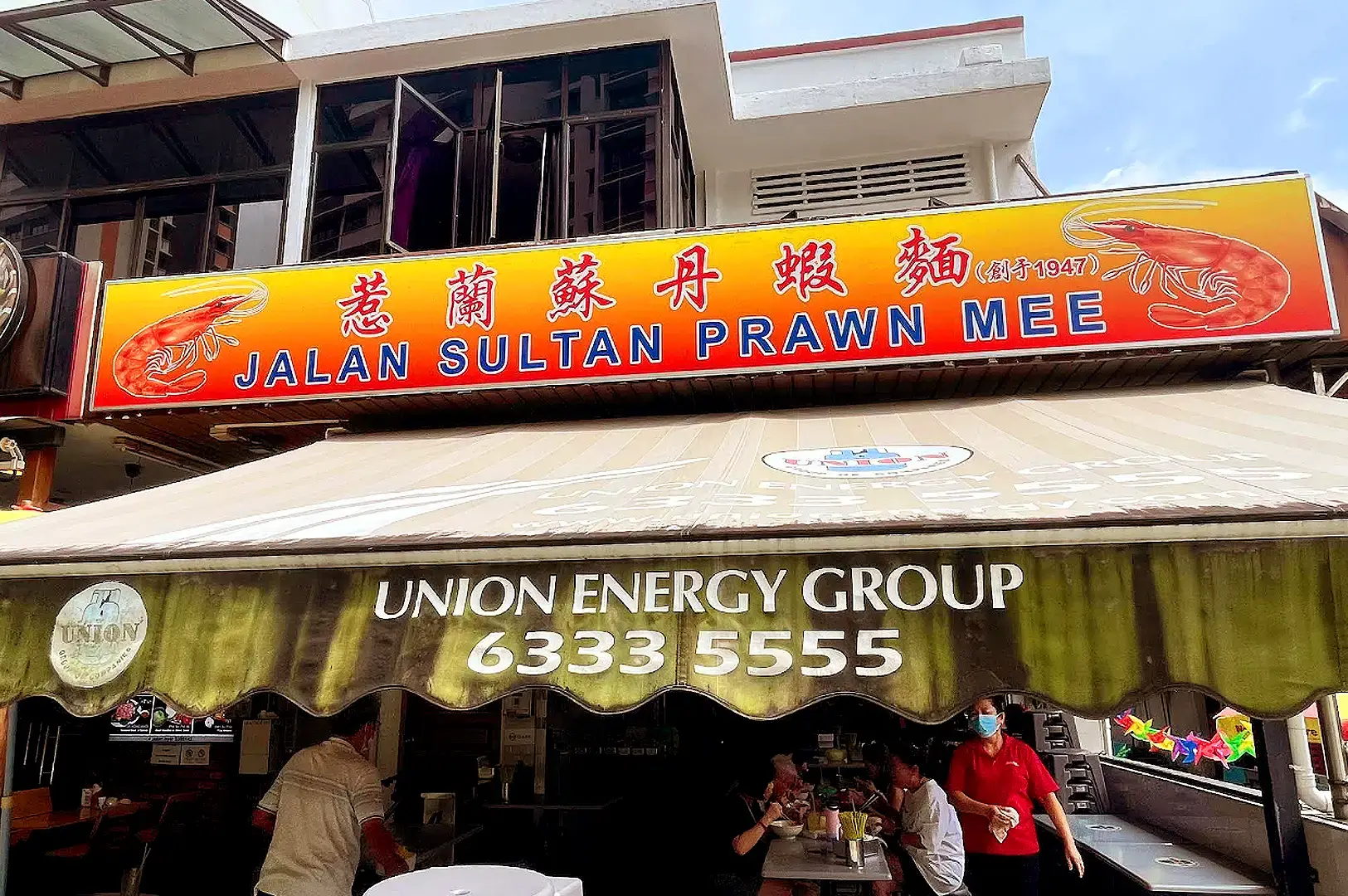
7. Jalan Sultan Prawn Mee: Old-School Dry Prawn Mee Near Kallang
Nearest MRT: Kallang, about 3 minutes on foot
Price: $
Jalan Sultan Prawn Mee is a long-running Kallang prawn mee name. Recent coverage notes its Michelin Bib Gourmand recognition and more than 70 years of history.
Why It Stands Out
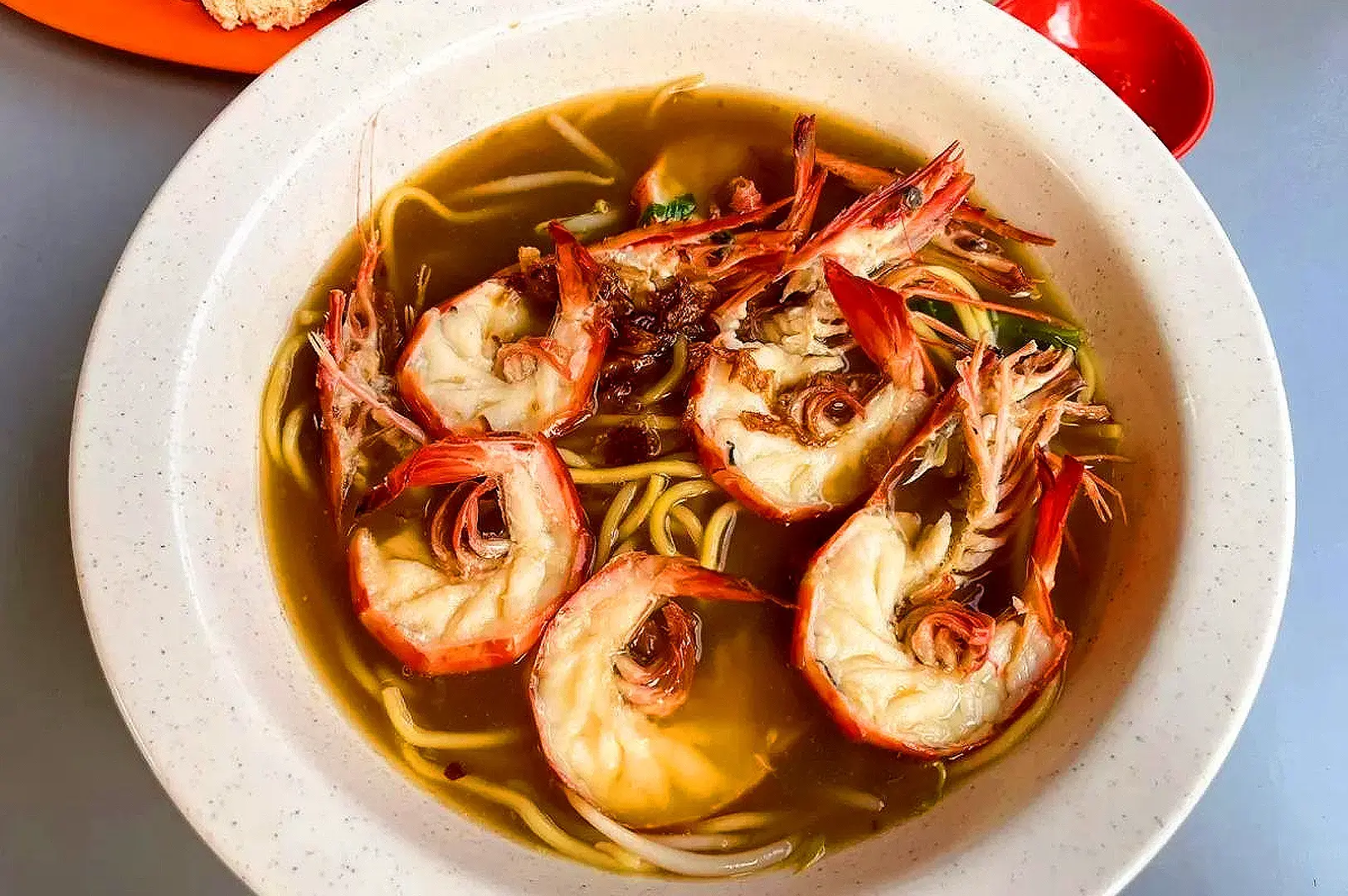
The dry version is the reason to come. The noodles are slicked with sambal, lifted by fried shallots, and seasoned with an old-school steadiness that feels practiced rather than showy. The soup on the side is rich without being heavy. It gives you prawn sweetness and umami without weighing the meal down. Compared with heavier, opaque broths, this one can feel darker yet clearer, with a prawn note that comes through cleanly.
What To Order
Order the dry prawn mee if you want the stall at its clearest. The sambal, shallots, and noodle seasoning carry the bowl, while the soup sits beside it as a steady counterpoint. If you want a fuller meal, add ngoh hiang or fish cakes if available nearby. It makes sense with this style: crisp fried rolls, savoury filling, and prawn mee soup are old-school coffee shop chemistry.
Planning Notes: Portions can be modest, and popular items may sell out. Go earlier rather than later, especially if you are making a special trip.
The Spoonful That Tells You Everything
Prawn mee rewards attention. Before you stir, breathe in. Before you add chilli powder or chilli sauce, taste the broth. Notice whether it leans sweet, dark, salty, smoky, porky, or sharply prawn-forward.
You do not need to chase every famous stall at once. Start with the one closest to home, or the one that sounds most like your kind of comfort. Sit down, let the steam hit your face, and taste for the hours behind it.
That is the thing worth travelling for: not just the prawn, not just the price, but the time someone spent so the broth could taste the way it does.

In Luang Prabang, Or Lam Carries the Taste of Sakhan
Eda Wong | June 12, 2026
The damp morning mist still clings to the teakwood houses of Luang Prabang as an elderly cook tends to a glowing charcoal brazier. Sparks jump lightly into the cool air, illuminating the blackened belly of an aluminium pot. Inside, a thick, dark liquid bubbles rhythmically, releasing an incredibly aromatic cloud of charred lemongrass, sweet Thai…

The Malayan Council, Reviewed: Local Food in Malaysia, Plated Like a Memory
Eat Drink Asia Team | June 11, 2026
Our Eat Drink Asia team spends a lot of time debating what makes a truly unforgettable meal. The team has previously published articles exploring the redefinition of comfort food. That is exactly what led me to The Malayan Council at 71 Bussorah Street. I visited on a Friday around 7:30 pm, just as the weekend…
-
Sushi in Singapore: Why There Is a Style for Every Budget
Eda Wong | June 11, 2026
Few Japanese dishes have travelled as successfully across Asia as sushi. What began as a culinary tradition deeply rooted in Japan has evolved into something remarkably diverse in Singapore. Today, sushi in Singapore can mean many different things. It can be a quick lunch grabbed from a conveyor belt restaurant, a carefully curated omakase meal…
-
The Quiet Pull of Lahpet in Myanmar’s Tea Leaf Salad
Dio Asahi | June 10, 2026
The afternoon humidity presses against the open-air teahouse in downtown Yangon, where the sharp clatter of a silver spoon against ceramic cuts through the low hum of conversation. A small plate sits in the centre of a low plastic table, holding a dense, dark green cluster that smells faintly of damp earth and sharp lime….
-
Dining at Suntec: The Restaurants That Feel Like Different Cities in One Mall
Eda Wong | June 9, 2026
Over the past six months, I’ve navigated the sprawling, sometimes disorientating corridors of Suntec City more times than I can count. What started as a simple quest to find decent spots for post-meeting lunches quickly turned into a genuine culinary journey. I have tried over a dozen venues within this massive complex, and I’ve found…
-
PappaRich SG and the Comfort of Malaysian Staple Food: A Restaurant Review in Familiar Flavours
Dio Asahi | June 6, 2026
There is a very specific kind of exhaustion that hits you right before a flight or just after you land. You are dragging your suitcase, staring blankly at the departure boards, and suddenly, you realize you are starving. But you don’t want just any food. You want something warm, familiar, and deeply comforting. I felt…
-
Sri Lanka’s Ambul Thiyal and the Sourness of Goraka
Eda Wong | June 5, 2026
In the open-air kitchen of a coastal home in southern Sri Lanka, a low fire crackles under a wide, unglazed clay pot. The air is thick with the scent of roasted black pepper and something deeply, aggressively tart. A wooden spoon scrapes the bottom of the pot, turning cubes of firm yellowfin tuna until they…
-
Traditional Malaysian Foods Aren’t a Museum: They’re a Living Argument at the Table
Eda Wong | June 4, 2026
When I first really started digging into traditional Malaysian food, I made a classic rookie mistake. I was sitting at a crowded kopitiam in Kuala Lumpur, looking at a plate of nasi lemak, and I thought I understood exactly what it was supposed to be. I thought it was a fixed, rigid recipe, a museum…
-
In Gifu, Hoba Miso Warms Slowly Over Magnolia Leaves
Dio Asahi | June 3, 2026
Frost clings to the wooden window frames in the highlands of Gifu. Inside, the air is thick with the scent of woodsmoke and fermented soybeans. On the table, a small ceramic charcoal grill known as a shichirin radiates a gentle, localized heat. Resting directly above the glowing embers is a large, brittle brown leaf holding…
-
The Stir Fried Egg Plant That Taught Me Restraint at Si Chuan Dou Hua Restaurant
Eat Drink Asia Team | June 2, 2026
I’ve always had a love-hate relationship with Sichuan food. Usually, you walk into a spot, order your food, and spend the rest of the night sweating through your shirt, chugging ice water, and wondering why you did this to yourself. But when I visited Si Chuan Dou Hua Restaurant on a Tuesday around 7 pm,…